Short answer. Raceway superfinishing removes only a few microns of steel, yet a well-matched stone shifts assembled deep groove ball bearings by an entire noise grade. Sharp, self-sharpening cubic silicon carbide (SC) and green silicon carbide (GC) stones shear hardened GCr15 raceway peaks in a two-stage oscillation cycle, turning directional helical grinding marks into an oil-retaining cross-hatch plateau without smearing metal or distorting groove curvature.
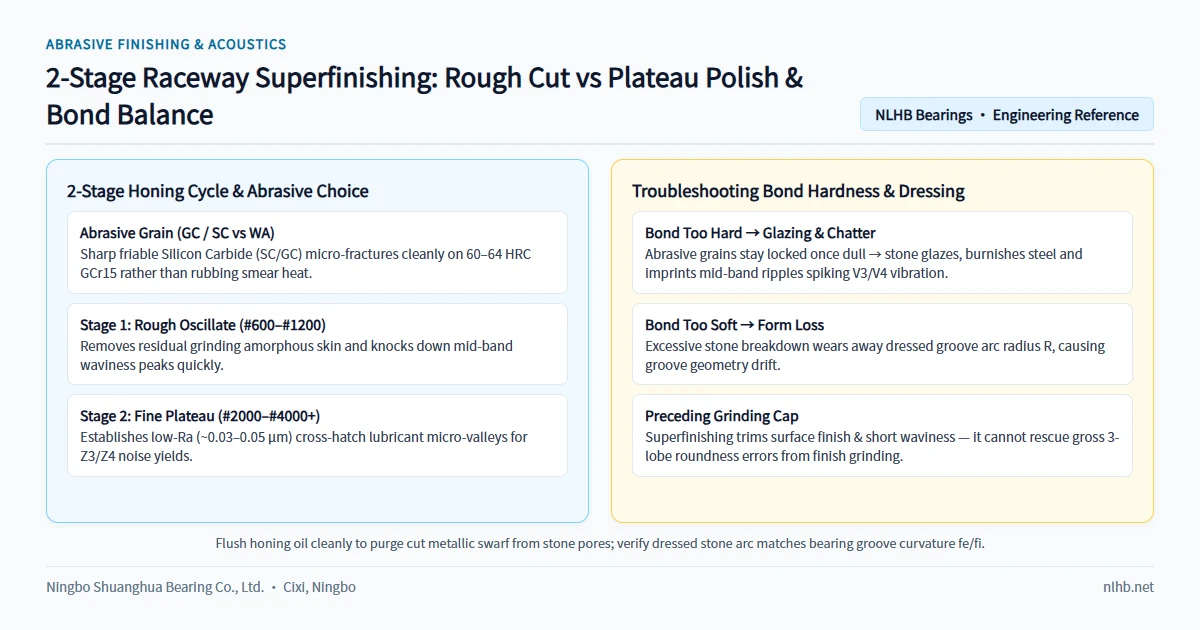
NLHB runs its own raceway superfinishing and outer-diameter finishing lines in Cixi, so every rule below comes from shop-floor use of our raceway superfinishing stones and OD finishing stones. Because stock removal is tiny, superfinishing only corrects surface texture, short waviness, and the thin grinding-affected skin—never bulk roundness or groove position errors from finish grinding.
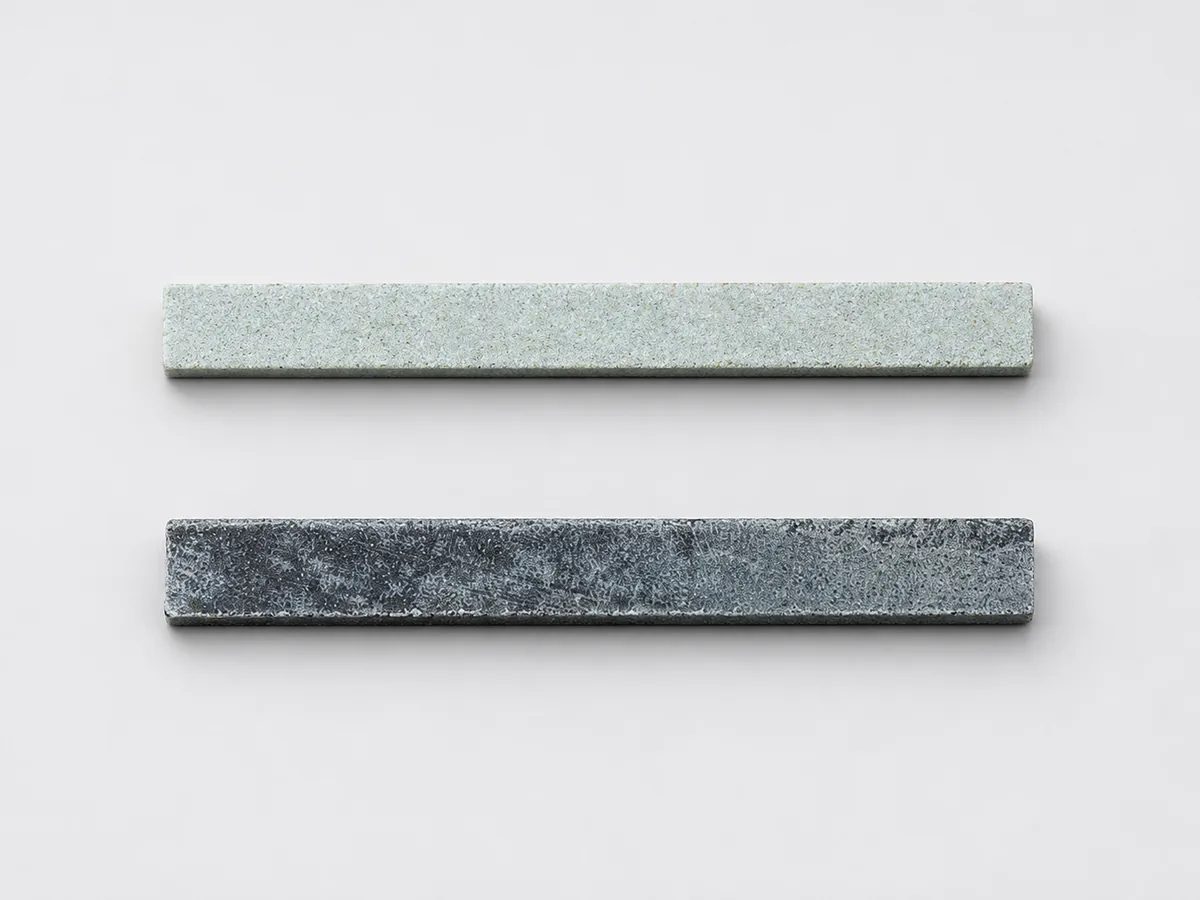
What superfinishing changes (and what grinding must hold)
Finish grinding sets bearing bore, OD, groove diameter, groove position, and macro-roundness. Superfinishing presses an arc-dressed stone lightly against the rotating ring while oscillating rapidly along the groove. On hardened GCr15 (60–64 HRC), it removes roughly 2–5 µm per side to build a plateau surface for oil-film retention.
| Surface item | After finish grinding | After two-stage superfinishing | Acoustic and functional effect |
|---|---|---|---|
| Surface lay | Helical grinding marks | Cross-hatch oil-retaining plateau | Cuts sliding hiss and protects film |
Roughness (Ra) |
Coarser grinding peaks | Ra ≤ 0.03–0.05 µm on quiet grades |
Drives down Z3/Z4 and high-band V noise |
| Waviness | Grinding chatter (15–500 UPR) |
Mid- and short-band ripples cut | Suppresses tonal hum in V bands |
| Surface layer | Thin thermal affected skin | Amorphous skin stripped cleanly | Prevents micropitting and noise drift |
| Geometry & size | Fixed by finish grinding | Few microns removed; size steady | Cannot fix macro lobing or runout |
Because superfinishing cannot erase large form errors, always audit raceway roundness and waviness at the grinder first.
Abrasives: SC and GC silicon carbide vs WA and CBN
On hardened GCr15, grains must be brittle and angular enough to shear grinding peaks and micro-fracture cleanly before turning into flat burnishing pads.
| Abrasive | Code | Behavior on hardened GCr15 |
Best station | Main shop risk |
|---|---|---|---|---|
| Cubic silicon carbide | SC |
Sharp, self-sharpening, resists swarf loading | Primary NLHB raceway choice | Wrong bond glazes if cutting angle drops |
| Green silicon carbide | GC |
Hard, very brittle, sharp edges | Fine polishing and hard alloys | Fractures too fast under heavy pressure |
| White fused alumina | WA |
Tougher, holds rounded edges longer | Roughing or softer parts | Smears metal and loads pores in fine GCr15 finishing |
| Cubic boron nitride | CBN |
Extreme hardness and long wear | High-volume automated lines | High price; strict dressing and machine rigidity needed |
Tougher WA grains rub instead of shearing on hard GCr15 fine stations, causing localized re-melting smear and glazed iron pickup. Friable SC and GC grains avoid smearing and leave crisp micro-valleys that feed grease into the contact ellipse.
Two-stage oscillation cycle: roughing vs fine polishing
Specifying "a 1000-grit stone" is incomplete because FEPA, JIS, and GB grit standards assign different particle sizes to the same number (GB/T 4127.10-2008 and GB/T 14319-2008). Quiet bearing production separates roughing from finishing:
- Rough superfinishing (
#600–#1200grit): High oscillation frequency, wide stroke, and higher contact pressure strike grinding peaks over a small contact patch. Rapid grain fracture strips the amorphous thermal skin and knocks down mid-band chatter waviness (15–500 UPR). - Fine polishing (
#2000–#4000+grit): Lower pressure transitions the stone from cutting into semi-cutting and burnishing. As swarf gradually fills pores and a coolant film forms, cutting halts naturally whileRaand high-frequency roughness drop into Z1–Z4 noise grades and V1–V4 BVT vibration grades (50–300 Hz,300–1,800 Hz,1,800–10,000 Hz).
Never send a #3000 finishing stick against deep grinding grooves—it loads in seconds and polishes wave peaks without removing chatter, failing V3/V4 checks.
Bond hardness, porosity and shop troubleshooting
A complete stone order defines seven items: abrasive, grit standard and number, bond hardness grade (letter), structure/porosity number, bond (vitrified or resin), impregnation (sulphur, wax, none), and thickness × width × length plus working face arc. Grade indicates how firmly the bond holds grains—not workpiece hardness:
- Bond too hard / structure too dense (glazing): Dull grains stay locked in place, swarf packs tight pores, and the stone turns dark and glassy. Cutting stops early; the stick burnishes over chatter waves, leaves scratches, and spikes
V3/V4mid- and high-band vibration. - Bond too soft / structure too open (curvature distortion): Grains shed prematurely, flattening or widening the dressed arc radius and distorting groove curvature (
R / fi / fe) across the lot.
Before swapping stones for loading, check four variables one by one: raise cutting angle (excess workpiece spindle speed or worn low-frequency oscillation heads cause sliding and glazing), verify steady stone air pressure, check coolant filtration and sulphur additives, and inspect incoming ground roughness and heat-treat batch hardness.
Curved raceway stones vs thru-feed OD finishing stones
Both items sit in our bearing components and finishing supplies range, yet they cannot be swapped on appearance.
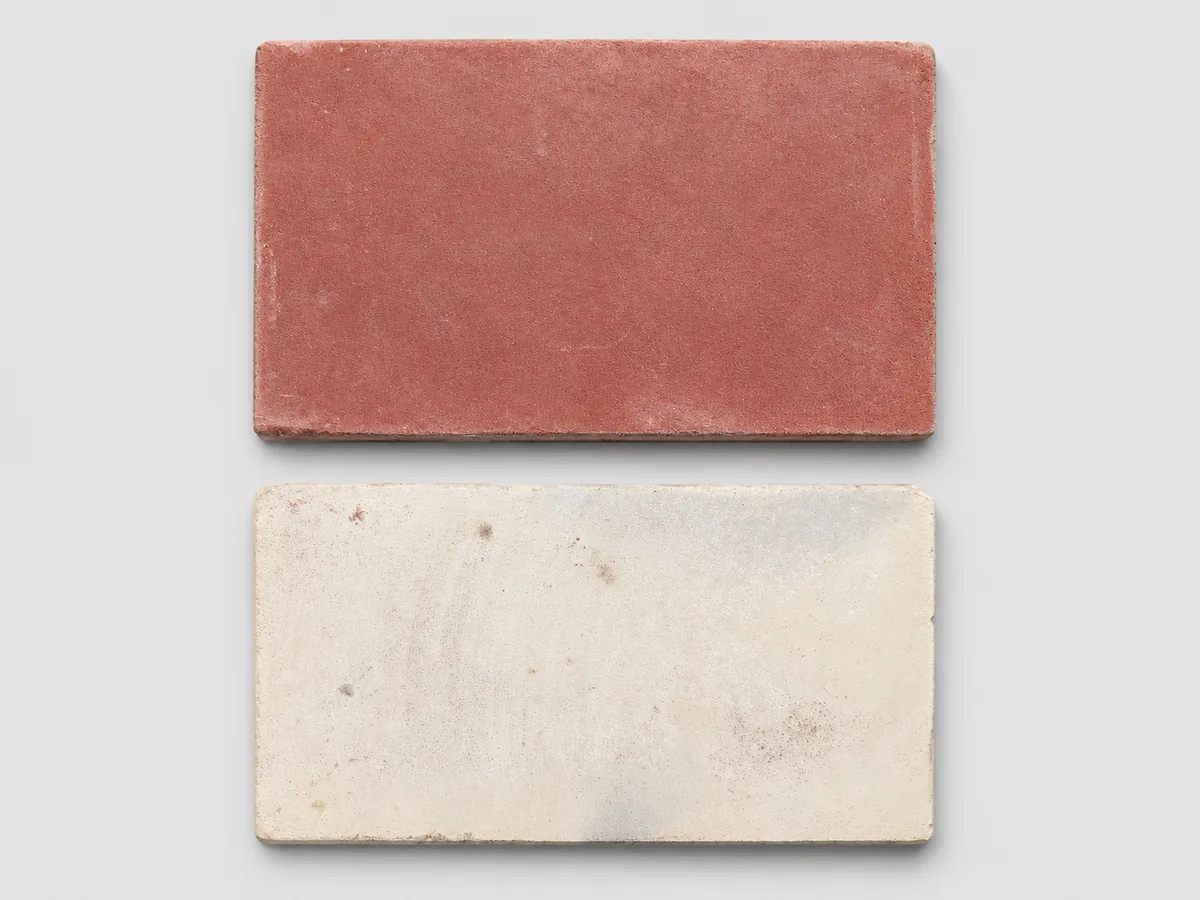
| Item | Curved raceway stone | Thru-feed OD finishing stone |
|---|---|---|
| Surface finished | Inner and outer arc raceways | Outer ring cylindrical OD |
| Part motion | Single-ring spindle rotation + oscillation | Continuous roller-fed rotation and forward feed |
| Stone shape | Narrow stick dressed to groove curvature (R) |
Long wide bar or block, flat or shallow-arc face |
| Primary goal | Low Ra, waviness, and Z/V noise grades |
Uniform OD finish, no centerless support marks or housing scoring |
Judge stones by good rings finished per stone plus dressing downtime, not sticker price per bar, and cross-check target limits using our noise and vibration tool.
Frequently asked questions
Why does a superfinishing stone glaze or turn dark mid-shift? Dull grains fail to release and swarf clogs pores. Check whether bond grade is too hard or structure too dense, then audit spindle speed, oscillation stroke/frequency, stone air pressure, coolant filtration, and incoming ground roughness one change at a time.
How do cubic silicon carbide (SC) and green silicon carbide (GC) differ?
Both cut hardened GCr15 cleanly without smearing. SC uses sharp blocky grains that resist iron loading across rough and finish raceway stations, whereas GC is more brittle and sharp for light fine polishing.
Can superfinishing fix out-of-round raceways or groove curvature errors?
No. Stock removal is only a few microns, so roundness and groove curvature (R / fi / fe) must be held at finish grinding. A too-soft stone that wears rapidly can actually distort groove curvature.
Why do two-stage cycles split roughing (#600–#1200) from finishing (#2000–#4000+)?
Roughing (#600–#1200) uses higher pressure and oscillation frequency to strip thermal skin and chatter waves; finishing (#2000–#4000+) drops pressure to cut Ra and acoustic hiss for Z3/Z4 and V3/V4.
Can thru-feed OD finishing stones be cut down for raceway honing? No. OD stones have wide flat or shallow-arc faces, different bond formulations, and holders matched to twin-roller continuous feeding rather than arc oscillation.
Sources and data boundary
Abrasive behavior, specification fields, and loading diagnostics follow NLHB's superfinishing pages and referenced national/ISO standards. Non-catalog hardness, Ra, grit, removal, and waviness band ranges carry inline verification notes for confirmation against your specific machine and drawing.
- NLHB Bearings. Bearing Raceway Superfinishing Stones (Cubic SiC / SC). https://nlhb.net/bearing-components/raceway-superfinishing-stones/
- NLHB Bearings. OD Through-Feed Superfinishing Stones for Bearing Rings. https://nlhb.net/bearing-components/od-finishing-stones/
- GB/T 4127.10-2008 & GB/T 14319-2008. Bonded abrasive products — superfinishing stones dimensions and designation.
- JB/T 7047 & JB/T 10187 / ISO 15242. Rolling bearings — vibration acceleration (
Z) and velocity (V) measurement and limits.
Related guides
- Bearing raceway superfinishing stones (SC / GC)
- OD through-feed superfinishing stones
- All bearing components & finishing supplies
- How raceway roundness, roughness and waviness drive bearing noise
- Bearing noise grades Z1–Z4: dB limits and specification
- Bearing vibration grades V1–V4 and BVT testing
- Bearing noise & vibration lookup tool
Ningbo Shuanghua Bearing (NLHB) runs in-house raceway grinding, superfinishing, and S910/BVT vibration testing in Cixi, China, and supplies shop-proven raceway and OD stones. Send your ring dimensions, machine model, current stone label, and target noise grade: request a quote.