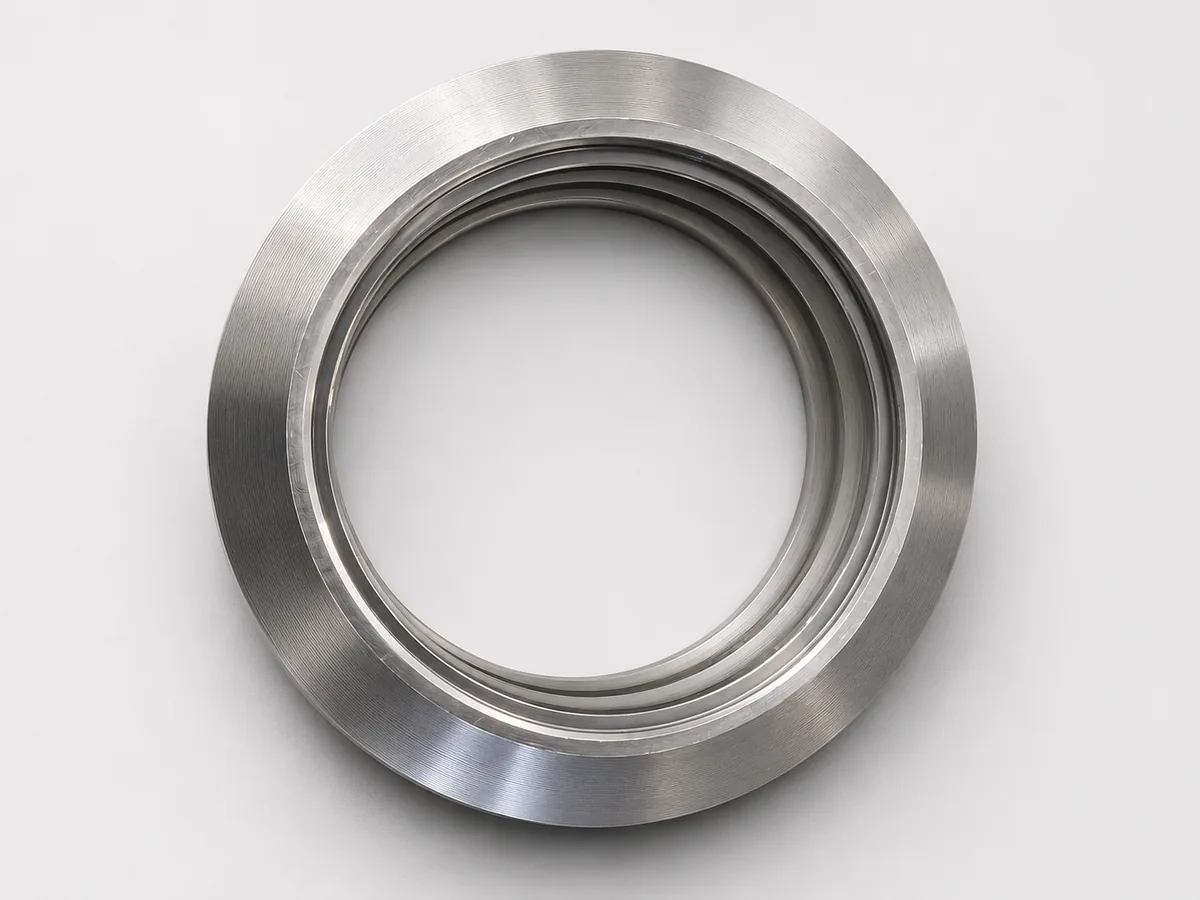
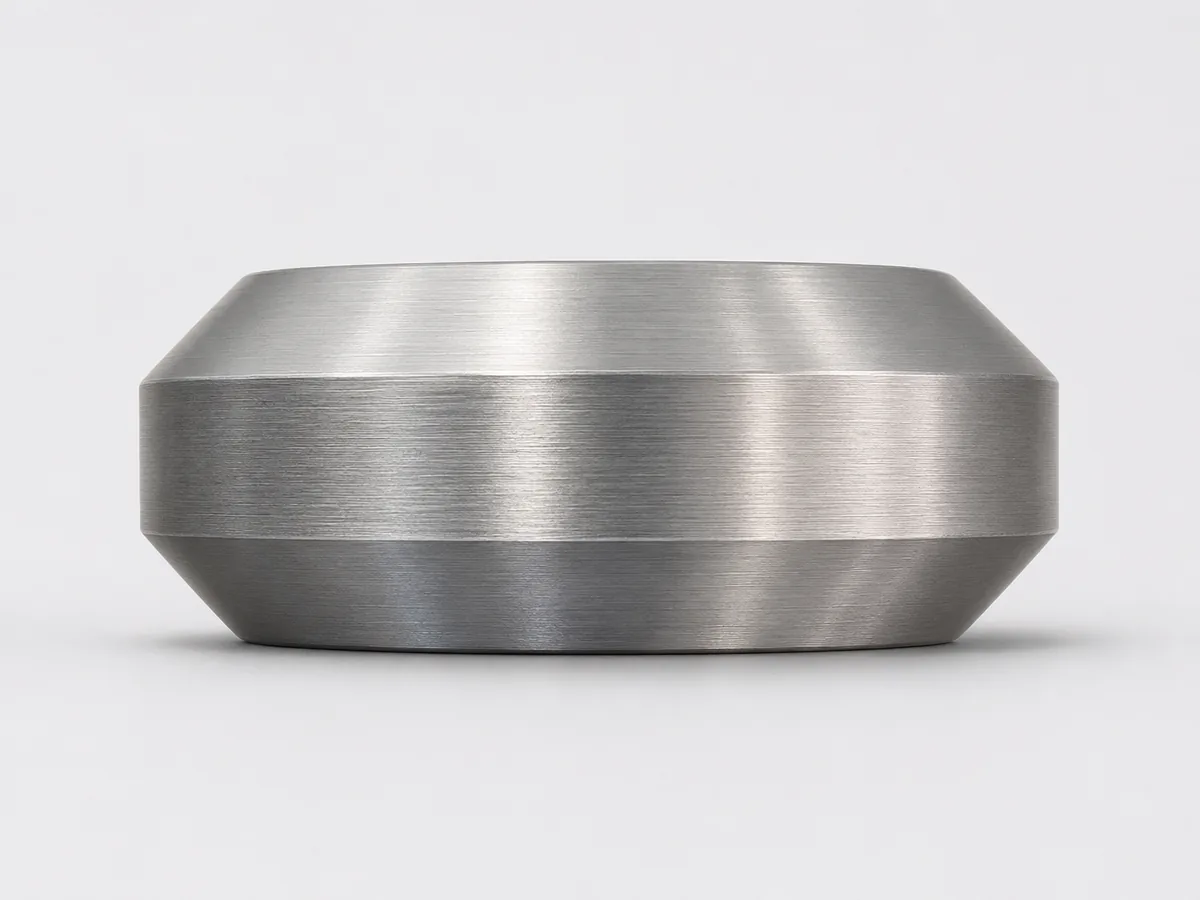
Bearing rings, also called bearing races, are the inner and outer rings of a rolling bearing. The inner ring has a raceway on its outside surface, the outer ring has one on its inside surface, and the balls roll between the two.
NLHB makes bearings, so we produce rings from turning through raceway superfinishing in our own plant. We supply rings to drawing in three conditions: turned (soft), heat-treated (hardened and tempered), and finished (ground and superfinished).
A ball bearing ring goes through these operations from bar or tube to finished part. Each delivery condition is a point along this flow.
| Condition | Operations done | Next step by the buyer | Must be specified |
|---|---|---|---|
| Turned rings | Cutting, turning | Heat treatment and grinding | Grinding allowance per surface, datums, material certificate |
| Heat-treated rings | Turning, hardening, tempering | Grinding | Hardness, heat treatment standard, allowed distortion, allowance |
| Finished rings | Grinding, optionally superfinishing | Direct assembly | Final tolerances, raceway roundness, roughness, cleanliness |
The most common problem with turned and heat-treated rings is stock allowance. Too little and the part cannot be cleaned up; too much and grinding takes longer and risks grinding burn. The drawing must state the allowance for each surface.
| Surface | Inner ring | Outer ring | What it controls |
|---|---|---|---|
| Fit surface | Bore, fitted to the shaft | OD, fitted to the housing | Fit, ring creep |
| Raceway | Outer raceway | Inner raceway | Clearance, noise, life |
| Faces | Both faces | Both faces | Grinding datum, axial location |
| Shoulders, seal grooves | Depends on design | Depends on design | Whether seals seat correctly |
A bright ring is not necessarily a good ring. Grinding burn can exist on parts that look normal; it changes the surface structure and hardness and needs a dedicated test method to detect.
GCr15 is the most common ring material. Where corrosion resistance is needed, high-carbon chromium stainless bearing steel (440C type, Chinese standard GB/T 3086) can be used; the exact grade is stated on the material certificate.
Typical inspection items for finished rings:
Required records and sampling are stated in the order's technical requirements.
Yes. "Race" and "ring" both mean the inner or outer ring that carries a raceway. A snap ring or retaining ring is a different part that locates the bearing on a shaft or in a housing.
Not reliably. Bearings with the same boundary dimensions can have different raceway curvature, shoulders and seal grooves, so we need a drawing or a measured sample.
Heat treatment, grinding and superfinishing are added, and the finished ring must meet final tolerances. The tighter the tolerance and the smaller the batch, the larger the difference.
Not by appearance. Etch inspection or dedicated non-destructive testing is used; the method is agreed for the material and the order.