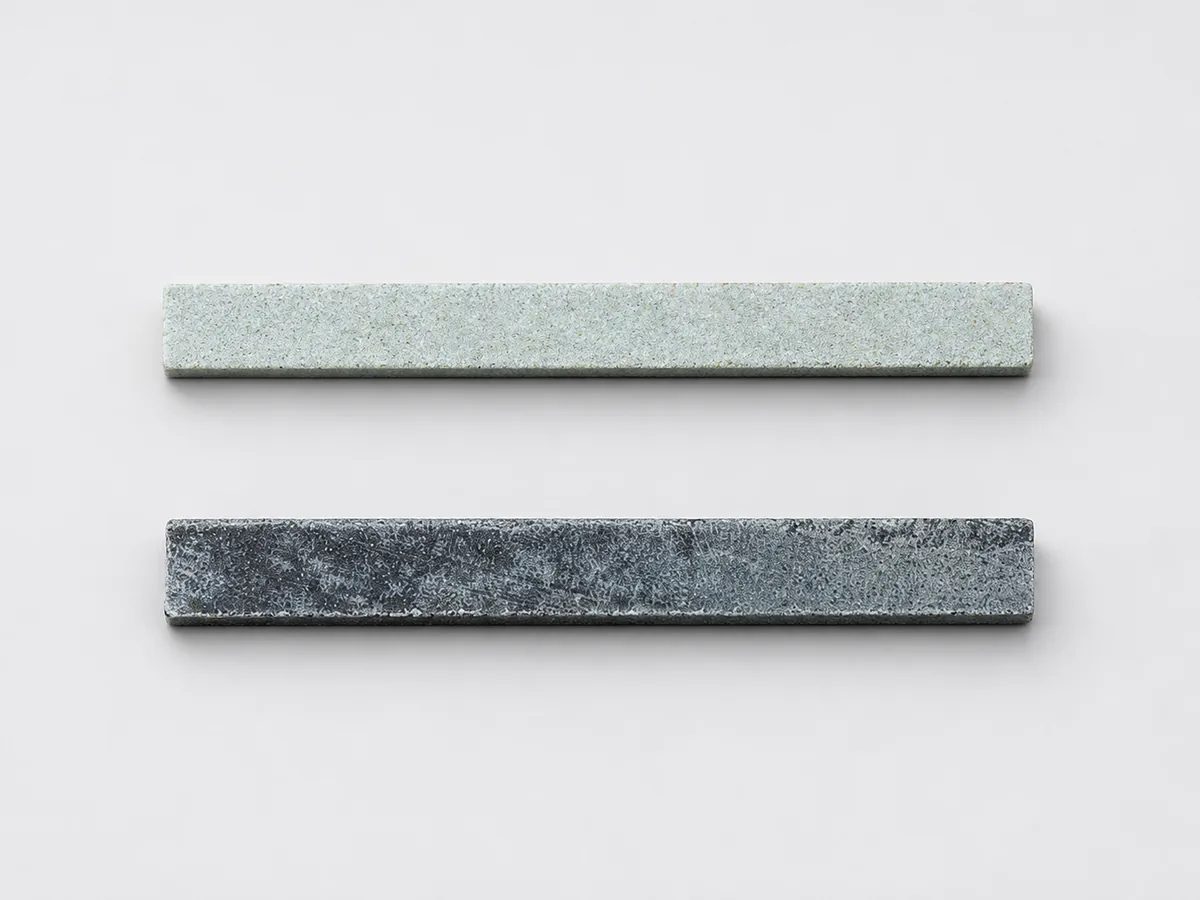
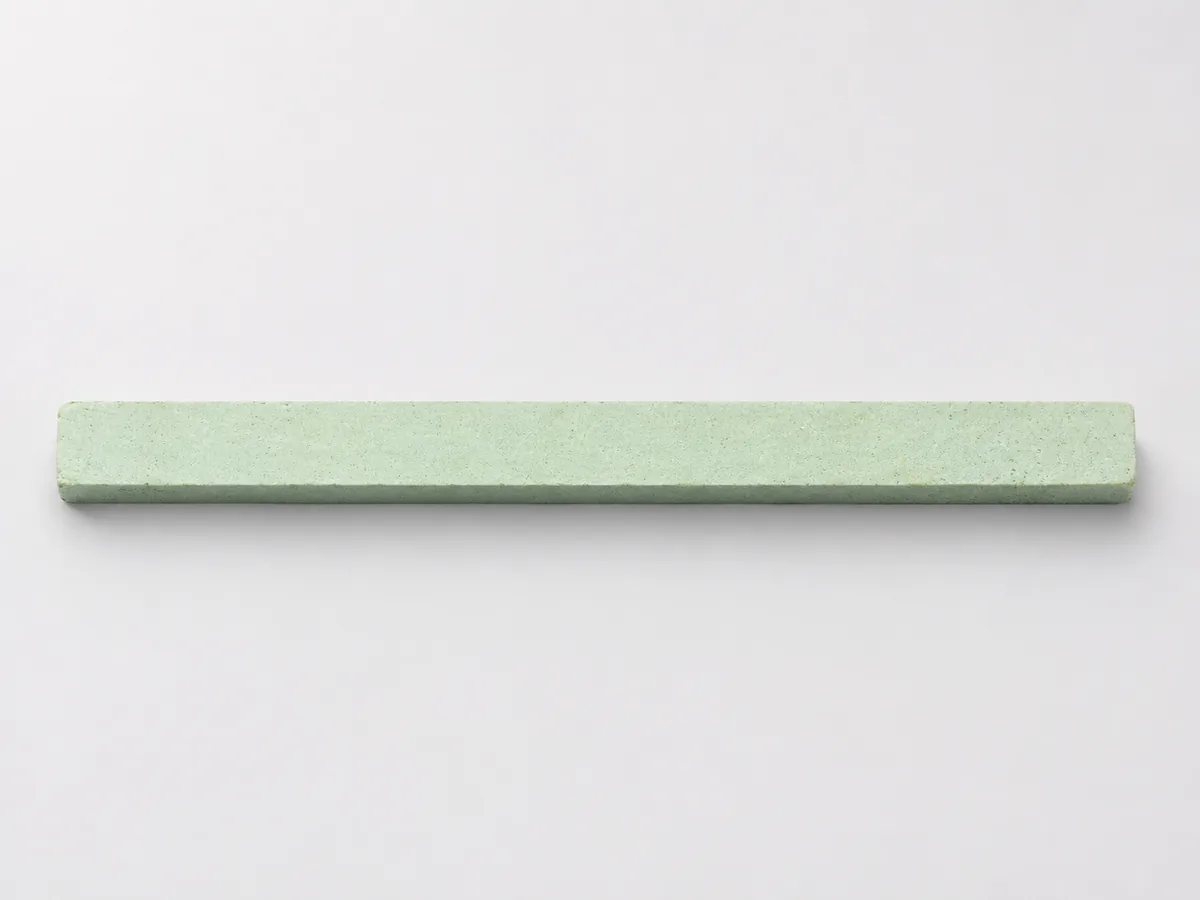
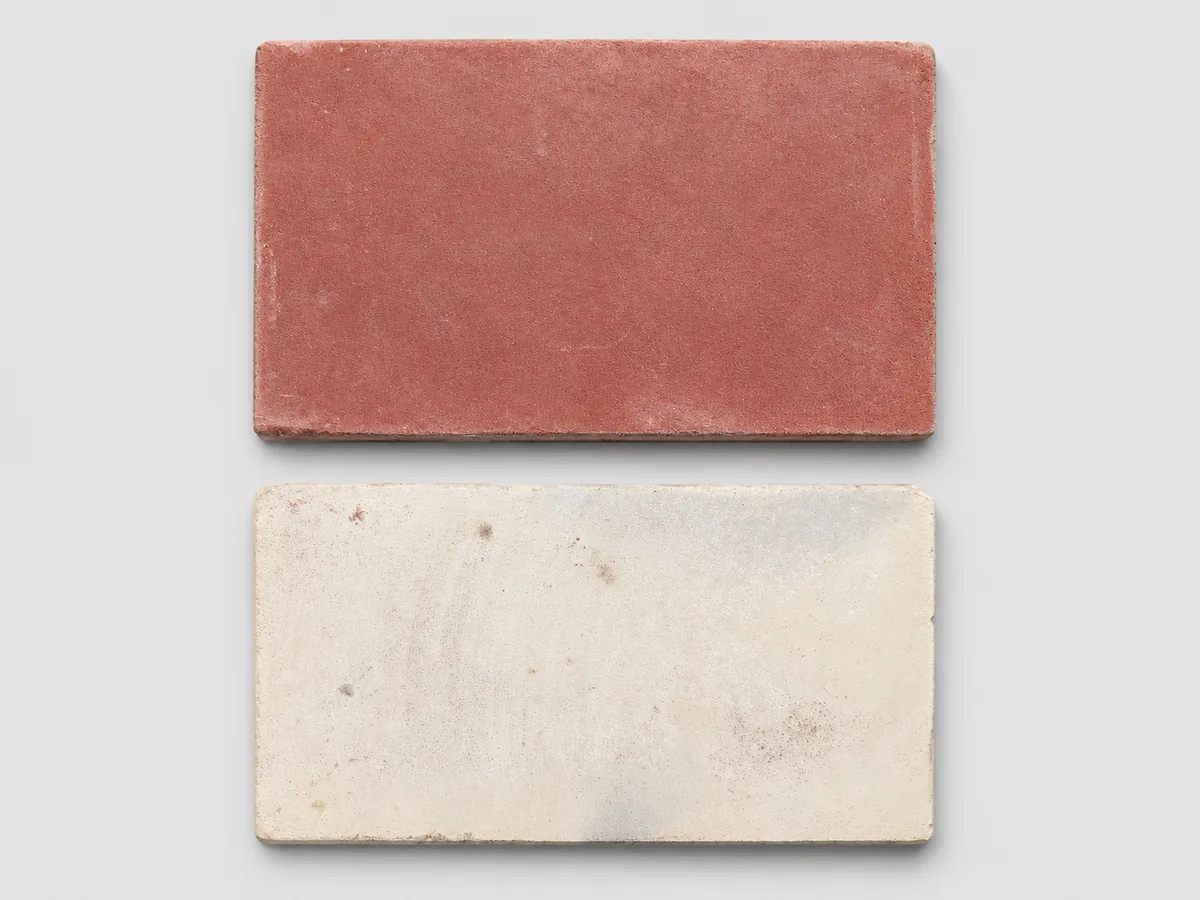

Raceway superfinishing is the final finishing operation on a bearing ring after raceway grinding. The superfinishing machine presses a stone against the rotating raceway at low pressure while oscillating it rapidly along the raceway, removing grinding marks and the affected surface layer and leaving an even cross-hatch pattern.
Superfinishing directly affects bearing noise, vibration and life. From the same batch of ground rings, good or poor superfinishing can move the assembled bearings by a whole noise class.
NLHB runs its own raceway superfinishing line and uses superfinishing stones every day. The stones we supply are specifications we have run on our own machines.
| Item | After grinding | After superfinishing |
|---|---|---|
| Surface pattern | One-directional helical grinding marks | Cross-hatch that retains lubricant |
| Roughness | Coarser | Clearly lower |
| Waviness | Grinding chatter present | Improved |
| Surface layer | May carry a grinding-affected layer | Largely removed |
| Size | Sized by grinding | Only a few microns removed; size essentially unchanged |
Stock removal in superfinishing is small and cannot correct large form errors. Raceway roundness and position must be right at grinding; superfinishing works on the surface.
Superfinishing stones commonly use these abrasives:
| Abrasive | Code | Characteristics | Typical use |
|---|---|---|---|
| Cubic silicon carbide | SC | Sharp, self-sharpening, loads less readily than conventional stones | Bearing steel raceway superfinishing |
| White fused alumina | WA | Tough, economical | Rough superfinishing or softer parts |
| Green silicon carbide | GC | Hard, brittle, sharp | Fine superfinishing, hard materials |
| Cubic boron nitride | CBN | Extremely hard, long life, costly | Very hard materials, high-volume automated lines |
Our own raceway superfinishing mainly uses cubic silicon carbide (SC) stones. Grit, grade and impregnation are chosen per station and part; send your machine and part details and we will recommend a specification.
"A 1000-grit stone" does not define a stone. A complete specification includes:
| Field | Examples | Why it matters |
|---|---|---|
| Abrasive | SC, WA, GC, CBN | Cutting action and self-sharpening |
| Grit | Stated in FEPA, JIS or Chinese GB system | The same number means different sizes in different systems |
| Grade (hardness) | Letter grade | How firmly the bond holds the grain, not the workpiece hardness |
| Structure | Number | Porosity, which affects chip clearance and loading |
| Bond | Vitrified, resin | Form holding and self-sharpening |
| Impregnation | Sulphur, wax, none | Improves cutting and finish, reduces loading |
| Dimensions | Thickness × width × length, plus working face profile | Suppliers list dimensions in different orders; mark them on a sketch |
The Chinese national standards for stone dimensions and marking are GB/T 4127.10-2008 and GB/T 14319-2008, both now under revision.
First separate normal loading from problem loading. A superfinishing cycle usually has three stages:
Loading in stage 3 is intended. Problem loading is loading that comes too early or too heavily: the stone stops self-sharpening while it should still be cutting. The stone face turns glazed or dark, the part looks bright but grinding marks remain, and in bad cases scratches appear.
Loading has no single cause and must be analysed case by case. These factors all play a part:
| Factor | Effect on loading | Check first |
|---|---|---|
| Ring material and hardness | Different materials and hardness produce different chips, which embed in the pores differently | Whether stone and settings were re-confirmed after a material or heat-treat batch change |
| Workpiece spindle speed | Higher speed reduces the cutting angle, so the stone slides instead of cutting and loads earlier | Whether speed has been raised from the original process |
| Oscillation frequency and amplitude | Lower frequency or amplitude also reduces the cutting angle and brings loading forward | Whether the oscillating head is worn or the stroke has shortened |
| Stone pressure | Too little pressure and grains do not fracture or break out, so the stone cannot self-sharpen | Whether pressure is low or the air supply unstable |
| Stone specification | Too hard, too fine or too dense a structure all load more easily | Whether a finishing stone is used at the roughing station |
| Superfinishing fluid | Wrong concentration or poor filtration keeps chips in; sulphur additives help prevent loading | Concentration, filtration, temperature |
| Incoming ground surface | Deep grinding marks overload the superfinishing step | Whether roughness after raceway grinding has worsened |
Spindle speed, oscillation frequency and amplitude together set the cutting angle, so adjust them together. Change one condition at a time, and record ring material and hardness, stone lot and process settings.
In our own use, cubic silicon carbide (SC) stones load less readily than conventional stones because their grains are sharp and self-sharpening. They do not replace parameter adjustment; after a stone change, still work through the table above.
Changing stones needs a trial. Record at least:
Analyse it case by case. First check whether the ring material or hardness has changed, then spindle speed, oscillation frequency and amplitude, stone pressure, stone specification and fluid. Too high a speed or too low a frequency or amplitude reduces the cutting angle and makes the stone load early. Change one condition at a time and compare by trial.
Cubic silicon carbide (SC) grains are sharper and more self-sharpening, and in practice the stone loads less readily than conventional stones in bearing steel raceway superfinishing. Loading also depends on ring hardness, speed and oscillation settings, so confirm the result by trial on your own machine.
No. Too fine a grit reduces stock removal and loads easily, so it may not remove the grinding pattern. Rough and finish stations use different grits.
A sample is a good start: it shows size, working face and abrasive colour. Grade, structure and impregnation need the label or a trial, ideally with machine and part information.
Ra depends on the incoming surface, machine, settings and measuring method. We run trials under agreed conditions and report the results rather than promise a number without a trial.