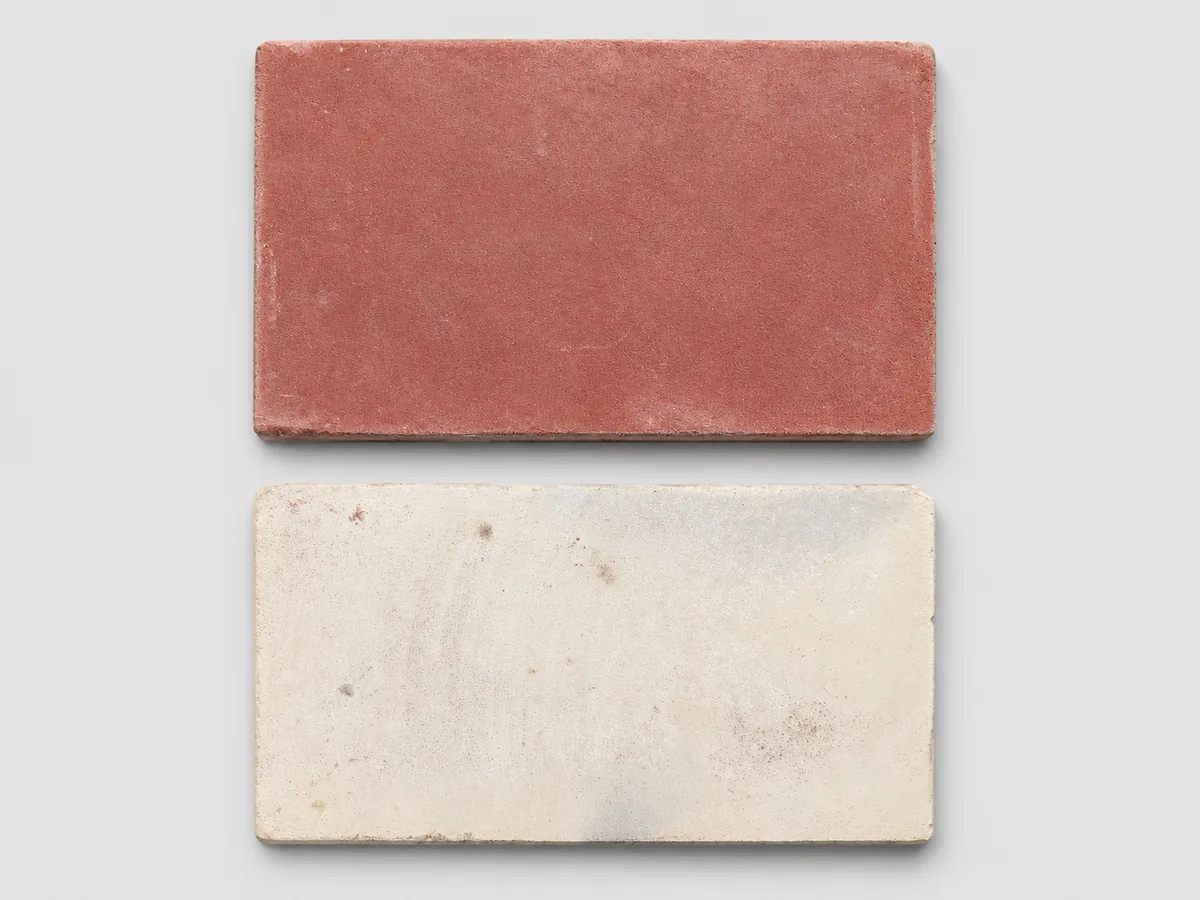
OD finishing stones are used to finish the outside diameter of bearing outer rings. The rings sit on two rotating rollers, turning and feeding forward, while stones above them press on the OD and remove grinding marks and support marks. This is known as through-feed superfinishing.
The OD sets the fit between the outer ring and the housing. A more uniform OD surface is less likely to score the housing on assembly and gives a more stable fit.
| OD finishing | Raceway superfinishing | |
|---|---|---|
| Surface | Outer ring OD (cylinder) | Inner and outer raceways (arc) |
| Part motion | Rotated and fed continuously by rollers | Held and rotated on a spindle, one at a time |
| Stone shape | Long bars or blocks, flat or shallow-arc face | Small-section sticks shaped to the raceway |
| Throughput | Continuous, high | Cycle per part |
| Main goal | OD surface, removing support marks | Raceway surface, noise and life |
The two stone types cannot be swapped on appearance. OD finishing stones must also match the stone holders of the machine.
A cheaper stone does not mean a lower cost per good ring. Compare stones with:
Cost per part = stone price ÷ number of good rings per stone
Also record downtime for stone changes and dressing. A stone that costs 30% more but lasts twice as long with fewer rejects is cheaper overall.
Not directly. The surface shape, machine and contact are different, so each needs its own specification.
Only a little. Roundness depends mainly on prior grinding, roller condition and feed; the stone mainly improves the surface.
Use the same machine, the same batch of parts and the same settings, and record size, surface, roundness, stone wear and cycle time.