Household appliances put deep groove ball bearings close to the user, often in damp or greasy air, and expect them to run for the life of the product without relubrication. Noise, sealing, grease life and corrosion resistance therefore decide the specification more than load capacity does. This guide sets out the operating conditions in washing machines, air-conditioner fan motors, vacuum cleaners and range hoods, and the items an appliance maker should write into the bearing specification.
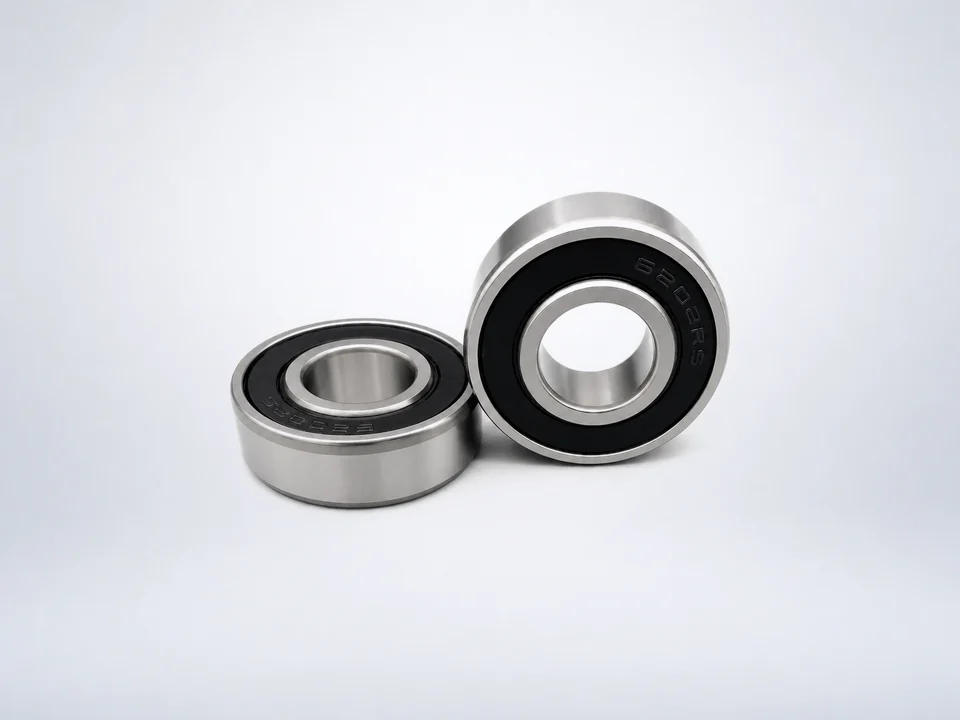
Sealed for life, running next to people
An appliance bearing is normally greased and sealed once at the bearing factory. Its noise level, seal type, grease and rust protection are fixed at that point, so they must be specified correctly before the first batch.
Operating conditions by appliance and position
| Appliance / position | Operating condition | Main risk | Specification priorities |
|---|---|---|---|
| Washing machine drum support | Radial load from unbalanced wet laundry; speed changes between wash and spin; warm humid air behind the shaft seal | Water and detergent ingress, corrosion, grease wash-out | Contact seals (2RS), rust protection, load capacity, grease with good water resistance |
| Washing machine motor | Continuous duty cycles, motor heat, vibration transmitted from the drum | Noise, temperature rise, fretting at the fits | Z/V grade, C3 where fits or heat require it, low-noise grease |
| Air-conditioner indoor fan motor | Long running hours at moderate speed, low background noise in bedrooms and offices | Audible bearing noise, grease ageing | Z/V grade, shields or non-contact seals for low torque, long-life grease |
| Air-conditioner outdoor fan motor | Outdoor temperature swings, rain, condensation, dust | Corrosion, water ingress, cold-start noise | Seals, rust protection, grease suited to the full ambient temperature range |
| Vacuum cleaner motor | High speed, heat from the motor, dust in the air stream | Temperature rise, grease degradation, noise | Precision grade, high-speed grease, cage selection (see the high-speed motor guide) |
| Range hood fan motor | Cooking heat and grease-laden vapour, long idle periods, noise at the cooking position | Contamination of the grease by cooking vapour, noise after idle periods | Seals, grease suited to elevated temperature, Z/V grade |
These are typical conditions. Actual loads, speeds and temperatures depend on each appliance design, and the bearing is selected against that design. For the fan and suction motors of cordless vacuum cleaners and hair dryers, see bearings for high-speed vacuum and hair dryer motors; for robot vacuums, see robot vacuum cleaner bearings.
Low noise: specify Z and V grades
Appliance noise complaints are rarely about loudness alone. They come from a tonal whine, an intermittent click or a low rumble. Z grades (vibration acceleration, JB/T 7047) mainly reflect surface finish; V grades (vibration velocity in low, medium and high bands, JB/T 10187) also catch waviness, dents and particles. For appliance motors, write both on the order, for example 6202-2RS C3 Z3V3, together with the test conditions. See what Z3V3 means.
- Measured vibration depends on grease type and fill, so agree the grease before agreeing the grade.
- Contact seals add their own friction noise; test sealed bearings in the sealed condition if that is how they are accepted.
- Bearing grade alone does not make a quiet motor. Shaft and housing roundness, fits and rotor balance must match.
Seal selection: ZZ, non-contact rubber seal or 2RS
| Closure | Construction | Friction and heat | Protection | Typical appliance use |
|---|---|---|---|---|
| ZZ | Steel shield on both sides, small gap to the inner ring | Lowest | Retains grease, stops coarse particles; not water-tight | Indoor fan motors and dry, clean positions |
| 2RZ (non-contact rubber seal) | Rubber seal with a narrow gap to the inner ring | Low | Better against dust and splash than a shield | Motors exposed to dust or occasional moisture |
| 2RS (contact rubber seal) | Rubber lip in contact with the inner ring | Higher: more torque and temperature rise | Best of the three against water and fine contamination | Washing machine drum supports, outdoor and range hood positions |
Contact seals also limit speed through lip friction. When a motor runs fast and still needs sealing, check the seal lip speed as well as the bearing speed rating — see sealed bearing speed limits. For a comparison on motor sizes, see 6203/6204 motor bearings: ZZ, 2RS and C3.
Grease life in a sealed-for-life bearing
In a sealed appliance bearing, grease life is usually shorter than the fatigue life calculated under ISO 281, so it is grease life that sets service life. It is shortened mainly by:
- Operating temperature: heat from the motor winding or cooking vapour ages the grease fastest.
- Speed and fill quantity: an over-filled bearing churns the grease and runs hot; an under-filled one runs short of lubricant.
- Contamination and water: water and detergent vapour degrade grease and promote corrosion.
- Seal type: contact seals keep grease and contaminants apart better but add heat.
Specify the grease type (or its required properties: temperature range, water resistance, noise class) and the fill quantity on the drawing or order. Changing the grease later changes noise, torque and life, so treat it as a controlled change that requires new samples.
Humidity and corrosion
- Identify the humid positions: drum support in washers, outdoor units, range hoods and any bearing near condensation.
- Choose the closure first. A 2RS seal protects the raceway better than rust protection alone.
- Agree the rust-preventive treatment and packaging for storage and sea freight to humid climates.
- Where exposure is severe, consider stainless steel rings; see 440C / 9Cr18Mo stainless bearings for the trade-offs in hardness and load rating.
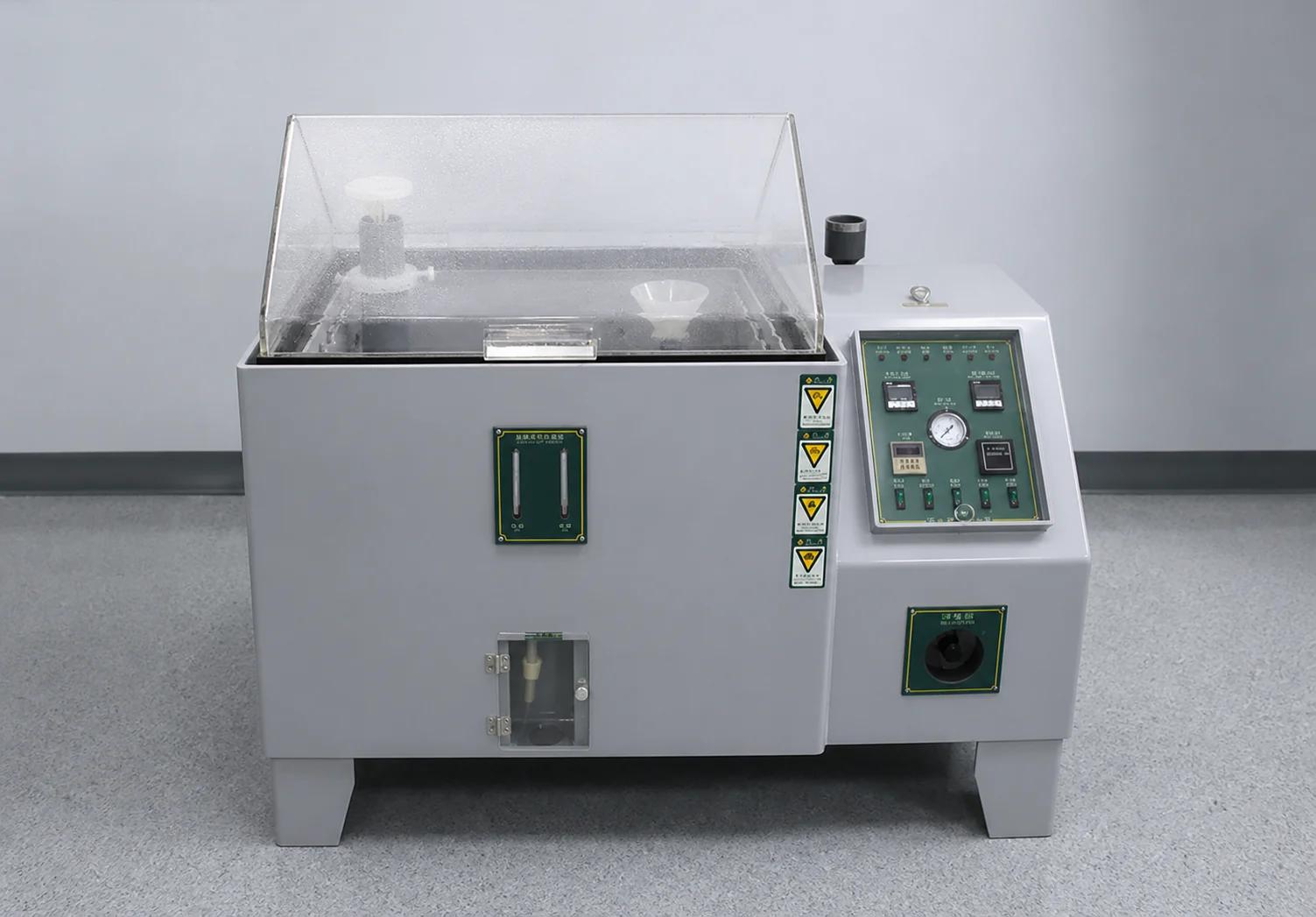
- Validate with a test agreed by both sides, such as a salt spray or humidity test on sample bearings, and record the conditions.
Common specification mistakes
- Ordering "low noise" without a Z/V grade and test conditions.
- Using 2RS everywhere: indoor fan motors then carry unnecessary torque and temperature rise.
- Leaving grease "to the supplier" and then changing grease source between batches.
- Using normal clearance with an interference fit on a warm motor shaft, which can remove operating clearance.
- Approving samples at room temperature only, when the product runs hot, cold or damp.
What we control on appliance bearings
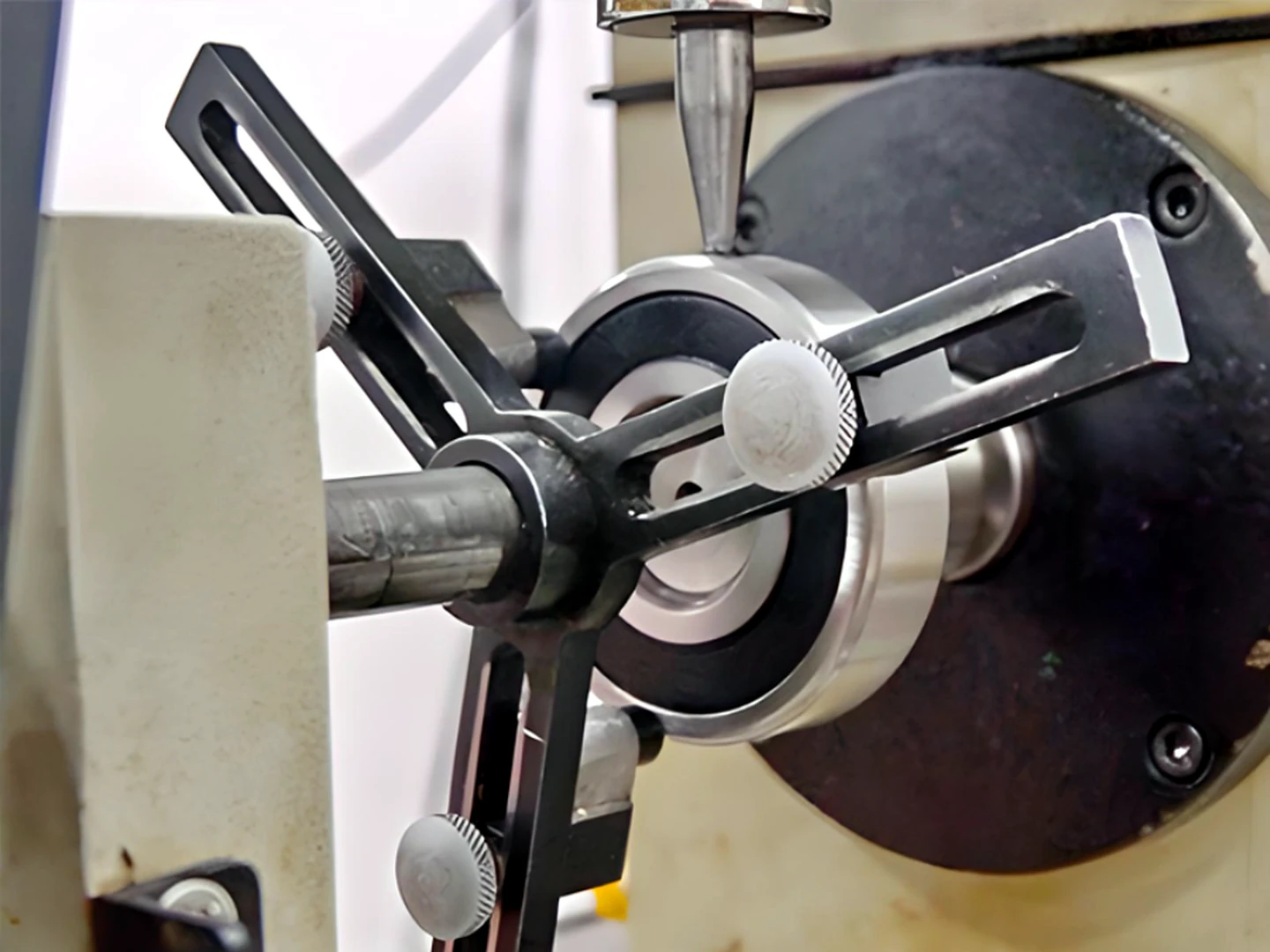
We turn, grind, super-finish and assemble deep groove ball bearings in our Cixi factory, fill grease and fit shields or seals as specified, and sort finished bearings on our own vibration testers to the Z and V grades agreed on each order. Salt spray testing is done in our own chamber when the order calls for it. NLHB manufactures miniature and deep groove ball bearings up to P4 precision, and double row angular contact bearings and track rollers up to P6.
Evidence from our workshop
What to send for a quotation
- Designation with closure, clearance and grade (e.g. 6202-2RS C3 Z3V3).
- Appliance and position: drum support, fan motor, suction motor, range hood.
- Speed range, operating temperature and humidity or outdoor exposure.
- Grease type or required properties and fill quantity.
- Noise test conditions, corrosion test requirement, annual quantity and packaging.
Frequently Asked Questions
What bearings are used in household appliances?
Mostly deep groove ball bearings, from miniature sizes in small motors to the 6000, 6200 and 6300 series in washing machines and fan motors. They are usually shielded or sealed and greased for life.
ZZ or 2RS for an air-conditioner fan motor?
Indoor fan motors in clean, dry air often use ZZ or non-contact seals for lower torque and noise. Outdoor fan motors exposed to rain and condensation usually need better sealing, such as 2RS, plus rust protection.
What noise grade should an appliance motor bearing have?
It depends on the product's noise target. Many motor makers specify both a Z grade and a V grade, such as Z3V3, with agreed test conditions, rather than a general low-noise request.
Why do washing machine bearings fail?
Common causes are water and detergent entering the bearing, corrosion, grease wash-out and overload from unbalanced loads. Sealing, rust protection and the shaft seal design are therefore as important as the bearing size.
Can NLHB supply appliance bearings with specified grease and noise grade?
Yes. We fill the grease and fit the closure specified on the order and sort finished bearings to the agreed Z and V grades. Send the designation and application and we confirm the achievable grade before quoting.
Related guides
Published 2026-09-25. Images show our own workshop and representative products. Final dimensions, grades, inspection limits and supply conditions are confirmed against the requested model, drawing and order.