6203 (17 × 40 × 12 mm) and 6204 (20 × 47 × 14 mm) are among the most common deep groove ball bearings in small and medium electric motors, pumps and fans. The size is fixed by the motor design; what the engineer still has to choose is the closure (ZZ or 2RS), the internal clearance (CN or C3), the noise grade and the precision class. This guide sets out how speed, temperature, contamination and fits drive each choice.
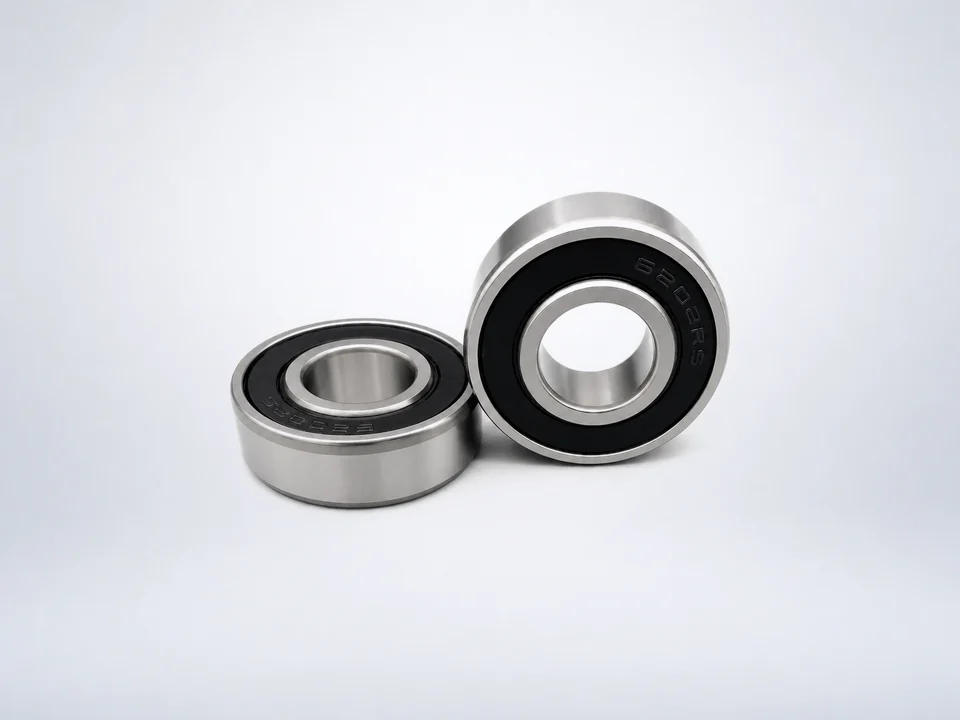
Same size, different specification
Two 6204 bearings with the same boundary dimensions can behave very differently in a motor: a 2RS C3 bearing with low-noise grease and a ZZ CN bearing differ in friction, temperature rise, noise and service life in dust.
ZZ or 2RS in a motor
| ZZ (metal shields) | 2RS (rubber contact seals) | |
|---|---|---|
| Sealing | Non-contact; keeps out larger particles | Contact lip; keeps out fine dust and splash water |
| Friction and heat | Low | Higher; seal-lip friction adds temperature rise |
| Speed | Limited mainly by the bearing and grease | Also limited by seal-lip sliding speed |
| Grease retention | Good in clean, enclosed motors | Better where grease could be thrown out or washed out |
| Typical motors | Enclosed motors, clean indoor fans, high-speed units | Pumps, outdoor fans, dusty or humid environments, tools |
In a totally enclosed motor the housing and end shields already keep most contamination away, so ZZ is common and runs cooler. Where dust or moisture can reach the bearing, 2RS is the safer choice as long as the speed is inside the seal limit. For seal-lip speed limits, see sealed bearing speed limits; for the general comparison, ZZ vs 2RS.
When C3 clearance is needed
Radial internal clearance is reduced twice in a motor. First, the inner ring is normally mounted with an interference fit on the shaft, which expands it. Second, the rotor heats the shaft and inner ring more than the housing cools the outer ring, so the inner ring expands more in service. If the starting clearance is too small, the operating clearance can approach zero, raising friction, temperature and noise. C3 provides a larger starting clearance to absorb both effects. The general principle is explained in C3, CN and C4 clearance.
- CN (normal) suits light fits, moderate temperatures and motors where minimum radial play is preferred.
- C3 is the usual choice for electric motors with an interference fit on the shaft, continuous duty or a noticeable temperature difference between shaft and housing.
- C4 is for heavier fits or higher temperature differences; it is less common in small motors and should be specified by the motor designer.
Decision table
| Operating condition | Closure | Clearance | Other points to specify |
|---|---|---|---|
| Enclosed motor, clean indoor use, moderate speed | ZZ | C3 (CN if fits are light) | Standard or low-noise grease |
| High speed, low temperature rise required | ZZ or open | C3 | P6/P5 precision, high-speed grease, Z/V grade |
| Dusty environment: workshops, agricultural and woodworking machines | 2RS | C3 | Check seal-lip speed limit |
| Humid or outdoor: pumps, outdoor fans | 2RS | C3 | Water-resistant grease; stainless option if moisture is persistent |
| Quiet appliance and fan motors | ZZ or 2RS as sealing requires | C3 | Z/V vibration grade, low-noise grease, axial preload spring |
| High ambient or high rotor temperature | ZZ or 2RS by environment | C3 or C4 as specified by the motor design | High-temperature grease; confirm seal material |
The table is a starting point. The final specification follows the motor drawing, the actual fits and the duty cycle.
Fits and axial arrangement
- The inner ring rotates with the shaft and carries a rotating load, so it is normally mounted with an interference fit. The fit class follows the motor drawing.
- One bearing locates the shaft axially; the other is allowed to float in the housing to accommodate thermal expansion of the shaft.
- Small motors often use a wave spring on the outer ring of one bearing to apply a light axial preload. This removes axial play and usually lowers noise.
- A housing bore that is out of round or too tight reduces clearance and causes noise that no bearing grade can correct.
Low-noise sorting and precision options
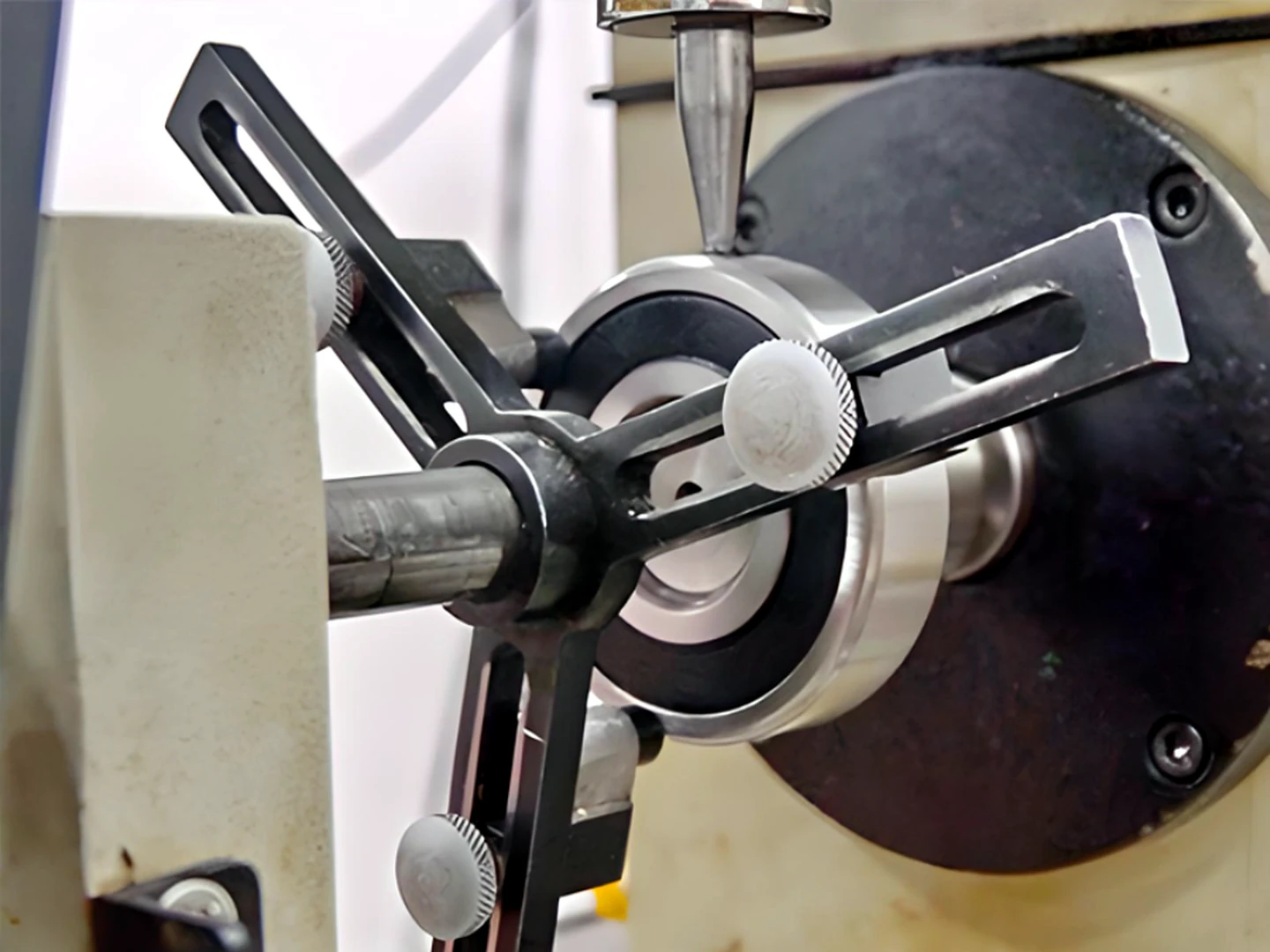
- Z/V vibration grades: we sort finished bearings on our own vibration testers and supply to the Z grade (acceleration) and V grade (velocity) agreed per order. See what Z3V3 means.
- P6 and P5: tighter runout for quiet or higher-speed motors. P4 is available for deep groove ball bearings where the shaft and housing accuracy justify it. See P4, P5 and P6.
- Grease: grease type and fill quantity affect noise, temperature rise and life; state any required grease in the order.
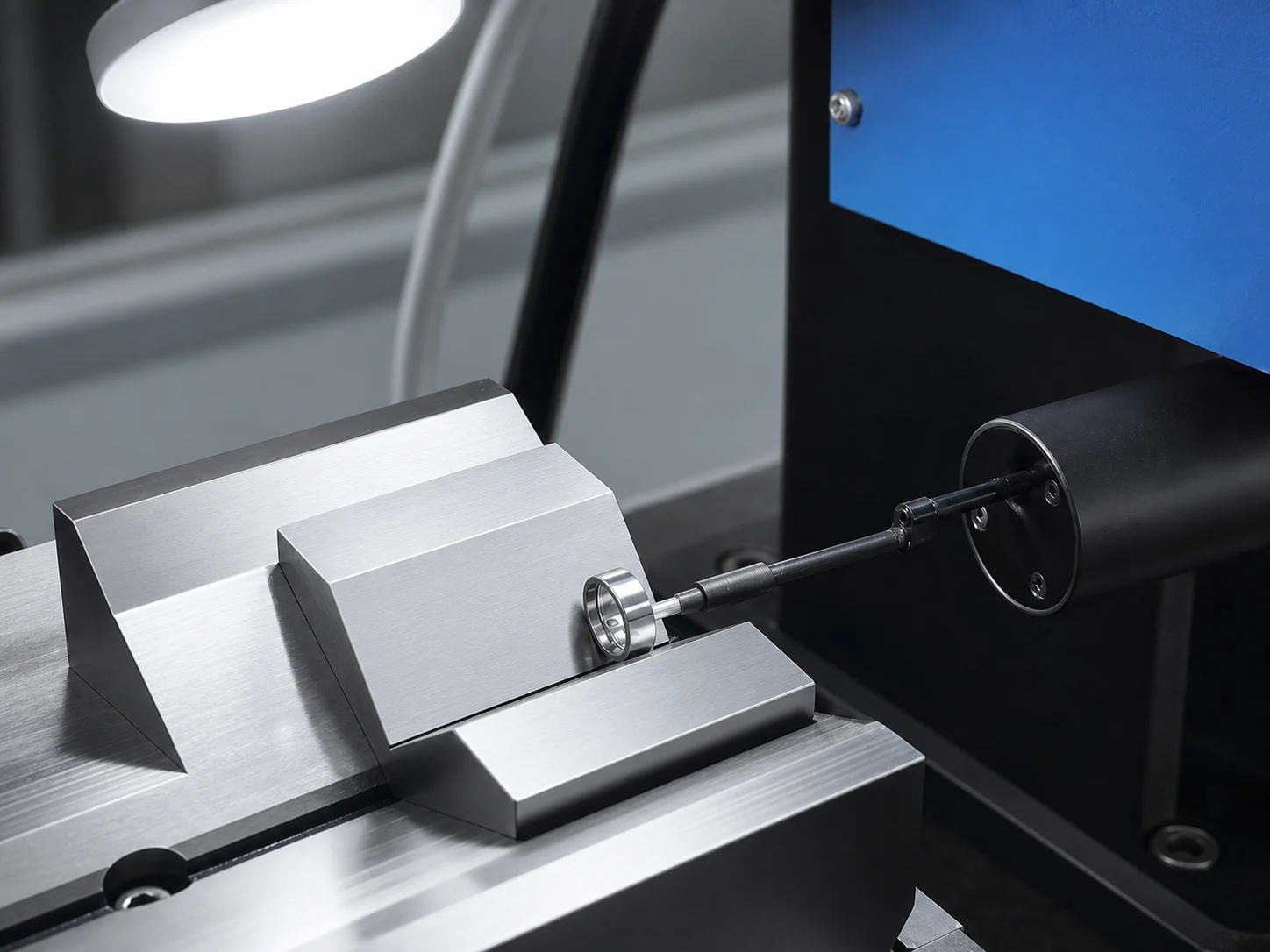
Motor bearings from our own grinding and test line
Raceway grinding, super-finishing and assembly of our 6200 series bearings are done in our Cixi factory, and vibration grades are checked on our own testers before packing. The achievable noise grade for a given closure and grease is confirmed before quotation. NLHB manufactures miniature and deep groove ball bearings up to P4 precision, and double row angular contact bearings and track rollers up to P6.
Evidence from our workshop
What to send for a quotation
- Full designation, e.g. 6204-2RS C3 Z3V3 or 6203ZZ C3 P6.
- Motor type, speed, duty cycle and operating temperature.
- Environment: clean, dusty, humid, outdoor.
- Shaft and housing fits, or the motor drawing.
- Grease requirement and quantity.
Frequently Asked Questions
Should a motor use 6204ZZ or 6204-2RS?
Use ZZ in clean, enclosed motors where low friction and temperature rise matter; use 2RS where dust or moisture can reach the bearing and the speed is within the seal limit.
Why do motor bearings use C3 clearance?
The inner ring is pressed onto the shaft and runs warmer than the outer ring. Both reduce internal clearance in service. C3 starts with more clearance so the bearing does not run too tight.
Is 6204-2RS C3 a good general choice for motors?
It is a common choice for motors exposed to dust or moisture. For clean, high-speed or low-temperature-rise designs, ZZ C3 is often preferred.
What does Z3V3 add to a 6203 or 6204 order?
It requires the bearing to pass both a vibration-acceleration grade (Z3) and a vibration-velocity grade (V3), which is how quiet motor makers specify low-noise bearings.
Do motor bearings need P5 precision?
Most general motors run well with normal or P6 bearings. P5 is used where runout affects noise or speed, together with matching shaft and housing accuracy.
Related guides
Published 2026-09-25. Images show our own workshop and representative products. Final dimensions, grades, inspection limits and supply conditions are confirmed against the requested model, drawing and order.