Precision deep groove ball bearings are made to tighter dimensional and running-accuracy classes than the normal grade (P0). NLHB produces deep groove and miniature ball bearings in P6, P5 and P4, and double row angular contact bearings and track rollers up to P6. This guide shows what each grade changes and when it is worth paying for.
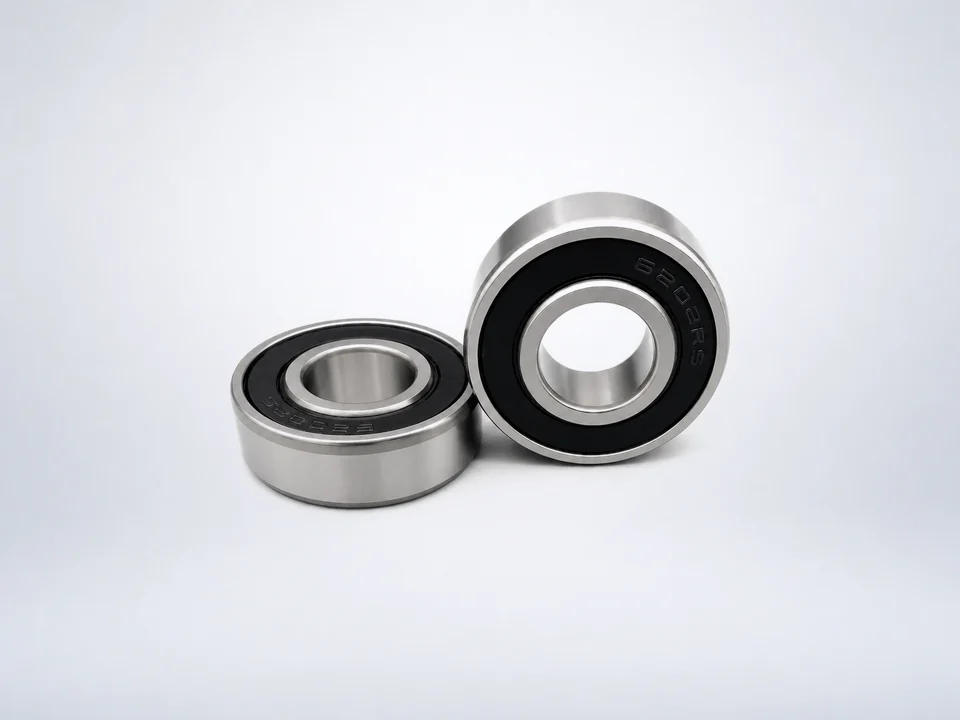
Precision class governs runout as well as size
Each grade step tightens bore, outside diameter and width tolerances, and — more important for noise and speed — reduces radial and axial runout of the rings.
P grades and their equivalents
| ISO / GB grade | ABEC (ABMA 20) | What changes | Typical machines |
|---|---|---|---|
| P0 (Normal) | ABEC 1 | Standard tolerances, usually not marked | General motors, gearboxes, agricultural machinery |
| P6 | ABEC 3 | Tighter size tolerances and runout | Quiet motors, precision drives, packaging machines |
| P5 | ABEC 5 | High precision, smaller runout | Machine-tool and motorised spindles, high-speed motors, encoders |
| P4 | ABEC 7 | Very high precision, smallest runout we produce | Precision spindles, dental handpieces, instruments, precision robotics |
Tolerance values for each bore size are defined in GB/T 307.1 and ISO 492. ABEC and ISO classes are treated as equivalent for sourcing, but the numbers are not identical in every size range — write the standard you accept on the order. For the full grade history including P2, see our precision grade reference.
What we produce at each grade
| Product line | Highest grade we produce | Notes |
|---|---|---|
| Miniature ball bearings (MR, 68/69, flanged, inch R) | P4 | Chrome or stainless steel rings, steel or ceramic balls |
| Deep groove ball bearings (6000, 6200, 6300 …) | P4 | Open, ZZ and 2RS; low-noise sorting on request |
| Double row angular contact bearings (3200/5200 …) | P6 | Open, ZZ and 2RS |
| Track rollers (SG, LFR, LV, VW …) | P6 | Profile accuracy agreed per drawing |
How to choose the grade
- Stay at P0 or P6 when the housing, shaft and assembly cannot use better accuracy — a P4 bearing in a housing of lower accuracy adds cost without functional benefit.
- Use P5 when runout directly affects the product: spindles, grinding heads, encoders, high-speed motors.
- Use P4 for precision spindles, dental handpieces and measuring equipment, together with matching shaft and housing accuracy.
- Combine with noise and clearance: quiet motors often need P6 or P5 plus Z/V grades and C3 clearance, not P4 alone.
Precision from our own grinding line
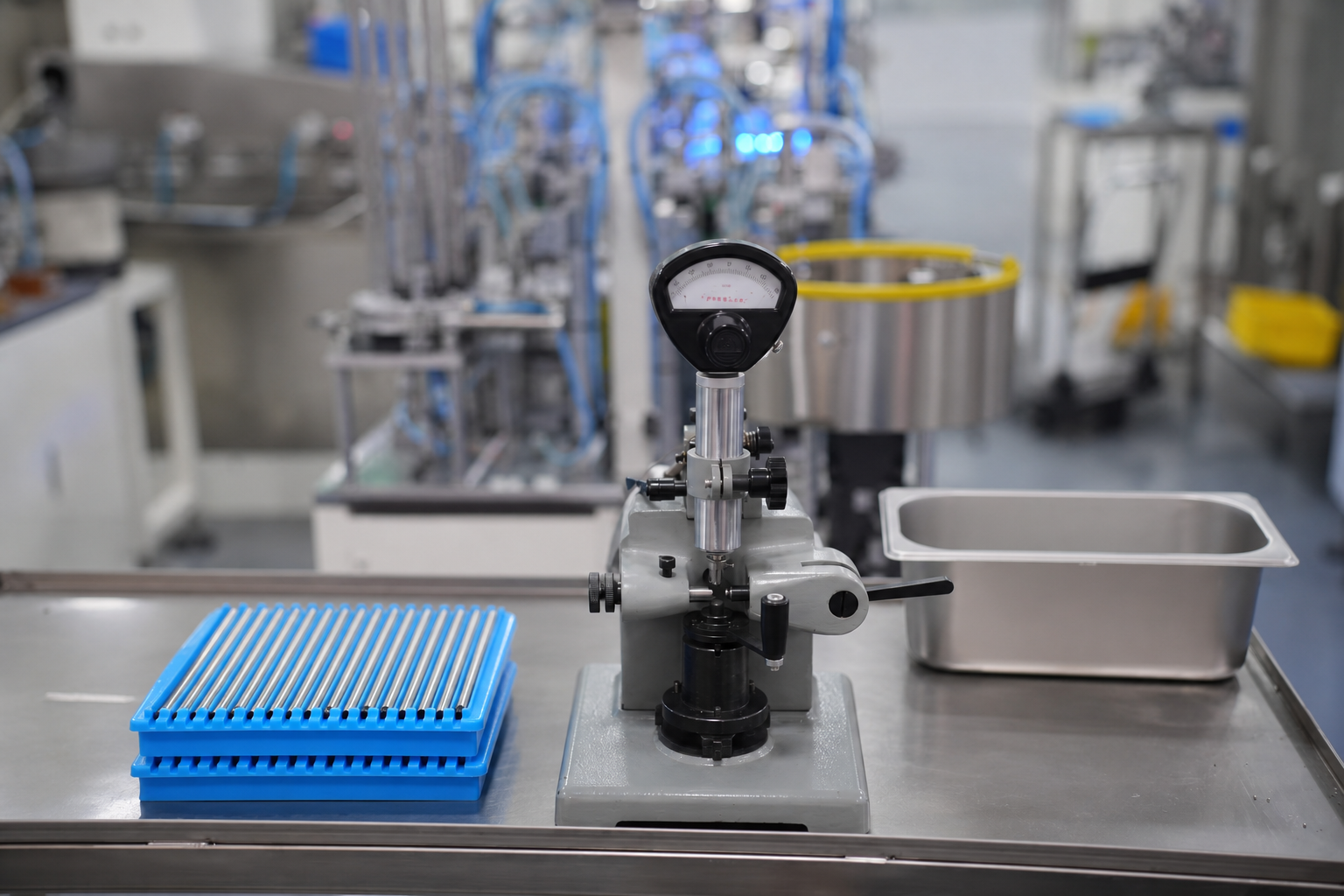
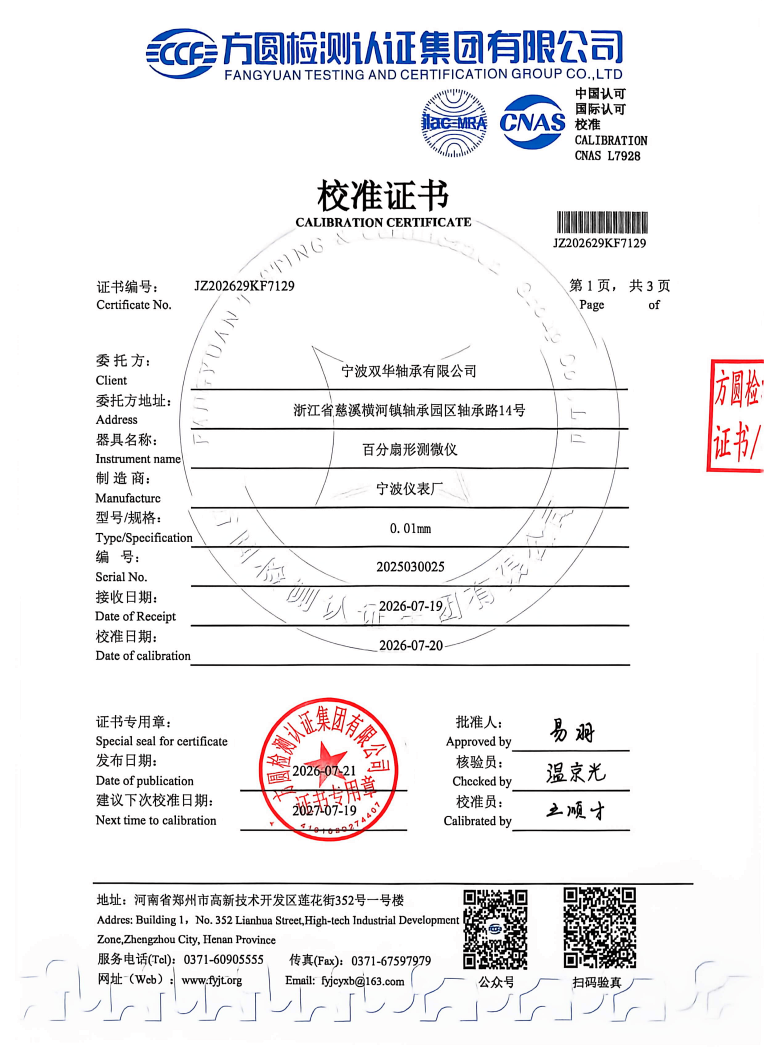
Raceway grinding, super-finishing and assembly are done in our Cixi factory, with roundness and raceway profile measured on our own instruments. NLHB manufactures miniature and deep groove ball bearings up to P4 precision, and double row angular contact bearings and track rollers up to P6.
Evidence from our workshop
What to send for a quotation
- Designation with grade, e.g. 6001-2RS P5 or MR85ZZ P4.
- Clearance and noise grade if required (C3, Z3V3).
- Application, speed and runout requirement.
- Shaft and housing fits.
- Quantity and inspection report requirement.
Frequently Asked Questions
What is the difference between P4, P5 and P6 bearings?
They are ISO/GB precision classes. From P6 to P5 to P4 the size tolerances and ring runout get smaller; P4 is the most precise of the three.
What ABEC grade is P5?
P5 corresponds to ABEC 5. P6 corresponds to ABEC 3 and P4 to ABEC 7.
Which machines need P5 or P4 bearings?
Spindles, high-speed motors, encoders, dental handpieces and measuring equipment — where ring runout affects the finished product.
Can NLHB make P4 deep groove ball bearings?
Yes. We produce miniature and deep groove ball bearings up to P4, and double row angular contact bearings and track rollers up to P6.
Is a higher precision grade always better?
No. If the shaft and housing are not equally accurate, a higher bearing grade adds cost without improving the machine.
Related guides
Published 2026-09-25. Images show our own workshop and representative products. Final dimensions, grades, inspection limits and supply conditions are confirmed against the requested model, drawing and order.