A part number such as 6202-2RS tells the supplier the size and seal type. It does not define how quiet the bearing must be, which grease is inside, how much of it, or how the batch will be accepted. For motor bearings these unstated items decide noise, temperature rise and service life. This guide lists the fields a motor bearing specification should contain, explains why each one matters, and ends with a template you can adapt to your own drawing or supplier agreement.
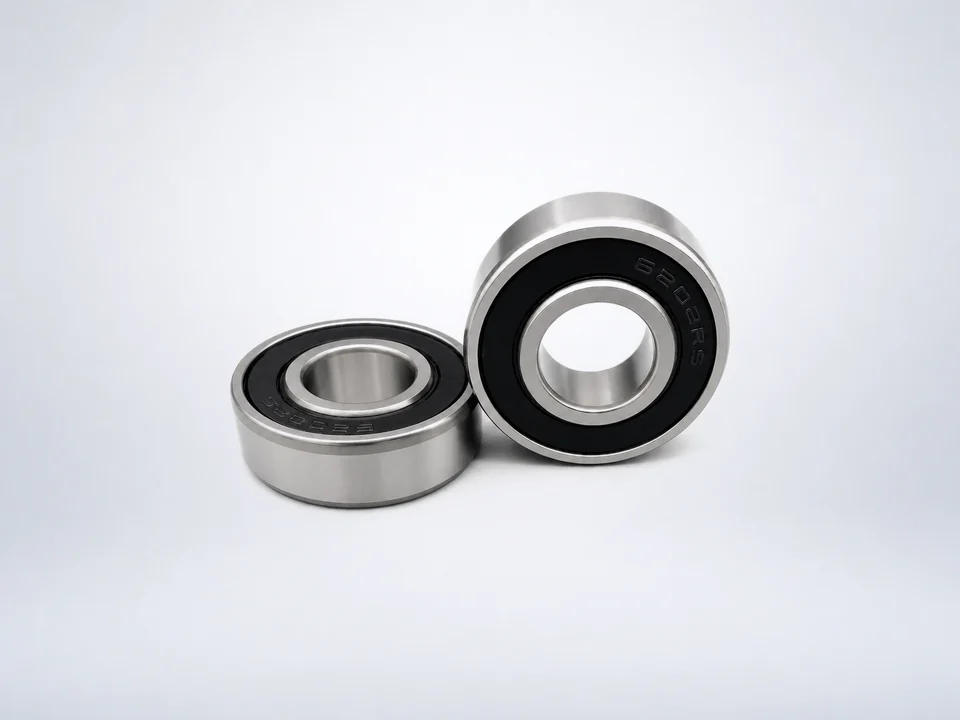
A specification closes the gaps a part number leaves open
Two bearings with the same designation can differ in precision grade, clearance, vibration level, grease, fill quantity and seal material. Writing each item down turns a verbal expectation of a quiet bearing into acceptance criteria that both sides can check.
Why a part number is not a specification
Catalogue designations follow standard boundary dimensions and a small set of suffixes. Everything else is left to the manufacturer's default. For a general-purpose gearbox this is usually acceptable. For a motor that runs at high speed close to people, the default choice of grease, clearance or vibration level may not match the design intent, and differences appear only after assembly: noise complaints, temperature rise or early grease degradation. A written specification moves these decisions to the drawing stage, where they are inexpensive to change.
The fields and why each one matters
| Field | What it controls | Engineering note |
|---|---|---|
| Designation and seal suffix | Boundary dimensions, shields (ZZ) or contact seals (2RS) | Contact seals add friction and limit speed; shields run faster but exclude less contamination. See ZZ vs 2RS. |
| Precision class | Size tolerances and ring runout | P6 is common for quiet motors; P5 for high-speed or low-runout designs. State the standard: GB/T 307.1, ISO 492 or ABMA 20. |
| Radial clearance group | Internal play after mounting and at operating temperature | C3 is widely used where interference fits and rotor heat reduce clearance. Confirm against your shaft and housing fits. |
| Vibration grade | Measured vibration acceleration (Z) and velocity (V) | Write both, e.g. Z3V3, with the acceptance standard JB/T 7047 / JB/T 10187 or an agreed company standard. |
| Grease type | Noise, friction torque, temperature range, life | Name the grease or its required properties (base oil, thickener, temperature range). Grease affects measured vibration, especially in the high band. |
| Grease fill | Churning heat and running-in noise | State as a proportion of the free internal space or as mass per bearing, by agreement. Over-filling raises temperature at speed. |
| Cage | Speed capability, noise, temperature limit | Pressed steel or polyamide. State it if the motor has a temperature or speed requirement. |
| Cleanliness | Particles that cause V-band peaks and rough running | Specify assembly environment, washing before greasing, and whether cleanliness is verified by vibration test or another agreed method. |
| Marking and packaging | Traceability and protection in transport | Specify marking content, batch identification, anti-rust treatment, tube or tray packing and carton labelling. |
| Inspection report | Evidence delivered with each batch | List the items and sample sizes you expect to see (see the template below). |
| Sampling and acceptance | How a batch is accepted or rejected | Agree the sampling plan, acceptance numbers and the handling of nonconforming parts before the first order. |
Precision, clearance and vibration: specify them together
These three items interact. A higher precision class reduces runout, but noise is measured and sorted separately; a P5 bearing is not automatically a Z3V3 bearing. Clearance affects both noise and temperature: too little clearance after mounting raises friction and heat, while too much can increase running noise in lightly loaded motors. For a quiet motor, a typical combination is P6 or P5, clearance group C3 or CN chosen against the fits, and an explicit Z/V grade. Background on each item: P4, P5, P6 precision, clearance groups and Z3V3 vibration grades.
Vibration test conditions must be written down
A vibration grade is only comparable when the test conditions are the same. The measured value depends on the tester, spindle speed, axial load, where the transducer contacts the outer ring, and whether the bearing is tested before or after sealing and greasing. The specification should state:
- Acceptance standard and edition, or the company standard that replaces it.
- Tester type and test speed, and the axial load applied.
- Test state: open before greasing, or finished bearing with grease and seals.
- Whether each band (low, medium, high) of the V grade is evaluated separately.
- Whether the result is 100% sorting or batch sampling.
Specification template
Copy the table into your drawing notes or supplier agreement and fill in the right-hand column. Items left blank default to the manufacturer's standard, so leave a field empty only when the default is acceptable.
| No. | Item | Example entry | Your requirement |
|---|---|---|---|
| 1 | Designation | 6202-2RS | |
| 2 | Precision class and standard | P6 to GB/T 307.1 (or ISO 492) | |
| 3 | Radial clearance group | C3 | |
| 4 | Vibration grade and standard | Z3V3 to JB/T 7047 / JB/T 10187 | |
| 5 | Vibration test conditions | Tester, speed, axial load, finished bearing with grease | |
| 6 | Ring and ball material | Chrome bearing steel; stainless or ceramic balls if required | |
| 7 | Cage | Pressed steel / polyamide | |
| 8 | Seal or shield material | 2RS rubber seal material; ZZ steel shield | |
| 9 | Grease brand or properties | Named low-noise grease, or base oil, thickener and temperature range | |
| 10 | Grease fill | As agreed: proportion of free space or mass per bearing | |
| 11 | Cleanliness requirement | Assembly environment and verification method | |
| 12 | Marking | Designation, brand or blank, batch code | |
| 13 | Packaging | Anti-rust oil, tube / tray / individual box, carton label content | |
| 14 | Inspection report items | Bore, OD, width, radial clearance, vibration, appearance | |
| 15 | Material and heat-treatment documents | Material certificate, hardness or metallographic report, as agreed | |
| 16 | Sampling plan and acceptance | Plan, sample size and acceptance number agreed in contract | |
| 17 | Change notification | Supplier to notify before changing grease, seal, cage or material |
Common specification errors
- Writing only low noise or silent without a Z/V grade and test conditions.
- Specifying a vibration grade but not the grease, so the tested bearing and the delivered bearing differ.
- Choosing C3 or CN without checking the shaft and housing fits and the rotor temperature.
- Specifying P5 for noise reasons while the vibration grade is left undefined.
- No change-notification clause: a later change of grease or seal material goes unnoticed until field returns.
How we work from a specification
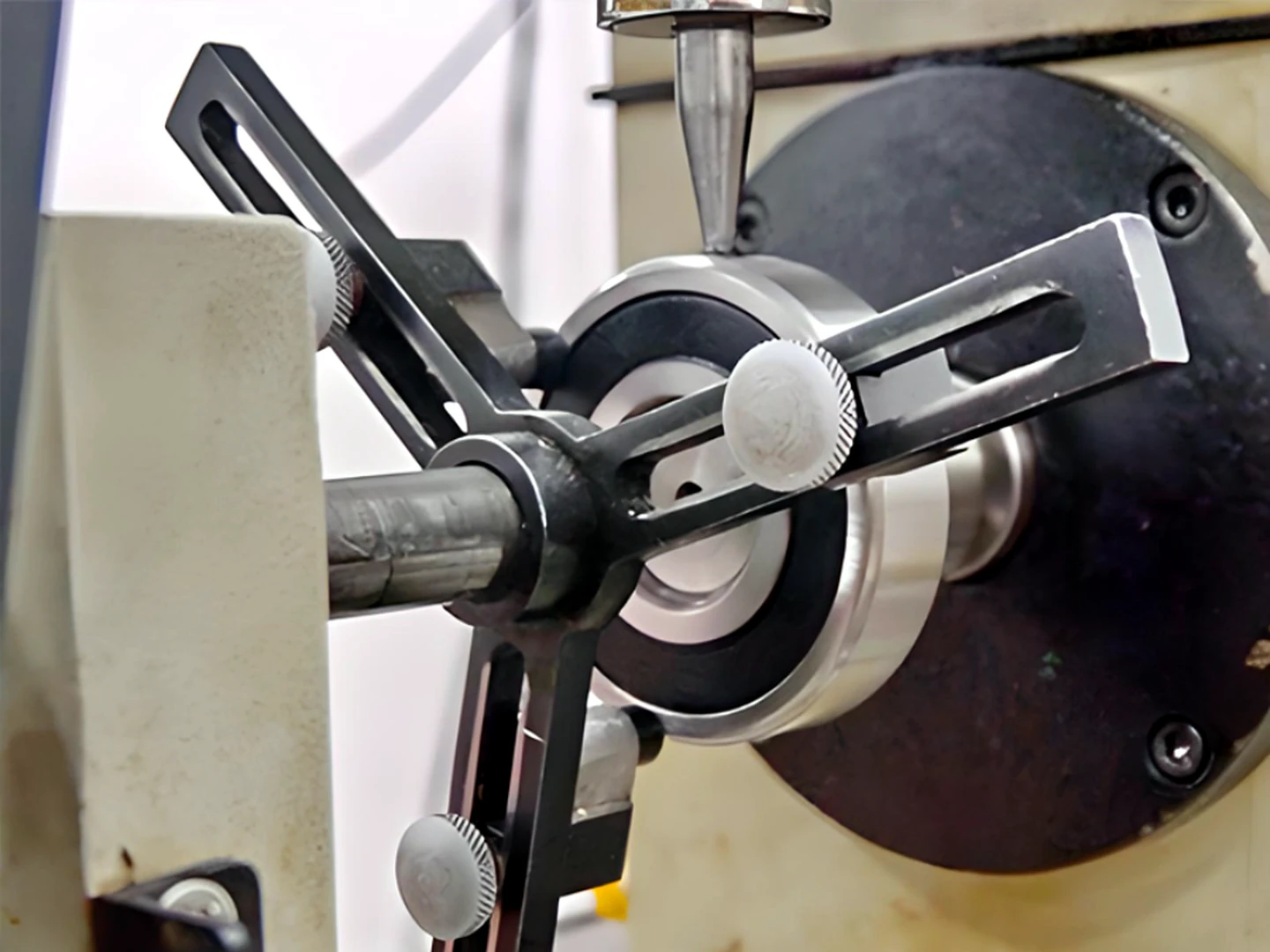
We review each field before quotation and state which items we can meet as written and which need agreement, such as a vibration grade for a particular size and seal type. Raceway grinding, super-finishing, assembly and vibration testing are done in our Cixi factory. NLHB manufactures miniature and deep groove ball bearings up to P4 precision, and double row angular contact bearings and track rollers up to P6.
Evidence from our workshop

What to send for a quotation
- Your completed specification table, or the drawing notes that contain it.
- Motor type, rated speed, operating temperature and noise target.
- Shaft and housing fits.
- Annual quantity and batch size.
- Inspection report and sampling requirements.
Frequently Asked Questions
What should a motor bearing purchase specification include?
Designation with seal type, precision class, radial clearance group, Z/V vibration grade with test conditions, grease type and fill, cage, cleanliness, marking, packaging, inspection report content, sampling plan and a change-notification clause.
Is P5 precision enough to guarantee a quiet bearing?
No. Precision class limits dimensions and runout. Noise is measured separately, so a vibration grade such as Z3V3 must be specified in addition.
Should motor bearings use C3 clearance?
C3 is common in motors because interference fits and rotor heat reduce clearance in operation. The correct group depends on your fits and temperature, so it should be checked for each design.
Why specify grease fill quantity?
Fill quantity affects churning friction, temperature rise and running-in noise. If it is not specified, the manufacturer's default applies and may differ between suppliers.
Which standards apply to vibration grades?
In China, JB/T 7047 covers vibration acceleration (Z grades) and JB/T 10187 covers vibration velocity (V grades) for deep groove ball bearings. Buyers can also agree a company standard.
Related guides
Published 2026-09-25. Images show our own workshop and representative products. Final dimensions, grades, inspection limits and supply conditions are confirmed against the requested model, drawing and order.