A bearing's speed limit is set by heat and by the forces on the balls and cage — not by size alone. For high-speed motors, drones, dental handpieces and small spindles, the right combination of precision grade, cage, grease, clearance, seals and ball material matters more than the catalogue number. NLHB produces miniature and deep groove ball bearings up to P4, with steel or silicon nitride ceramic balls and steel or nylon cages.
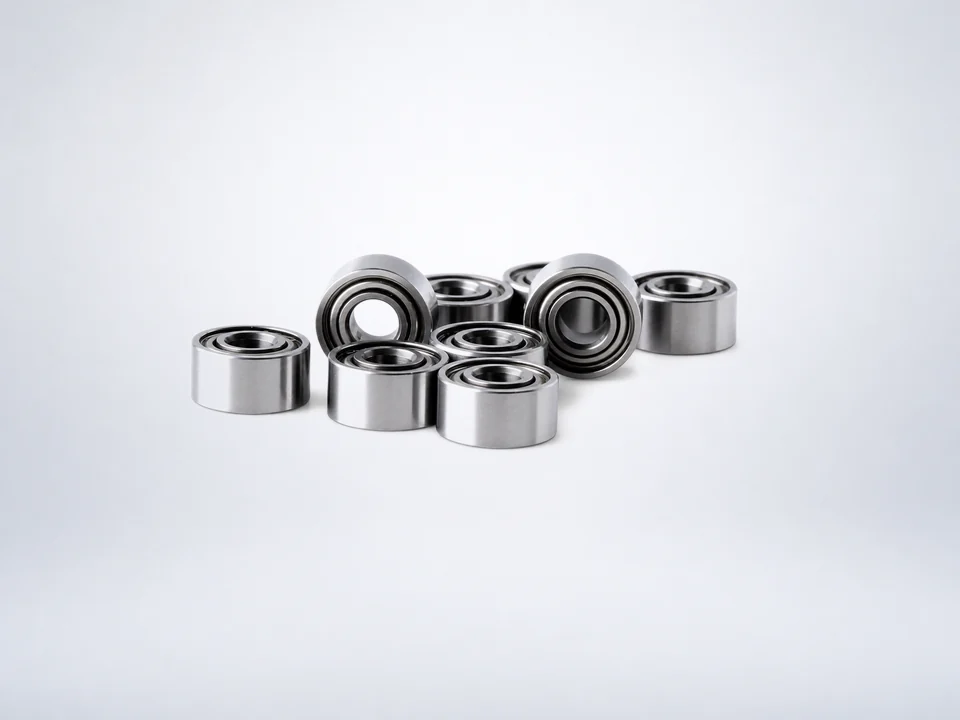
Speed limits are thermal and dynamic limits
Seal, grease and cage friction generate heat, and ball centrifugal force rises with the square of speed. Each design choice below either reduces frictional heat or reduces dynamic load on the balls and cage.
Six choices that decide how fast a bearing can run
| Choice | Options | Effect at high speed |
|---|---|---|
| Precision grade | P6 · P5 · P4 | Lower runout and better geometry reduce vibration and heat |
| Cage | Pressed steel · nylon (polyamide) | Nylon is light and quiet but has a temperature limit; steel suits higher temperatures |
| Grease | High-speed low-noise grease · standard grease | High-speed grease has lower churning friction; fill quantity also matters |
| Clearance | CN · C3 (MC3/MC4 for miniatures) | C3 leaves room for thermal expansion and interference fits |
| Seals | Open · ZZ shields · 2RS contact seals | Contact seals add friction; ZZ or open bearings run faster |
| Ball material | Steel · silicon nitride (Si₃N₄) ceramic | Ceramic balls weigh about 40% of steel balls, so lower centrifugal force and less heat |
Typical high-speed applications
Motors and fans
Quiet high-speed motors combine P6/P5, C3, low-noise grease and Z/V vibration grades.
Drone and brushless motors
Small 3×8 mm class bearings such as 693ZZ; low vibration keeps motors smooth and cool.
Dental handpieces
SR144-type bearings with stainless rings and ceramic balls in P4 precision.
Common mistakes
- Choosing 2RS seals for maximum speed — contact seals are often the first speed limit.
- Over-filling grease: too much grease churns and heats the bearing.
- Using normal clearance with a tight fit on a hot shaft — the bearing can lose its clearance and overheat.
- Upgrading only the bearing grade while the shaft or housing runout stays poor.
Hybrid ceramic and stainless options
We produce miniature bearings with stainless steel rings and silicon nitride ceramic balls, with steel or nylon cages chosen to your requirement, up to P4 precision. NLHB manufactures miniature and deep groove ball bearings up to P4 precision, and double row angular contact bearings and track rollers up to P6.
Evidence from our workshop
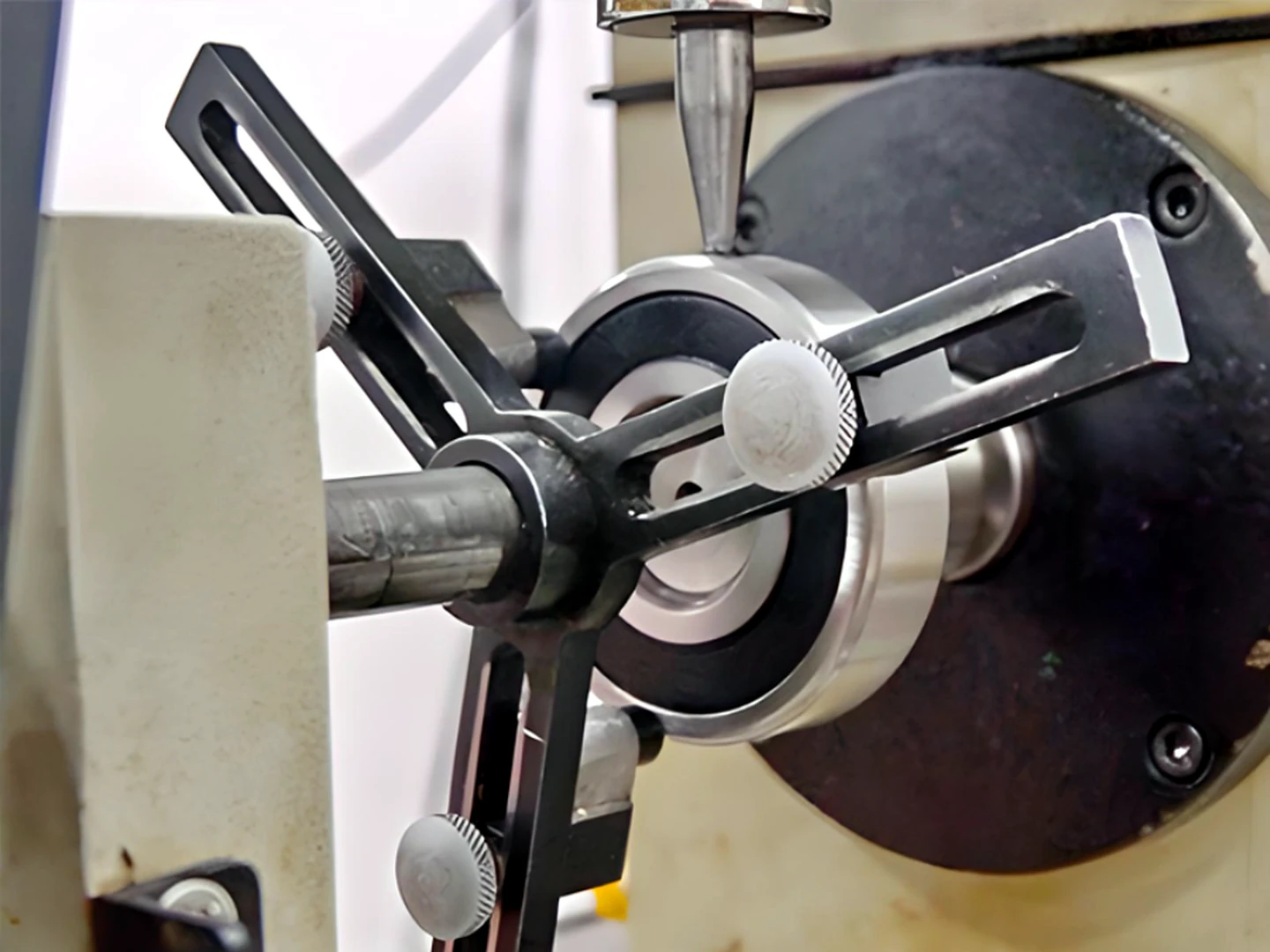
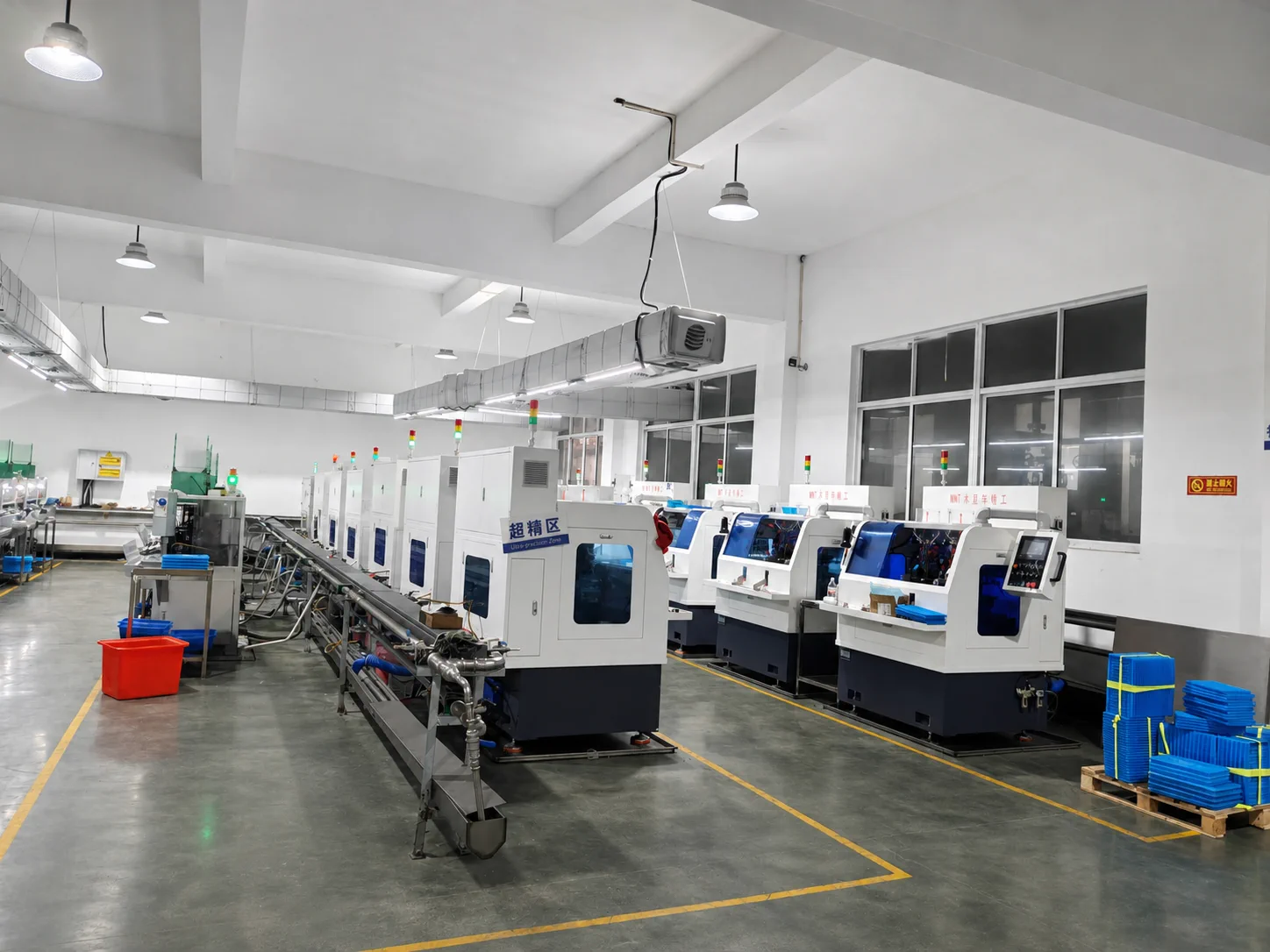
What to send for a quotation
- Designation and quantity.
- Operating speed, temperature and load.
- Precision grade, clearance and noise grade.
- Seal, cage and ball material requirement.
- Grease requirement, if any.
Frequently Asked Questions
How do I choose a bearing for high speed?
Choose a higher precision grade, a suitable cage, high-speed grease with the right fill, C3 clearance where fits or heat require it, shields instead of contact seals, and consider ceramic balls for the highest speeds.
Do ceramic ball bearings run faster?
Hybrid bearings with silicon nitride balls usually run cooler at high speed because the balls are lighter, which lowers centrifugal force. The gain depends on the whole design.
Nylon or steel cage for high speed?
Nylon cages are light and quiet and suit many high-speed small bearings, but they have a temperature limit. Steel cages suit higher temperatures.
Why does my bearing overheat at high speed?
Common causes are contact seals, too much grease, loss of clearance from tight fits or heat, misalignment and poor shaft or housing geometry.
What precision does NLHB offer for high-speed bearings?
Miniature and deep groove ball bearings up to P4, with steel or ceramic balls and steel or nylon cages.
Related guides
Published 2026-09-25. Images show our own workshop and representative products. Final dimensions, grades, inspection limits and supply conditions are confirmed against the requested model, drawing and order.