Straightening and guide rollers touch the product directly, so the groove decides both the wire quality and the roller life. NLHB manufactures V-groove and U-groove guide and straightening rollers, including rebar straightening rollers and cable guide rollers, to drawing or from a worn sample.
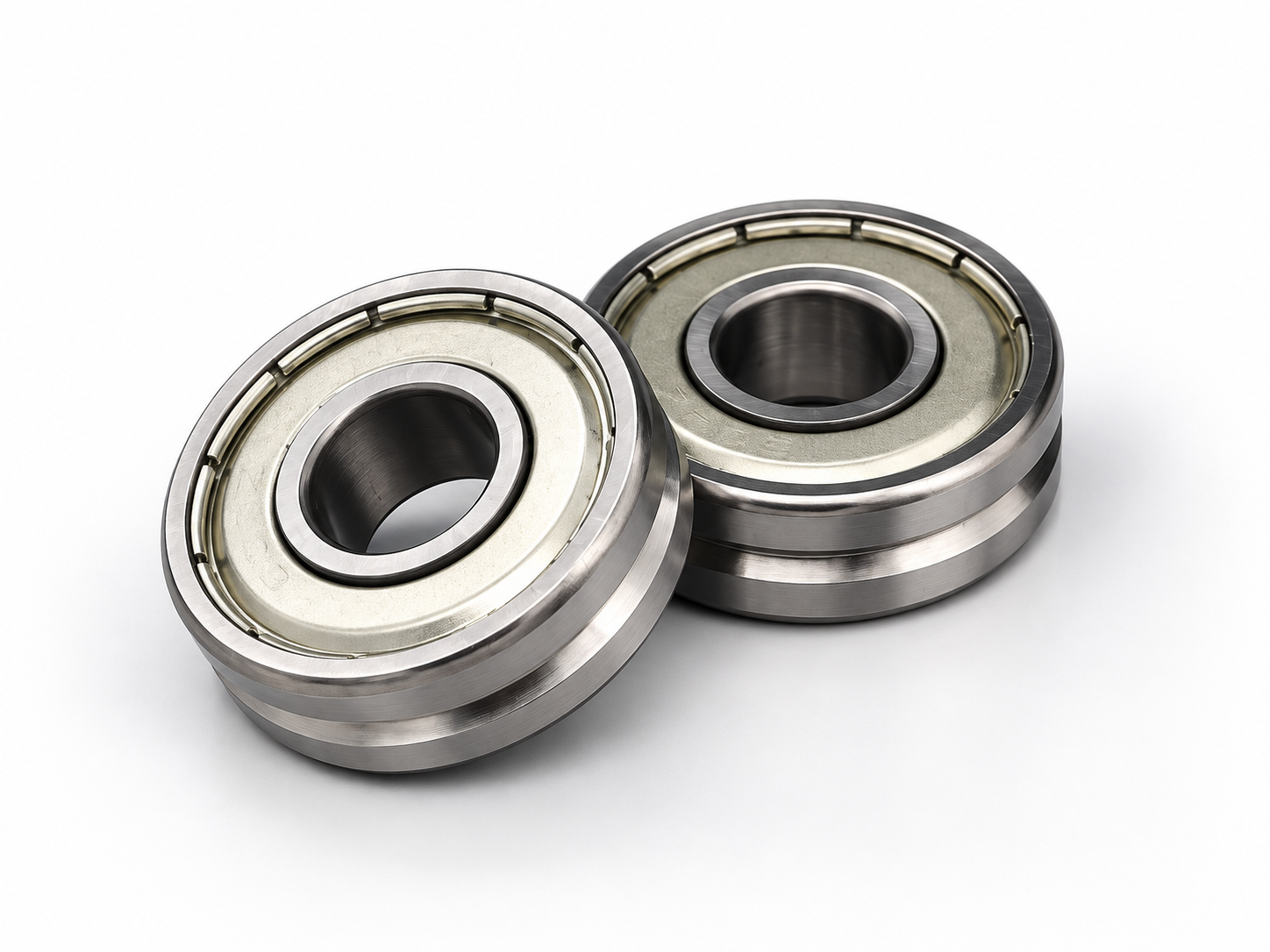
The groove is the functional interface
Groove geometry, working diameter, edge radius and runout determine straightness and surface condition of the wire. The internal bearing must hold that geometry concentric under load.
Where these rollers are used
Welding wire and steel wire
Straightening before winding or cutting; guide rollers on drawing and spooling lines.
Tire cord and radial tire lines
Guide rollers for steel cord where accuracy and smooth running matter.
Rebar, cable and PV ribbon
Rebar straightening machines, cable and copper wire lines, photovoltaic ribbon.
How to choose
| Parameter | What to decide | Why it matters |
|---|---|---|
| Groove type | V groove or U groove, angle or radius | Controls how the wire centres and how contact pressure spreads |
| Groove size | Matched to the wire diameter range | Too wide lets the wire wander; too tight marks and wears the groove |
| Working diameter | Contact diameter of the groove | Affects bending of the wire and roller speed |
| Material and hardness | Hardened bearing steel or as agreed | Resists wear and keeps the wire surface clean |
| Runout | Groove runout relative to the bore | Wobble shows up as wavy wire and uneven wear |
| Bearing and seal | Internal bearing type and sealing | Dust and wire scale must not enter the bearing |
Why guide rollers wear fast
- Groove size or shape does not match the wire diameter.
- The wire is harder than the groove surface, or carries abrasive scale.
- Rollers are misaligned, so the wire rubs one flank.
- The internal bearing fails first because of contamination, and the roller stops turning.
- Groove runout is too large, so contact moves around the groove.
Made to drawing or from a worn sample
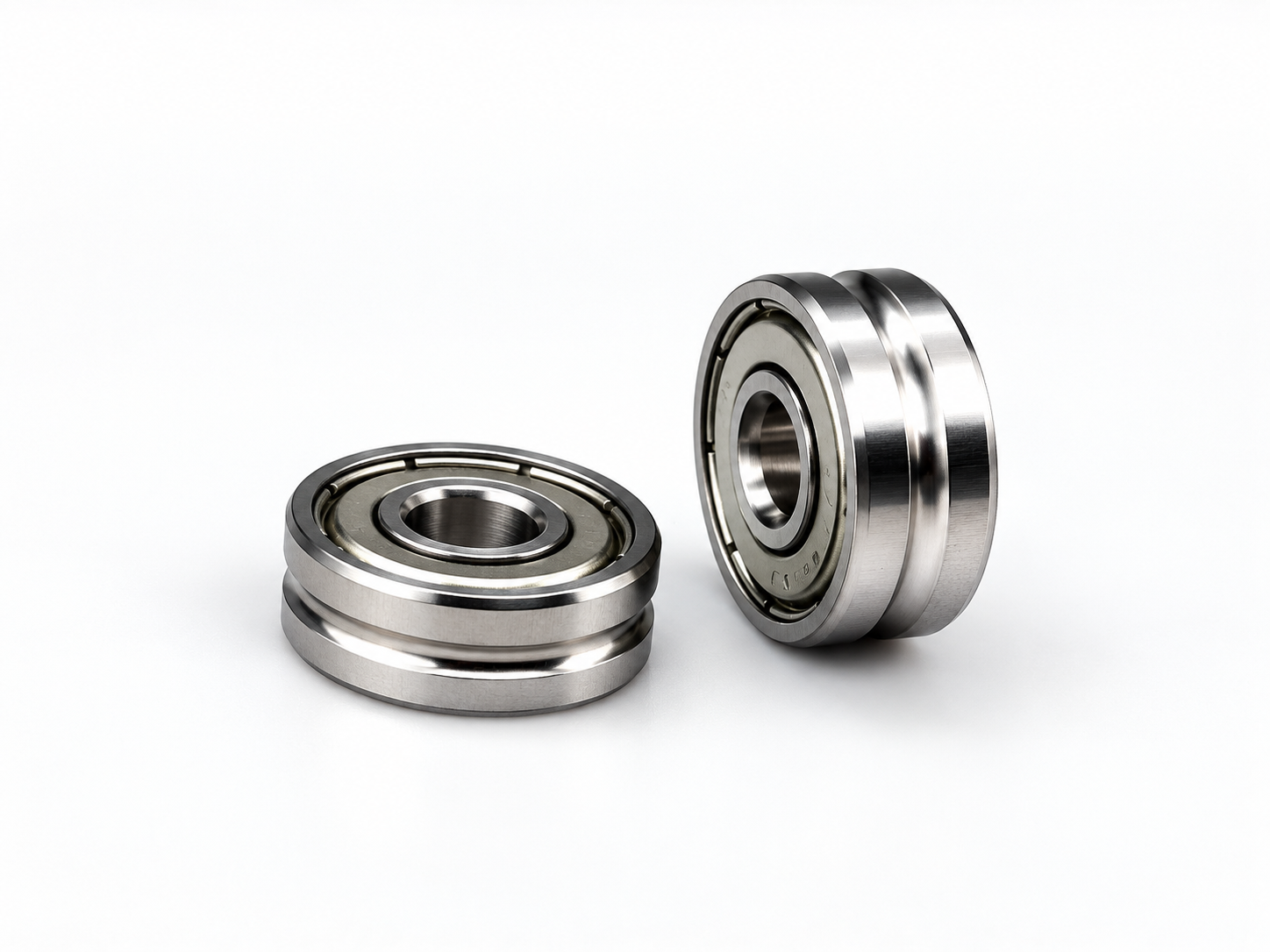
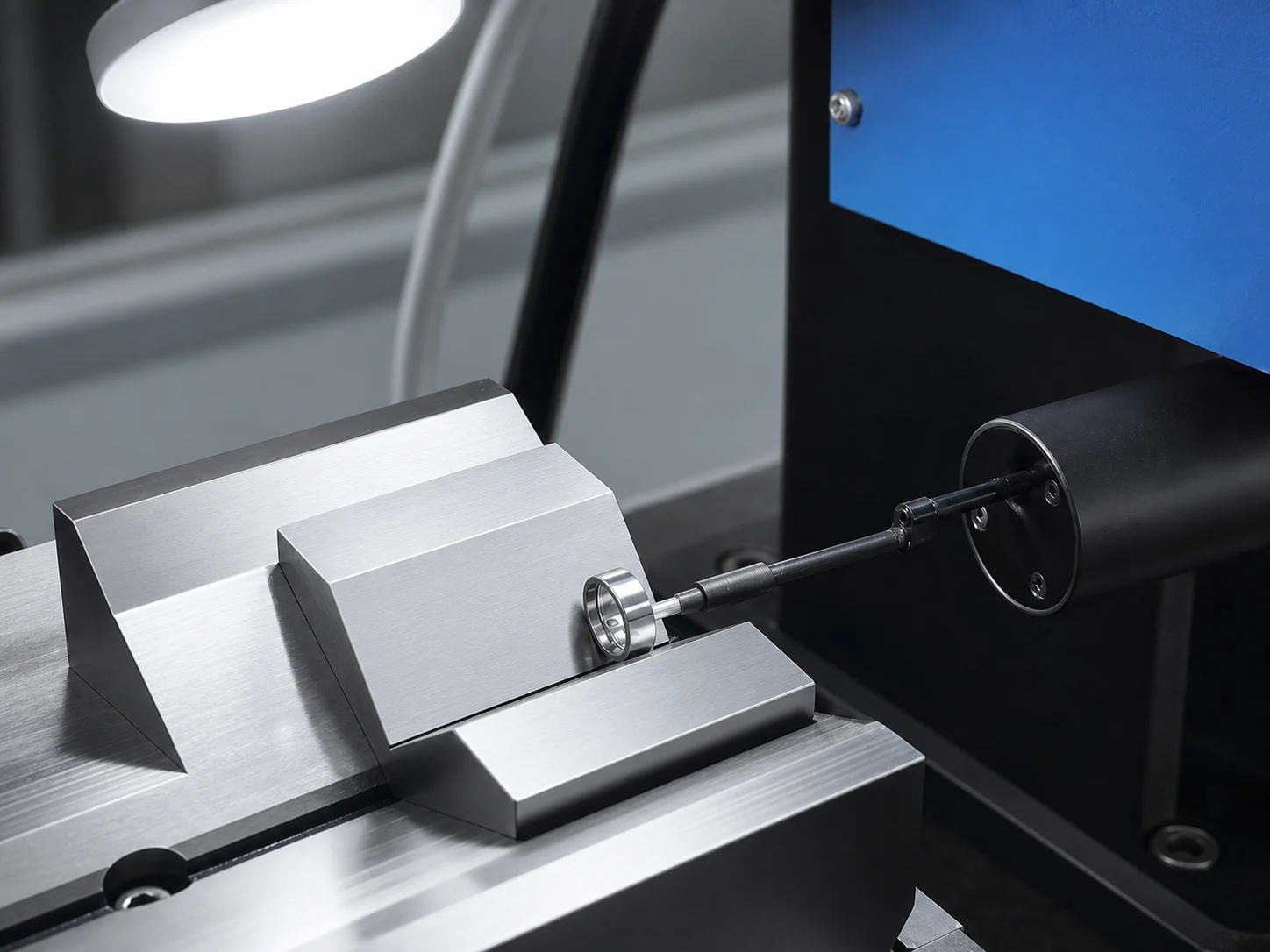
We grind the groove directly into the outer ring in our Cixi factory and can measure a worn roller to reproduce it. Tell us the wire diameter and material and we suggest the groove.
Evidence from our workshop
What to send for a quotation
- Wire or material: diameter range, material and hardness.
- Line type: straightening, guiding, drawing or winding.
- Existing roller drawing, photo or sample.
- Groove type, working diameter and bore.
- Speed, quantity and any wear problem you want to solve.
Frequently Asked Questions
How do I choose a straightening roller groove for my wire diameter?
Match the groove size to the wire diameter range and choose V or U profile by how the wire should centre. Send the wire diameter and material and we suggest the groove.
Why do my wire guide rollers wear out so fast?
Common causes are a groove that does not match the wire, abrasive or harder wire, misalignment, excessive runout and contamination of the internal bearing.
Why is my guide roller scratching the wire?
Usually a worn or rough groove, a groove that is too tight, or a roller that has stopped turning because its bearing failed.
Do you make rebar straightening machine rollers?
Yes. We make rebar straightening rollers as well as guide rollers for welding wire, steel wire, tire cord, cable and PV ribbon lines.
Can you copy a worn roller without a drawing?
Yes. Send the sample; we measure the profile and bore, confirm the drawing with you and then produce.
Related guides
Published 2026-09-25. Images show our own workshop and representative products. Final dimensions, grades, inspection limits and supply conditions are confirmed against the requested model, drawing and order.