Track roller selection begins with the rail and contact geometry, not with the bearing number. SG, LFR, LV and VW products may all serve guided-motion systems, but their outer-ring profile, mounting arrangement and adjustment method are not interchangeable by appearance alone.
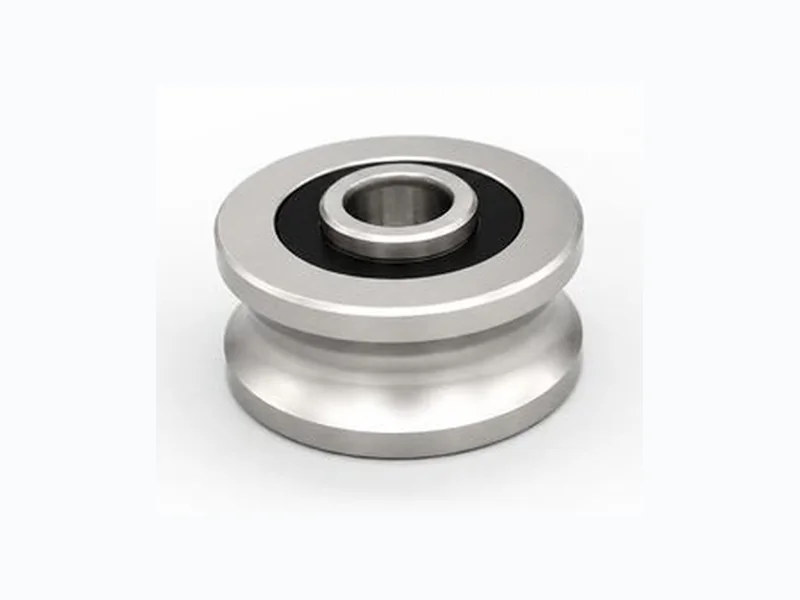
Four series, four rail interfaces
The decisive interface is between the roller profile and the mating track. Confirm groove angle or radius, rolling-contact diameter, shaft or stud arrangement, and the required running clearance before comparing catalogue numbers.
Product definition and series boundaries
Guide rollers are supported directly on a mating track rather than in a conventional housing bore. The outer ring therefore acts as both a bearing ring and a rolling wheel. Profile accuracy, wall thickness, sealing and mounting rigidity must be evaluated together.
LFR is an established gothic-arch track-roller family in major catalogues. SG, LV and VW are common commercial series names used for compact or V-profile guide systems, but suffixes and geometry vary by supplier. Replacement decisions must be based on a drawing or a verified sample.
Series map
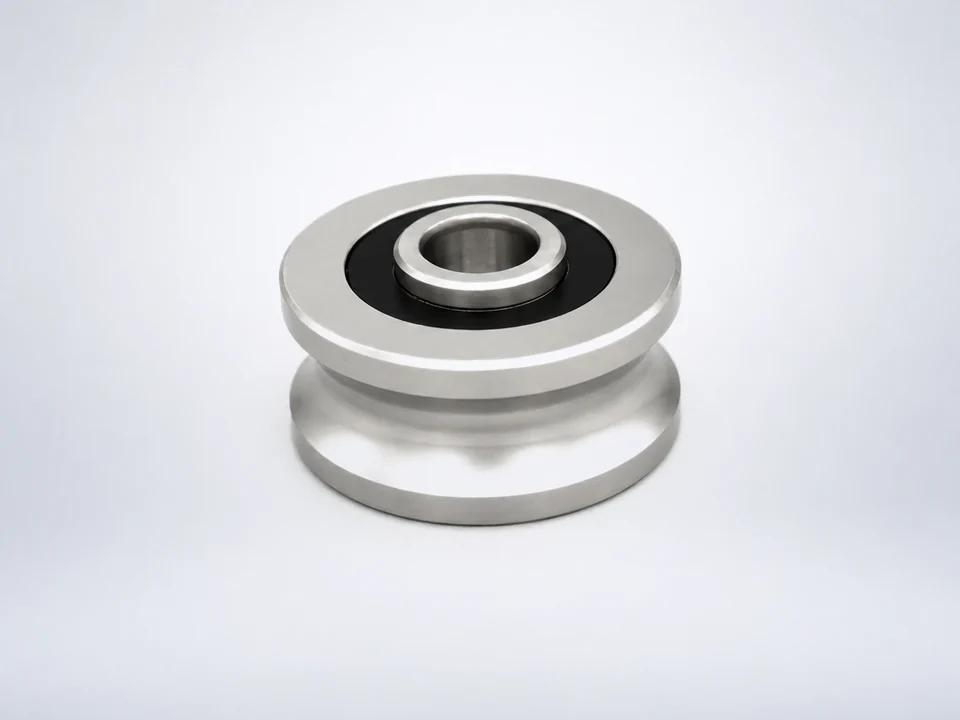
SG series
Compact guide roller family. Confirm the recessed mounting arrangement, profile dimensions and mating rail.
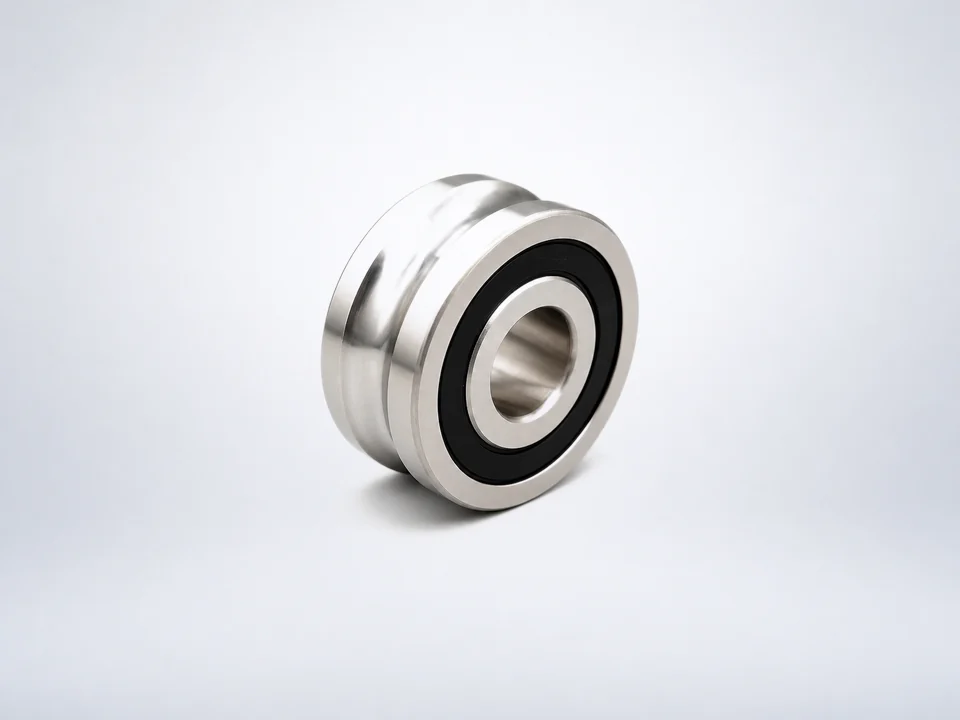
LFR series
Gothic-arch track rollers for round or profiled guideways; available mounting and sealing details are model-specific.
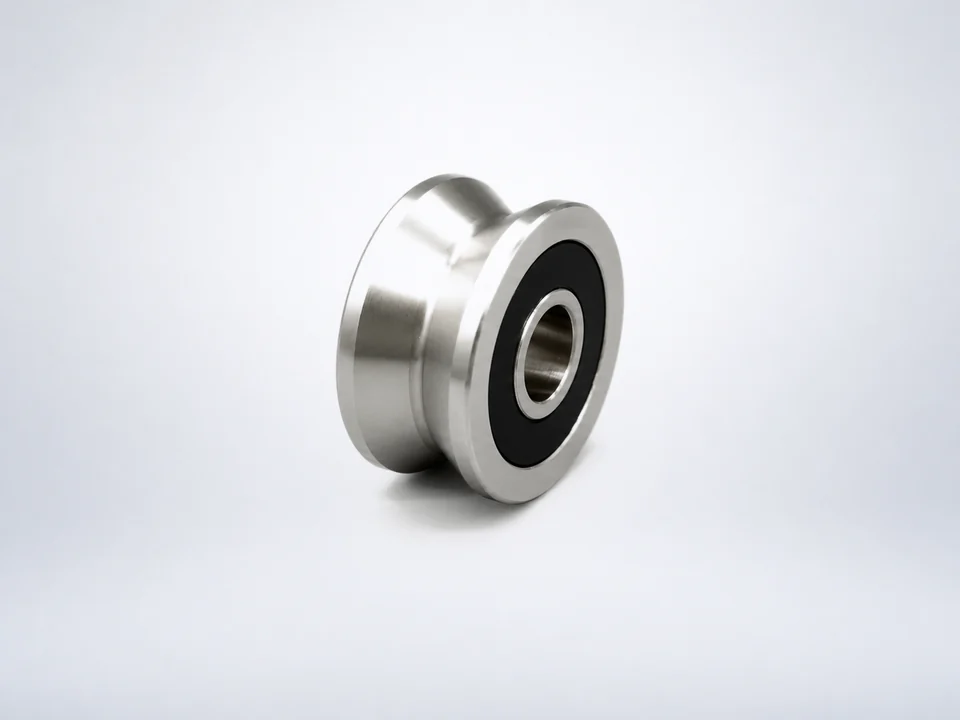
LV series
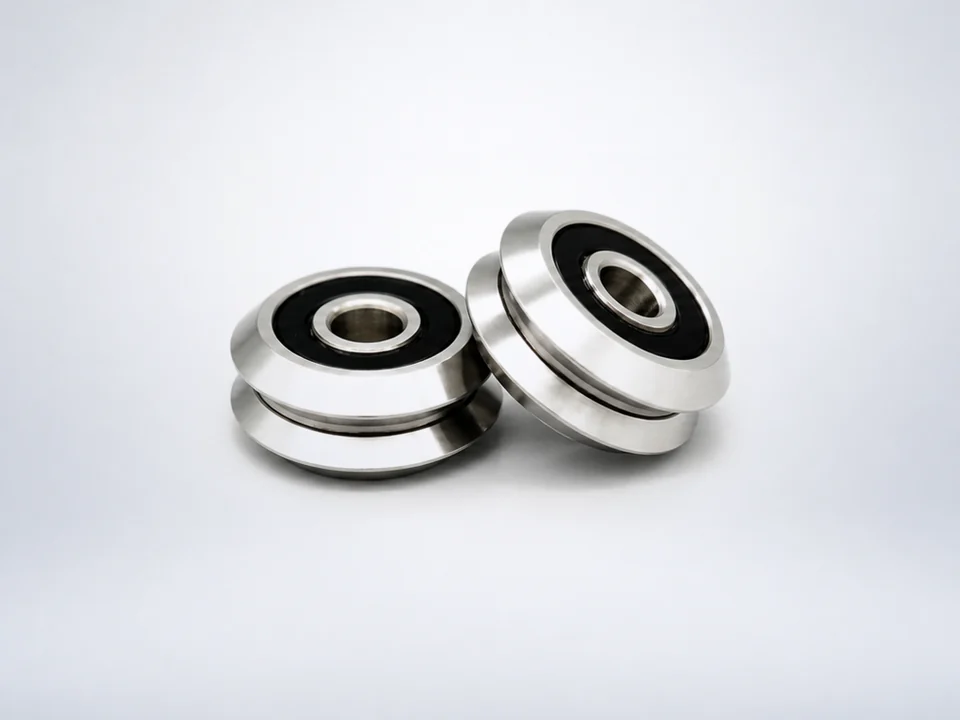
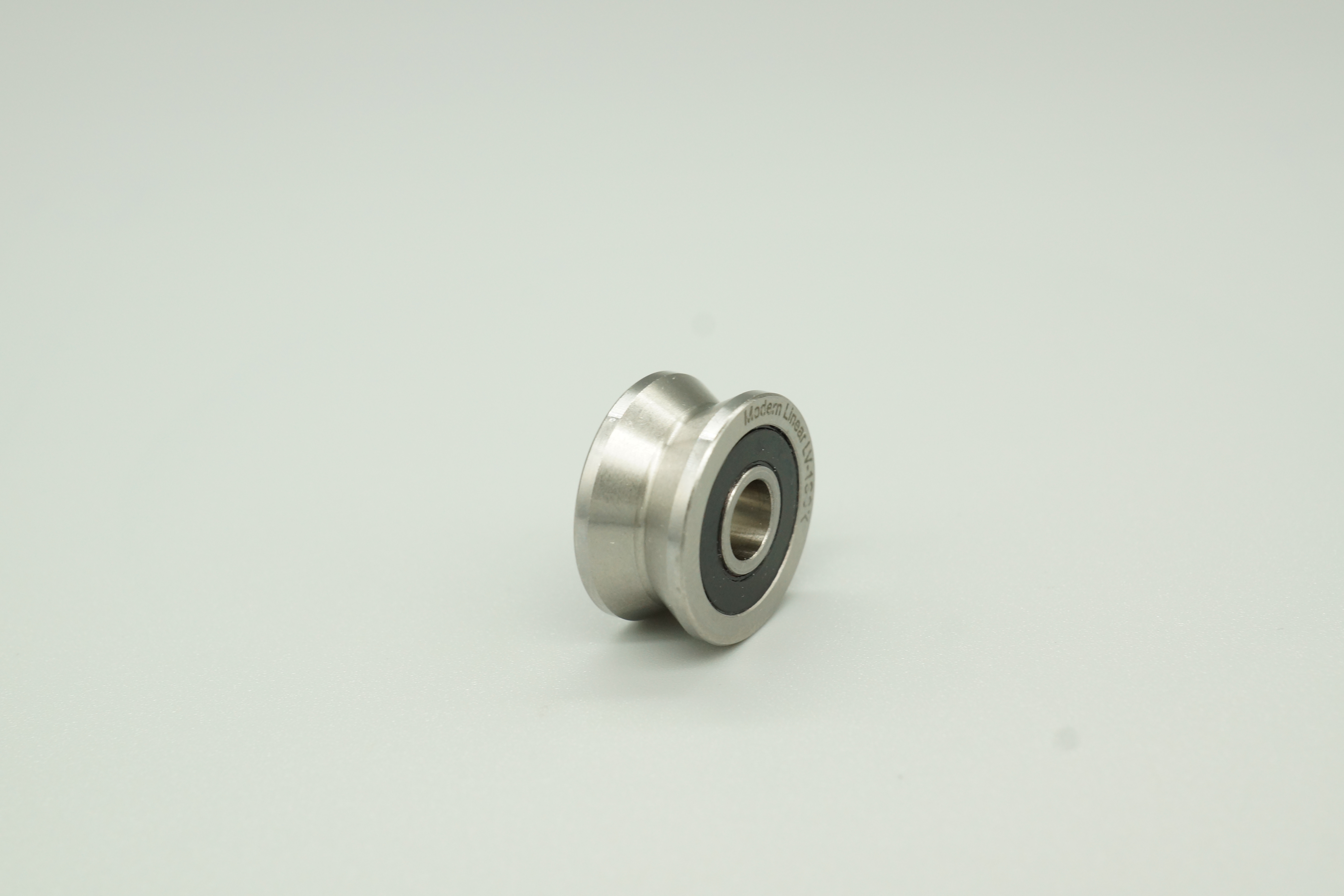
V-groove rollers selected by groove geometry, contact position, rail angle and mounting datum.
VW series
V-profile guide rollers used in linear-motion arrangements; system adjustment determines running behaviour.
Custom profiles
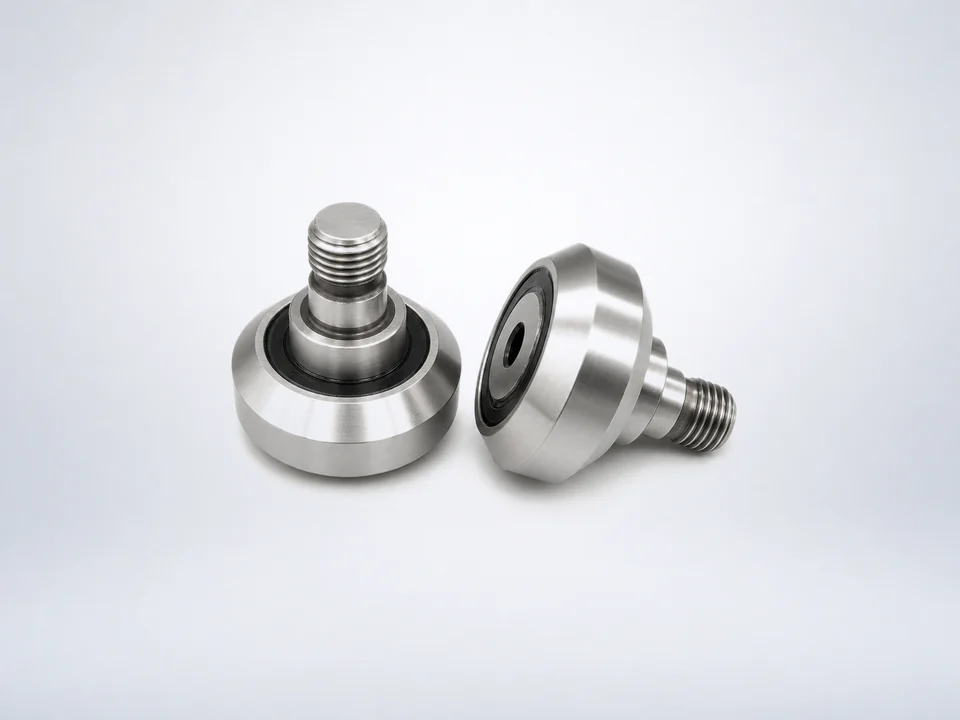
Special grooves, extended rings and non-standard widths require drawing-based review and sample verification.
Selection framework
| Selection item | Engineering question | Evidence required |
|---|---|---|
| Mating track | What is the rail profile, angle or radius? | Rail drawing or measured cross-section |
| Mounting | Is the roller mounted on a shaft, screw, stud or eccentric element? | Shaft diameter, shoulder and tightening method |
| Adjustment | How is running clearance or preload set? | Concentric/eccentric layout and installation sequence |
| Environment | Are dust, chips, coolant or washdown present? | Seal requirement, lubricant and maintenance plan |
Do not select a guide roller from OD and width alone
Two rollers with similar boundary dimensions can contact the rail at different positions. A mismatched groove angle or radius changes edge loading, friction and guidance accuracy.
Data required for engineering selection
A complete review should define the bearing and the adjacent guide system as one assembly.
- Full designation and existing supplier, if replacing an installed roller.
- Rail profile drawing, groove angle/radius and rolling-contact diameter.
- Shaft or stud dimensions, shoulder arrangement and fastening method.
- Radial and axial load direction, duty cycle, speed and shock conditions.
- Target clearance/preload, alignment capability and installation adjustment.
- Seal, lubricant, corrosion and contamination requirements.
Inspection focus for profiled track rollers
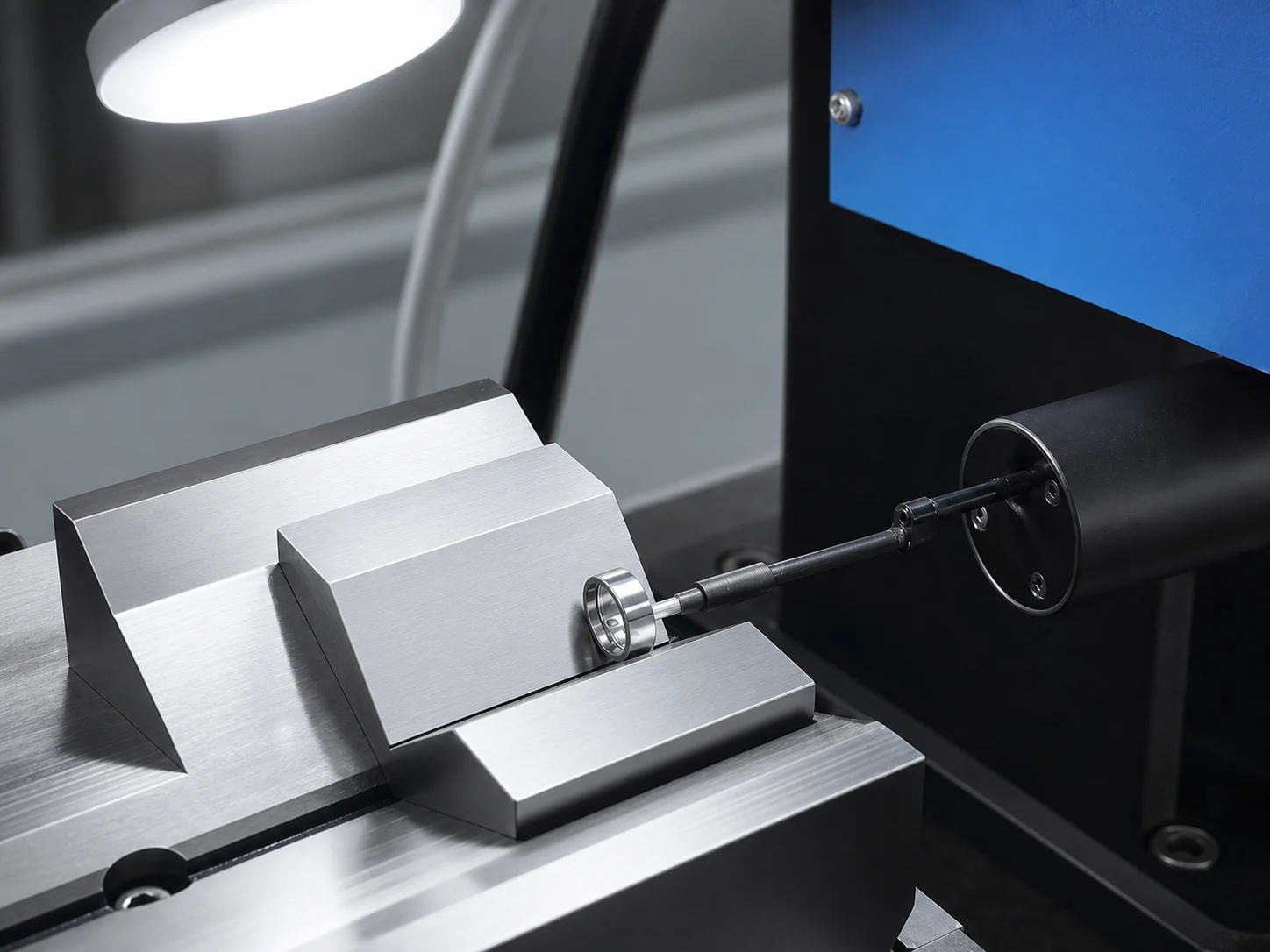
Inspection should connect the drawing datum to the functional rail contact. Typical review items include groove profile, runout, ring geometry, seal fit and rotational condition.
Technical information for quotation
- Full designation and existing supplier, if replacing an installed roller.
- Rail profile drawing, groove angle/radius and rolling-contact diameter.
- Shaft or stud dimensions, shoulder arrangement and fastening method.
- Radial and axial load direction, duty cycle, speed and shock conditions.
- Target clearance/preload, alignment capability and installation adjustment.
- Seal, lubricant, corrosion and contamination requirements.
Frequently Asked Questions
Can SG and LFR rollers be replaced by the same outside diameter?
Not on that basis alone. Groove geometry, contact diameter, inner-ring arrangement and adjustment method must also match.
What is the difference between a concentric and eccentric roller?
A concentric roller establishes the fixed datum. An eccentric mounting element is commonly used to adjust system clearance or preload.
Can a V-groove roller run on any V rail?
No. Rail angle, groove angle, contact location, hardness and surface condition must be compatible.
Should sealed rollers be selected for every application?
Sealing is chosen from contamination, friction, speed and maintenance requirements; it is not an automatic upgrade.
What should be measured from an old sample?
Record bore, outside diameter, widths, groove geometry, contact diameter, shoulder details and seal arrangement.
Can NLHB review a custom track roller?
Yes. Supply a drawing or sample together with the rail and operating information for an engineering review.
Related engineering guides
References
Evidence version: track-series-v1 · Checked 2026-09-21. Images are representative. Final dimensions, ratings, inspection limits and supply conditions are confirmed against the requested model, drawing and order.