A double-row angular contact ball bearing accommodates radial load and axial load in both directions within one bearing unit. Series selection should be based on boundary dimensions, load direction, locating function, closure, internal clearance or preload, and operating environment. The complete suffix, product data and drawing define the final specification.
Product range and series structure
The current NLHB range is organised into six principal catalogue groups. Each group represents a dimensional route; load ratings, internal design and available variants remain model-specific.
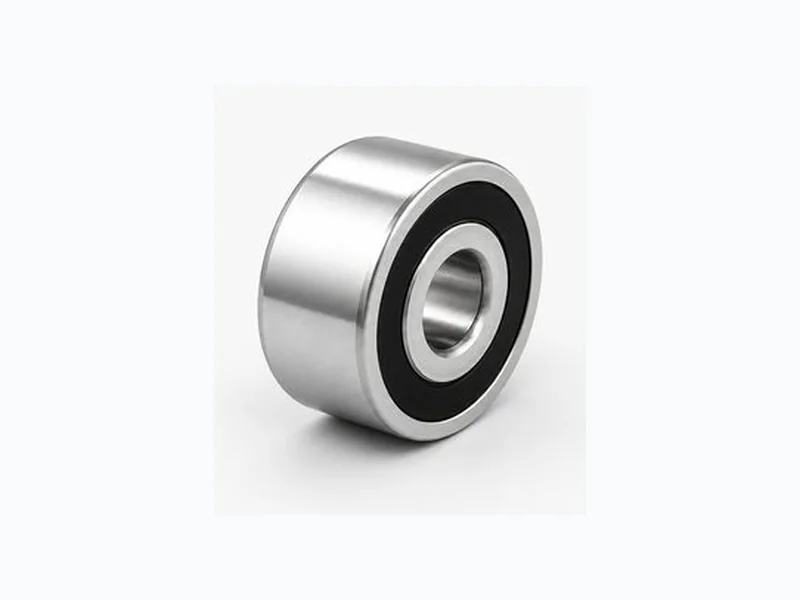
Representative product image. Exact ring geometry and closure depend on the requested model and suffix.
Design principle and specification limits
In design and operation, a double-row angular contact ball bearing is generally comparable to an integrated pair of single-row angular contact bearings arranged back-to-back, with a common inner ring and outer ring. The arrangement provides radial support and axial location in both directions while reducing the axial space and mounting work associated with two separate bearings.
Bearings with similar boundary dimensions may nevertheless differ in raceway geometry, contact-angle design, internal clearance or preload, cage construction, closures, lubricant and ring features. These details influence torque, rigidity, temperature, noise and mounting behaviour. The basic family designation therefore identifies a product route; it does not constitute a complete specification.
Product series and catalogue relationships
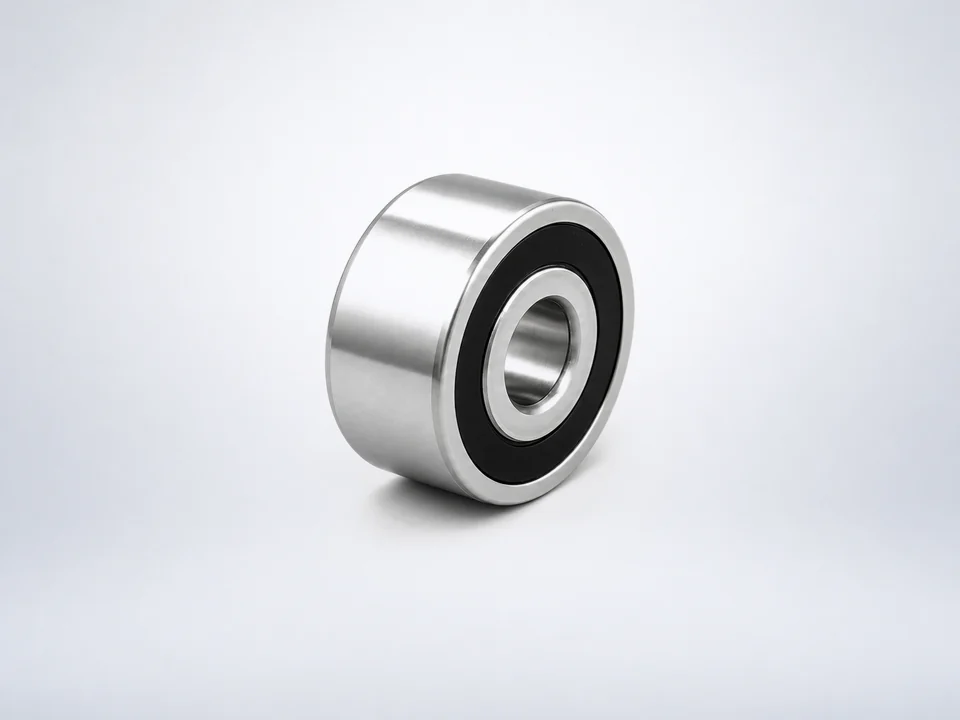
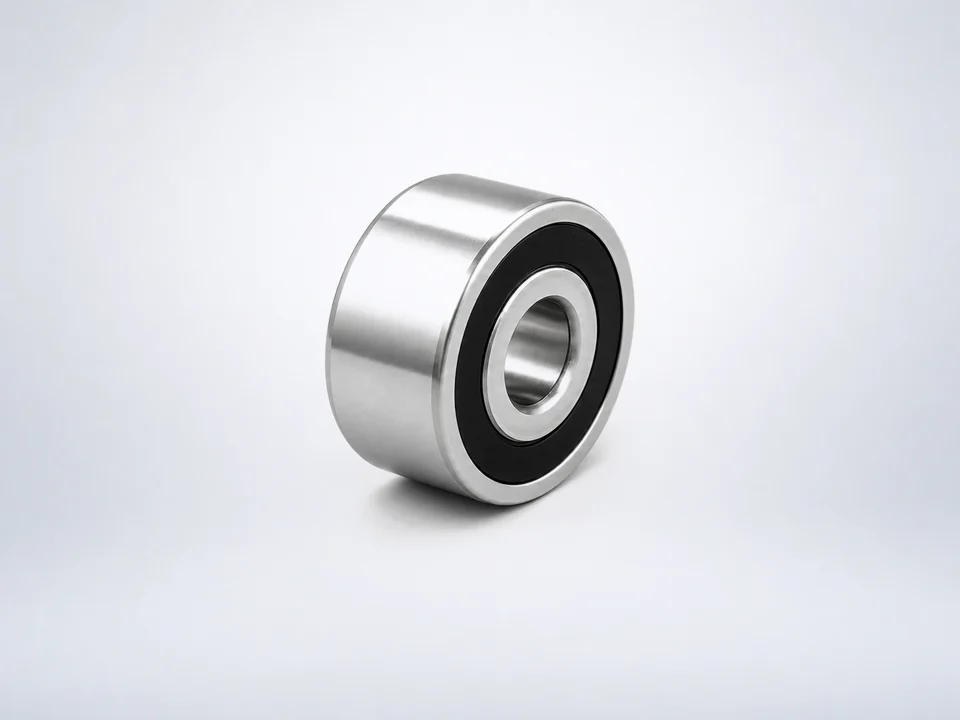
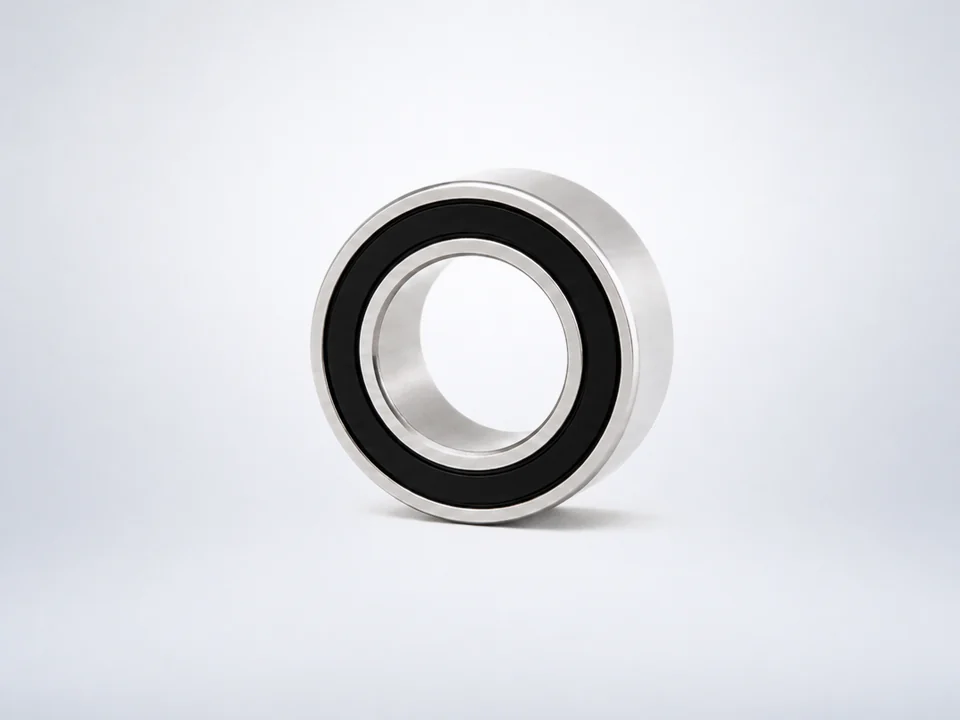
The following groups reflect the current NLHB website and project records. Images represent the series only; the exact configuration is defined by the model page, drawing or approved sample.
3200 / 5200
The two designations are used as catalogue cross-references in parts of the market. Complete suffixes, manufacturer data and internal design must still be verified.
3300 / 5300
Another common catalogue relationship. Confirm d, D, B, abutment geometry and locating requirements before comparing performance data.
3800
A compact-section series generally screened first by available space. Raceway geometry, internal clearance and closure remain model-specific.
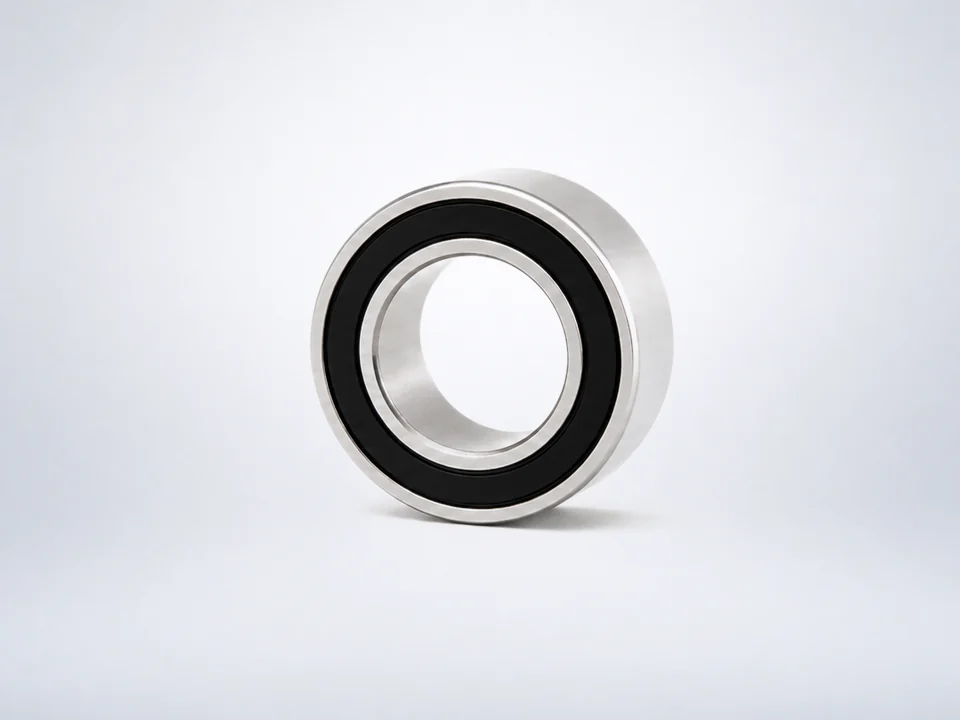
3900
An independent dimensional series rather than an alternative designation for 3800. Identify it from boundary dimensions, mounting arrangement and load direction.
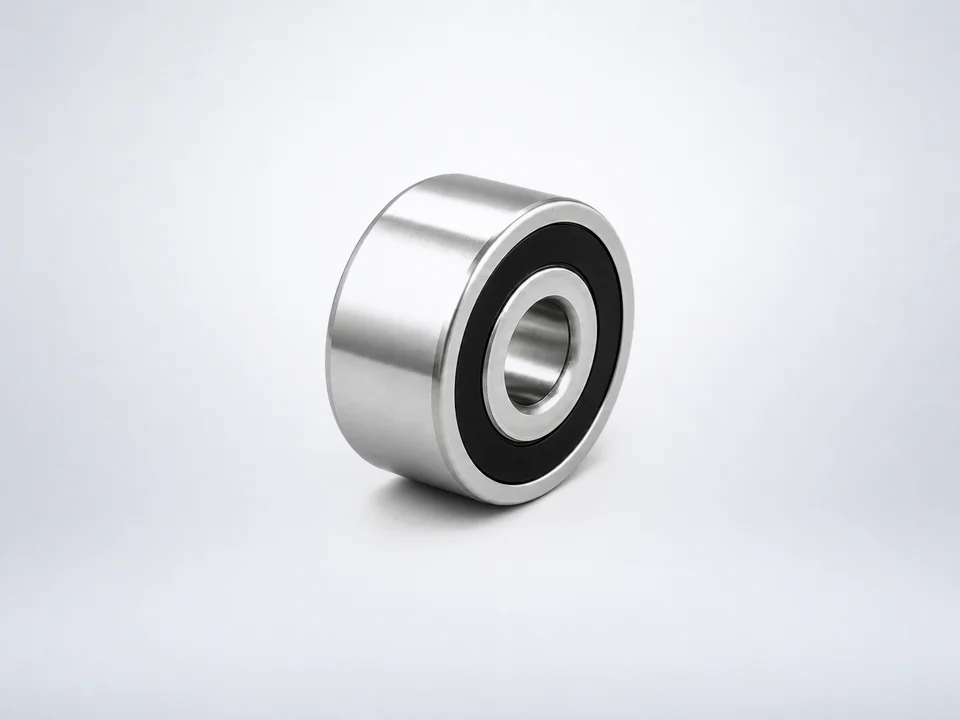
4200
An independent catalogue series. Dimensions, speed capability, clearance and available variants should be taken from model-specific data.
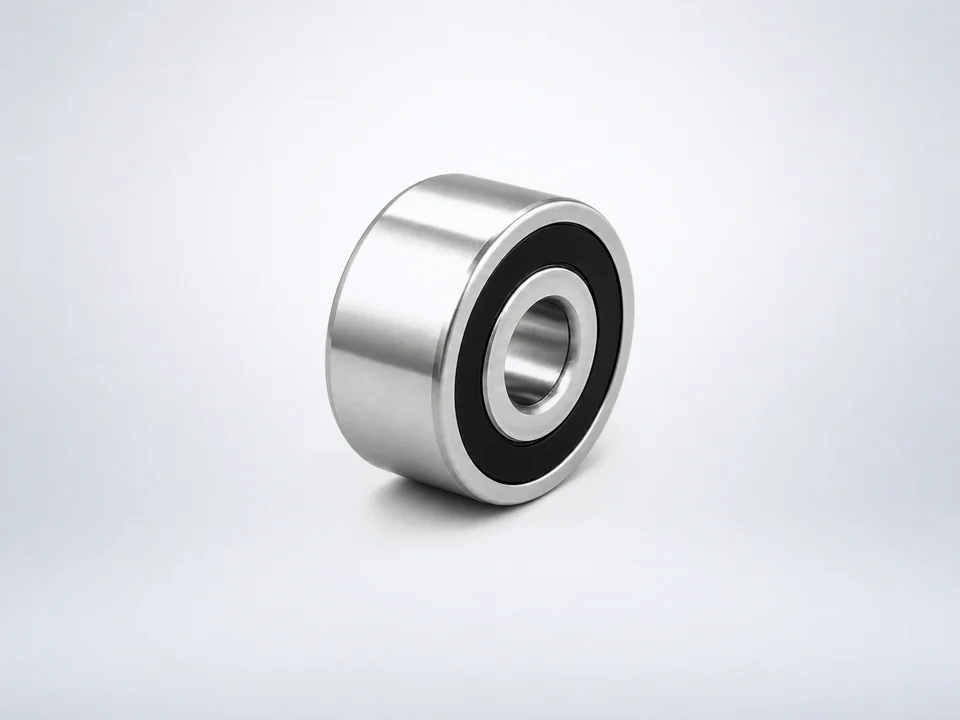
4300
An independent catalogue series requiring confirmation of boundary dimensions, closure, cage and internal parameters.
Selection data required by application
| Decision | What to provide | What must be checked |
|---|---|---|
| Replacement of an installed bearing | Complete marking, photographs, d/D/B, closure, ring features and machine position | Suffix definition, internal design, fits, clearance or preload and non-standard features |
| Design of a new assembly | Radial and axial loads, speed, temperature, available space and shaft/housing fits | Dimensional series, locating arrangement, rigidity, closure, lubrication and validation method |
| Investigation of noise or temperature | Operating stage, test condition, lubricant, fits and measured temperature/vibration records | Internal clearance, alignment, seal friction, cleanliness and raceway geometry |
| Custom or obsolete component | Drawing or sample, mating parts, quantity, inspection requirements and approval process | Critical dimensions, manufacturing route, sample measurements and production release criteria |
Equal boundary dimensions do not establish interchangeability
When two models share d × D × B, they qualify for further review only. Complete suffixes, closures, cages, internal clearance or preload, contact geometry, ring features, fits and operating conditions still require confirmation.
Design variants and suffix-controlled features
The basic designation identifies the dimensional family. Suffixes and drawing notes define the supplied configuration and should be stated consistently on the quotation, drawing and approval sample.
- Open, ZZ or 2RS: determines contamination protection, running friction and assembly controls. See the 2RS and ZZ comparison.
- Internal clearance or preload: specify the measured quantity, test load and assembly condition rather than relying on an undefined class.
- Cage: material and construction influence assembly, friction, temperature and speed capability. Confirm the design by drawing or approved sample.
- Lubrication: grease type and fill method form part of the specification for closed bearings.
- Additional ring features: snap grooves, flanges, extended rings and special shoulders can determine mounting compatibility.
Inspection items associated with the double-row design
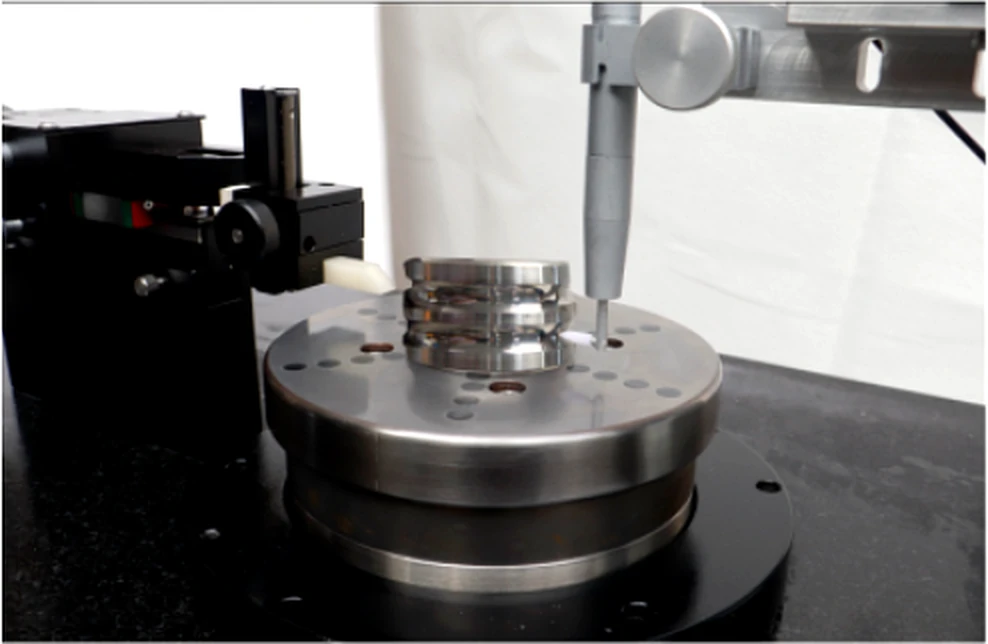
Product appearance does not establish the contact condition of the two rows. Technical review may therefore include ring roundness, consistency between the two raceways, groove-centre position, axial-clearance grouping, functional checks after closure assembly and the agreed final inspection record.
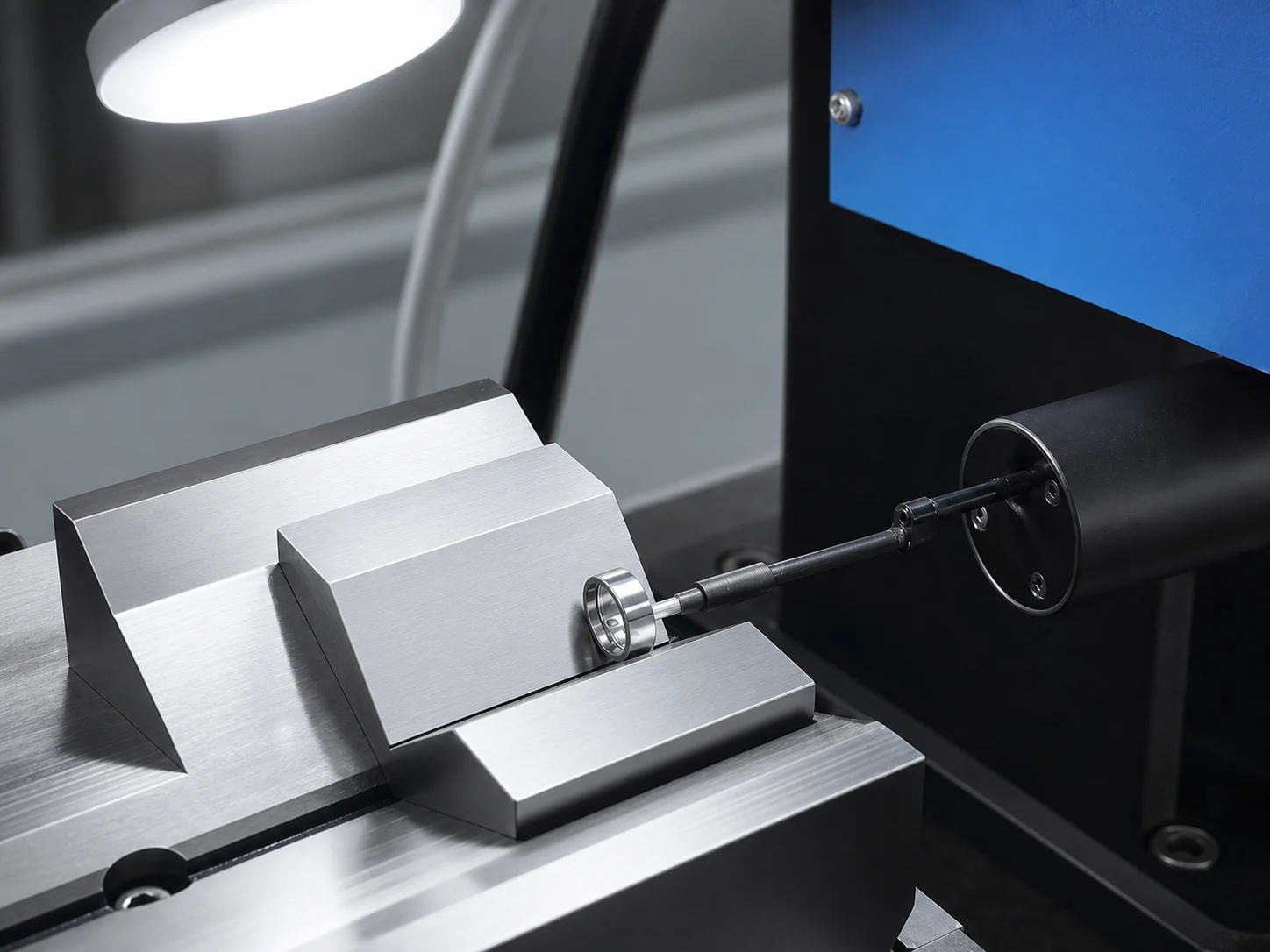
Technical information required for quotation
Recommended input data
- Complete bearing marking and suffix—not only “5203” or “3805”.
- Required quantity and whether this is sample, pilot or repeat production.
- Drawing, or measured d × D × B plus photos of both sides.
- Radial and axial load direction, operating speed and duty cycle.
- Temperature, dust, water, chemicals and cleaning conditions.
- Clearance/preload, torque, noise or inspection requirements and their test method.
- Documents required with the order: drawing approval, material certificate or inspection record.
FAQ
Are 3200 and 5200 bearings identical?
The two designations are used as catalogue cross-references for parts in the same dimensional family in parts of the market, but the base number alone does not establish interchangeability. Verify the complete suffix, drawing, internal design and application.
Do 3200 and 3800 identify the same bearing?
No. They are different dimensional series and should be identified and reviewed separately.
Can load capacity be selected from the series name?
No. Compare model-specific boundary dimensions, internal design and confirmed ratings under the same calculation assumptions and operating conditions.
How should 2RS and ZZ be selected?
Consider contamination, speed, starting torque and assembly controls. A 2RS design introduces contact-seal friction; a ZZ design avoids seal-lip friction but requires controlled shield installation.
What should be measured when the original marking is unreadable?
Measure bore, outside diameter and width; photograph both faces; record closures, snap grooves, flanges and ring extensions; and identify the machine position and load direction.
Can NLHB review a custom double-row bearing drawing?
Yes. Feasibility, supply route and sample planning can be reviewed after receipt of the drawing or sample, application data, quantity and inspection requirements.
Continue the double-row topic cluster
References
- NSK — Double Row Angular Contact Ball Bearings
- SKF — Double Row Angular Contact Ball Bearings
- Schaeffler — Design of Bearing Arrangements
Evidence version: drac-series-v1.1 · Checked 2026-09-21. Product images are representative. Final dimensions, ratings, inspection limits and supply conditions are confirmed against the requested model, drawing and order.