Robot joints and servo motors push bearing design in two directions at once: the joint wants a large hollow bore and a small outside diameter, while the motion control wants stiffness, low and repeatable friction torque, and small runout. Thin-section 68 and 69 series deep groove ball bearings meet the space requirement; standard 60 and 62 series bearings carry more load for the same bore. This guide compares them and sets out preload, friction torque and precision choices.
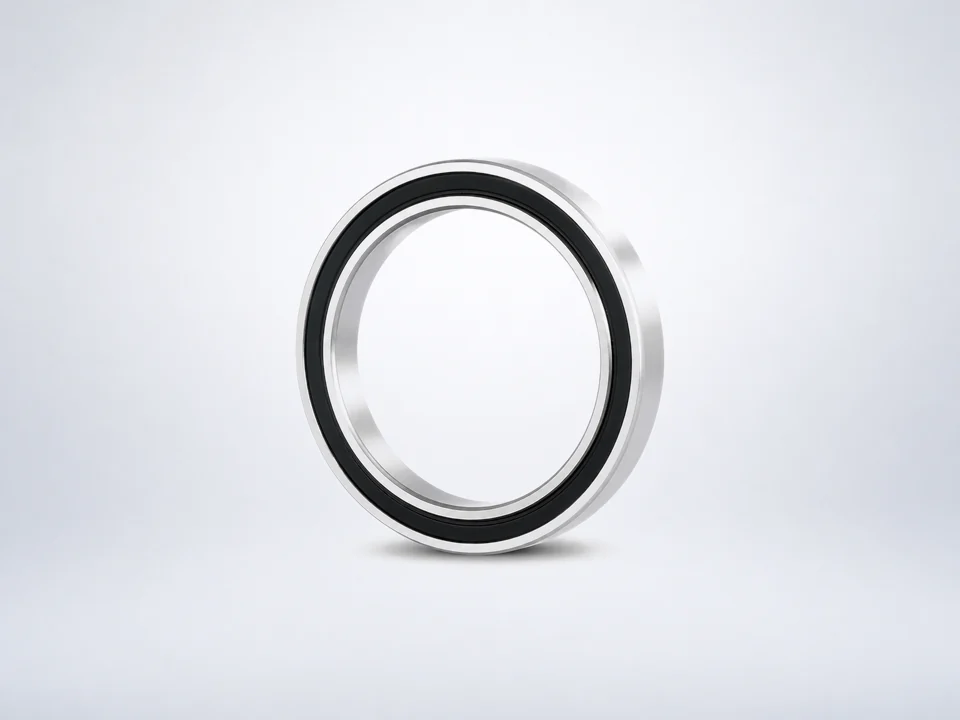
Space, stiffness and torque must be traded
A thinner cross-section means smaller balls, lower load rating and lower stiffness, and a ring that takes the shape of its housing. The gain is a larger bore for cables and hollow shafts, a smaller joint and less mass.
Where bearings sit in a robot joint
| Position | Main requirement | Common bearing types (general practice) |
|---|---|---|
| Servo motor rotor | Speed, low noise, low runout at the encoder end | Pair of deep groove ball bearings, often with light spring preload |
| Hollow joint shaft and cable passage | Large bore, small section, low mass | Thin-section deep groove ball bearings (68/69 series or special sections) |
| Reducer internal supports | Depends on reducer type; defined by the reducer design | Deep groove, angular contact or needle roller bearings inside the reducer |
| Joint output (tilting moment) | High moment stiffness in a narrow width | Crossed roller bearings or preloaded angular contact pairs |
| Auxiliary supports: encoders, brakes, idlers | Low torque, small runout | Miniature and thin-section deep groove ball bearings |
Crossed roller and single-row angular contact output bearings are listed as general design knowledge; they are not NLHB product lines. Our scope in robot joints is the deep groove positions: servo motor rotors, hollow shafts, encoder and auxiliary supports.
Thin-section 68/69 vs standard 60/62 series
The ISO dimension series give several outside diameters for the same bore. The example below uses a 25 mm bore; the same pattern applies to other sizes. Radial section is (D − d) / 2.
| Designation | d × D × B (mm) | Radial section (mm) | Relative load and stiffness | Typical joint use |
|---|---|---|---|---|
| 6805 | 25 × 37 × 7 | 6 | Lowest | Hollow shafts, encoder and cable-passage supports |
| 6905 | 25 × 42 × 9 | 8.5 | Low to medium | Compact joint shafts, small servo outputs |
| 6005 | 25 × 47 × 12 | 11 | Medium | Servo motor rotors, joint shafts with more load |
| 6205 | 25 × 52 × 15 | 13.5 | Higher | Larger servo motors and heavier joint supports |
Load ratings for each size are given in the catalogue and calculated to ISO 281 (dynamic) and ISO 76 (static). Note that "thin-section" is also used for constant-section bearings, where the section stays the same across a range of bores; those are a different product family from the ISO 68/69 series. See our deep groove series guide for the full series overview.
Space vs stiffness: design consequences
- Smaller balls give a lower load rating and lower radial and axial stiffness. Check deflection at the tool point, not only bearing life.
- A single deep groove ball bearing carries tilting moment poorly. Moment stiffness comes from two bearings spaced apart, or from an angular contact pair or crossed roller bearing at the output.
- Thin rings follow the shape of the housing and shaft. Housing roundness, shoulder support and fit tolerances directly affect running accuracy and torque.
- Aluminium housings expand more than steel bearings with temperature; the fit and preload change as the joint warms up.
Preload
| Method | How it works | Effect | Watch for |
|---|---|---|---|
| Spring preload (deep groove pair) | Wave spring or spring washer pushes one outer ring axially | Removes axial play; preload stays nearly constant as temperature changes | Moderate stiffness gain; the spring-side outer ring needs a sliding fit |
| Fixed (position) preload | Bearings clamped against spacers or shoulders, typically angular contact pairs | Higher stiffness | Preload rises with temperature and fit changes; torque and heat increase |
| No preload | Bearings run with operating clearance | Lowest friction torque | Axial play and backlash-like behaviour; ball skidding at speed |
For deep groove bearings in servo motors and joint shafts, a light spring preload is the usual compromise. Specify radial clearance together with the preload method, because clearance determines the contact angle the preload creates.
Low and repeatable friction torque
In a joint, bearing friction torque adds to the load the servo must overcome and, more importantly, its variation affects low-speed smoothness and force control. Torque is influenced by:
- Closure: open or ZZ bearings have the lowest torque; contact seals (2RS) add lip friction. Protect the joint with an external seal where possible.
- Grease type and fill: low-torque grease and a controlled, reduced fill lower both starting and running torque.
- Preload: torque rises with preload; set the lowest preload that meets the stiffness target.
- Geometry and precision: raceway roundness and surface finish affect torque ripple.
- Mounting: out-of-round housings and misalignment between two seats raise torque sharply on thin-section rings.
If friction torque is an acceptance criterion, agree the test method (starting or running torque, speed, load, temperature and grease condition) before sampling, rather than a single number without conditions.
Precision grade
Runout at the servo motor rotor affects encoder signal quality and vibration; runout at joint supports affects repeatability. We produce deep groove and miniature ball bearings up to P4. P5 or P4 is considered at the encoder end and at positions that influence positioning accuracy; P6 is often sufficient for auxiliary supports. See P4, P5 and P6 deep groove bearings.
Selection steps
- Fix the envelope: required bore (shaft or cable passage), maximum outside diameter and width.
- Choose the arrangement for moment loads first; then select the deep groove positions.
- Pick the largest cross-section the envelope allows, then check load, stiffness and life.
- Define preload method, radial clearance and fits together.
- Set closure and grease for the torque target; seal the joint externally where possible.
- Set precision and noise grade by position, and agree torque and vibration test conditions for samples.
Our scope in robot joints and servo motors
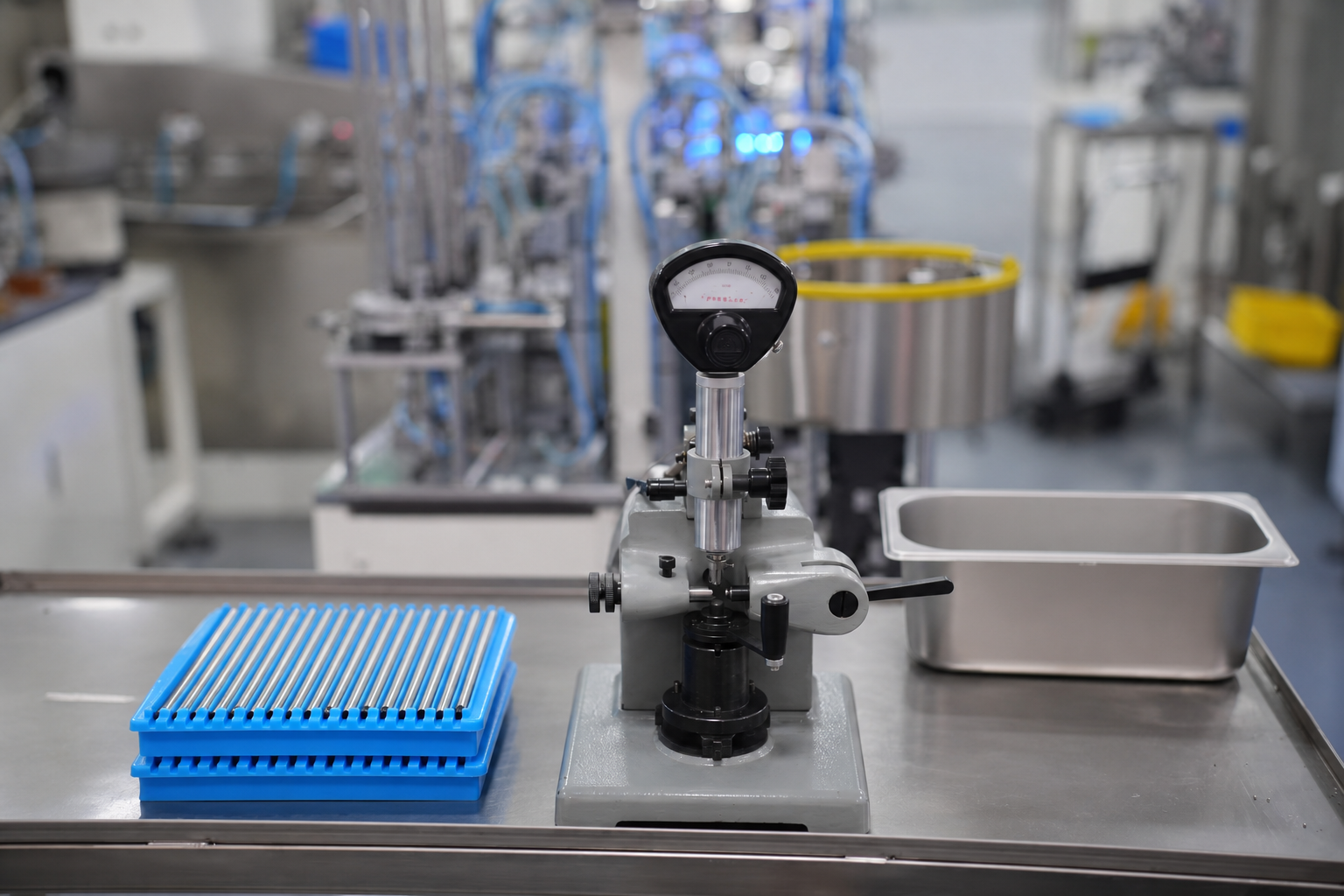
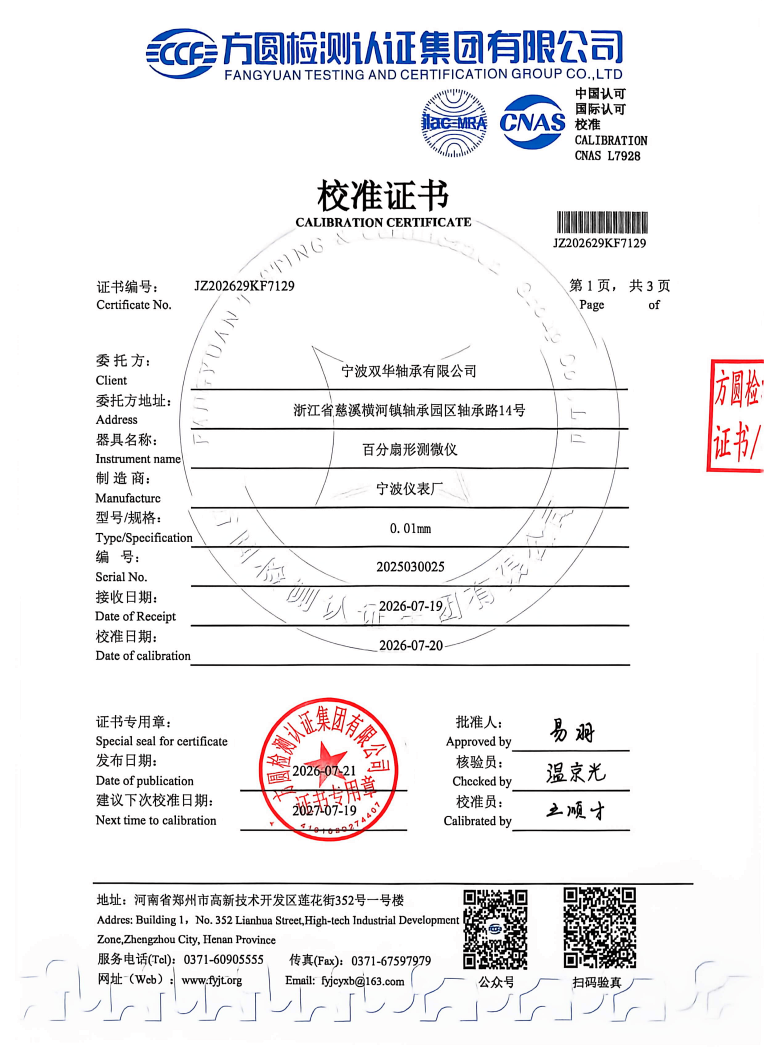
We produce 68/69 series thin-section, 60/62/63 series and miniature deep groove ball bearings up to P4, open, ZZ or 2RS, with grease and fill to the order, and check roundness on our own calibrated roundness tester. Angular contact output bearings and crossed roller bearings are outside this scope. NLHB manufactures miniature and deep groove ball bearings up to P4 precision, and double row angular contact bearings and track rollers up to P6.
Evidence from our workshop
What to send for a quotation
- Bearing size or envelope (bore, maximum OD, width) and quantity.
- Position: servo motor rotor, hollow joint shaft, encoder or auxiliary support.
- Loads, speed range and stiffness or deflection target.
- Preload method, clearance, fits and housing material.
- Precision grade, closure, grease, and torque or vibration test conditions.
Frequently Asked Questions
What is the difference between 6805 and 6005 bearings?
Both have a 25 mm bore. 6805 is 25 × 37 × 7 mm (68 thin-section series); 6005 is 25 × 47 × 12 mm (60 series). The 6005 has larger balls, a higher load rating and more stiffness; the 6805 saves radial space and mass.
Are 68/69 series bearings suitable for robot joints?
Yes, for hollow shafts, cable passages, encoders and auxiliary supports where space is limited. Tilting moment at the joint output is normally carried by a dedicated arrangement such as a crossed roller bearing or a preloaded angular contact pair.
How do I reduce bearing friction torque in a servo joint?
Use open or shielded bearings with an external joint seal, a low-torque grease with a controlled fill, the lowest preload that meets stiffness, and accurate, well-aligned housing seats.
What precision grade do servo motor bearings need?
It depends on the encoder and positioning requirements. P5 or P4 is considered at the encoder end and at accuracy-critical positions; P6 is often sufficient elsewhere. NLHB produces deep groove bearings up to P4.
Does NLHB make crossed roller bearings for robot joints?
No. We produce thin-section, standard and miniature deep groove ball bearings for the motor, hollow-shaft and auxiliary positions of robot joints, up to P4.
Related guides
Published 2026-09-25. Images show our own workshop and representative products. Final dimensions, grades, inspection limits and supply conditions are confirmed against the requested model, drawing and order.