In a rebar straightening and cutting machine the rollers are consumables that decide straightness, surface marking and downtime. NLHB manufactures rebar straightening rollers to drawing or from a worn sample. This guide explains what the rollers do, which parameters control their wear, why their bearings fail, and what information is needed to reproduce a roller.
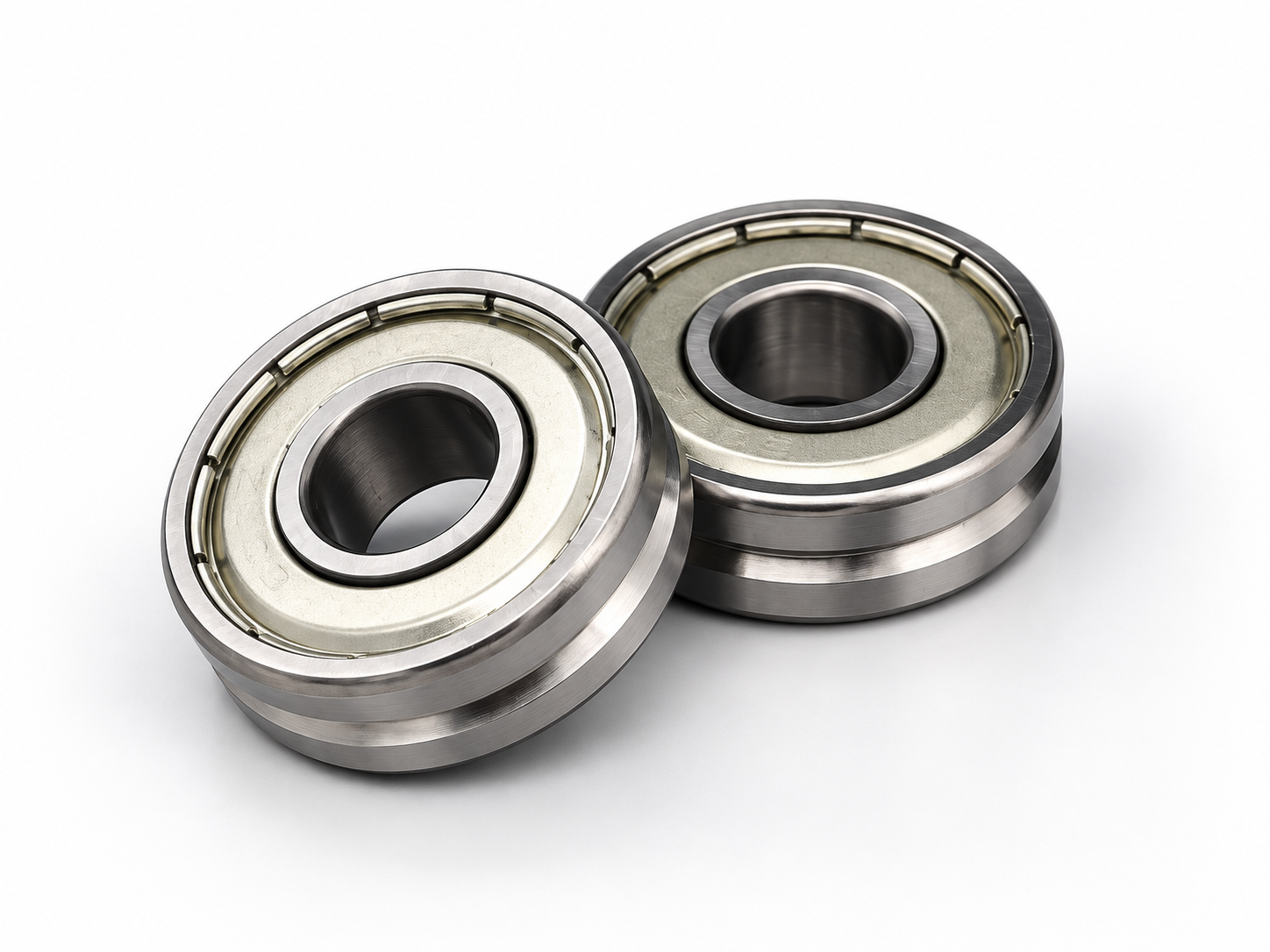
Bending, then relaxing, the bar
Straightening works by bending the bar alternately beyond its yield point in several planes, with decreasing deflection, so that residual curvature from the coil is removed. The rollers apply those bends; their groove and alignment decide how evenly they do it.
Where the rollers sit in the machine
Feed / traction rollers
Grooved rollers pressed onto the bar pull it from the coil and push it through the straightener. Grip and groove wear are the main issues.
Straightening rollers
Rows of rollers, often in two planes, offset against each other to bend the bar alternately. Groove accuracy and alignment decide straightness.
Rotor (rotating straightener)
Rollers or straightening blocks mounted in a rotating frame around the bar. Rotation distributes the bending over the full circumference; bearings run at higher speed with centrifugal load.
Machine layouts vary between manufacturers. Some use fixed rows of rollers only, some a rotor with rollers or blocks, and many combine both. Identify which roller position the replacement is for before comparing drawings.
Groove and hardness considerations
| Parameter | What to decide | Effect if wrong |
|---|---|---|
| Groove form | V, U or specific profile per machine design | Bar wanders, contact concentrates on one flank |
| Groove size | Matched to the bar diameter range the roller serves | Too wide: poor control; too tight: marks ribs, accelerates wear |
| Bar surface | Plain round bar or ribbed rebar | Ribs act like a file on the groove; ribbed bar needs a groove that tolerates rib contact |
| Working diameter | Groove bottom diameter, per machine | Changes the bending geometry and straightening result |
| Groove surface hardness | Hardened and ground, as agreed per drawing | Soft grooves wear quickly and lose profile |
| Groove runout to bore | As tight as the drawing requires | Wavy bar, noise, uneven wear around the groove |
| Core toughness | Balance between hard surface and shock resistance | Very hard, brittle rollers can chip or crack under shock |
Exact hardness values and heat treatment are agreed per drawing and material. A harder groove is not automatically better: the roller must also survive the shock of bar ends entering the machine.
Why rollers wear quickly
- Groove size or profile does not match the bar diameter being run.
- Ribbed bar and mill scale abrade the groove surface.
- Rollers set with excessive pressure or misaligned, so the bar rubs one flank.
- The internal bearing fails, the roller stops turning and the bar slides in the groove, producing a flat.
- Groove runout or bore wear lets the contact point move around the groove.
- Running a wider diameter range on one roller set than it was designed for.
Bearing contamination in straightening rollers
Rebar processing generates mill scale, rust flakes and fine metallic dust. These particles collect around the roller hub and are the most common reason the internal bearing fails. Once the bearing is rough or seized, the groove wears flat within a short time.
| Condition | Protection measure | Maintenance point |
|---|---|---|
| Scale and rust dust | Contact seals (2RS type) rather than shields | Blow or brush dust from roller hubs, do not use high-pressure air at the seal |
| Rotor running at speed | Bearing and grease suited to the speed and centrifugal load | Check rotor bearings for noise and heat at regular intervals |
| Outdoor or damp sites | Seals with corrosion protection; covered storage | Check for rust after standstill |
| Shock from bar ends | Correct fits; no looseness on the pin | Check pins and bolts for wear and loosening |
Reproducing a roller from a worn sample
- Send the worn roller, preferably with an unworn or less-worn roller from the same position.
- State the machine brand and model and the roller position (feed, straightening row or rotor).
- State the bar diameter range and whether the bar is plain or ribbed.
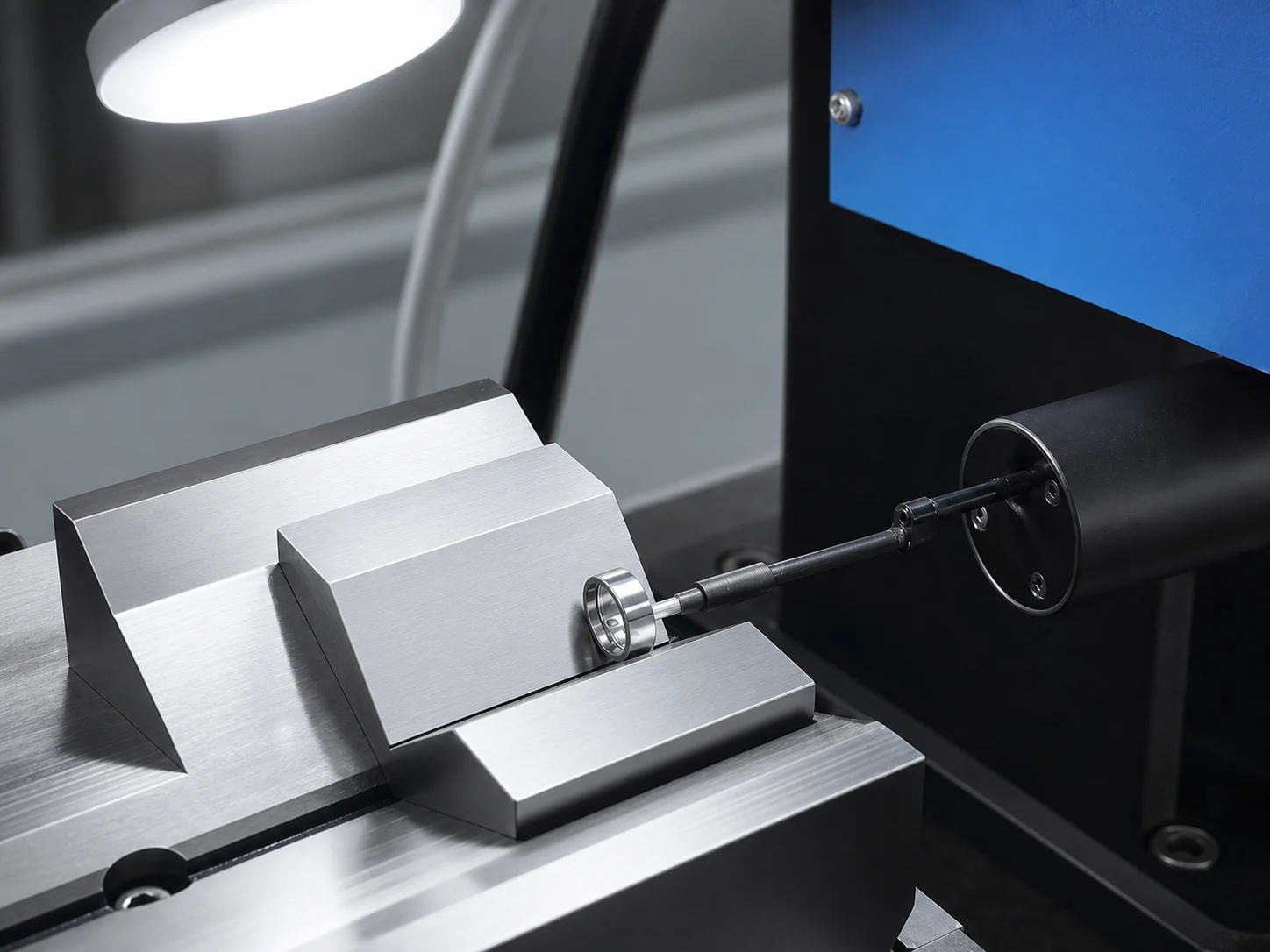
- We measure bore, width, outside diameter and the groove profile at its least-worn section, and identify the internal bearing.
- We send a drawing for confirmation, including groove, hardness requirement and bearing type, before production.
Rebar straightening rollers from Cixi
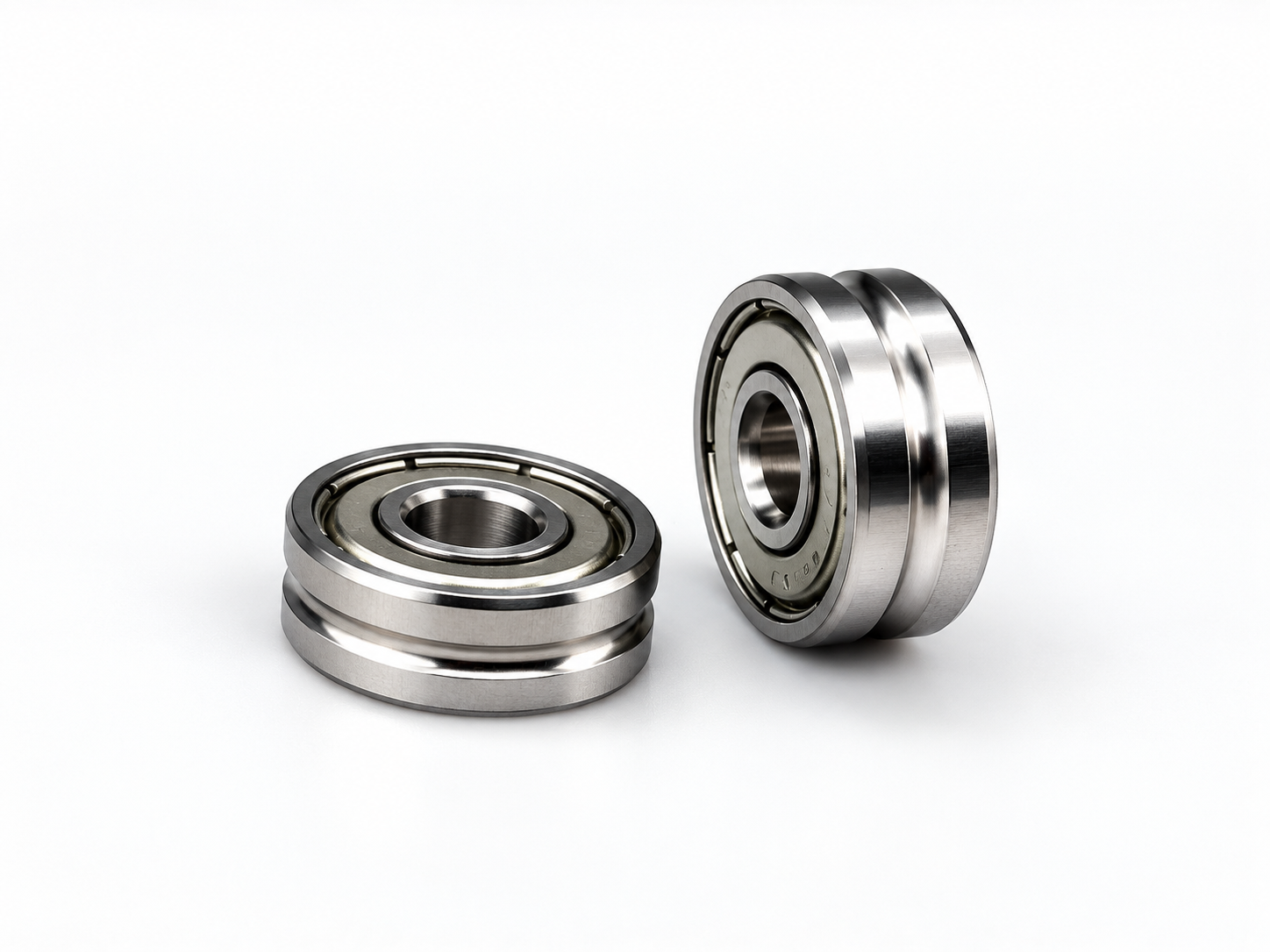
We manufacture rebar straightening rollers, as well as V-groove and U-groove guide and straightening rollers for wire and cable lines. The groove is ground in our own factory and can be reproduced from a worn sample.
Evidence from our workshop
What to send for a quotation
- Machine brand, model and roller position.
- Bar diameter range; plain or ribbed bar.
- Drawing, photos or a worn sample (ideally also an unworn one).
- Bore, width and outside diameter if already measured.
- Quantity and the wear or failure problem you want to solve.
Frequently Asked Questions
What do the rollers in a rebar straightening machine do?
Feed rollers pull the bar from the coil; straightening rollers or a rotor bend it alternately in several planes so that the coil curvature is removed before the bar is cut to length.
Why do rebar straightening rollers wear so fast?
Common causes are a groove that does not match the bar diameter, abrasive ribs and mill scale, excessive pressure or misalignment, and failed internal bearings that stop the roller turning.
Is a harder straightening roller always better?
No. The groove surface must resist wear, but the roller also has to survive shock from bar ends. Hardness is agreed per drawing and material.
Why do the bearings inside straightening rollers fail?
Mill scale, rust and metallic dust enter the bearing, especially where shields or worn seals are used. The bearing roughens or seizes and the groove then wears flat.
Can NLHB make a straightening roller from a worn sample?
Yes. We measure the sample, identify the internal bearing, confirm a drawing with you and then produce.
Related guides
Published 2026-09-25. Images show our own workshop and representative products. Final dimensions, grades, inspection limits and supply conditions are confirmed against the requested model, drawing and order.