Short answer. Choose 440C / 9Cr18Mo martensitic stainless steel when the bearing needs through-body corrosion resistance in wet washdown service under moderate loads. Choose GCr15 / 100Cr6 chrome steel with surface plating or conversion coating when high contact stress, static Brinelling shock limits, or larger ring cross-sections make 440C load derating and cost impractical—provided you compensate for plating build-up before assembly and enforce post-plate hydrogen relief baking and a cold-forming freeze.
Corrosion-resistant bearing selection is rarely a simple choice between bare steel and stainless steel. In solar trackers, agricultural bearings, and humid industrial drives, surface-engineered GCr15 bearings often retain higher mechanical strength than 440C at lower cross-sectional cost.
When Coated GCr15 Outperforms 440C Stainless Steel
Standard GCr15 (100Cr6 / 52100) bearing steel through-hardens to 60–64 HRC. By contrast, 440C / 9Cr18Mo stainless steel runs near ~58 HRC, carries roughly 80–85% of an identical GCr15 bearing's dynamic load rating, and costs roughly 2–4× more in ring material across larger sections。For metallurgy boundaries, see our 440C and 9Cr18Mo stainless steel bearing guide and when stainless steel bearings still rust.
Coated GCr15 beats 440C in three common conditions:
- High shock or static Brinelling loads. Slow-moving tracker pivots and implement frames require high static dent resistance (
C0 / P0), where58 HRCstainless reaches its plastic indentation limit sooner. - Large bores and thick outer rings. As section mass grows,
440Cbillet cost and grinding time rise sharply compared with plated or coatedGCr15. - Outdoor weather exposure. Rain, condensation, and mud splash suit sacrificial
Zn-Nicoatings without paying for solid stainless alloys.
| Selection Factor | GCr15 / 100Cr6 + Surface Coating |
440C / 9Cr18Mo Stainless |
|---|---|---|
| Ring hardness | 60–64 HRC |
~58 HRC |
Dynamic load rating (C) |
100% baseline |
~80–85% of GCr15 equivalent |
| Static Brinelling resistance | Higher resistance to shock denting | Lower indentation limit under heavy shocks |
| Ring material cost (large sections) | Baseline | ~2–4× ring material cost |
| Protection mechanism | Sacrificial or oil-sealed barrier layer | Through-body passive film (still vulnerable to chlorides) |
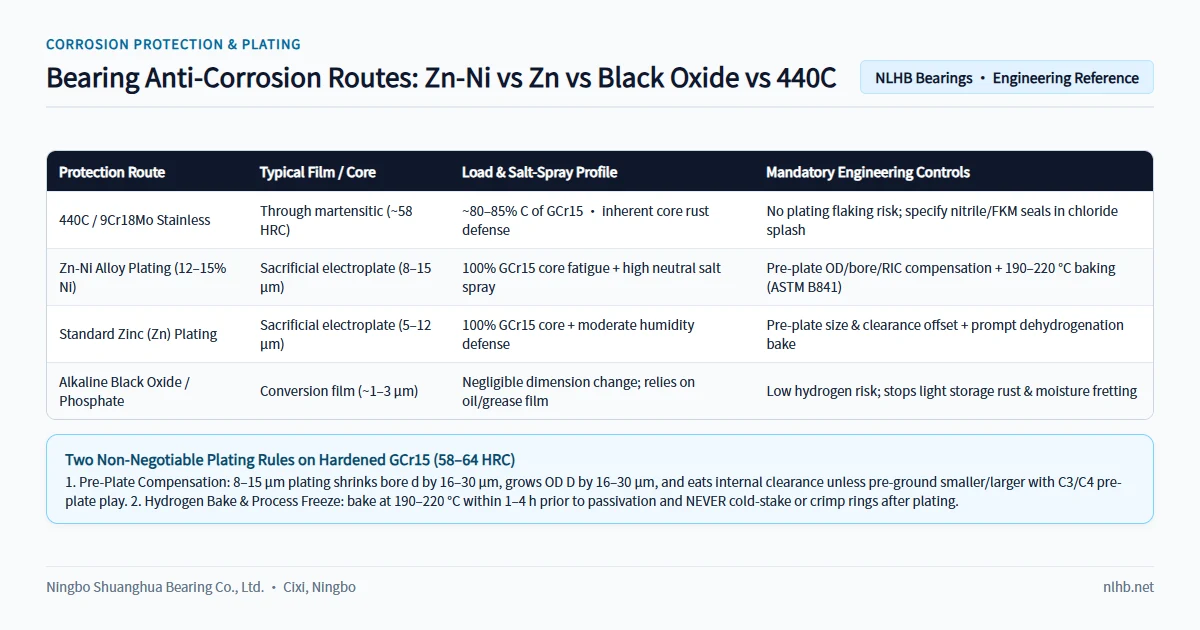
4-Way Comparison: 440C vs Zn-Ni vs Standard Zinc vs Black Oxide / Phosphate
| Route | Layer & Thickness | Corrosion Performance | Fit & Clearance Shift | Hydrogen Risk & Key Benefit |
|---|---|---|---|---|
440C / 9Cr18Mo |
Solid alloy (no coating) | Moderate; resists fresh water & wet washdown | None (ground to final size) | Zero plating hydrogen; tolerates hot washdown without peeling |
Zinc-Nickel (Zn-Ni 12–15% Ni) (ISO 19598 / ASTM B841) |
Electroplated alloy, 8–15 µm per side |
Highest neutral salt-spray life among sacrificial zinc coatings | High (-16–30 µm bore, +16–30 µm OD if uncompensated) |
Requires immediate relief bake; ideal for outdoor/coastal tracker frames |
Standard Zinc (Zn) (alkaline or acid) |
Electroplated pure zinc, 5–12 µm per side |
Moderate humidity/washdown barrier; shorter salt-spray life than Zn-Ni |
Moderate (-10–24 µm bore, +10–24 µm OD) |
High hydrogen permeation risk without bake; light-duty barrier |
Alkaline Black Oxide (ISO 11408) / Phosphate |
1–3 µm chemical conversion film |
Low standalone dry rust barrier; relies on oil/grease | Negligible dimensional build-up | Very low hydrogen uptake; matte oil-retaining surface helps retard tribo-chemical moisture entry and white-etching stress corrosion |
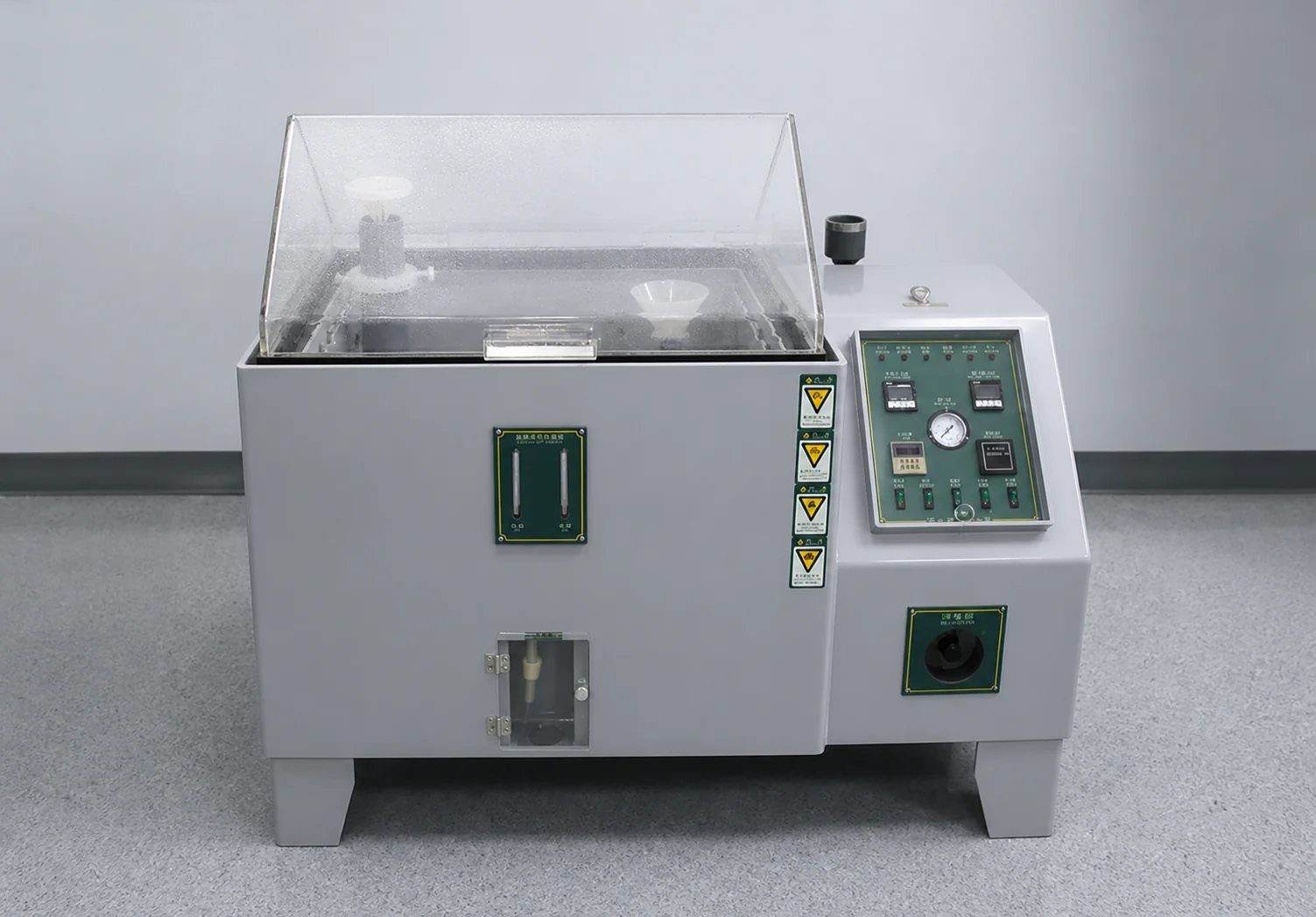
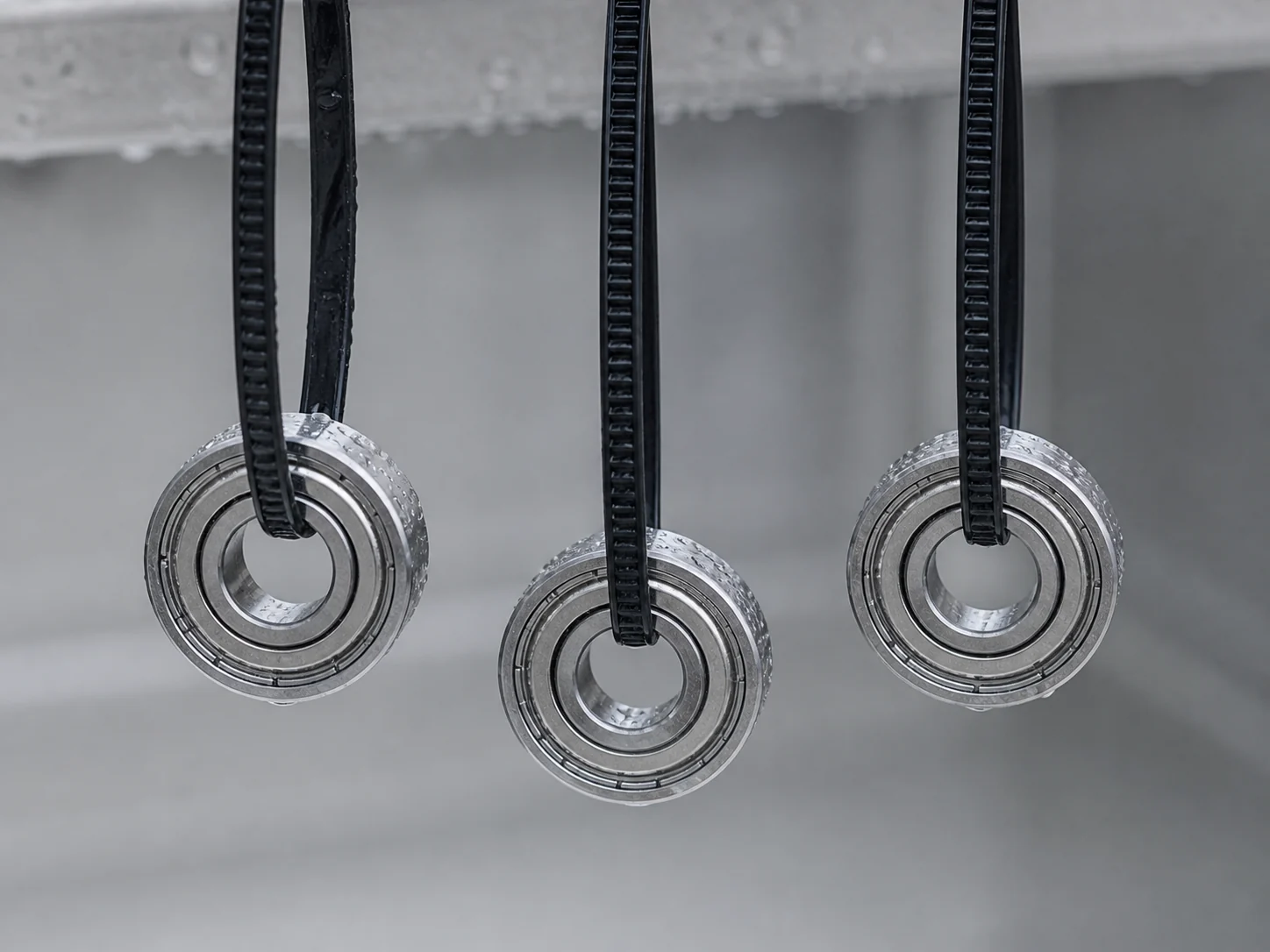
Unlike thick electroplating, 1–3 µm alkaline black oxide (ISO 11408) or zinc/manganese phosphate converts only the outer steel skin. Dry black oxide rusts quickly in salt mist, but sealed with rust-preventive oil or grease, its micro-porous matte finish holds lubricant tightly and helps slow moisture-driven hydrogen uptake and white-etching cracking on stressed races。
Rule 1: Pre-Plating Dimensional & Clearance Compensation
An 8–15 µm per-side Zn-Ni deposit grows outward on every unmasked face simultaneously:
- Bore
dshrinks by16–30 µm, turning a slip fit into an interference bind on hex or round shafts. - Outer diameter
Dgrows by16–30 µm, tightening housing seats—especially when mating stamped housings are also plated. - Radial internal clearance (
RIC) drops unless precision raceways are masked or rings are ground to pre-plating target allowances and assembled with wider pre-plate internal clearance (C3orC4).
Always define finished dimensions after plating and baking, and review bearing clearance C3/CN/C4 behavior alongside our custom bearing rings specs before releasing tolerances.
Rule 2: Hydrogen Embrittlement Relief Baking & Post-Plate Process Freeze
Hardened GCr15 (58–64 HRC) sits well above the 39 HRC hydrogen-embrittlement sensitivity threshold。Acid pickling and electroplating inject atomic hydrogen into the steel lattice; once press-fitted under hoop tensile stress, unbaked rings can suffer delayed brittle fracture.
Two manufacturing rules are mandatory:
- Immediate baking before passivation. Rings must bake at
190–220 °Cwithin1–4 hoursof plating—strictly before chromate passivation or sealing, which otherwise traps hydrogen inside. Hold times typically span8–24 hoursperASTM B841/ISO 19598hardness class, kept safely below the steel's tempering ceiling。 - Strict post-plate cold-forming freeze. Never perform cold plastic forming, riveting, or staking on rings after electroplating. Hard
Zn-Nideposits crack under plastic strain, opening direct moisture paths and triggering localized stress corrosion. Finish all mechanical forming prior to plating or design non-deforming retention.
Never submerge complete assembled bearings into plating baths; trapped pickling acids destroy internal grease and corrode raceways.
What to Send for a Coated Bearing Quote
Submit your operating requirements through our custom bearing solutions workflow:
- Drawing marking coated zones versus masked zones.
- Coating spec (
Zn-Ni12–15% Nithickness window,Zn, orISO 11408black oxide/phosphate) andISO 9227salt-spray target. - Post-plate dimensional and
CN / C3 / C4clearance inspection stage. - Hydrogen relief bake and
ASTM F519or crack-check requirements. - Loads, speeds, and whether mating shafts or housings are also coated.
Frequently asked questions
Is a zinc-nickel plated GCr15 bearing better than a 440C stainless bearing?
It depends on load and environment. Zn-Ni plated GCr15 retains 60–64 HRC hardness and full load/Brinelling capacity for outdoor frames, while 440C suits wet washdown and higher temperatures without plating wear.
Why must hydrogen relief baking occur before chromate passivation? Conversion films and sealers block hydrogen diffusion out of the steel, while baking after passivation cracks and degrades the chromate layer.
How much does 8–15 µm Zn-Ni plating shift bore and OD dimensions?
A 8–15 µm per-side layer shrinks bore d by 16–30 µm and grows OD D by 16–30 µm, requiring pre-plating grinding allowances and wider C3 / C4 pre-plate clearance.
Can rings be staked or riveted after electroplating? No. Cold plastic forming cracks brittle plated coatings and creates localized stress-corrosion sites. Finish all forming before plating or use non-deforming retention.
Does black oxide protect bearings against salt spray without oil?
No. 1–3 µm black oxide conversion layers offer minimal dry barrier protection; they require oil or grease to seal pores and retard moisture ingress.
Can assembled sealed bearings be electroplated whole? No. Plating chemicals become trapped behind seals and inside raceway crevices, ruining grease and causing internal pitting. Plate rings individually before assembly.
Sources and Standards
- ISO 19598:2016 — Electroplated zinc and zinc-alloy coatings on iron or steel with Cr(VI)-free treatment.
- ASTM B841 — Electrodeposited coatings of zinc-nickel alloy deposits on steel.
- ISO 11408 — Chemical conversion coatings: Black oxide coating on iron and steel.
- ISO 24251-1:2025 / ASTM F519 — Prevention and testing of hydrogen embrittlement in high-strength steels.
- ISO 9227 & GB/T 3086 — Neutral salt spray testing and
9Cr18Mostainless bearing steel specifications.
NLHB manufactures GCr15 and 440C bearings, custom rings, and salt-spray tested assemblies in Cixi, Ningbo. Send your drawing and target spec to request a quote.