Yes, stainless steel bearings can rust. Bearing-grade stainless steel such as 440C / 9Cr18Mo is a hardened martensitic steel: it resists water and humidity far better than chrome bearing steel, but it is not immune to chlorides, stagnant moisture in crevices or repeated condensation. Whether a bearing survives depends on the whole assembly — rings, balls, cage, shields, seals and grease — and on how the equipment is cleaned and stored. This guide explains the mechanisms and how to specify a bearing for wet and corrosive service.
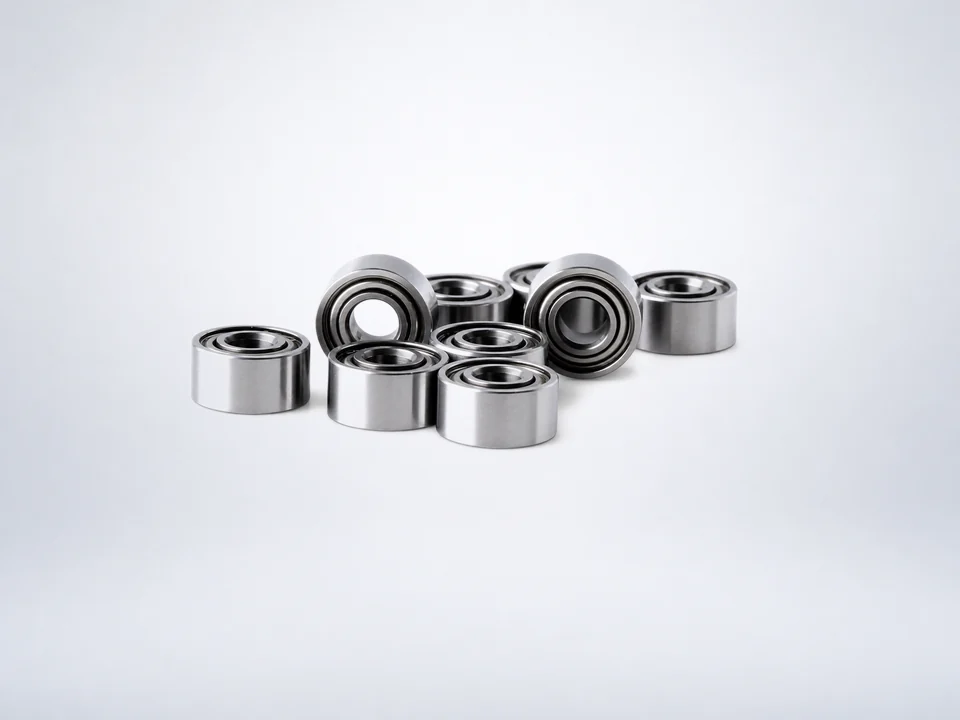
Corrosion resistance is a system property
The rings are only one part. A carbon steel shield, a steel cage, grease washed out by cleaning agents, or water trapped between shaft and bore can start corrosion on a bearing whose rings are stainless.
Why stainless steel can still rust
Stainless steel resists corrosion because chromium forms a thin passive oxide film on the surface. The film repairs itself in air. Corrosion starts where the film is broken faster than it can recover. Bearing stainless steel is hardened to carry rolling contact loads, and hardenable martensitic grades such as 440C / 9Cr18Mo have lower corrosion resistance than the austenitic grades (304, 316) used for tanks and pipework. For the material itself, see our 440C / 9Cr18Mo guide.
| Mechanism | Where it happens | What you see | Main countermeasure |
|---|---|---|---|
| Chloride pitting | Salt water, sea air, sweat, chlorinated or salt-based cleaning agents | Small dark pits on raceways and balls; noise after standing | Rinse with fresh water, keep grease film intact, consider ceramic balls |
| Crevice corrosion | Under shields, in the bore and OD fits, around seal lips | Rust staining at fits and shield edges, fretting marks | Seals rather than open bearings, corrosion-resistant fits and housing materials |
| Condensation | Equipment cycled between cold and warm, outdoor units, cold rooms | Uniform light rust on raceways after idle periods | Grease that resists water, seals, rotate periodically, dry storage |
| Galvanic and mixed-material attack | Stainless rings with carbon steel shields, cages or shafts | Rust starting on the shield or cage first | Specify the material of every component, not only the rings |
| Standstill corrosion | Bearings that sit wet between cleaning cycles | Marks at ball pitch on the raceway | Drain and dry after washdown, relubricate or use sealed, greased units |
Stainless steel vs chrome steel bearings
| Property | Chrome steel (GCr15 / 52100) | Stainless steel (440C / 9Cr18Mo) |
|---|---|---|
| Corrosion resistance | Low; relies on grease and packaging oil | Good against water and humidity; limited against chlorides |
| Hardness and load capacity | Reference for bearing load ratings | Typically slightly lower; confirm load ratings for the exact model |
| Cost | Lower | Higher material and processing cost |
| Typical use | Dry, lubricated, enclosed machinery | Wet, outdoor, washdown, medical and marine-adjacent service |
Choose stainless only where moisture reaches the bearing. In a dry, well-lubricated gearbox a chrome steel bearing carries more load at lower cost. Where moisture is present, stainless rings are the first step, and the remaining components decide the result.
Shields, seals, grease and ceramic balls
- ZZ shields are non-contact metal shields. They keep out larger particles but not water spray. Confirm the shield material — a non-stainless shield on stainless rings is a common weak point.
- 2RS contact seals keep water and cleaning fluid out much better than ZZ, at the cost of higher friction and a lower speed limit. For wet service they are usually the right default. See ZZ vs 2RS.
- Grease is part of the corrosion protection. A water-resistant grease with a suitable fill protects raceways during standstill. Washdown with hot water or detergents gradually removes grease from open or shielded bearings.
- Ceramic balls (silicon nitride, Si₃N₄) do not rust and are lighter than steel balls. Stainless rings with ceramic balls remove the balls as a corrosion site, but the rings, cage and shields still need to be chosen for the environment.
- Cage material should match the environment. Steel or nylon cages are supplied to customer requirement; state the material if the bearing will run wet.
Application notes
Fishing reels
Salt water and salt spray are the main risk. Stainless rings, shields or seals and a water-resistant grease are typical; hybrid ceramic-ball versions are used where lower weight and no ball corrosion are wanted. Rinse with fresh water after use and dry before storage.
Outdoor equipment
Rain, dew and daily temperature cycles cause condensation inside the bearing. Contact seals, adequate grease fill and drain paths in the housing matter more than the steel grade alone.
Food and washdown equipment
Frequent washing with water and cleaning agents removes grease and leaves water in crevices. Sealed stainless bearings with a lubricant approved by your own food-safety requirements are the usual approach. Name the lubricant in the order; we confirm availability before quotation.
How to specify a bearing for wet or corrosive service
- Describe the medium: fresh water, salt water, sea air, cleaning agents (name them), condensation only.
- Describe the exposure: splash, spray, immersion, washdown frequency, standstill time while wet.
- Specify the material of rings, balls, cage and shields separately.
- Choose the closure: 2RS for water and fluids; ZZ only where spray does not reach the bearing.
- Specify grease type and fill, or state that the grease must be water-resistant and let us propose one.
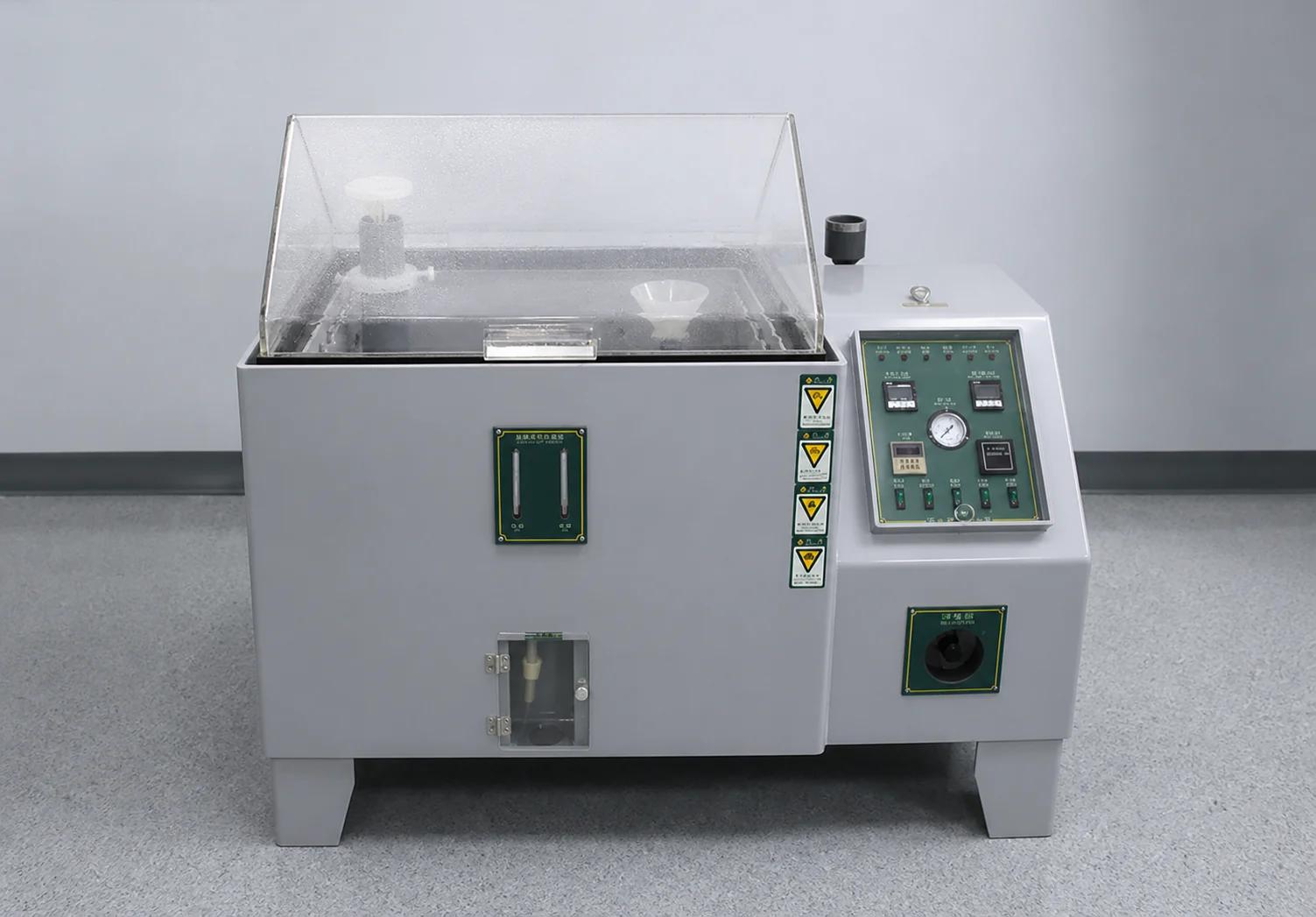
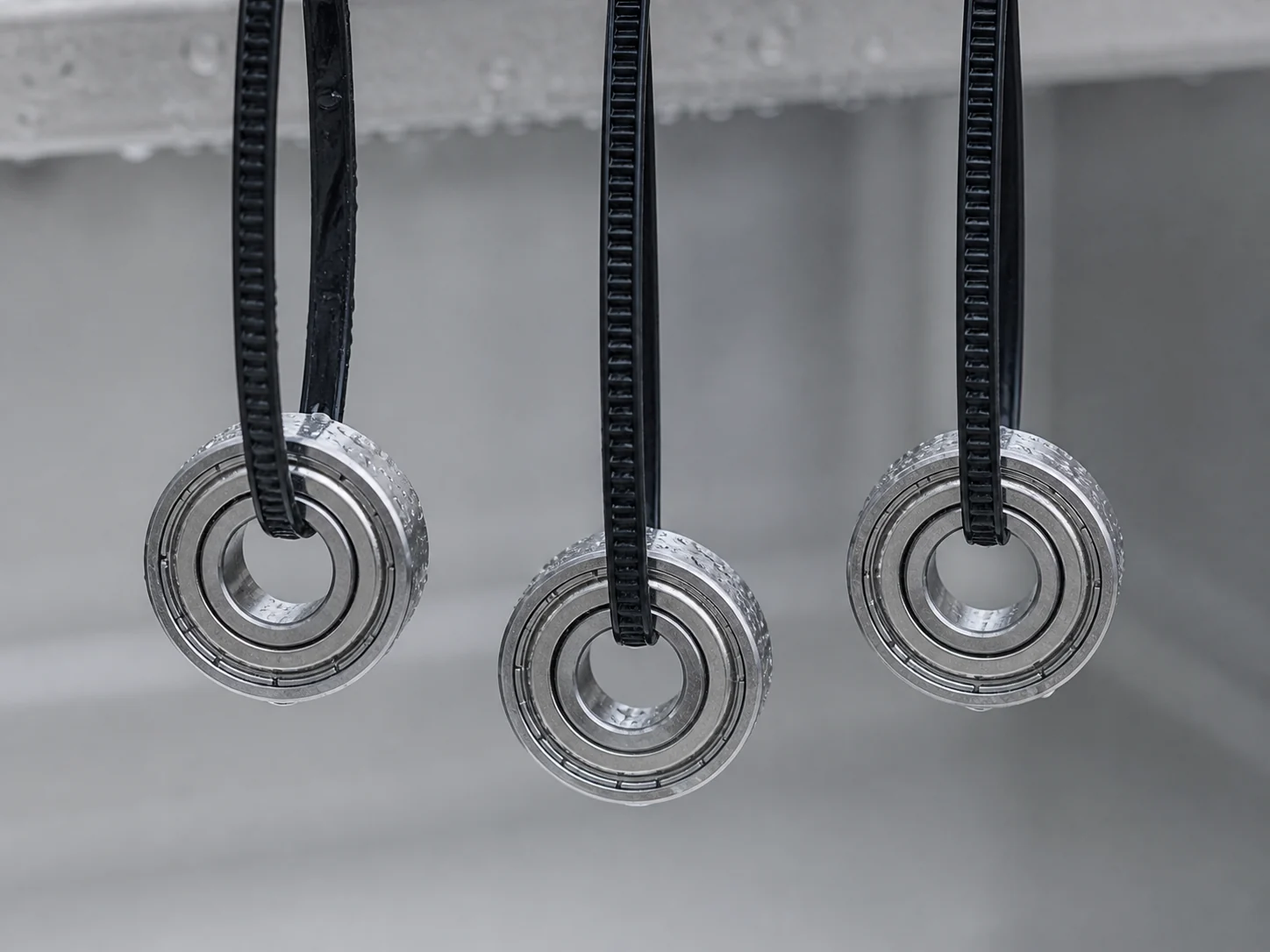
- Agree any corrosion test, such as a salt spray comparison, with its duration and acceptance criteria written into the order.
Stainless rings, ceramic balls and salt spray comparison
We produce miniature bearings with stainless steel rings and silicon nitride ceramic balls, with steel or nylon cages to customer requirement. Our salt spray chamber is used to compare materials and surface conditions; test duration and acceptance criteria are agreed per order. NLHB manufactures miniature and deep groove ball bearings up to P4 precision, and double row angular contact bearings and track rollers up to P6.
Evidence from our workshop
What to send for a quotation
- Designation with material and closure, e.g. S608-2RS or 608-2RS stainless.
- Material of rings, balls, cage and shields.
- Medium and exposure: salt water, washdown agents, condensation, standstill time.
- Grease requirement, including any lubricant approval your application needs.
- Corrosion test requirement, if any, with duration and acceptance criteria.
Frequently Asked Questions
Do stainless steel bearings rust?
They can. Bearing stainless steel such as 440C resists water and humidity much better than chrome steel, but chlorides, trapped moisture in crevices and repeated condensation can still cause pitting and rust.
Why did my stainless steel bearing rust in salt water?
Chlorides break down the passive film locally. Salt water left in the bearing, especially during standstill, causes pitting on raceways and balls. Rinsing with fresh water, drying and a sealed, greased bearing reduce the risk.
Are 2RS seals better than ZZ shields against water?
Yes. 2RS contact seals keep water and cleaning fluids out far better than non-contact ZZ shields, at the cost of more friction and a lower speed limit.
Do ceramic ball bearings rust?
Silicon nitride ceramic balls do not rust. The rings, cage and shields still can, so a hybrid bearing for wet service normally uses stainless rings.
Is stainless steel always the better choice?
No. In dry, enclosed and well-lubricated machines, chrome steel bearings carry more load at lower cost. Choose stainless where moisture reaches the bearing.
Related guides
Published 2026-09-25. Images show our own workshop and representative products. Final dimensions, grades, inspection limits and supply conditions are confirmed against the requested model, drawing and order.