A planter, a rotary tiller and a baler place very different demands on bearings. Opener discs and tiller rotors work in soil; baler bearings work in dust and chaff under repeated shock. Within one machine the conditions also change from position to position. This guide goes through the main positions on each machine, describes the load and contamination at each, compares insert and unit bearings with sealed deep groove bearings, and summarises the selection in one table.
Select by position, not by machine
The same planter has a disc opener bearing running in wet soil and a seed-meter drive bearing running clean and dry. The seal, bore type and lubrication should follow the position, not a single standard for the whole machine.
Planter and seed drill positions
| Position | Load | Contamination | Typical bearing arrangement |
|---|---|---|---|
| Disc opener hub | Radial from soil resistance; axial from the disc angle and side forces on turns | Continuous contact with soil, water and residue | Sealed double row or deep groove bearing in the disc hub, heavy contact seals |
| Gauge wheel | Radial from depth control; axial on turns and side slopes | Soil and residue at the tyre and hub | Sealed bearing in the wheel hub; seal and dust cap protect the bore |
| Closing and press wheels | Moderate radial, side load from wheel angle | Soil, mud build-up | Sealed bearing, often with flinger |
| Drive and seed-meter shafts | Low radial, low speed | Dust, fertiliser, seed treatment | Hex-bore or round-bore sealed bearings; insert bearings in flanged housings |
The disc opener is the hardest planter position. The disc runs at an angle to travel, so the bearing carries axial load all the time, not only when turning. Soil pressure against the hub and the seal is continuous, and wet residue can wrap around the hub. Seal quality and the fit between hub and bearing decide the life here more than the load rating.
Rotary tiller positions
| Position | Load | Contamination | Typical bearing arrangement |
|---|---|---|---|
| Rotor (blade shaft) end support | High shock from blades striking soil and stones; radial and axial | Soil, water, straw and weeds wrapping at the shaft end | Bearing in a sealed housing with lip seals and a guard; heavy seals, protection against wrapping |
| Side drive (chain or gear case) | Transmitted torque and shock | Protected by the case, but water can enter through worn case seals | Oil-lubricated bearings inside the case; the case seal is the barrier |
| Central gearbox | Input torque from the PTO, shock | Clean if the gearbox is sealed | Oil-lubricated bearings; follow the gearbox maker's specification |
On a tiller the weak point is usually the rotor end opposite the drive. Straw and weeds wrap around the shaft, rub the seal and pull soil into the lip. A guard over the shaft end and regular cleaning are as important as the bearing selection. Where the rotor end bearing sits in an oil-filled side case, check the case lip seal at each service; water in the oil will damage every bearing in the case.
Baler positions
| Position | Load | Contamination | Typical bearing arrangement |
|---|---|---|---|
| Plunger rollers | Repeated shock at each compression stroke; radial on the roller | Dust and chaff on the rails | Track-roller type bearings with a thick outer ring running on the plunger rails |
| Pickup reel and cam track | Light radial with frequent impacts from the crop and ground | Dust, chaff, soil at the pickup | Cam followers or small sealed bearings; insert bearings on reel shafts |
| Packer / stuffer and feeder | Cyclic load, shock | Dust and fibres | Insert bearings in housings or sealed bearings on crank pins |
| Knotter drive | Low speed, indexed motion | Dust, twine fibres, crop residue | Small sealed bearings; cleanliness of the knotter area matters |
| Flywheel and main drive | Belt or PTO load; high inertia | Dust | Sealed bearings or bearings in housings, relubrication where specified |
Baler plunger rollers are track rollers in function: the outer ring runs directly on the rail and carries shock at every stroke. A thick outer ring and a crowned or cylindrical profile matched to the rail are the main selection points. See our track roller series guide for outer ring profiles.
Insert and unit bearings or sealed deep groove bearings
| Insert bearing / mounted unit | Sealed deep groove bearing in a machined bore | |
|---|---|---|
| Construction | Deep groove ball bearing with a wide inner ring, spherical outer ring and locking device; supplied in a pillow block or flanged housing | Standard or wide-series bearing pressed into a hub, pulley or housing |
| Shaft location | Set screws, eccentric collar, or square or hex bore | Interference fit, shoulder, snap ring or clamping nut |
| Misalignment | Spherical outer ring compensates for initial misalignment in the housing | Limited; needs an accurately bored hub or housing |
| Relubrication | Often possible through a grease fitting in the housing | Usually sealed-for-life |
| Replacement | Unit or insert changed on the machine with simple tools | Requires pressing out and in |
| Typical positions | Frame-mounted shafts: drive shafts, reel shafts, conveyor shafts | Wheel hubs, disc hubs, pulleys, rollers |
Insert bearings suit long shafts carried on a welded frame, where the housing alignment cannot be controlled precisely. Hub-mounted positions such as opener discs and gauge wheels normally use pressed-in sealed bearings, because the hub itself provides the housing and the seal must be integral with the bearing.
Sealing and relubrication by position
- In the soil (opener discs, tiller rotor ends, closing wheels): multi-lip contact seals, a flinger where space allows, and a guard against residue wrapping.
- Near the soil but not in it (gauge wheels, pickup): double-lip seals are the usual minimum; dust caps on hubs.
- Above the ground in dust (drive shafts, baler mechanisms): contact seals; shields are acceptable only in covered, clean positions.
- Inside oil-filled cases: the case seal protects the bearing; open or shielded bearings are normal inside.
- Relubrication: use grease fittings where the operator has a daily or weekly greasing routine. Grease until fresh grease appears at the seal, and do not force. Where greasing is unlikely, choose sealed-for-life.
Seal types, grease families and washing practice are covered in detail in why farm bearings get mud and water inside.
Selection summary
| Machine / position | Main load | Contamination level | Bearing type | Sealing | Lubrication |
|---|---|---|---|---|---|
| Planter disc opener | Radial + continuous axial | Severe: soil, water | Sealed double row or deep groove in hub | Multi-lip, flinger | Sealed-for-life |
| Planter gauge / closing wheel | Radial + side load | High: soil, residue | Sealed bearing in hub | Double or triple-lip, dust cap | Sealed-for-life |
| Planter drive / meter shaft | Light | Moderate: dust, fertiliser | Hex or round-bore insert or sealed bearing | Contact seal | Either |
| Tiller rotor end | Shock, radial + axial | Severe: soil, straw wrapping | Housed bearing with lip seals | Heavy seals, guard | Relube or oil bath per design |
| Tiller side case / gearbox | Torque, shock | Low inside the case | Oil-lubricated bearings | Case lip seal | Oil |
| Baler plunger roller | Repeated shock | Moderate: dust, chaff | Track-roller type | Contact seals | Sealed or relube per design |
| Baler pickup / packer | Cyclic, impacts | High: dust, soil at pickup | Insert bearings, cam followers | Contact seals | Relube where accessible |
| Baler knotter | Light, indexed | Dust, fibres | Small sealed bearings | Contact seals | Sealed-for-life |
This table describes typical practice. The final choice for a given machine follows the original design and the drawing; where the original bearing has failed repeatedly, send the failed part so the failure mode can be identified before changing the specification.
Agricultural bearings by position
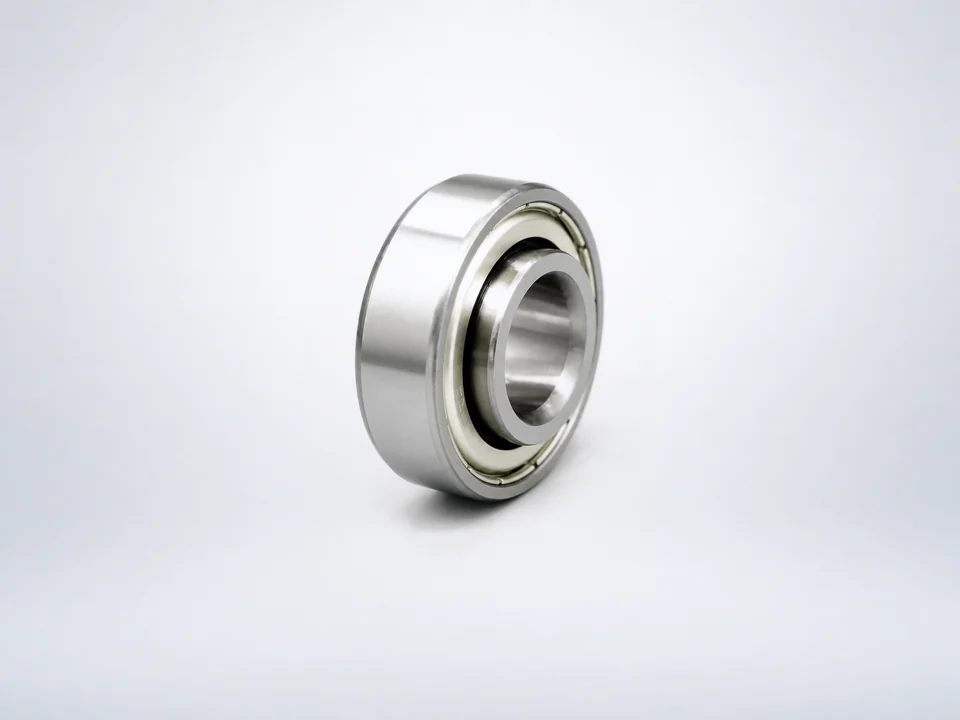
We supply agricultural bearings including 203KRR2-type units, and track rollers for roller positions. Send the machine position, the original part or drawing and the failure history; we confirm whether the part fits our range and agree seal type, grease and inspection per order. NLHB manufactures miniature and deep groove ball bearings up to P4 precision, and double row angular contact bearings and track rollers up to P6.
Evidence from our workshop
What to send for a quotation
- Machine type and bearing position (e.g. planter disc opener, tiller rotor end, baler plunger roller).
- Original designation or drawing, or a sample.
- Bore type (round, square, hex) and locking method.
- Seal type required and relubrication or sealed-for-life.
- Failure history of the original bearing, annual quantity and packing.
Frequently Asked Questions
Which planter bearing fails most often?
Usually the disc opener bearing. It carries continuous axial load from the disc angle and runs in constant contact with soil and water, so seal wear decides its life.
Why do rotary tiller bearings fail at the rotor end?
Straw and weeds wrap around the shaft end, rub the seal and pull soil into the lip, while blade impacts add shock. A guard and regular cleaning are as important as the bearing itself.
Are baler plunger rollers ordinary bearings?
They work as track rollers: the outer ring runs directly on the plunger rail and takes shock at each stroke, so a thick outer ring and a profile matched to the rail are needed.
When should I use an insert bearing instead of a sealed deep groove bearing?
Use insert bearings on frame-mounted shafts where housing alignment is not precise and quick replacement is needed. Use pressed-in sealed bearings in wheel and disc hubs.
Should agricultural bearings always be relubricatable?
Only where the operator greases regularly. Where greasing is unlikely, sealed-for-life bearings avoid over-greasing and the wrong grease.
Related guides
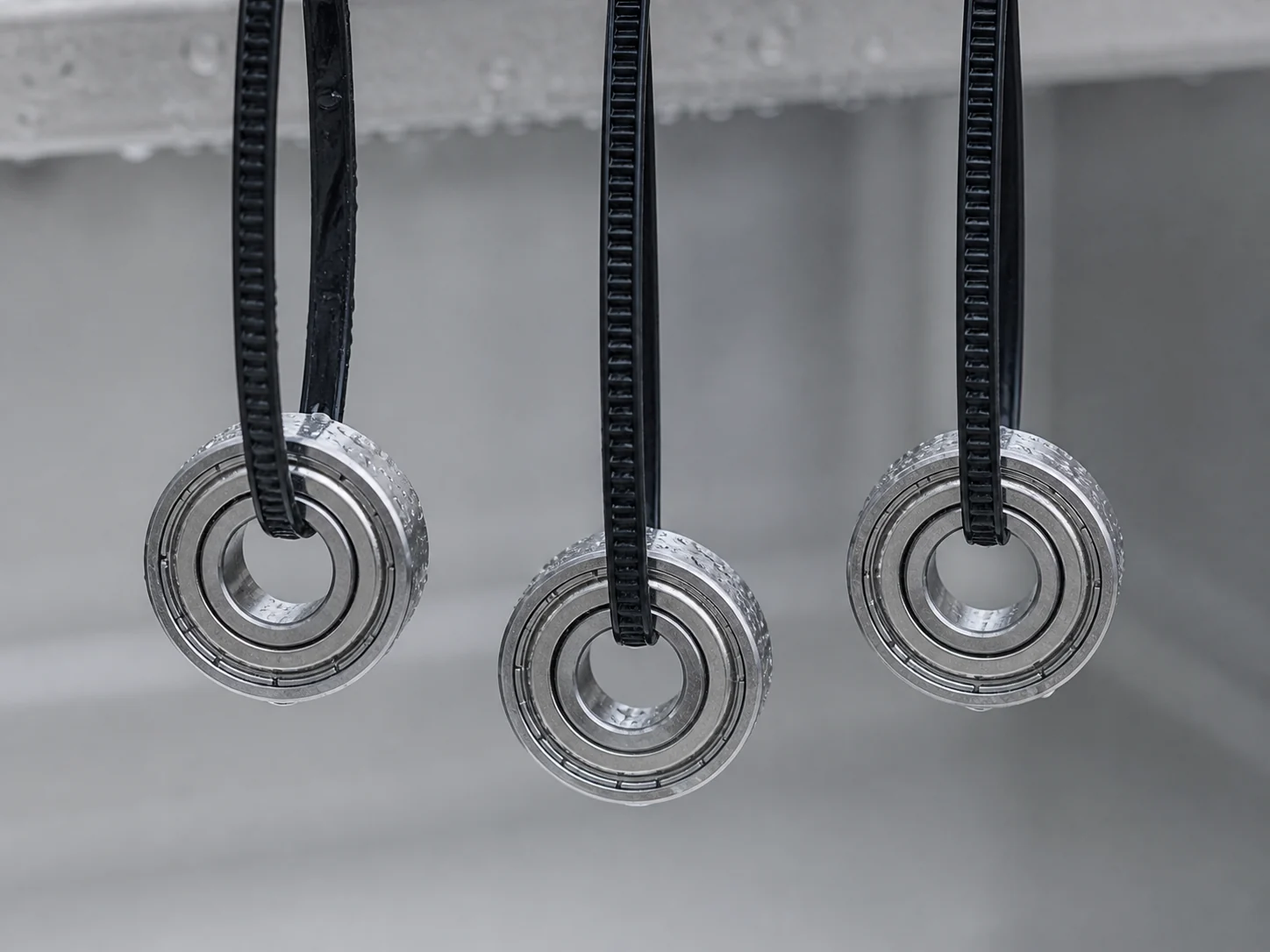
Published 2026-09-25. Images show our own workshop and representative products. Final dimensions, grades, inspection limits and supply conditions are confirmed against the requested model, drawing and order.