A disc harrow gang turns on a square shaft that carries the discs and spools as one clamped stack. The gang bearing must transmit that rotation without slipping on the shaft, survive continuous mud and dust, and absorb shock when discs strike stones or hard ground. This guide explains the square-bore design, how the common designations are read, why these bearings fail, and what to send when you need a replacement.
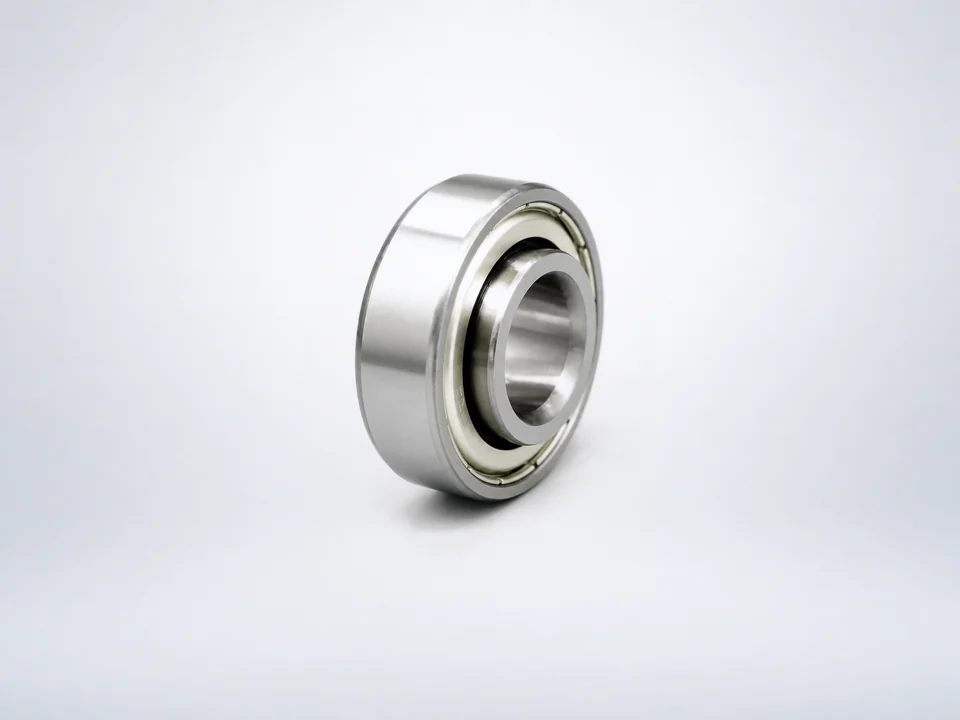
The bore locks the ring to the gang
On a disc gang the inner ring must rotate with the square shaft. A square bore gives a positive drive with no set screw or eccentric collar, while the seal system on both sides keeps soil out of the raceways.
Why disc harrow bearings have a square bore
Disc blades are mounted on a square gang shaft (gang bolt) and separated by spools. The whole stack is clamped by a nut at the end of the shaft. Because the shaft is square, the discs, spools and the bearing inner ring rotate together as one assembly. This avoids the two weaknesses of a round-bore bearing in this position: set screws that loosen under vibration, and a round bore that can creep on the shaft when it becomes contaminated.
| Feature | Square-bore gang bearing | Round-bore bearing with set screw or collar |
|---|---|---|
| Drive between shaft and inner ring | Positive, by the square form | Friction and set screw or eccentric collar |
| Axial location | By the clamped disc and spool stack | By set screw or collar on the shaft |
| Typical loosening mechanism | Loose gang nut lets the bore rock on the shaft | Set screw backs off; ring creeps on the shaft |
| Typical position | Disc gangs on harrows and similar tillage tools | General farm shafts, conveyors, drives |
How to read W208PPB-type designations
W208PPB is a commonly referenced industry designation for a disc harrow square-bore bearing. Designations of this family are generally read as follows; always confirm the meaning against the catalogue of the brand the part was originally bought from, because suffix usage is not uniform across manufacturers.
| Part of the designation | Common meaning | What to confirm |
|---|---|---|
| Prefix (e.g. W) | Identifies a special or agricultural series | Brand catalogue meaning |
| Series number (e.g. 208) | Relates to the bearing envelope, mainly outside diameter | Measured OD and width |
| Seal suffix (e.g. PP) | Seal on both sides | Number of lips, flinger type |
| Other suffixes (e.g. B) | Outer ring or bore variant | Spherical or cylindrical OD, square bore size |
Replacement parts sold under these numbers by different suppliers are dimensionally compatible references, not brand authorization. Two parts with the same number can still differ in seal design, grease and ring shape, so compare the sample, not just the label. For suffix conventions in general, see our bearing suffix guide.
Seals and flingers on gang bearings
Gang bearings run close to the soil and are often submerged in wet mud. The sealing system is therefore usually heavier than on a standard deep groove ball bearing:
- Triple-lip contact seal: several rubber lips in series. The outer lip excludes coarse soil, the inner lips keep fine particles and water out and grease in.
- Flinger (slinger): a steel shield that rotates with the inner ring in front of the seal. It throws off mud and protects the rubber lips from direct abrasion.
- Spherical outer ring: many gang bearings have a spherical OD fitted in a housing or flangette, allowing the bearing to align with a gang shaft that is not perfectly straight.
- Grease fill: sealed-for-life types rely on the initial grease; re-lubricatable versions are fed through the housing.
Contact seals add friction and temperature compared with shields. At the low speeds of a disc gang this is acceptable; the priority is exclusion. See seal lip speed limits for the general relationship.
Common failure modes and their causes
| Symptom | Most likely cause | What to check |
|---|---|---|
| Rough rotation, grinding noise | Mud or fine soil past worn seal lips | Seal lip wear, flinger damage, grease condition |
| Rust-coloured grease, pitted raceways | Water ingress; condensation during storage | Washing practice, storage conditions, seal integrity |
| Worn or rounded square bore | Loose gang nut; bore rocking on the shaft | Gang bolt torque, spool faces, shaft corners |
| Cracked outer ring or housing | Shock load from stones, stumps or transport | Operating depth and speed, housing bolts |
| Bearing seized, disc gang dragging | Advanced contamination or loss of grease | Replace bearing; inspect shaft and housing |
| Seal pushed out or turned inside out | Over-greasing of a re-lubricatable unit | Grease quantity and gun pressure |
A worn square bore is almost always a clamping problem rather than a bearing quality problem. If the gang nut is not re-tightened after the first hours of work and at regular intervals, the stack loosens, the bore corners hammer against the shaft and the new bearing fails in the same way as the old one.
How to specify a replacement
- Read the full designation on the outer ring or seal, including every suffix.
- Measure the square bore across flats, the outside diameter, and the inner and outer ring widths.
- Note the outer ring form: spherical or cylindrical, and any snap-ring groove.
- Note the seal: number of lips, flinger present or not, grease fitting or sealed-for-life.
- Check the shaft: corner wear on the square gang bolt means the shaft may need replacing as well.
- Record the housing or flangette type so the bearing seats correctly.
Agricultural bearings from our Cixi factory
We supply agricultural bearings including 203KRR2-type units. Square-bore disc harrow bearings are made to order: send the designation, measured dimensions or a sample and we quote dimensionally compatible references, not brand-authorized parts.
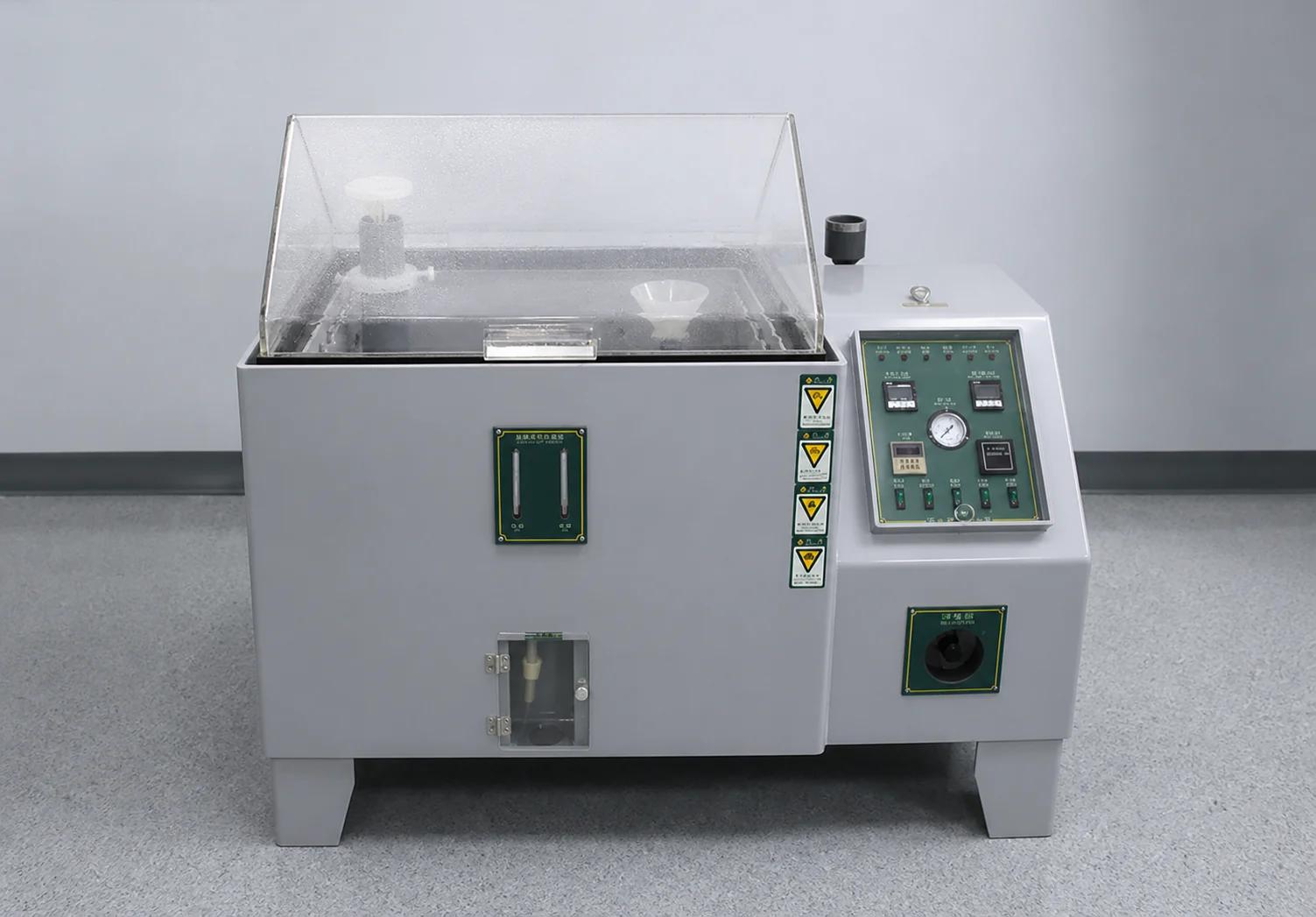
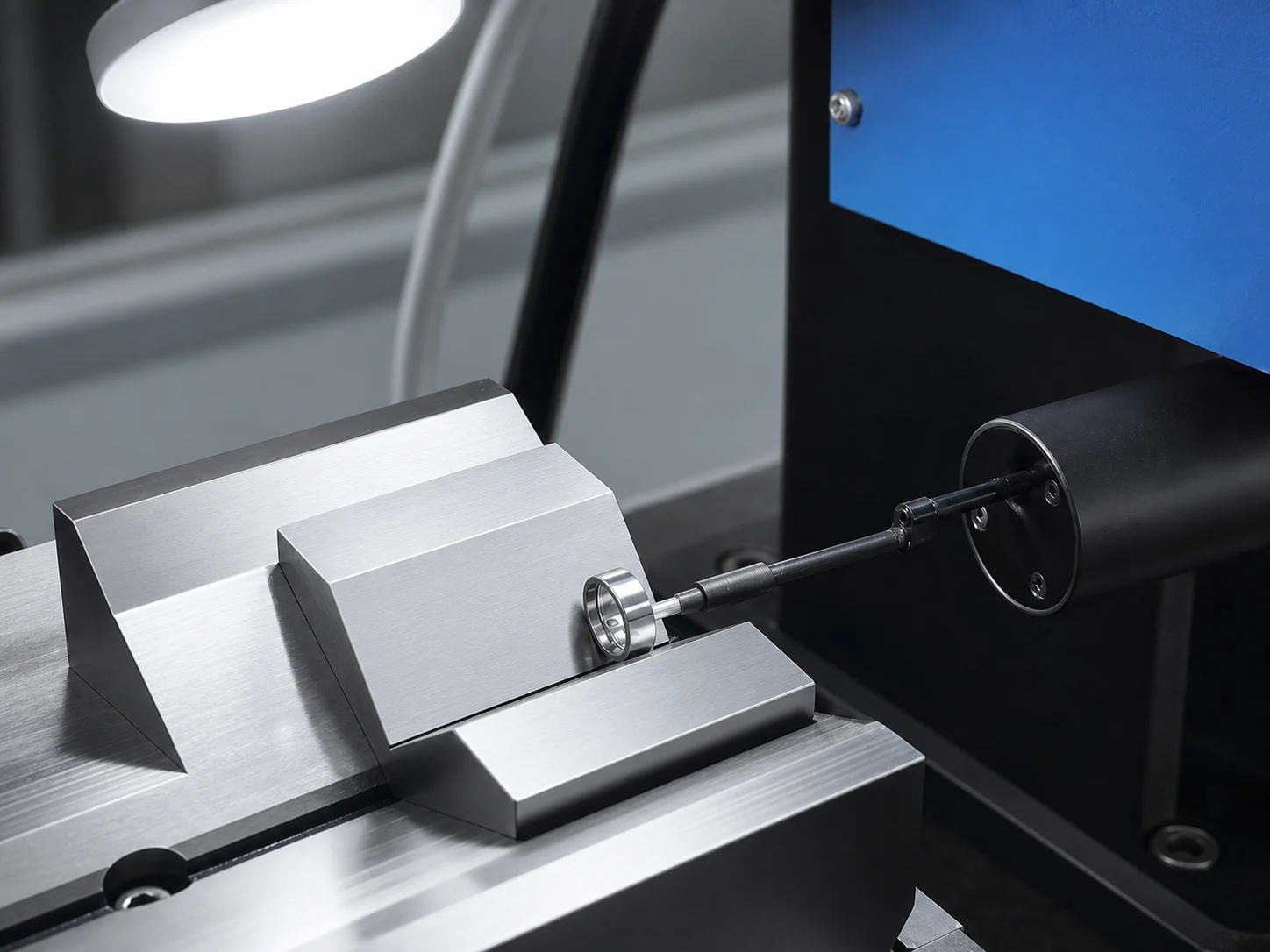
Evidence from our workshop
What to send for a quotation
- Full designation from the old bearing, including all suffixes.
- Square bore across flats, outside diameter and ring widths, measured.
- Outer ring form (spherical or cylindrical) and seal type (lips, flinger).
- Photos of the bearing, housing and shaft, or a sample.
- Machine type, annual quantity and any recurring failure you want to solve.
Frequently Asked Questions
Why do disc harrow bearings have a square bore?
Because the gang shaft is square. The square bore makes the inner ring turn positively with the discs and spools, without set screws or locking collars that can loosen.
What does W208PPB mean?
It is a commonly referenced industry designation for a disc harrow square-bore bearing. The series number relates to the bearing envelope and PP usually indicates seals on both sides; confirm the exact meaning in the original brand catalogue.
Why do my harrow bearings keep failing early?
The usual causes are mud and water past worn seals, a loose gang nut that lets the bore rock on the shaft, shock loads from stones, and over-greasing that damages the seals.
Can I replace a square-bore bearing with a round-bore one?
Not directly on a square gang shaft. The shaft, spools and housing are designed around the square bore; changing the bore type means changing the gang design.
Are replacement W208PPB-type bearings original brand parts?
No. Replacements from other manufacturers are dimensionally compatible references, not brand authorization. Compare dimensions, seal design and grease against your sample.
Related guides
Published 2026-09-25. Images show our own workshop and representative products. Final dimensions, grades, inspection limits and supply conditions are confirmed against the requested model, drawing and order.