Most agricultural bearings do not fail from fatigue. They fail because soil, crop residue or water gets past the seal and destroys the raceways long before the rated life is reached. This guide explains how contamination enters, how the common seal designs compare, when relubrication helps and when it harms, and how to match the sealing arrangement to the field condition.
Contamination, not fatigue, sets the life
Rated life under ISO 281 assumes clean lubrication. In a tillage or harvesting machine the real limit is how long the seal keeps soil and water out, so the seal system deserves as much attention as the load rating.
How mud and water get inside
- Lip wear: abrasive soil on the seal lip acts like a grinding compound. Once the lip is worn, fine particles pass with every revolution.
- Direct pressure: high-pressure washing aimed at the seal forces water and fine dirt past the lips.
- Breathing: a warm bearing that is washed or parked in cold, wet conditions cools down, the internal air contracts and moist air is drawn in. Condensation then forms inside.
- Submersion: bearings running in wet mud or standing water see a continuous head of slurry at the seal.
- Seal damage at installation: lips cut by shaft edges or keyways, or seals dented by hammering on the wrong ring.
- Over-greasing: excessive pressure from a grease gun lifts or inverts a contact lip, leaving a permanent leak path.
Seal types compared
| Seal type | How it works | Exclusion | Friction and heat | Typical use |
|---|---|---|---|---|
| Shield (ZZ, metal) | Non-contact steel shield with a small gap | Coarse particles only | Lowest | Clean, dry positions; not for mud or water |
| Single-lip contact seal (2RS) | One rubber lip on the inner ring | Good for dust and splash | Moderate | General machinery, covered positions |
| Double-lip contact seal | Two lips in series | Better for fine dust and light water | Higher | Drives and shafts near soil but not submerged |
| Triple-lip contact seal | Three lips in series, often with a flinger | High, for mud and slurry | Highest | Disc gangs, tillage tools, seeders |
| Flinger / slinger | Rotating steel shield ahead of the seal | Throws off mud, protects the lips | Low addition | Combined with contact seals in heavy soil |
| Labyrinth | Narrow, winding non-contact passage, often grease-filled | Good when kept filled with grease | Low | Housed units, higher speed positions |
Each additional contact lip increases friction torque and operating temperature. On slow tillage shafts this is acceptable; on faster positions check the seal lip speed. See sealed bearing speed limits and ZZ vs 2RS for the underlying comparison.
Relubrication or sealed-for-life
| Re-lubricatable (grease fitting) | Sealed-for-life | |
|---|---|---|
| Principle | Fresh grease purges old grease and contamination outward past the seal | Initial grease fill must last the service life |
| Advantage | Can recover a bearing that has taken in small amounts of dirt or water | No maintenance; no risk of over-greasing or wrong grease |
| Risk | Over-greasing damages seals; dirty grease fittings inject contamination | No recovery once contamination enters |
| Suited to | Machines with a regular greasing routine and accessible fittings | Positions that are hard to reach or often forgotten |
The decision depends more on the maintenance culture of the end user than on the bearing itself. A re-lubricatable bearing that is never greased performs no better than a sealed one; a sealed bearing in a position that is greased by habit will have its seals damaged.
Grease selection principles
- Water resistance first: choose a grease with good water wash-out resistance and corrosion protection. Lithium-complex, calcium-sulfonate and polyurea greases are families commonly used for wet agricultural duty; confirm the specific product with the grease supplier.
- Consistency: a firmer grease helps form a barrier at the seal; a softer grease flows better in cold weather and through long grease lines. Choose to suit temperature and relubrication method.
- Compatibility: do not mix greases of different thickener types without confirming compatibility. Mixing can soften the grease and let it run out.
- Fill quantity: sealed bearings are filled to a defined proportion of free space. Overfilling raises temperature and pressure behind the seal.
- Rust protection in storage: machines stored between seasons need grease and seals that protect against condensation over months of standstill.
Installation and maintenance practice
- Chamfer or cover shaft edges, keyways and square corners so seal lips are not cut during fitting.
- Press only on the ring being fitted; never hammer on the seal or flinger.
- Wipe grease fittings clean before greasing; stop when fresh grease appears at the seal, and do not force.
- Wash with low pressure and do not aim the jet at the seal.
- After washing, run the machine briefly to drive out water, or let it dry before long-term storage.
- Store machines under cover; turn the shafts at intervals during long storage where practical.
- Re-tighten bolts, gang nuts and housing fasteners after the first hours of work; looseness destroys seals as quickly as dirt does.
Selection by field condition
| Field condition | Recommended sealing | Lubrication | Notes |
|---|---|---|---|
| Dry, dusty soil | Double or triple-lip contact seal | Sealed-for-life or relube | Fine dust abrades lips; flinger helps |
| Wet, sticky clay or mud | Triple-lip seal with flinger | Relube preferred where a routine exists | Highest wear on the outer lip |
| Standing water, paddy fields | Triple-lip seal with flinger, water-resistant grease | Relube to purge water | Check for condensation after each season |
| Crop residue, straw wrapping | Contact seal with flinger or guard | Either | Wrapped straw rubs and heats the seal |
| Covered drives, off the ground | Single-lip seal or shield | Sealed-for-life | Lower friction; less heat |
| Fertilizer or chemical exposure | Contact seal; corrosion protection considered | Either | Confirm seal material and ring surface protection |
Seal and grease agreed per application
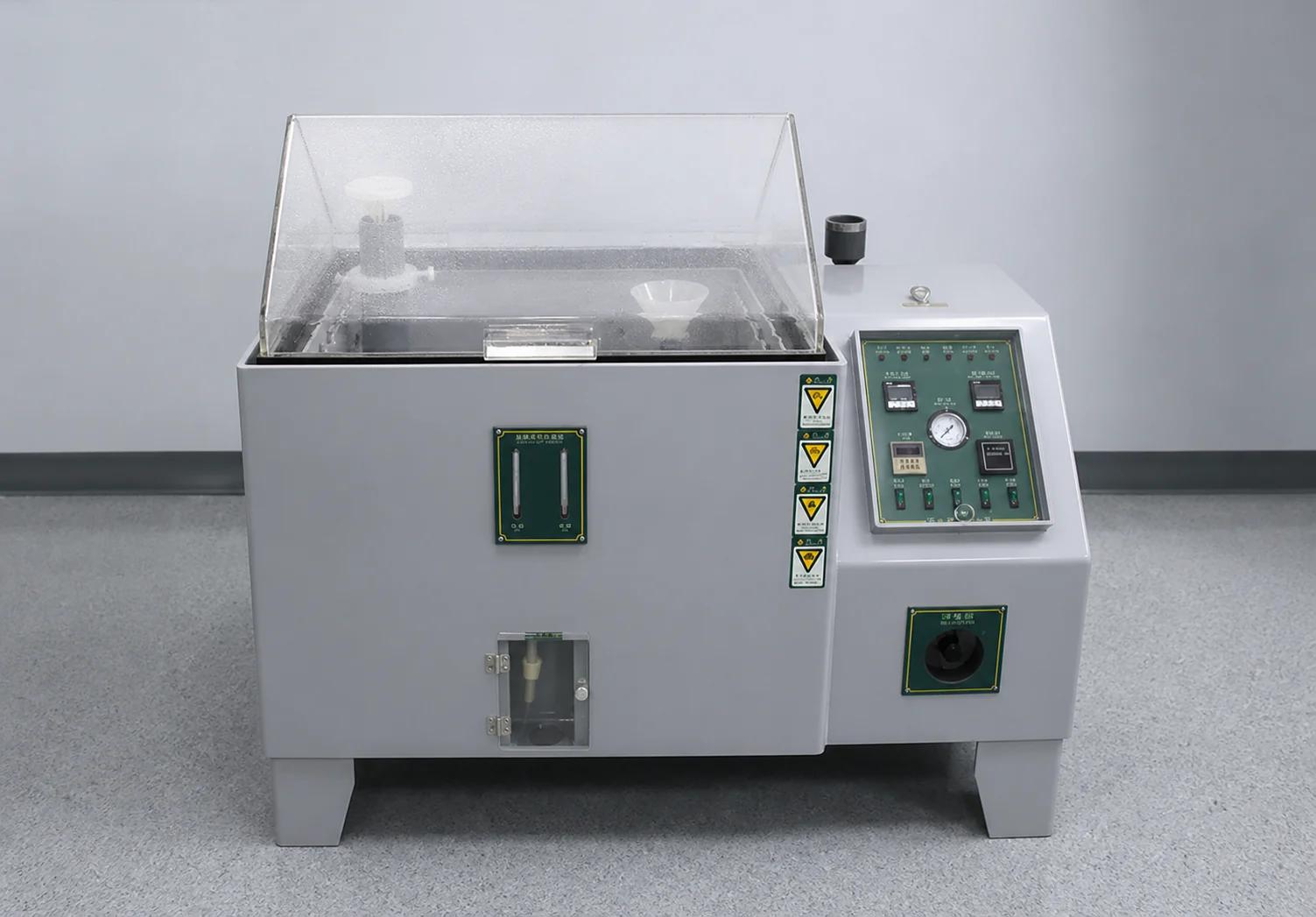
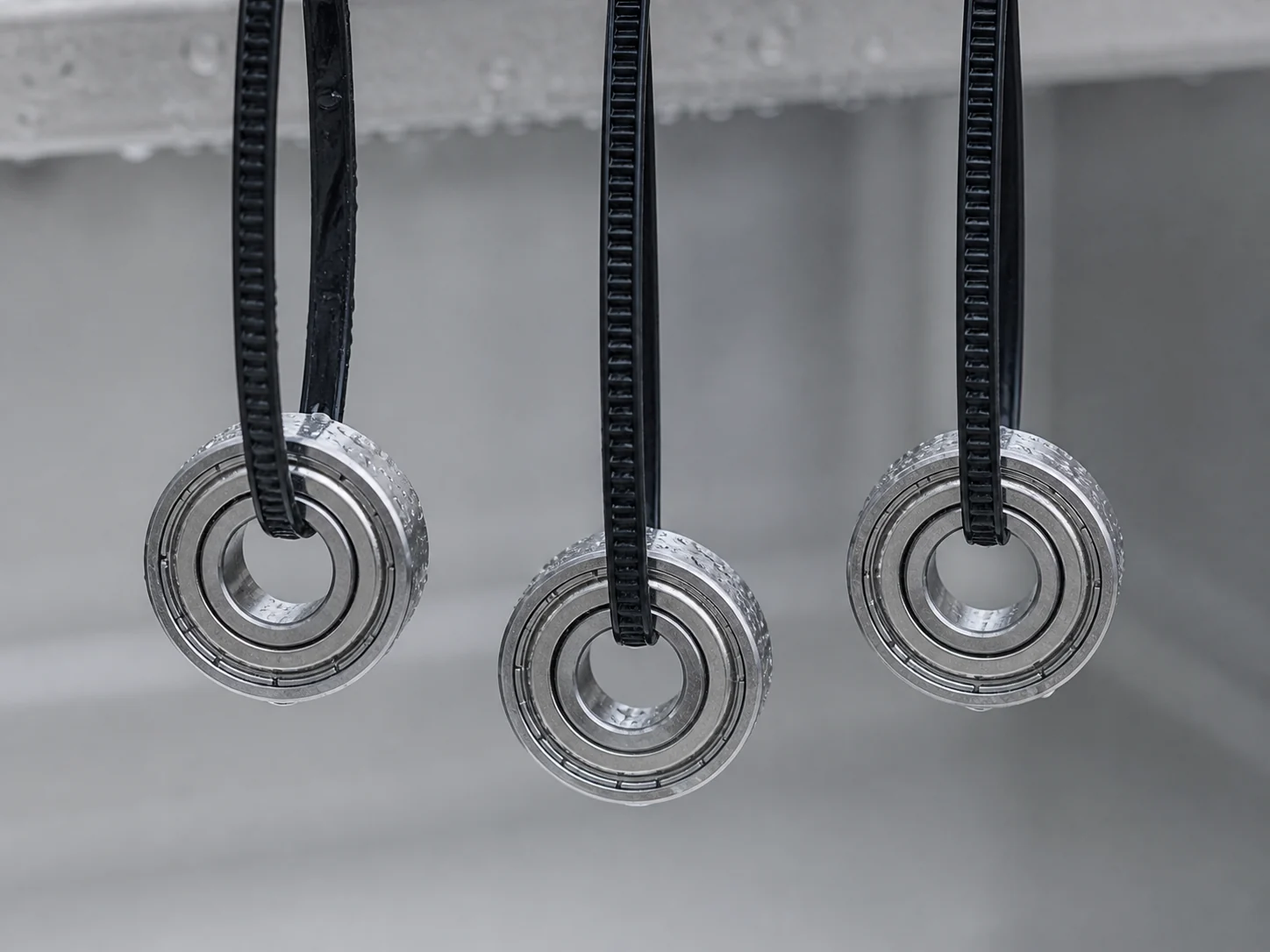
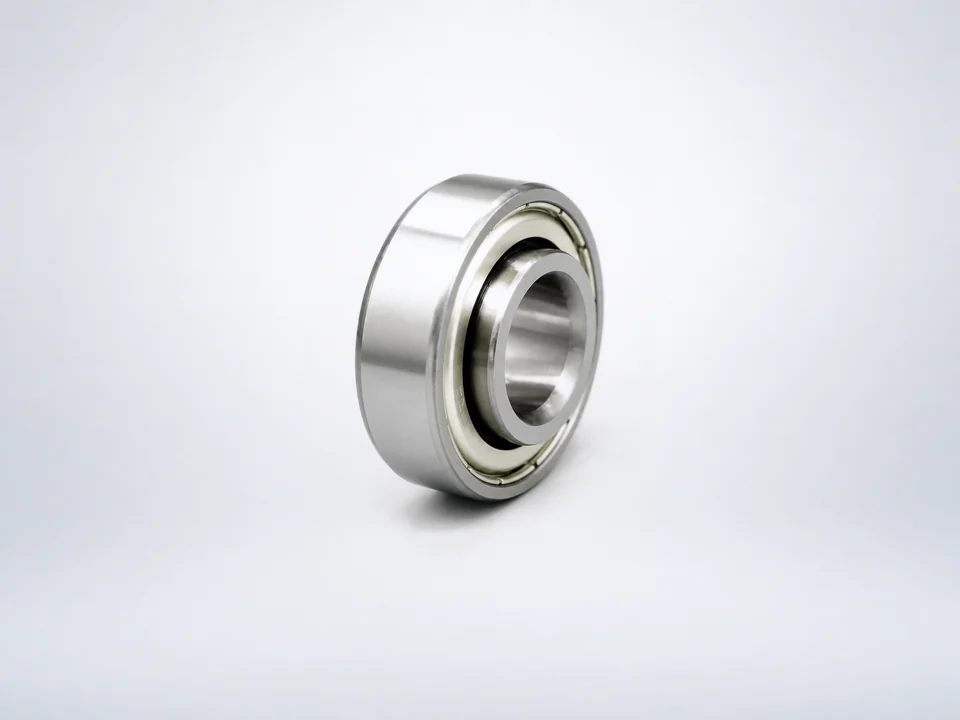
We supply agricultural bearings including 203KRR2-type units, with seal type, grease and fill agreed per order. Corrosion behaviour can be checked in our salt spray chamber when the order requires it.
Evidence from our workshop
What to send for a quotation
- Bearing designation or drawing, and the machine position.
- Field condition: dry dust, wet mud, standing water, residue.
- Required seal type and whether a flinger is needed.
- Relubrication or sealed-for-life, and grease requirement if specified.
- Operating speed, temperature range and storage between seasons.
Frequently Asked Questions
Why do sealed farm bearings still get water inside?
Common causes are high-pressure washing at the seal, condensation when a warm bearing cools in wet conditions, worn seal lips and seals damaged by over-greasing or installation.
Is a triple-lip seal always better than a double-lip seal?
It excludes more contamination, but adds friction and heat. It is the right choice for slow, dirty positions such as disc gangs; for faster or covered positions a single or double-lip seal may be better.
Should agricultural bearings be greased or sealed-for-life?
Re-lubricatable bearings are better where the user greases regularly, because fresh grease purges contamination. Where greasing is unlikely, sealed-for-life avoids over-greasing and wrong grease.
What grease is best for wet agricultural conditions?
Choose a grease with good water wash-out resistance and corrosion protection. Lithium-complex, calcium-sulfonate and polyurea families are commonly used; confirm the product with your grease supplier.
Can over-greasing damage a sealed bearing?
Yes. Excess pressure can lift or invert a contact lip, which then leaks permanently and admits dirt.
Related guides
Published 2026-09-25. Images show our own workshop and representative products. Final dimensions, grades, inspection limits and supply conditions are confirmed against the requested model, drawing and order.