When a new bearing is noisy or hot from the first run, the question is whether the bearing arrived defective or was damaged or constrained during installation. Both happen, and the answer decides who corrects what. In most cases the cause can be narrowed down on site before any bearing is opened: by checking the mounting method, the actual fits, the seat geometry, alignment, lubrication and the axial arrangement, and by testing unmounted bearings from the same batch. This guide gives that check sequence and lists the evidence a manufacturer needs for a useful failure analysis.
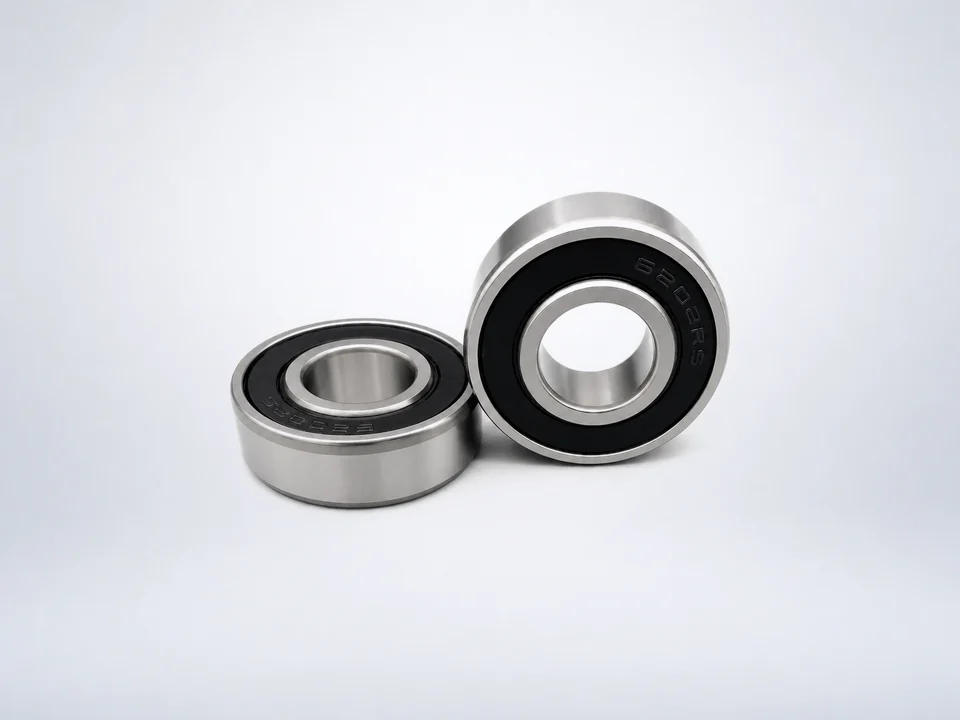
Separate the bearing from the installation first
A bearing that was defective on delivery shows the same symptom when tested unmounted. A bearing damaged or constrained by the installation is usually quiet and free before mounting, and the fault appears or grows once it is fitted, loaded and running.
Symptom, likely cause and first check
| Symptom immediately after installation | Likely installation cause | Could it be the bearing? | First check on site |
|---|---|---|---|
| Regular notches or ticks at ball spacing | Mounting force passed through the balls; impact; dropped bearing | Possible if unmounted bearings of the batch show the same notches | Mounting tool and which ring it bears on; hand-spin unmounted samples |
| Tight, uniform drag and rising temperature | Interference too large, both rings tight, oversize shaft or undersize housing | Unlikely unless unmounted bearings are already tight | Measure shaft and housing diameters at several positions |
| Noise that changes with each revolution | Out-of-round or tapered seat, burr on shaft or shoulder, bent shaft | Unlikely if unmounted bearings are quiet | Seat roundness and runout; shoulder squareness |
| Heat and noise on one side of the machine | Misalignment between two bearing seats; tilted outer ring | Unlikely | Housing bore alignment; contact pattern on removed bearing |
| Random grinding or crunching | Particles entered during assembly: chips, dust, abrasive | Possible if the batch was contaminated | Cleanliness of shaft, housing and assembly station; debris in grease |
| High temperature in the first hours, then falling | Grease distribution during running-in | Not a defect by itself | Record temperature over time at a fixed point and speed |
| Continuous high temperature with contact-sealed bearings | Seal lip drag at high speed; seal pressed or distorted | Possible if seal lip dimensions are wrong | Compare with a shielded (ZZ) bearing; check seal for damage |
| Heat that grows with running time, noise under load | Excessive axial preload; no axial float for thermal expansion | Unlikely | Axial arrangement: locating and non-locating bearing, spring preload, locknut torque |
The table lists typical associations to direct the check. A single symptom can have more than one cause, and the result should be confirmed by measurement and, where needed, by teardown.
1. Mounting force path
Fitting force must act on the ring that carries the interference. If a bearing is pressed onto a shaft by pushing the outer ring, or into a housing by pushing the inner ring, the force passes through the balls and can indent the raceways at every ball position. The result is a regular notch in rotation and a vibration increase that appears only after mounting. Hammering directly on rings, pressing on shields or seals, and pressing in a tilted position cause the same kind of damage. The mechanism is described in detail in why a miniature bearing feels rough or notchy; it applies to larger bearings as well.
- Pressing onto a shaft: sleeve on the inner ring only.
- Pressing into a housing: sleeve on the outer ring only.
- Both at once: a tool that bears on both rings in the same plane.
- Heating the inner ring for shrink fitting: controlled heating to the temperature allowed for the bearing, grease and seals; no open flame.
2. Fits and loss of clearance
An interference fit expands the inner ring or compresses the outer ring and reduces radial clearance. During operation the inner ring is usually warmer than the outer ring, which reduces clearance further. If the mounted and operating clearance approaches zero, friction and temperature rise and the bearing becomes noisy under load. Typical causes are a shaft at the upper limit combined with a housing at the lower limit, interference on both rings where only the rotating ring needs it, or a clearance group selected without considering the fits. Measure the real shaft and housing diameters rather than relying on the drawing, and compare them with the clearance group ordered; see C3, CN and C4 clearance.
3. Shaft and housing geometry
A thin-walled bearing ring takes the shape of its seat. An oval or lobed housing bore, a tapered shaft seat, a burr at the edge of a keyway, or a shoulder that is not square to the axis will distort the raceway after mounting even if the bearing was round before. This produces vibration at a rate related to shaft rotation and uneven load around the circumference. Check seat roundness and taper, shoulder squareness and fillet radii against the bearing chamfer. The fillet radius on the shaft must be smaller than the bearing chamfer so that the ring sits against the shoulder.
4. Misalignment
Deep groove ball bearings accept only a small angular misalignment, and double row angular contact bearings accept less because the two ball rows resist tilting. Housing bores that are not coaxial, a shaft deflecting under belt tension, or an outer ring pressed in at an angle all load the balls unevenly. Typical signs are heat and noise on one bearing of a pair and a wear track on the raceway that runs at an angle rather than parallel to the ring face. For double row designs, see double row angular contact bearing failure causes.
5. Contamination during assembly
Machining chips left in housings, dust on the bench, abrasive from finishing the shaft, dirty rags and gloves, or packaging opened long before assembly all introduce particles. Each particle rolled over leaves a dent, and dents cause random grinding noise and vibration peaks. Open bearings are most exposed; shields and seals reduce but do not remove the risk if the bearing is handled in a dirty area. Sealed and shielded bearings should not be washed before mounting: washing removes the factory grease and can carry particles behind the seal.
6. Grease quantity and type
A new greased bearing typically runs warmer during the first period of operation while excess grease is pushed out of the rolling path; the temperature then falls and stabilises. This is a normal running-in behaviour, not a defect. A temperature that keeps rising points elsewhere. Over-filling, for example when a fitter adds grease to a pre-greased bearing, increases churning and heat. Adding a different grease can change consistency when the two greases are not compatible. Grease that is too stiff for low temperature causes high starting torque. Record the grease used and whether any was added on site.
7. Seal drag
Contact seals (2RS) touch the inner ring and generate friction and heat that shields (ZZ) do not. At higher speed this heat can be significant, and a new seal lip generates more friction before it runs in. A seal that was pressed on, deformed by a tool or pushed inward by a housing shoulder will drag further and may squeal. If a sealed bearing runs hot at speed while a shielded version of the same size runs normally in the same position, seal friction is the likely contributor; see sealed bearing speed limits.
8. Preload and axial arrangement
Axial preload applied by spring washers, shims or a locknut removes clearance deliberately. Too much preload raises friction and temperature, and the effect grows as the shaft warms and expands. In a two-bearing arrangement one bearing normally locates the shaft axially and the other is free to move in its housing. If both are clamped, shaft expansion loads them against each other. Check which bearing is intended to float, whether it can actually move, the spring force if springs are used, and the locknut tightening procedure.
How to tell a supplier defect from an installation issue
| Evidence | Points to the bearing | Points to the installation |
|---|---|---|
| Unmounted bearings from the same batch | Also noisy, rough or tight when hand-spun or vibration-tested | Smooth and quiet before mounting |
| Occurrence pattern | Across several machines and fitters, linked to one batch or date code | Linked to one station, fitter, tool, shaft batch or housing batch |
| Raceway marks after teardown | Defects not related to ball positions, grinding marks, inclusions, cracks | Dents at ball pitch, random particle dents, skewed wear track |
| Measured fits | Shaft and housing within drawing limits | Shaft or housing outside limits, oval or tapered seats |
| Time to symptom | Present from the first rotation, independent of load | Develops with load, speed or temperature after mounting |
| Seals and shields | Seal lip or shield out of shape before mounting | Seal or shield dented by a tool, pressed by a shoulder |
No single row decides the case. When several rows point the same way, the conclusion is usually reliable. When the evidence is mixed, the retained unmounted samples and a controlled teardown are the deciding step. Incoming inspection records help here; see incoming bearing inspection checklist.
Evidence to send for failure analysis
- The failed bearing, removed without further damage, not washed and not opened, in a clean bag. Mark the load side and the mounting orientation if known.
- Unmounted bearings from the same batch and package, unopened if possible.
- Package label, batch or date code, and the delivery note.
- Photographs of the bearing in position, the shaft and housing seats, the mounting tool and any visible damage.
- Measured shaft and housing diameters at several positions, with the drawing tolerances.
- Mounting method: press, heating, tool used, which ring the force acted on.
- Operating conditions: speed, load direction, belt tension, temperature, and where and when temperature was measured.
- Grease used, whether grease was added on site, and seal type.
- Vibration readings or spectra if available, with measuring point and speed.
- Number of affected units out of the total mounted, and whether the symptom appeared at start or after some hours.
How we handle a returned bearing
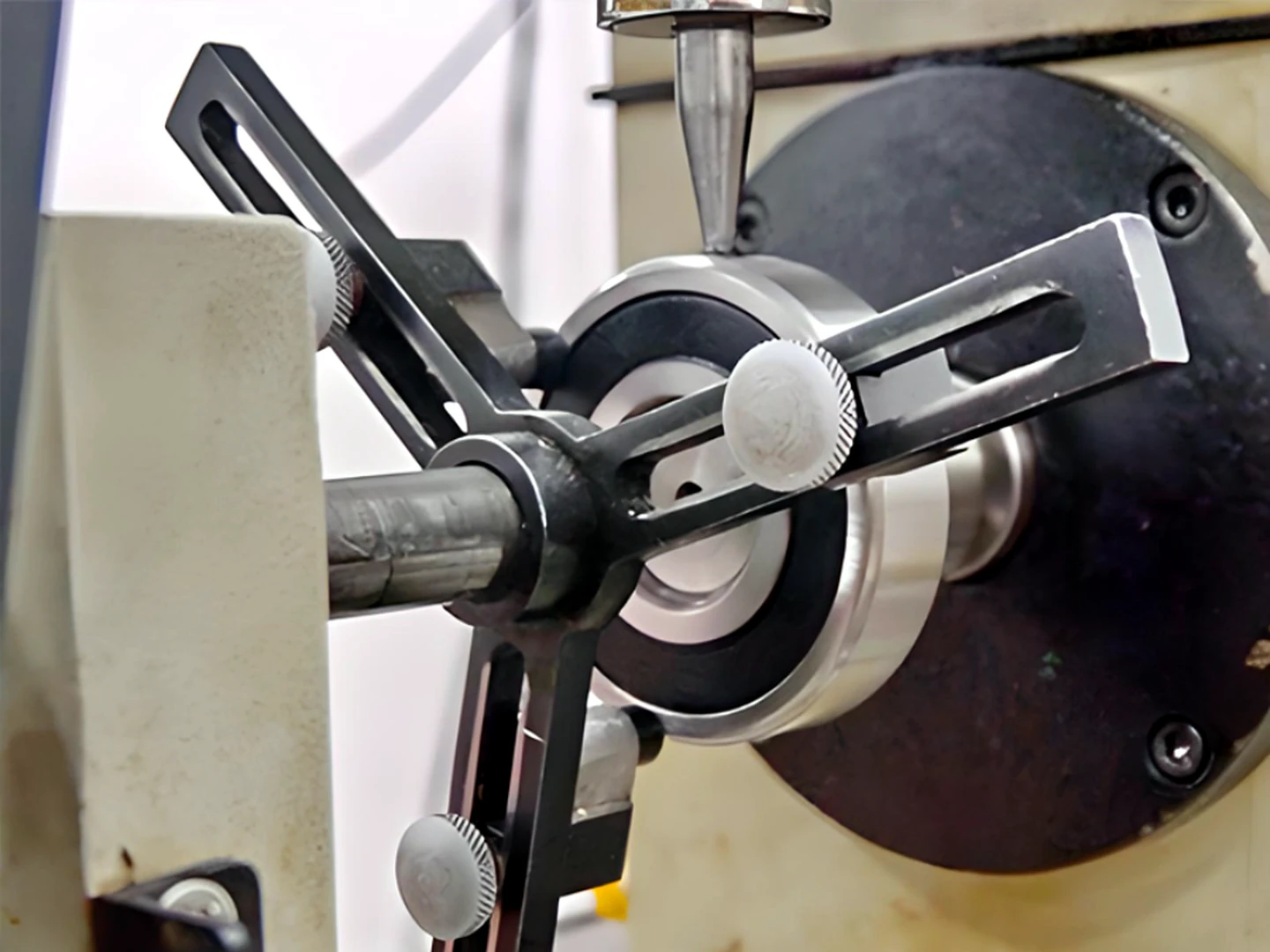
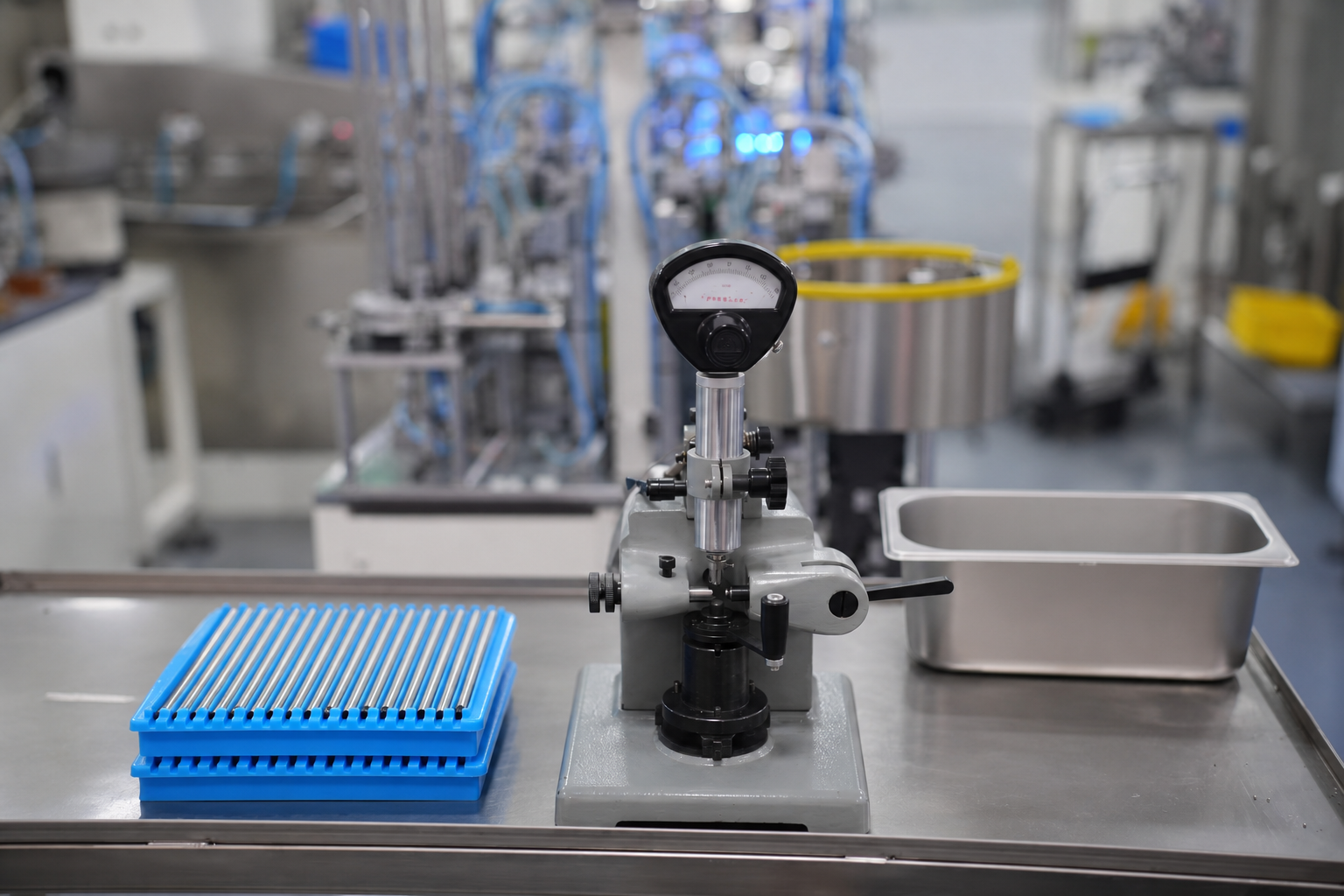
We compare returned bearings with the retained records of the same batch and with unmounted samples, examine raceways and seals, and re-measure roundness, raceway profile, roughness and vibration on our own instruments where the bearing condition allows. Turning, raceway grinding, super-finishing and assembly are done in our Cixi factory, so each process step can be traced. NLHB manufactures miniature and deep groove ball bearings up to P4 precision, and double row angular contact bearings and track rollers up to P6.
Evidence from our workshop
What to send for a quotation
- Bearing designation with seal, clearance, precision and vibration grade.
- Shaft and housing tolerances and the planned fits.
- Axial arrangement: locating and floating bearing, preload method.
- Mounting method and tools used by your assembly line.
- Speed, load, operating temperature and grease requirement.
Frequently Asked Questions
Why is my new bearing noisy right after installation?
The most common installation causes are fitting force passed through the balls, particles introduced during assembly, a distorted seat and misalignment. Test unmounted bearings from the same batch: if they are quiet, the cause is most likely in the installation.
Is it normal for a new bearing to run hot at first?
A moderate temperature rise during the first period of running is normal for greased bearings while excess grease is pushed aside; the temperature should then fall and stabilise. A temperature that keeps rising indicates lost clearance, excessive preload, misalignment, over-filled grease or seal drag.
How do I know if the bearing was defective before mounting?
Defects present on delivery also show on unmounted bearings of the same batch, appear across different machines and fitters, and leave raceway marks unrelated to ball positions. Installation damage is linked to a station, tool or seat and often leaves dents at ball pitch.
Should I wash a noisy sealed bearing and remount it?
No. Washing removes the grease and can move particles behind the seals. A bearing that is noisy after mounting should be replaced and kept, unwashed, for analysis.
What should I send the supplier for failure analysis?
The failed bearing unwashed and unopened, unmounted bearings from the same batch, the package label, photos, measured shaft and housing sizes, mounting method, operating conditions, grease details and any vibration readings.
Related guides
Published 2026-09-25. Images show our own workshop and representative products. Final dimensions, grades, inspection limits and supply conditions are confirmed against the requested model, drawing and order.