Maintenance staff and assemblers usually describe bearing noise by how it sounds: a hiss, a grinding, a click, a rumble, a squeal or a knock. These descriptions are useful because each sound tends to come from a different mechanism. This guide maps each noise type to its typical causes and to the checks that confirm them. The associations below are starting points for diagnosis, not conclusions. The cause should be confirmed by vibration measurement, by varying speed, load and temperature, and where needed by teardown.
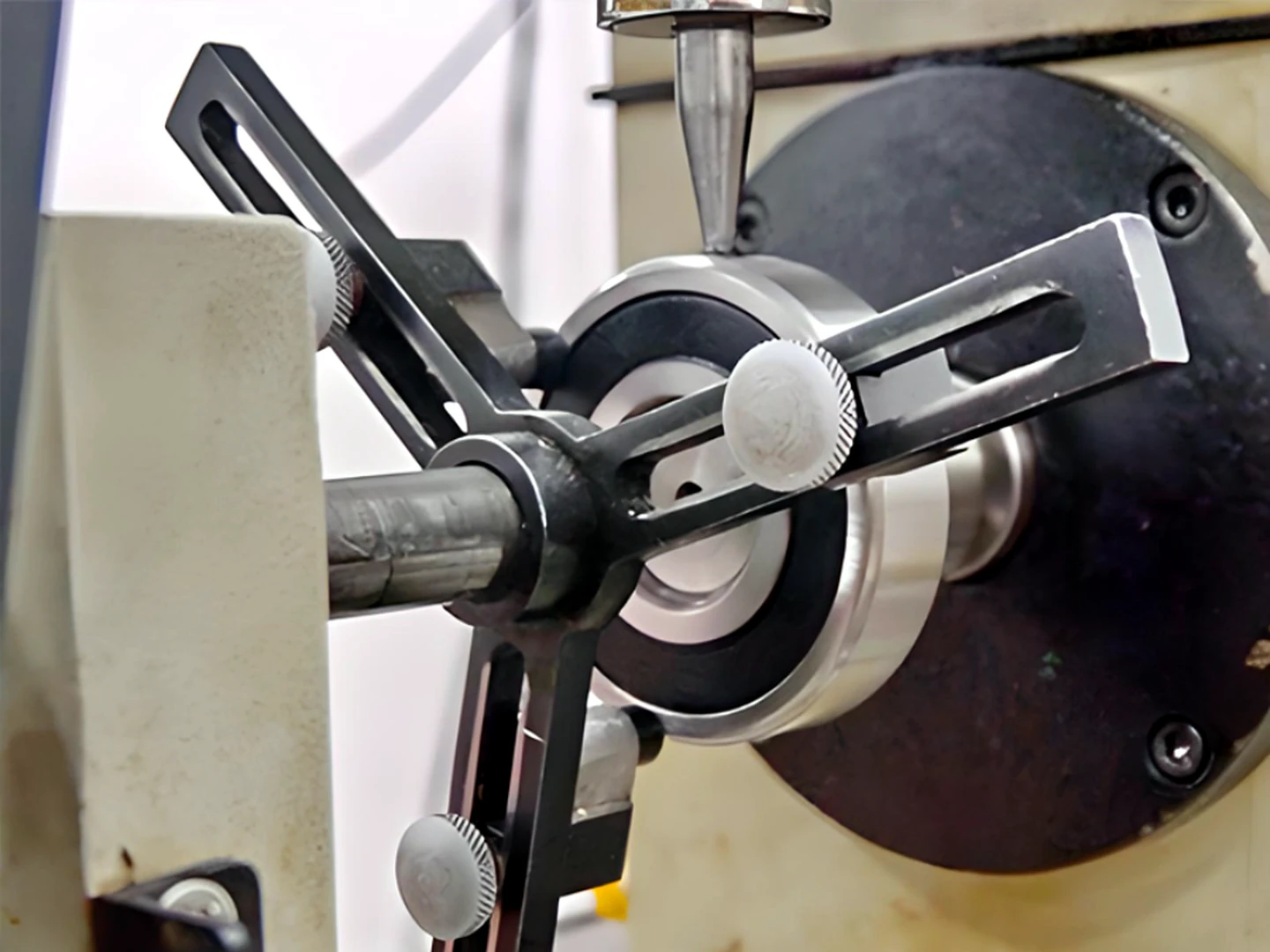
Sound character points to the mechanism
Continuous, even sounds usually come from surfaces and lubrication. Sounds that repeat at a fixed rate usually come from a local defect, the cage or a fit problem. Sounds that come and go usually come from particles, the cage or changing load.
Noise types and typical causes
| Noise as heard | Typical causes | What usually changes it | How to confirm |
|---|---|---|---|
| Even hiss or rushing sound | Normal rolling noise; surface roughness of raceways and balls; lubricant film condition | Increases gradually with speed; grease type and quantity | Compare with a reference bearing of the same size; vibration acceleration level |
| Grinding, gritty or crunching | Contamination in the raceway; corrosion; distributed surface damage | Present at low speed and by hand; worsens with time | Hand-spin; inspect grease for debris; teardown for random dents or rust |
| Irregular click or tick | Particle passing through the contact; cage movement in its pockets; seal or shield touching | Comes and goes; may change with orientation or temperature | Repeat test after running; check seal contact; teardown for debris |
| Regular click at a fixed rate | Local dent or spall on a raceway or ball; damaged cage pocket | Rate rises with speed in fixed proportion | Vibration spectrum or envelope analysis compared with calculated defect frequencies; teardown |
| Low rumble or hum | Raceway waviness; advanced raceway damage; misalignment; housing or structure resonance | Changes with speed and load; may peak at certain speeds | Vibration velocity in low and medium bands; change mounting or speed to separate resonance |
| Squeal or screech | Insufficient or unsuitable lubrication; sliding of balls under light load at high speed; seal lip friction | Appears at certain speeds, at start-up, or when cold or hot | Check lubricant; apply light axial or radial load if design allows; compare with shielded version |
| Periodic knock or thump | Ring creeping in a loose fit; local defect entering the load zone; bent shaft or unbalance | Once per revolution of shaft or of a ring | Check fit and wear marks on bore or outside diameter; runout check; teardown |
The same sound can have more than one cause, and two causes can be present together. Use the table to decide what to check first, not to assign responsibility.
Hiss: surface finish and lubrication
Every running ball bearing produces a steady hiss. Its level depends on the surface roughness of raceways and balls, the lubricant film and the speed. A bearing with a finer raceway finish and suitable low-noise grease runs with a lower hiss. This component is what vibration-acceleration grades (Z grades) mainly assess. A hiss that is louder than a reference bearing of the same size usually indicates a rougher surface, a grease with more particles or an unsuitable fill, rather than damage. See how raceway roundness, roughness and waviness drive noise.
Grinding and crunching: contamination and corrosion
A gritty or crunching sound that can also be felt when the bearing is turned by hand usually comes from particles in the raceway or from corrosion. Each particle rolled over produces a small dent; rust spots behave in a similar way. The sound tends to worsen as more surface is damaged. Common sources are machining chips, abrasive from shaft finishing, dust at assembly, water and condensation. Teardown typically shows dents in random positions, debris in the grease or brown spots.
Clicks: particles, cage and local defects
Distinguish between irregular clicks and clicks at a fixed rate. Irregular clicks that come and go often come from a particle passing through, or from the cage moving within its clearance, especially at low temperature when grease is stiff. Clicks at a fixed rate that rises with speed point to a local defect: a dent, a spall or a damaged ball. Each local defect on the outer ring, inner ring or balls repeats at its own characteristic rate, calculated from the bearing geometry and the speed. Comparing the measured repetition rate with these calculated rates narrows down which part is damaged.
Rumble and hum: waviness, damage and resonance
A low rumble or hum is usually associated with waviness of the raceways or balls, with advanced damage spread around a raceway, or with misalignment. Waviness produces vibration in the low and medium frequency bands that vibration-velocity grades (V grades) assess. A hum that is strong only at one speed and disappears above and below it is often a resonance of the housing or machine structure, excited by normal bearing vibration. Changing the speed or the mounting helps to separate a bearing problem from a structural one.
Squeal: sliding and lubrication
A high-pitched squeal indicates sliding contact. Causes include insufficient or unsuitable lubricant, balls skidding rather than rolling when the bearing runs fast under very light load, a contact seal lip rubbing with too much interference, and the cage rubbing on a guiding surface. Squeal that appears on start-up in cold conditions and disappears when warm points to grease consistency. Squeal only in lightly loaded high-speed applications points to skidding; a controlled axial preload, where the design allows it, is a common remedy. Squeal that disappears with a shielded bearing of the same size points to the seal.
Knock: loose fits and local defects in the load zone
A knock or thump once per revolution often indicates a ring that is not held firmly: an outer ring creeping in a worn or oversize housing, or an inner ring loose on its shaft. Polished or worn bands on the bore, outside diameter or side faces are typical evidence. A local raceway defect that passes through the load zone can also produce a knock, as can a bent shaft or unbalance of the rotating part. Check the fit and seat condition first, then the runout of the shaft.
Diagnosis steps before replacing parts
- Describe the sound precisely: continuous, repetitive or transient; high or low pitch; at which speed, load and temperature.
- Locate the source with a mechanic's stethoscope or accelerometer on each bearing position, and rule out gears, belts, fans and couplings.
- Vary one condition at a time: speed, load, temperature, direction of rotation. Note how the sound changes.
- Measure vibration where possible: overall level, band values and, for repetitive sounds, a spectrum or envelope compared with calculated defect frequencies.
- Check the installation: fits, alignment, axial arrangement, lubrication and seal condition. See new bearing noisy or hot after installation.
- Remove the bearing without further damage and inspect raceways, balls, cage and grease. Keep unmounted bearings from the same batch for comparison.
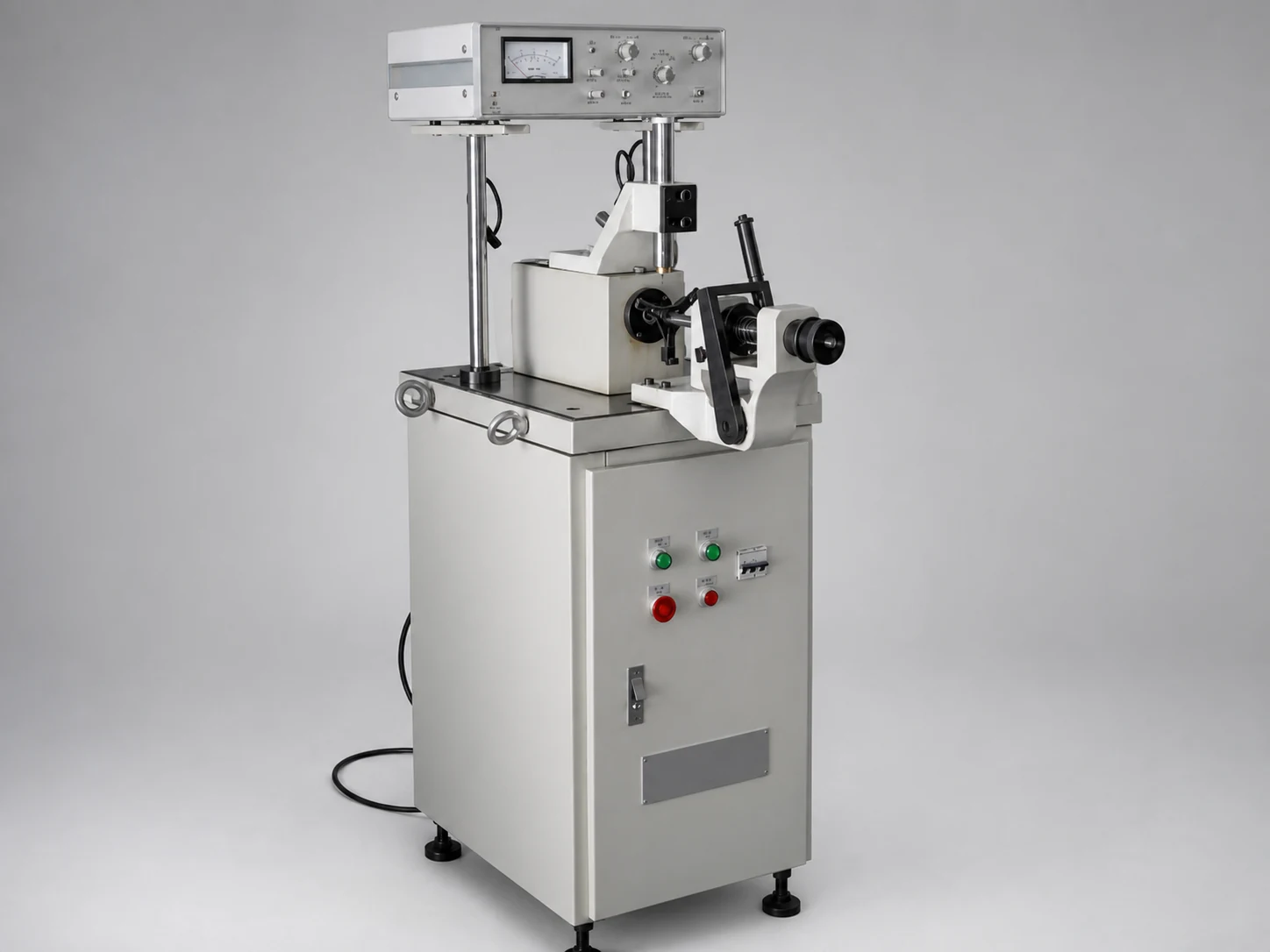
Noise measured before packing
Finished deep groove and miniature bearings are tested on our own vibration testers and supplied to the Z and V grades agreed on each order. Raceway grinding and super-finishing, which set the running noise of the bearing, are done in our Cixi factory. NLHB manufactures miniature and deep groove ball bearings up to P4 precision, and double row angular contact bearings and track rollers up to P6.
Evidence from our workshop

What to send for a quotation
- Bearing designation, clearance, precision and vibration grade.
- Description of the noise and when it occurs.
- Speed, load, temperature and lubrication.
- Shaft and housing fits and axial arrangement.
- Noisy bearings and unmounted bearings from the same batch, if available.
Frequently Asked Questions
What does a grinding noise from a bearing usually mean?
Most often contamination in the raceway, corrosion or distributed surface damage. It can usually be felt by hand as well. Confirm by inspecting the grease for debris and the raceways for random dents or rust.
Why does a bearing squeal?
Squeal indicates sliding: insufficient or unsuitable lubricant, balls skidding under very light load at high speed, a contact seal rubbing, or cage friction. The conditions under which it occurs usually indicate which of these applies.
What causes a regular clicking sound in a bearing?
A click at a fixed rate that rises with speed usually points to a local defect such as a dent, a spall or a damaged ball. Irregular clicks are more often particles or cage movement.
Is a humming bearing always damaged?
No. A hum can come from raceway waviness, but also from a resonance of the housing or machine excited by normal vibration. If the hum appears only at one speed, check the structure first.
Can the noise type alone identify the cause?
No. Noise types are typical associations that guide the investigation. The cause should be confirmed by vibration measurement, by changing operating conditions and, where necessary, by teardown.
Related guides
Published 2026-09-25. Images show our own workshop and representative products. Final dimensions, grades, inspection limits and supply conditions are confirmed against the requested model, drawing and order.