"Ceramic bearing" is used for two different products: hybrid bearings, with steel rings and silicon nitride (Si3N4) balls, and full ceramic bearings, where the rings are ceramic as well. Both cost more than an all-steel bearing, and both only pay off when the application uses a property that steel cannot provide. NLHB produces hybrid bearings with chrome steel or stainless steel rings and Si3N4 balls; this guide explains when that combination is justified and when a well-specified steel bearing is the better choice.
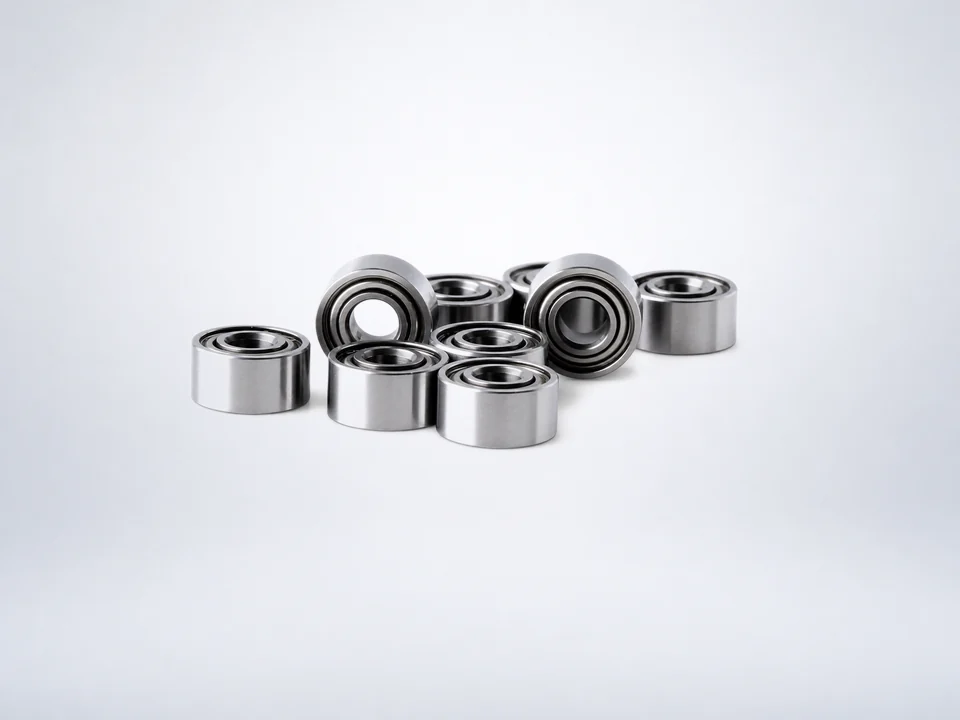
The ball material changes the dynamics
Silicon nitride balls have roughly 40% of the density of bearing steel, a higher elastic modulus and no electrical conductivity. Lower ball mass reduces centrifugal and gyroscopic loads at speed; the insulating ball interrupts current flow through the bearing.
Three constructions compared
| Property | All-steel | Hybrid (steel rings + Si3N4 balls) | Full ceramic (category) |
|---|---|---|---|
| Rolling elements | Bearing steel or stainless steel | Silicon nitride | Silicon nitride or zirconia |
| Rings | Bearing steel or stainless steel | Bearing steel or stainless steel | Ceramic |
| Ball density | Reference | About 40% of steel | Depends on ceramic grade |
| Electrical insulation | No | Yes, through the balls | Yes |
| Magnetic | Chrome steel: yes | Rings follow the steel grade | Non-magnetic |
| Tolerance of thin or poor lubrication | Reference | Better: ceramic-on-steel contact resists adhesive wear and smearing | Can run with very limited lubrication in some designs |
| Shock and misalignment tolerance | Highest | Similar rings; stiffer ball-to-raceway contact | Lowest; ceramic rings are brittle |
| Relative cost | Lowest | Higher | Highest |
The table is qualitative on purpose. Load ratings, speed ratings and life of a hybrid bearing depend on the ring material, internal design, lubricant and precision grade of the exact bearing, and are confirmed per model rather than scaled from a steel catalogue value.
What silicon nitride balls actually change
- Lower mass. At high speed the centrifugal force of each ball presses it against the outer raceway. A lighter ball reduces this load, the associated friction and heat, and the tendency of the ball set to skid. This is the main reason hybrids are used in high-speed spindles, dental handpieces and small high-speed motors.
- Higher hardness and stiffness. Si3N4 is harder and stiffer than bearing steel. The contact ellipse is smaller, which raises bearing stiffness but also raises contact stress on the steel raceway. Raceway geometry and surface finish therefore matter more, not less.
- Electrical insulation. The balls do not conduct current, so shaft currents from inverter-driven motors cannot pass through the rolling contact. This prevents electrical erosion marks (frosting and fluting) on the raceways.
- Different contact chemistry. Ceramic and steel do not weld together under boundary lubrication. Hybrid bearings are less prone to adhesive wear when the lubricant film is thin — at start-up, at very high speed, or with low-viscosity lubricants.
- Lower thermal expansion. Ceramic balls expand less than the steel rings as temperature rises. The change in internal clearance with temperature is different from an all-steel bearing and must be considered when the clearance group is chosen.
Where each construction pays off
| Application | Usual choice | Reason |
|---|---|---|
| General motors, gearboxes, pumps, agricultural machinery | All-steel | Speed and lubrication are within normal limits; shock loads favour steel; cost matters |
| High-speed spindles, dental handpieces, small high-speed motors | Hybrid | Lower ball mass reduces heat and skidding at speed |
| Inverter-fed motors with shaft-current problems | Hybrid | Insulating balls interrupt current through the bearing |
| Thin lubricant film: low-viscosity oil, minimal grease, frequent start-stop | Hybrid | Ceramic-on-steel contact resists adhesive wear |
| Humid or wash-down conditions | Stainless steel, or hybrid with stainless rings | Ring corrosion is the limiting factor; see our stainless bearing guide |
| Aggressive chemicals, strong magnetic fields, some vacuum uses | Full ceramic (specialist category) | Rings must also be corrosion-proof or non-magnetic |
When ceramic balls are not worth the cost
- The bearing is failing from contamination, poor sealing, misalignment or wrong fits. A different ball material does not correct any of these; see bearing overheating troubleshooting.
- The application carries heavy shock or impact loads. Steel balls and rings tolerate overload better.
- Operating speed is well within the steel bearing's rating and there is no electrical or lubrication problem to solve.
- Shaft and housing accuracy do not match the bearing. A hybrid bearing mounted in a poor housing will not deliver its speed advantage.
How to specify a hybrid bearing
- State the ball material (Si3N4) and the ring material: chrome bearing steel or stainless steel.
- State the precision grade. Hybrids are usually combined with P5 or P4 in high-speed use; we produce miniature and deep groove bearings up to P4.
- Give speed, load, temperature and lubrication method, so that clearance, cage and grease are selected together with the balls.
- If the purpose is insulation, state it explicitly and describe the drive (inverter-fed motor, grounding arrangement).
- Agree the inspection and marking requirements: vibration grade, clearance, and how hybrid bearings are identified on the package.
Hybrid bearings from our own grinding line
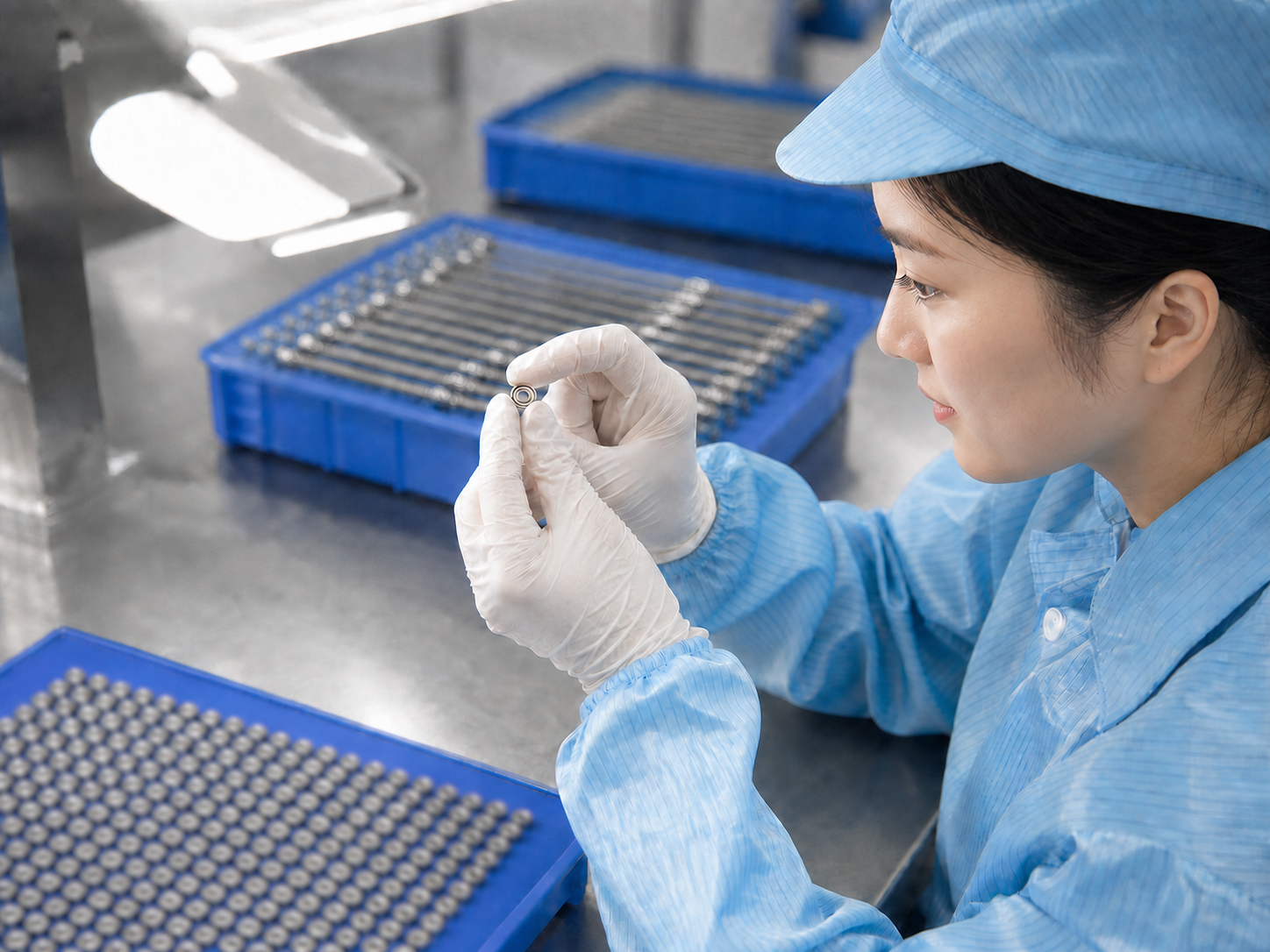
We produce hybrid bearings with chrome steel or stainless steel rings and silicon nitride balls, mainly in miniature and small deep groove sizes; the SR144 dental handpiece bearing is one example, supplied in P4. Raceway grinding, superfinishing and assembly are done in our Cixi factory. We do not produce full ceramic bearings. NLHB manufactures miniature and deep groove ball bearings up to P4 precision, and double row angular contact bearings and track rollers up to P6.
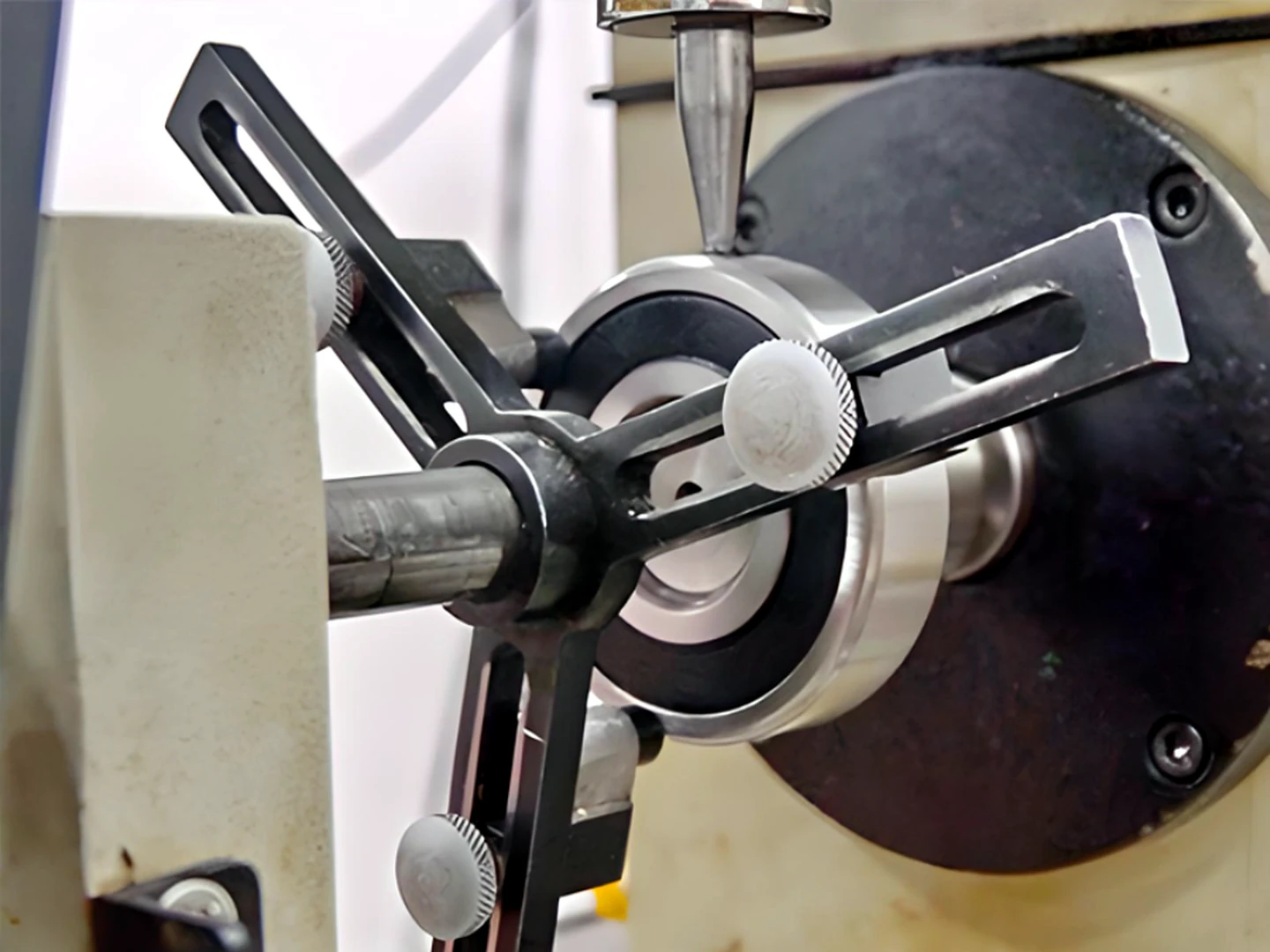
Evidence from our workshop
What to send for a quotation
- Bearing designation and quantity.
- Ball material (Si3N4) and ring material (chrome steel or stainless steel).
- Precision grade, clearance and vibration grade.
- Speed, load, temperature and lubrication method.
- Purpose of the hybrid design: speed, insulation or lubrication.
- Cage, seal and grease requirements.
Frequently Asked Questions
Are ceramic ball bearings better than steel bearings?
Only for specific conditions: high speed, electrical insulation or thin lubrication. For ordinary speeds and shock loads, a correctly specified steel bearing is usually the better and lower-cost choice.
What is a hybrid ceramic bearing?
A bearing with steel rings and ceramic rolling elements, normally silicon nitride balls. The rings can be chrome bearing steel or stainless steel.
What is the difference between hybrid and full ceramic bearings?
In a hybrid bearing only the balls are ceramic. In a full ceramic bearing the rings are ceramic as well, which gives corrosion resistance and non-magnetic behaviour but lower tolerance of shock and higher cost.
Do hybrid bearings stop electrical erosion in motors?
The silicon nitride balls insulate the rolling contact, so current cannot flow through the bearing. This is a common reason for using hybrids in inverter-fed motors.
Does NLHB make ceramic bearings?
We make hybrid bearings with chrome steel or stainless steel rings and Si3N4 balls, mainly in miniature and small deep groove sizes. We do not make full ceramic bearings.
Related guides
Published 2026-09-25. Images show our own workshop and representative products. Final dimensions, grades, inspection limits and supply conditions are confirmed against the requested model, drawing and order.