The cage (retainer) spaces the balls evenly and guides them through the load zone. It carries no load in the rating sense, but it often decides the speed limit, the noise level and the temperature and lubricant range of a ball bearing. The three common choices are pressed steel, injection-moulded nylon (polyamide) and machined cages, typically brass. NLHB supplies pressed steel and nylon cages to customer requirement; this guide explains how the three compare and how to specify the cage.
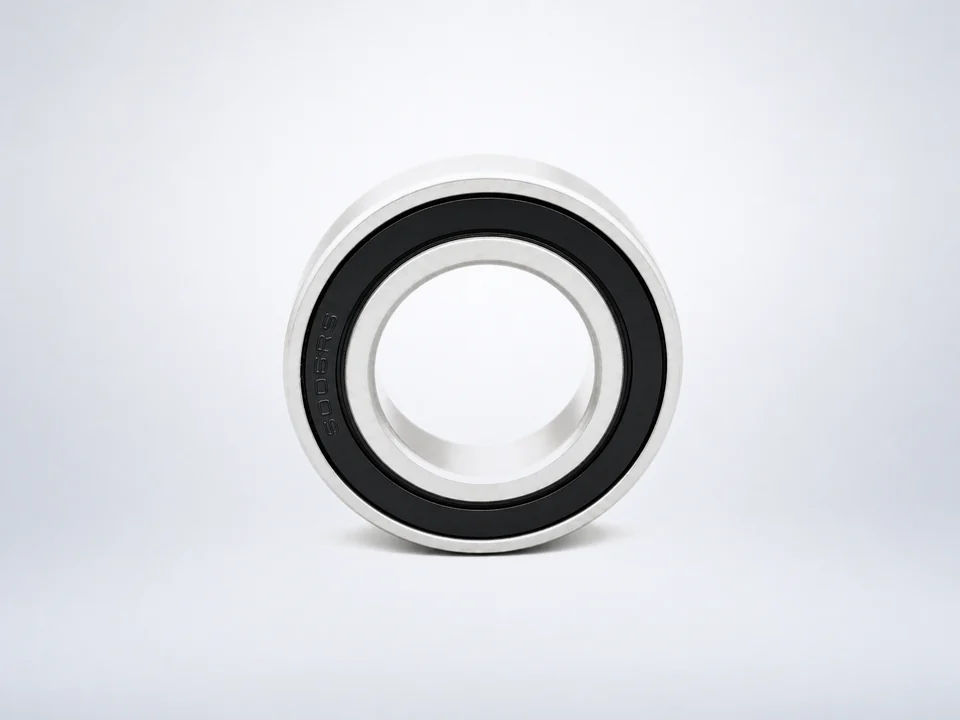
The cage sets several limits at once
Cage material and design affect friction against the balls, how the cage responds to acceleration and vibration, its temperature range, and whether it tolerates the chosen lubricant and any chemicals in the environment.
Pressed steel, nylon and machined cages compared
| Factor | Pressed steel | Nylon (polyamide) | Machined (e.g. brass) |
|---|---|---|---|
| Construction | Two stamped halves riveted together, or a one-piece crown | Injection-moulded, often glass-fibre reinforced; snap-in crown design | Machined from bar or tube; heavier section |
| Operating temperature | Wide; not the limiting part in most cases | Limited by the polymer's continuous-temperature rating | Wide |
| Speed | Good | Good; low mass and friction suit higher speeds, within the temperature limit | Good in larger bearings; guidance and balance depend on design |
| Noise | Reference | Usually quieter; elastic material damps ball-to-cage contact | Depends on design and clearance |
| Lubricant compatibility | Compatible with most greases and oils | Must be checked; some lubricants and additives age polyamide at elevated temperature | Compatible with most lubricants |
| Shock and vibration | Good | Good elasticity, but loses strength when hot and becomes brittle when very cold | Highest strength under shock and heavy vibration |
| Starved lubrication | Metal-to-metal contact with balls | Tolerates short periods of poor lubrication better than metal | Metal-to-metal contact with balls |
Temperature limits of polyamide cages depend on the polyamide grade, reinforcement and lubricant, and should be taken from the material supplier's data for the exact grade used. The high-temperature bearing guide covers the case where the operating temperature approaches the polymer limit.
Choosing by operating condition
| Condition | Preferred cage | Notes |
|---|---|---|
| General motors, appliances, gearboxes | Pressed steel or nylon | Either works; nylon is chosen for noise, steel for wider temperature margin |
| Low-noise small motors and fans | Nylon | Combine with low-noise grease and Z/V vibration grades |
| High speed in miniature and small bearings | Nylon or steel, per speed and temperature | See the high-speed selection guide |
| Elevated temperature | Pressed steel | Nylon only if the continuous temperature is within its rated limit |
| Synthetic or special lubricants, chemical exposure | Pressed steel unless compatibility is confirmed | Ask the lubricant and polymer suppliers for compatibility data |
| Very low temperature | Pressed steel | Polyamide becomes less tough in cold conditions |
| Heavy shock, strong vibration, large bearings | Machined (brass) category | Not produced by NLHB; specify with a supplier that machines cages |
| Maximum load capacity, low speed | No cage (full complement) | See full complement vs caged |
Common cage specification mistakes
- Choosing nylon for noise without checking temperature. A cage that is quiet on the test bench can soften and deform in a hot housing.
- Changing the lubricant without checking the cage. A change to synthetic oil or a special grease should be checked for polyamide compatibility.
- Treating cage and grease as separate decisions. Cage friction, grease churning and seal friction together determine temperature rise at speed.
- Leaving the cage unspecified. If a replacement must match an existing machine, state the cage material; the same designation can be supplied with different cages.
How to write the cage on an order
- State the cage material: pressed steel or nylon (polyamide), and whether glass-fibre reinforcement is required.
- Give the continuous and peak operating temperature, and the lubricant or grease to be used.
- Give speed and any shock or vibration in the application.
- For replacements, send a sample or photo of the existing cage so the type can be matched.
- State noise requirements (Z/V grades) together with the cage, because both affect vibration results.
Steel and nylon cages to customer requirement
We supply miniature and deep groove ball bearings with pressed steel or nylon cages as specified on each order, and confirm the cage and grease combination before production. We do not produce machined brass cages. NLHB manufactures miniature and deep groove ball bearings up to P4 precision, and double row angular contact bearings and track rollers up to P6.
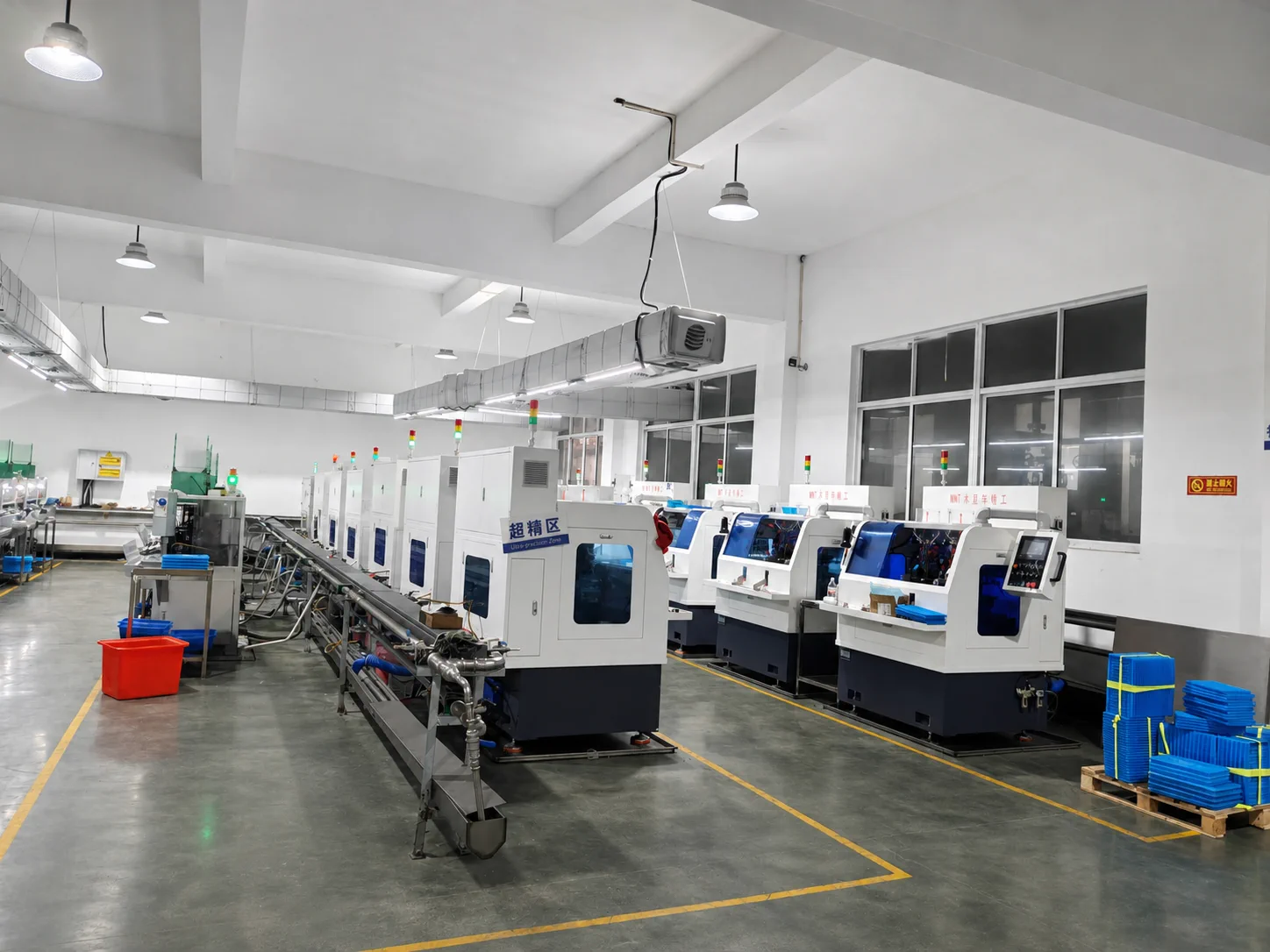
Evidence from our workshop

What to send for a quotation
- Bearing designation and quantity.
- Cage material: pressed steel or nylon (polyamide).
- Operating temperature, speed and lubricant.
- Shock or vibration conditions.
- Noise grade if required.
- Sample or photo of the existing cage for replacements.
Frequently Asked Questions
Which is better, a steel cage or a nylon cage?
Neither in general. Nylon is lighter and quieter; pressed steel has a wider temperature range and broader lubricant compatibility. The choice follows operating temperature, lubricant and noise requirement.
Can nylon cage bearings run at high temperature?
Only within the continuous-temperature rating of the polyamide grade used. Above that, a pressed steel cage is specified.
Are nylon cage bearings quieter?
Usually yes, because the elastic cage damps ball-to-cage contact. Measured noise also depends on grease, precision and cleanliness.
When is a brass cage used?
Machined brass cages are used where strength under shock and heavy vibration is needed, often in larger bearings. NLHB does not produce machined brass cages.
Can NLHB supply a specific cage type?
Yes. We supply pressed steel or nylon cages according to the customer's requirement, confirmed on each order.
Related guides
Published 2026-09-25. Images show our own workshop and representative products. Final dimensions, grades, inspection limits and supply conditions are confirmed against the requested model, drawing and order.