A bearing that runs hot is limited by several parts at once: the internal clearance that shrinks as the inner ring heats up, ring dimensions that can change if the steel is not stabilized, a lubricant that ages faster, and cages and seals made of polymers with their own limits. A high-temperature specification has to address each of these. This guide lists what to define on the drawing and the order. The temperature rating we can achieve is confirmed for each order against the specified design.
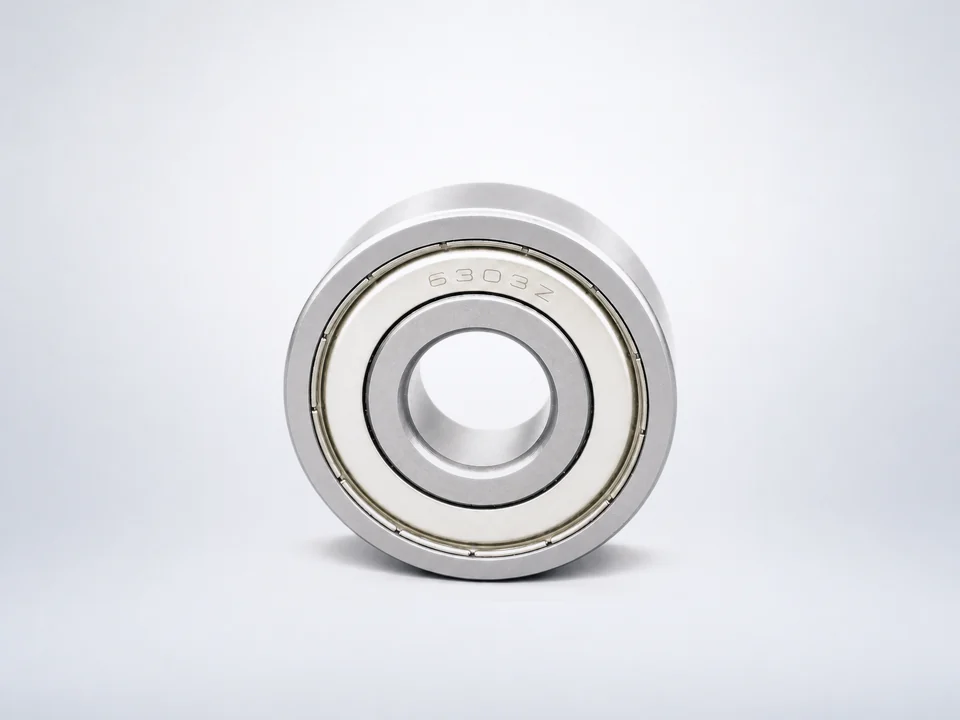
The weakest component sets the limit
Steel rings, balls, cage, seal and lubricant each have a temperature limit. The bearing's usable temperature is the lowest of these, reduced further by the clearance and fit conditions in the machine.
What changes when a bearing runs hot
| Element | Effect of high temperature | What to specify |
|---|---|---|
| Internal clearance | The inner ring is usually hotter than the outer ring and expands more, reducing operating clearance. Too little clearance raises friction and temperature further. | Clearance group (C3, C4) based on the calculated temperature difference and fits |
| Ring dimensions | Retained austenite in hardened steel can transform over time at elevated temperature, changing ring size. | Dimensional stabilization of rings for the operating temperature, stated on the order |
| Lubricant | Oxidation, bleeding and loss of consistency accelerate as temperature rises; relubrication intervals shorten. | Grease or oil type, base oil viscosity at operating temperature, fill quantity |
| Cage | Polymer cages soften and age; steel and brass cages are not limited in the same way. | Cage material matched to operating temperature and lubricant |
| Seals | Elastomer seals harden, lose lip contact or degrade; lip friction adds heat. | Seal material, or metal shields where sealing requirements allow |
| Fits | Different expansion of shaft, housing and rings changes the fit, especially in light-alloy housings. | Shaft and housing tolerances checked at operating temperature |
Internal clearance: C3, C4 and fits together
Operating clearance is the initial clearance, minus the reduction from interference fits, minus the reduction from the temperature difference between the rings. At elevated temperature the last term grows, which is why C3 or C4 is commonly specified. Choosing the group requires the fits and an estimate of the ring temperature difference; a larger group is not automatically better, because excessive clearance increases noise and reduces the number of balls carrying load. See C3, CN and C4 clearance explained.
Dimensional stabilization of rings
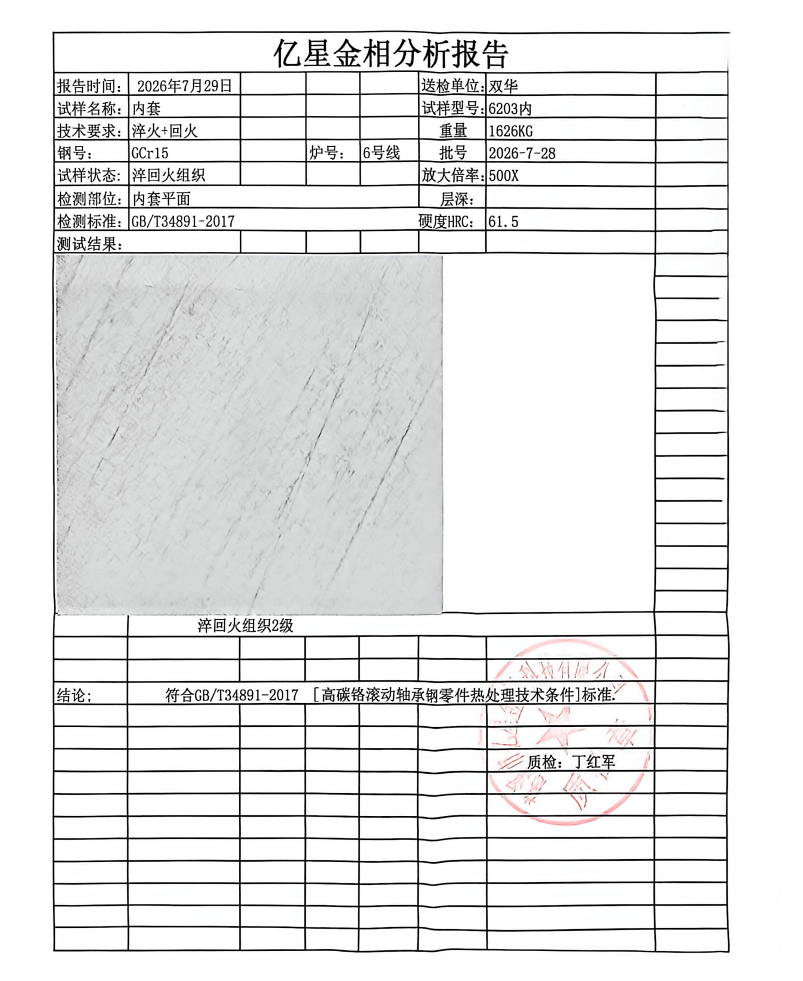
Standard bearing steel heat treatment gives adequate stability for normal operating temperatures. For higher temperatures, rings are given a stabilizing heat treatment so that they keep their dimensions in service. Some catalogues identify stabilization classes with suffix codes; the temperature assigned to each code should be taken from the governing catalogue or standard, not assumed. Stabilization can reduce hardness, so load rating and life calculations must use the resulting properties.
Our heat treatment is carried out by a long-term partner heat-treatment plant. Where stabilization is required, the process and acceptance checks are agreed in the order and confirmed before production.
Grease, oil, cage and seal selection
| Component | Options | Selection notes |
|---|---|---|
| Grease | High-temperature greases with synthetic base oils and suitable thickeners | Dropping point is not an operating limit. Select by the manufacturer's stated operating range, base oil viscosity at temperature and required relubrication interval. |
| Oil | Oil bath, circulating or oil-mist lubrication | Used when heat must be removed from the bearing or grease life is too short. Viscosity must be checked at operating temperature. |
| Cage | Polyamide (nylon), pressed steel, machined brass | Polyamide cages are limited by continuous temperature and lubricant compatibility. Steel or brass is specified when the temperature exceeds the polymer's limit. |
| Seals and shields | NBR, higher-temperature elastomers such as FKM, metal shields (ZZ) | Contact seals add friction heat. ZZ shields have no elastomer, but give less protection against fine contamination and liquids. |
Material temperature limits should be taken from the lubricant, cage material and seal material suppliers' data for the exact grade used. We confirm the combination for each order rather than quoting a general figure.
Temperature rating is confirmed per order
We do not publish a general high-temperature rating. The achievable operating temperature depends on clearance, stabilization, lubricant, cage and seal, and is confirmed for each order against your drawing and operating conditions. Turning, raceway grinding, superfinishing and assembly are done in our factory, and clearance is checked on our own equipment. NLHB manufactures miniature and deep groove ball bearings up to P4 precision, and double row angular contact bearings and track rollers up to P6.
Specification checklist
- Operating temperature: steady-state and peak, measured where (outer ring, housing, ambient), and heat source (internal friction or external).
- Speed, loads and duty cycle.
- Shaft and housing materials, tolerances and expected temperature of each.
- Required clearance group, or the data for us to propose one.
- Ring stabilization requirement.
- Lubricant type, fill quantity and relubrication method.
- Cage material and seal or shield type.
- Inspection and test requirements agreed for acceptance.
If a bearing is already running hot in service, begin with diagnosis rather than a new specification. Our bearing overheating troubleshooting guide covers lubrication, preload, fit and alignment causes.
Evidence from our workshop

What to send for a quotation
- Bearing designation or drawing.
- Operating temperature (steady and peak), where it is measured, and the heat source.
- Speed, loads, shaft and housing materials and tolerances.
- Requirements for clearance, stabilization, lubricant, cage and seals.
- Quantity and acceptance tests.
Frequently Asked Questions
Should a high-temperature bearing always be C3 or C4?
Not automatically. C3 or C4 is common because the inner ring runs hotter than the outer ring, but the group is chosen from the fits and the expected ring temperature difference.
What is dimensional stabilization of bearing rings?
A heat treatment that keeps ring dimensions stable at elevated operating temperature. It is specified by the operating temperature and can reduce hardness, which affects load ratings.
Can nylon cages be used at high temperature?
Polyamide cages have a continuous temperature limit and can be affected by some lubricants. Above that limit a steel or brass cage is specified.
Is the grease dropping point the maximum operating temperature?
No. The dropping point is a laboratory property. Use the lubricant manufacturer's stated operating range for the grease grade.
What temperature can NLHB bearings run at?
There is no general figure. The achievable temperature is confirmed per order from the clearance, stabilization, lubricant, cage and seal specified for your application.
Related guides
Published 2026-09-25. Images show our own workshop and representative products. Final dimensions, grades, inspection limits and supply conditions are confirmed against the requested model, drawing and order.