Most small and medium ball bearings are greased once at assembly and sealed for life, so the factory grease is the bearing's entire lubrication supply. The grease affects temperature rise, starting torque, noise, service life and low-temperature behaviour. This guide explains the main grease categories, the properties that matter — base oil viscosity, thickener and consistency, fill quantity — and how to specify grease on an order. At NLHB the grease type and fill quantity are agreed per order.
Grease is base oil held in a thickener
The base oil forms the lubricating film between balls and raceways. The thickener holds the oil in place and releases it slowly. Additives protect against oxidation, wear and corrosion. Each part is chosen for the speed, temperature and environment of the application.
Grease categories for ball bearings
| Category | Typical use | Main selection points |
|---|---|---|
| General-purpose | Motors, gearboxes, pumps and general machinery at moderate speed and temperature | Mineral base oil with a common soap thickener; broad compatibility |
| High-speed / low-noise | Small motors, fans, appliances, office equipment, precision miniature bearings | Lower base oil viscosity, filtered grease with fine thickener structure, controlled fill |
| High-temperature | Hot housings, heaters, dryers, equipment near heat sources | Synthetic base oil and heat-resistant thickener; check oxidation life at operating temperature |
| Low-temperature | Outdoor and cold-climate equipment, refrigeration, cold-start conditions | Low-viscosity or synthetic base oil so that starting torque stays acceptable |
| Food-grade | Food, beverage and packaging machinery where incidental contact is possible | Registered food-grade lubricant of the category required by the customer's hygiene plan |
Categories overlap. A fan motor may need low noise and low-temperature starting at the same time; a dryer motor may need high temperature and low noise. The specification should state every condition rather than a single category name.
Base oil viscosity
- Viscosity at operating temperature determines the thickness of the lubricating film. The film must be thick enough to separate balls and raceways under the actual load and speed.
- Higher viscosity: thicker film, better for heavier load and lower speed, but more churning friction and higher starting torque.
- Lower viscosity: less friction and heat at high speed and lower starting torque in the cold, but thinner film under load.
- Mineral oils suit most general applications. Synthetic oils (for example esters, PAO or fluorinated oils) are used where temperature range, oxidation life or low-temperature torque require them.
Thickener and consistency
| Thickener family | General characteristics |
|---|---|
| Lithium soap | The most common general-purpose thickener; good all-round properties |
| Lithium complex | Higher temperature capability than simple lithium soap |
| Polyurea | Used in many sealed electric-motor bearings for long life and low noise |
| Fluorinated (PTFE with fluorinated oil) | Very high temperature and chemical resistance; high cost |
Consistency (NLGI grade) describes how stiff the grease is. Stiffer grease stays in place better; softer grease flows back to the contact more readily. Greases with different thickeners are not always compatible, so an existing grease should not be topped up or replaced with another type without checking compatibility.
Fill quantity and its effect on temperature and noise
- Fill quantity is specified either as a percentage of the free internal space of the bearing or as a mass per bearing.
- Overfilling is a common cause of high temperature in the first hours of running: excess grease is churned by the balls and cage until it is pushed aside.
- High-speed bearings are generally filled more lightly than low-speed bearings.
- Grease cleanliness and thickener structure affect measured vibration. Hard particles and coarse thickener fibres show up as noise, especially in the high-frequency band, which is why low-noise greases are filtered.
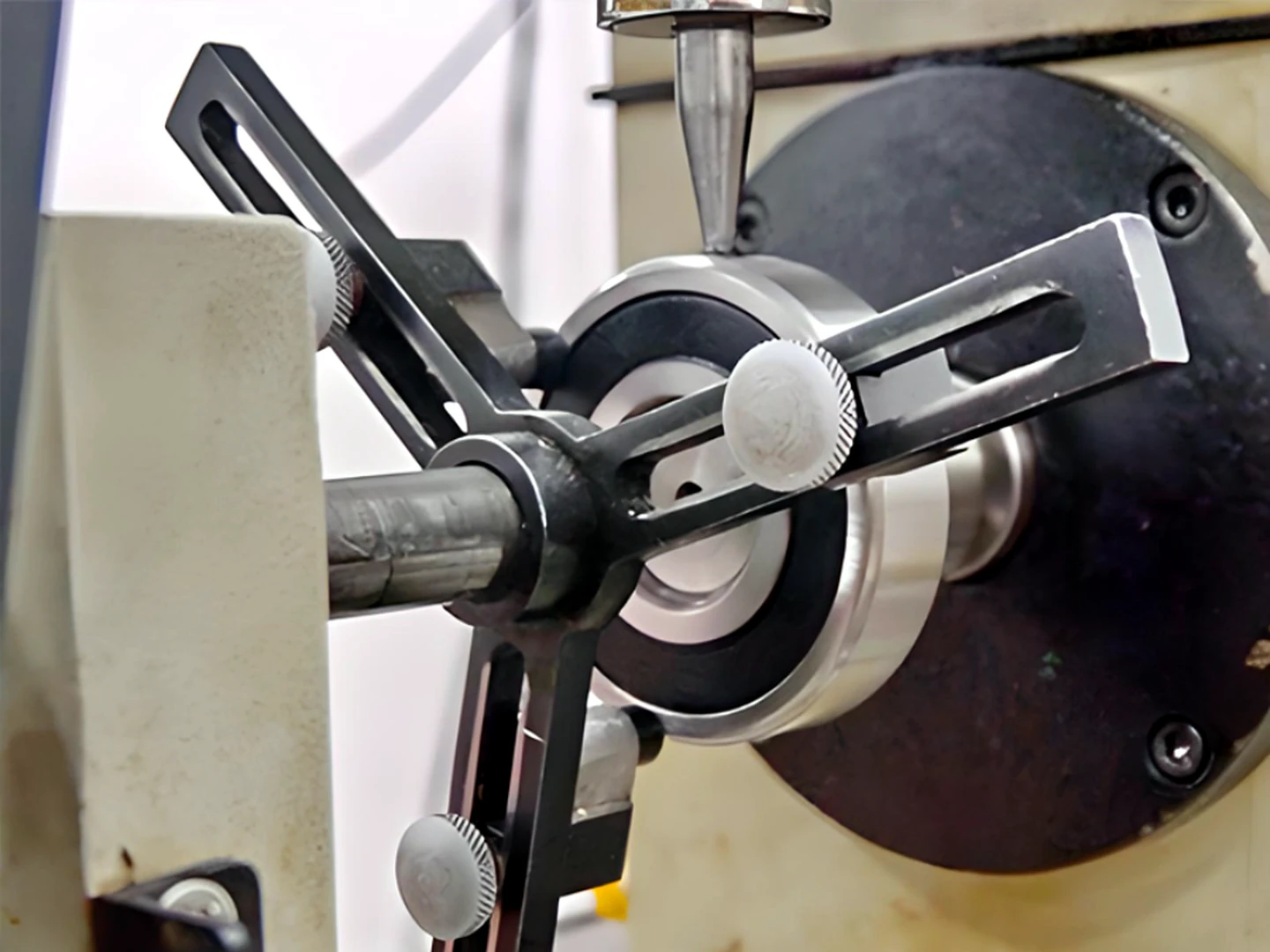
- Vibration grades (Z/V) are measured with the grease installed, so the grease type and fill must be fixed before the vibration requirement is agreed. See Z3V3 vibration grades.
How to specify grease on an order
- Name the grease you require, or describe the conditions and ask us to propose a grease for your approval.
- State the fill quantity (percentage of free space or mass per bearing), or the purpose: low torque, long life, low noise.
- Give operating temperature range, including cold starting temperature if relevant.
- Give speed, load and whether the bearing is sealed (2RS) or shielded (ZZ).
- For food-grade requirements, state the lubricant registration category required.
- Agree the vibration grade and starting-torque requirement, if any, with the grease fixed.
- Require the same grease and fill for repeat orders; any change is agreed in writing before production.
Grease is agreed per order
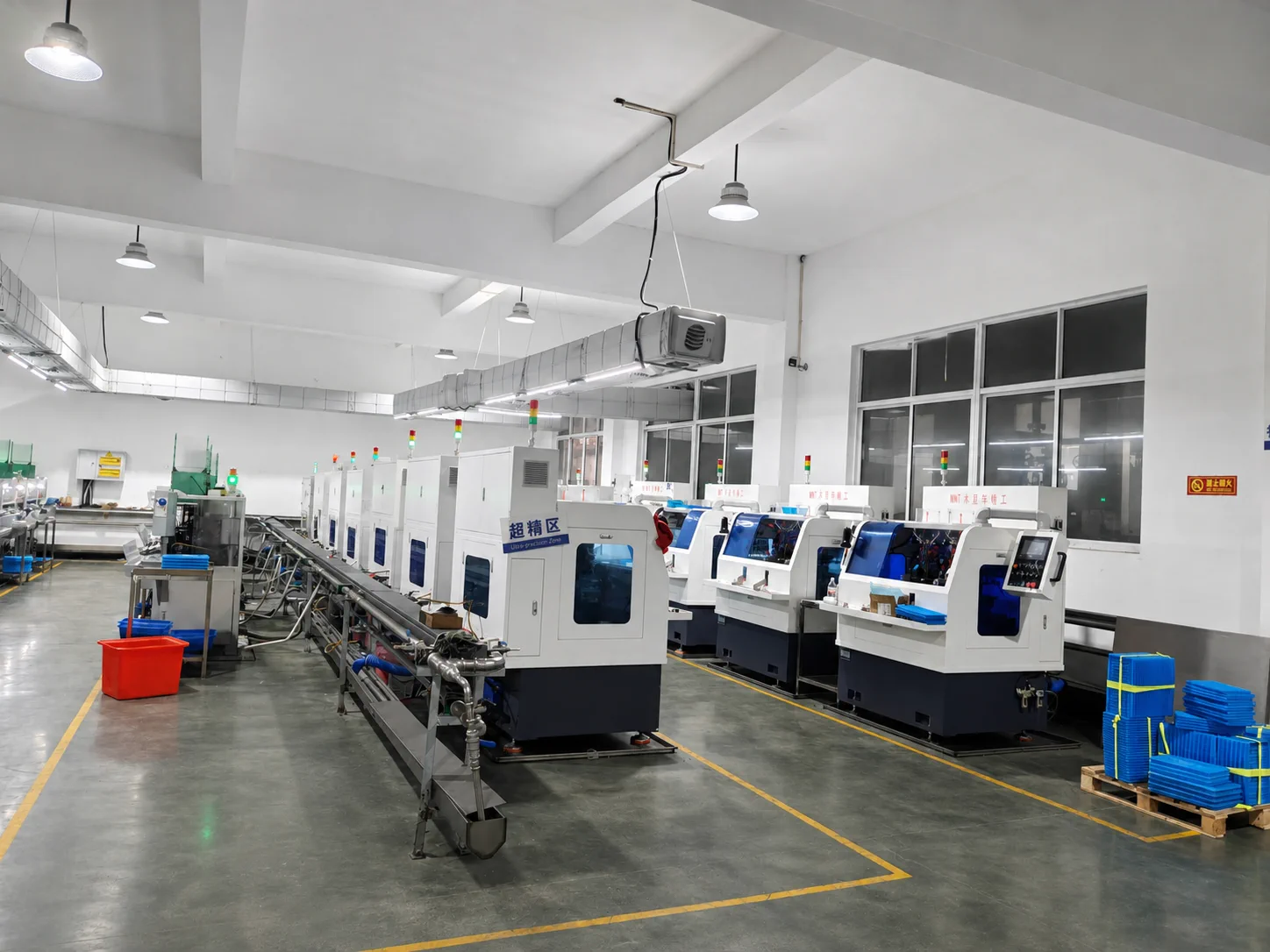
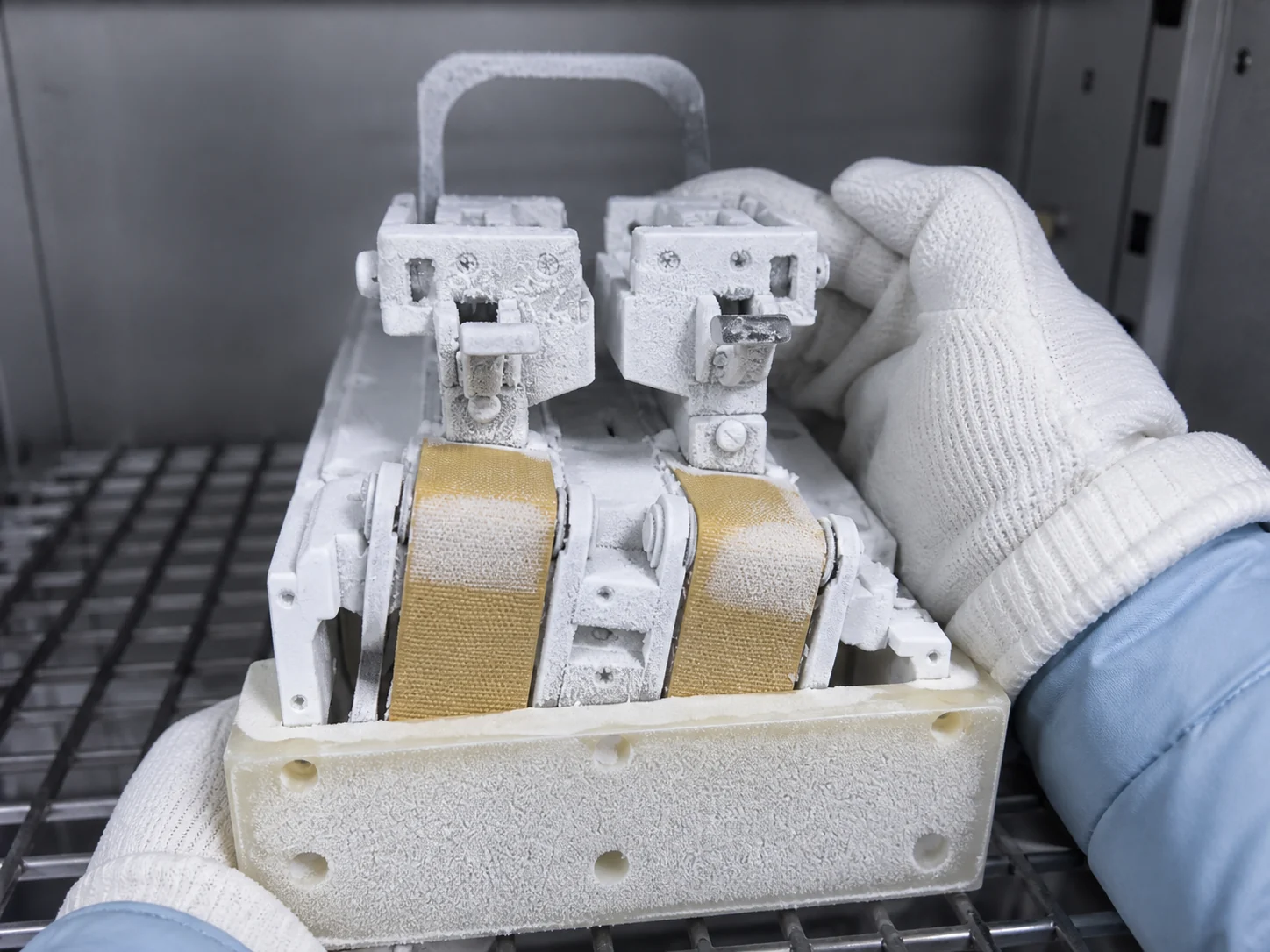
We grease and assemble miniature and deep groove bearings in our own factory. Grease type and fill quantity are agreed on each order against your application or specified grease, and vibration testing is done on the greased bearing. We do not publish a standard grease list or claim lubricant certifications; food-grade and special greases are confirmed before quotation. NLHB manufactures miniature and deep groove ball bearings up to P4 precision, and double row angular contact bearings and track rollers up to P6.
Evidence from our workshop
What to send for a quotation
- Bearing designation, seal type and quantity.
- Required grease, or the operating conditions for us to propose one.
- Fill quantity or its purpose.
- Operating temperature range, including cold start.
- Speed and load.
- Food-grade or other lubricant requirements.
- Noise grade and starting torque, if required.
Frequently Asked Questions
How much grease should be in a bearing?
It depends on speed and design. Fill quantity is specified as a percentage of free internal space or as mass per bearing and agreed per order; high-speed bearings are usually filled more lightly.
Why does a new bearing run hot at first?
Often because of grease churning. Excess grease is worked by the balls and cage until it is pushed aside; overfilling makes this worse.
Does grease affect bearing noise?
Yes. Base oil viscosity, thickener structure and grease cleanliness all affect measured vibration, which is why low-noise bearings use filtered low-noise grease.
Can I mix two different bearing greases?
Not without checking compatibility. Greases with different thickeners or base oils can soften, harden or separate when mixed.
Which grease does NLHB use?
Grease type and fill quantity are agreed per order, based on your specified grease or on the operating conditions you provide.
Related guides
Published 2026-09-25. Images show our own workshop and representative products. Final dimensions, grades, inspection limits and supply conditions are confirmed against the requested model, drawing and order.