SR144 is an inch-series miniature bearing, 3.175 × 6.35 × 2.38 mm (1/8 × 1/4 × 3/32 in), widely used in dental handpieces. In this duty the bearing runs at very high speed, is exposed to spray water and handpiece oil, and must survive repeated steam sterilization. NLHB has produced SR144 bearings with stainless steel rings and silicon nitride ceramic balls to P4 precision, and has run 134 °C steam sterilization tests on them. This guide explains the design choices and what to specify.

Speed, sterilization and precision in one small bearing
A handpiece bearing combines three demands that rarely meet in one part: very high speed with little lubricant, corrosive steam and cleaning cycles, and tight runout for a concentric bur. Material, precision and cage are chosen together.
Where the bearings sit in a handpiece
| Handpiece type | Drive | Bearing duty | Selection focus |
|---|---|---|---|
| High-speed turbine | Compressed air drives a turbine rotor on a pair of small bearings | Very high speed, low load, repeated start-stop, spray water nearby | Hybrid ceramic balls, P4 precision, low-friction cage, sterilization resistance |
| Contra-angle / straight (motor-driven) | Gear train driven by an electric or air motor; reduction, 1:1 or speed-increasing ratio | Speed set by the gear ratio, gear and bur loads, several bearing positions | Size and load per position, precision, corrosion resistance |
SR144 is associated mainly with turbine rotors. Contra-angle heads use a range of miniature sizes that differ by design; the handpiece drawing or the original bearing decides the size, flange and shield configuration.
Why stainless rings and silicon nitride balls
- Stainless steel rings: steam, water and cleaning agents corrode chrome bearing steel. Martensitic stainless bearing steel is hardened for rolling contact and resists this environment; see our 440C / 9Cr18Mo stainless steel guide.
- Si₃N₄ ceramic balls: about 40% of the density of steel, so centrifugal load at turbine speeds is lower; harder than steel; no corrosion; and low adhesion to steel rings when lubrication is marginal.
- Hybrid design: ceramic balls with stainless rings is the common configuration for turbines. All-steel versions may be acceptable for lower-speed positions, as agreed with the customer.
P4 precision
At turbine speeds, ring runout turns directly into vibration, noise and bur eccentricity. P4 (ABEC 7) is the highest grade we produce for miniature bearings and is the grade we have supplied for SR144. Tolerance values are defined in ISO 492, GB/T 307.1 and ABMA 20; write the standard you accept on the order. Background on the grades is in P4, P5 and P6 precision.
134 °C steam sterilization: design considerations
| Element | What sterilization does | What to agree |
|---|---|---|
| Rings | Steam and moisture attack non-stainless steel | Stainless steel rings |
| Balls | Steel balls can corrode; ceramic balls do not | Si₃N₄ ceramic or stainless balls |
| Cage | Repeated heat and moisture can change dimensions or strength of some polymers | Cage material and design confirmed with the customer for the sterilization process |
| Lubricant | Heat and steam wash out or degrade lubricant | Initial lubricant agreed with the handpiece maker's maintenance oil |
| Shields | Moisture and oil pass the shield gap | Open or shielded, per handpiece design |
We have run 134 °C steam sterilization tests on our SR144 bearings. Service life in a handpiece depends on the handpiece design, maintenance oil, cleaning routine and user practice, so we agree the test method and acceptance criteria with each customer rather than quote a general figure.
Cage choice
The cage guides the balls at very high speed and is often the part that limits life in a turbine. Cage type and material — steel or polymer, one-piece or two-piece, ball-guided or ring-guided — are agreed with the customer against the handpiece design, speed and sterilization process. We produce steel and nylon cages to customer requirements.
Standards: what applies to the bearing and what does not
- ISO 14457 covers dental handpieces and motors as complete devices. It does not specify the bearing, and a bearing supplier cannot declare conformity to it on the handpiece maker's behalf.
- The bearing itself is specified by dimensions, precision grade (ISO 492 / GB/T 307.1 / ABMA 20), materials, cage, lubricant, noise and the sterilization test agreed with the customer.
- Regulatory approval of the handpiece remains the responsibility of the handpiece manufacturer. Ask your regulatory contact which component documents they need from the bearing supplier.
Hybrid miniature bearings from our own line
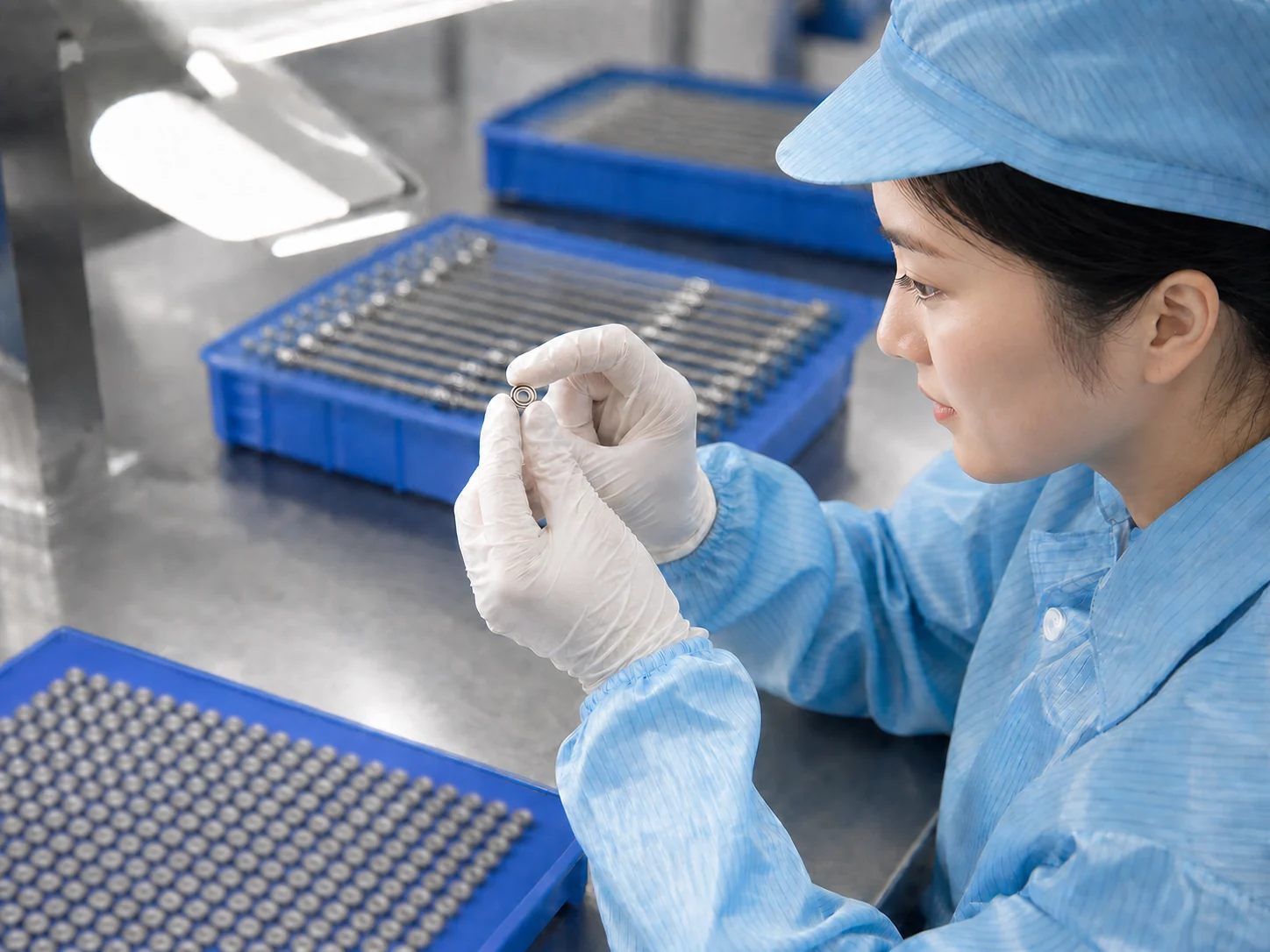
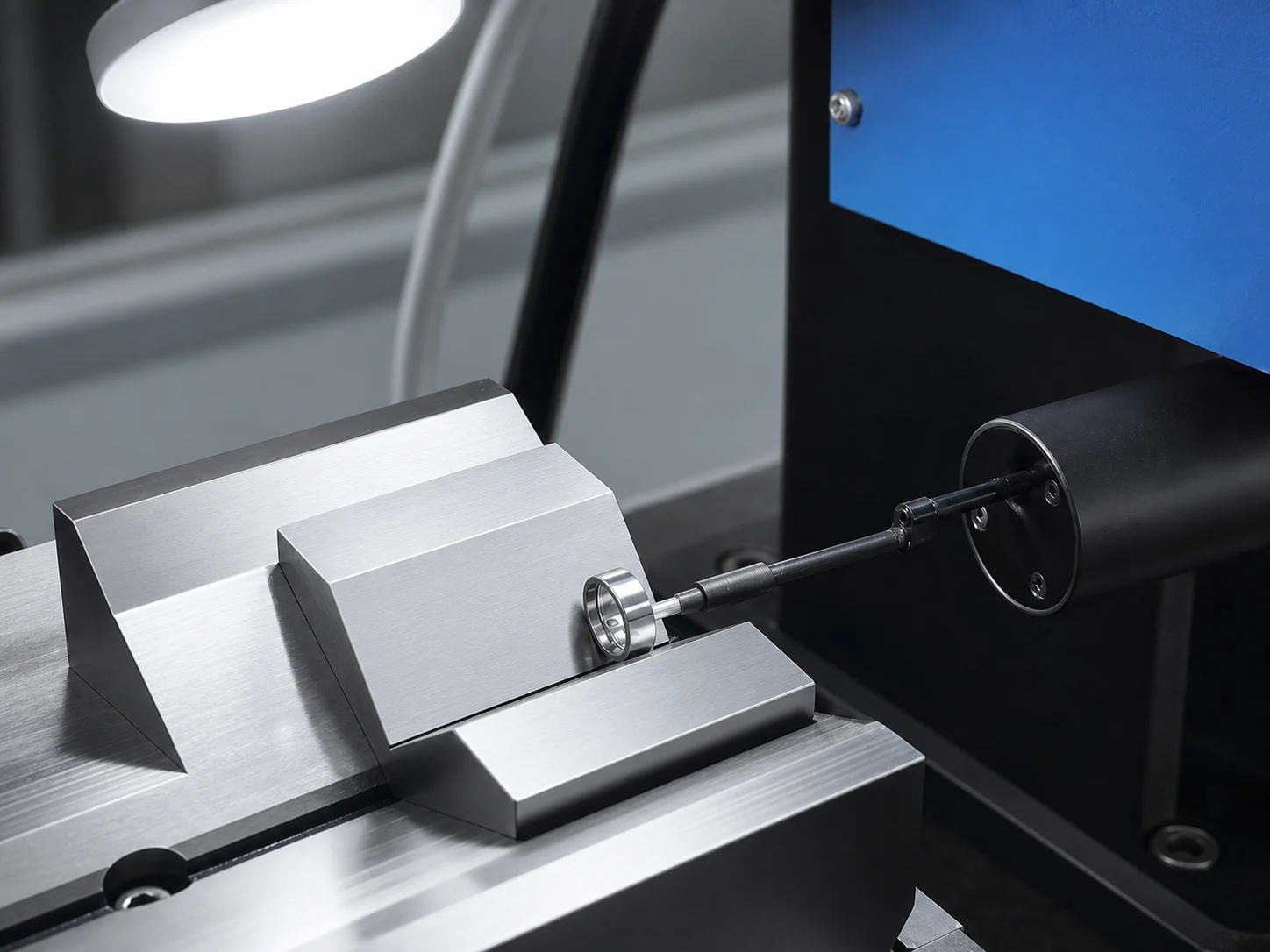
We have produced SR144 bearings in P4 with stainless steel rings and Si₃N₄ ceramic balls, with the cage agreed per customer, and have run 134 °C steam sterilization tests. Miniature bearings are made in-house from turning to assembly and checked on our own inspection equipment. NLHB manufactures miniature and deep groove ball bearings up to P4 precision, and double row angular contact bearings and track rollers up to P6.
Evidence from our workshop
What to send for a quotation
- Designation (SR144 or flanged/shielded variant) or a drawing; for repair workshops, an original bearing or a clear photo with dimensions.
- Handpiece type and position: turbine or contra-angle, and the drive.
- Ring and ball material, precision grade and cage type.
- Lubricant and sterilization process (temperature and routine) used in service.
- Quantity, packaging and inspection report requirements.
Frequently Asked Questions
What are the dimensions of an SR144 bearing?
SR144 is 3.175 × 6.35 × 2.38 mm, which is 1/8 × 1/4 × 3/32 inch. Flanged and shielded variants add suffixes depending on the design.
Why do dental turbine bearings use ceramic balls?
Silicon nitride balls are lighter than steel, so they reduce centrifugal load and heat at turbine speeds; they are also hard and do not corrode during steam sterilization.
Does ISO 14457 apply to handpiece bearings?
No. ISO 14457 applies to complete dental handpieces and motors. The bearing is specified by dimensions, precision, materials, cage, lubricant and agreed tests.
Can SR144 bearings withstand 134 °C sterilization?
Stainless rings and ceramic balls are chosen for this environment, and we have run 134 °C steam sterilization tests. Life in service depends on the handpiece, cage, lubricant and maintenance, so test conditions are agreed with each customer.
What precision does NLHB supply for SR144?
We have produced SR144 bearings in P4 (ABEC 7), the highest grade we make for miniature bearings.
Related guides
Published 2026-09-25. Images show our own workshop and representative products. Final dimensions, grades, inspection limits and supply conditions are confirmed against the requested model, drawing and order.