How a flexible bearing works
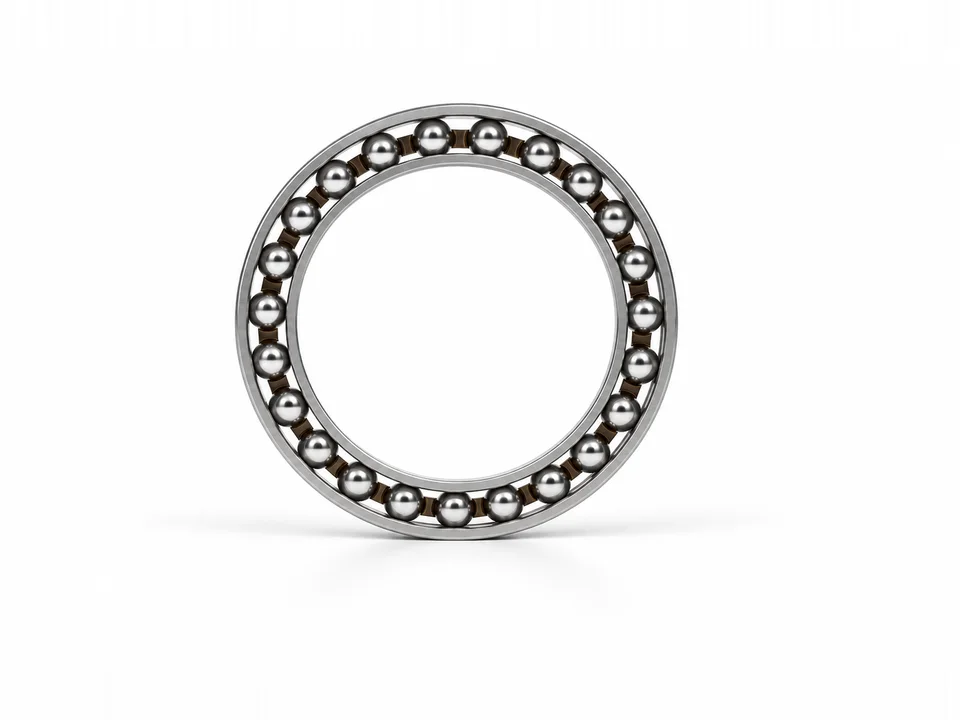
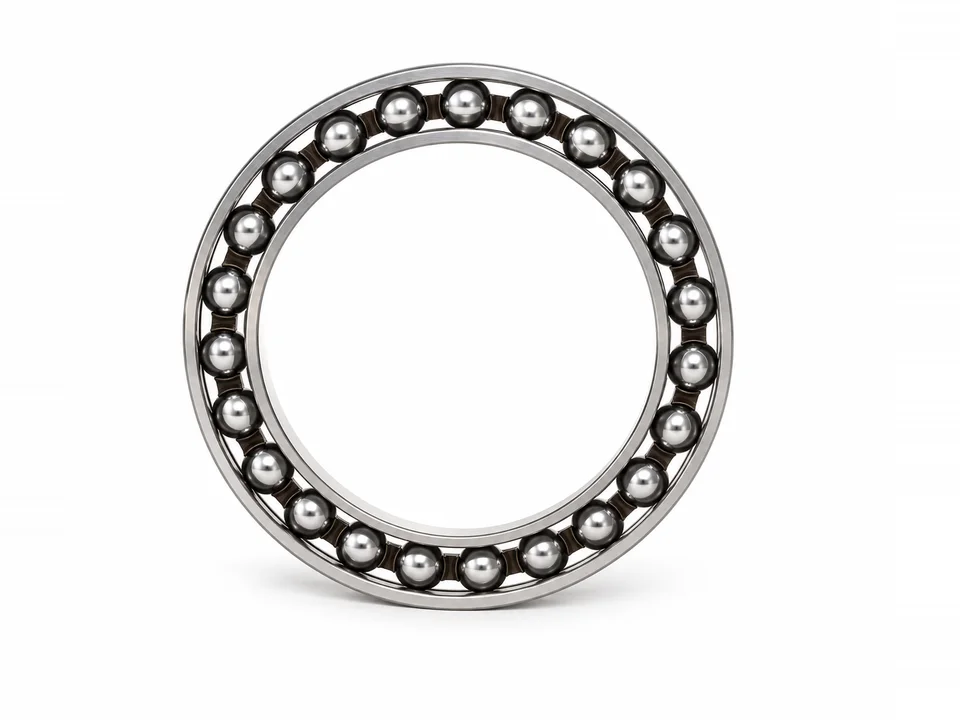
The wave generator of a harmonic reducer is an elliptical cam with a thin ball bearing pressed on it. The inner ring takes the elliptical shape of the cam. The outer ring pushes the flexspline into mesh with the circular spline at the two ends of the long axis. As the cam turns, the ellipse travels round the rings, so every part of both rings flexes continuously.
A standard bearing is made to stay round. A flexible bearing is made to keep deforming over its whole service life without cracking or wearing the raceways, so the ring section, the ball set and the cage are designed for that duty.
PRZ series: full table
Dimensions in mm. Max radial deformation, input speed and output torque are the values listed with each size in the catalog for the matching reducer. They are not bearing speed or torque ratings. Sizes 40–65 are listed without these values.
| Model | d | D | B | C | r | Max radial deformation (mm) | Input speed (rpm) | Output torque (N·m) |
|---|
| PRZ-R14 | 25.070 | 33.9 | 6.350 | 6.095 | 0.3 | 0.8 | 3000 | 6 |
| PRZ-R17 | 30.300 | 41.722 | 6.680 | 6.160 | 0.3 | 0.9 | 3000 | 16 |
| PRZ-R20 | 35.560 | 49.073 | 8.130 | 7.240 | 0.3 | 1.0 | 3000 | 30 |
| PRZ-R25 | 45.212 | 61.341 | 6.350 | 9 | 0.3 | 1.0 | 3000 | 50 |
| PRZ-R32 | 58.928 | 79.756 | 8.640 | 11.810 | 0.3 | 1.2 | 3000 | 90 |
| PRZ-40 | 71.12 | 98.171 | 10.29 | 14.475 | 0.6 | — | — | — |
| PRZ-50 | 88.9 | 122.707 | 12.7 | 18.085 | 1 | — | — | — |
| PRZ-65 | 117.856 | 159.312 | 15.88 | 23.495 | 1 | — | — | — |
Reading the dimensions
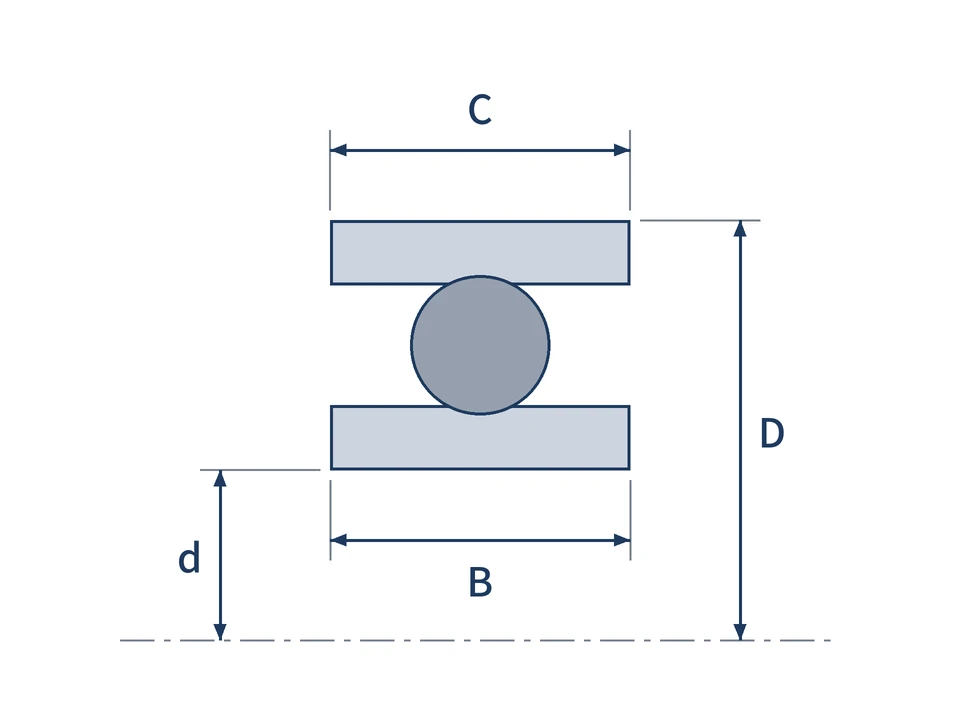
d is the bore that fits on the cam, D the outside diameter that fits in the flexspline. B and C are the two ring widths shown on the catalog section: C at the outer ring, B at the inner ring. The two widths are not equal, so give both when you order or compare a sample. r is the chamfer.
What we need for selection
- Reducer size, ratio and the complete reducer designation.
- Cam drawing and wave generator assembly drawing.
- Input speed, output torque and duty cycle of your application.
- Lubrication method and grease, if specified.
A flexible bearing is selected together with its cam and flexspline. Envelope dimensions alone do not show whether a bearing suits the deformation and duty.
Frequently asked questions
Is a flexible bearing a crossed roller bearing?
No. It is a thin-walled deep groove ball bearing on the wave generator. The crossed roller bearing in a harmonic reducer is the output bearing; see the SF and HF page.
Can a standard thin-section ball bearing replace a flexible bearing?
Not on envelope size alone. The rings deform with every turn of the cam, so the bearing must be selected for that deformation and duty.
Does NLHB supply PRZ flexible bearings?
Yes. NLHB provides supply and customization support for PRZ flexible bearings. Send the reducer designation, cam drawing and assembly drawing.
Is the input speed in the table the speed limit of the bearing?
No. It is the reducer operating condition listed with that size in the catalog. Speed suitability is reviewed with your cam, lubrication and duty cycle.