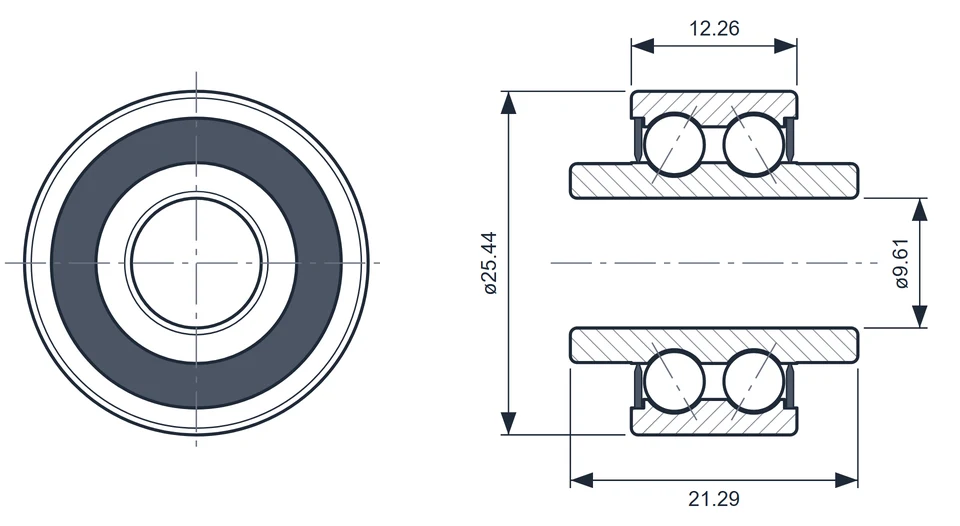
What is a pulley bearing?
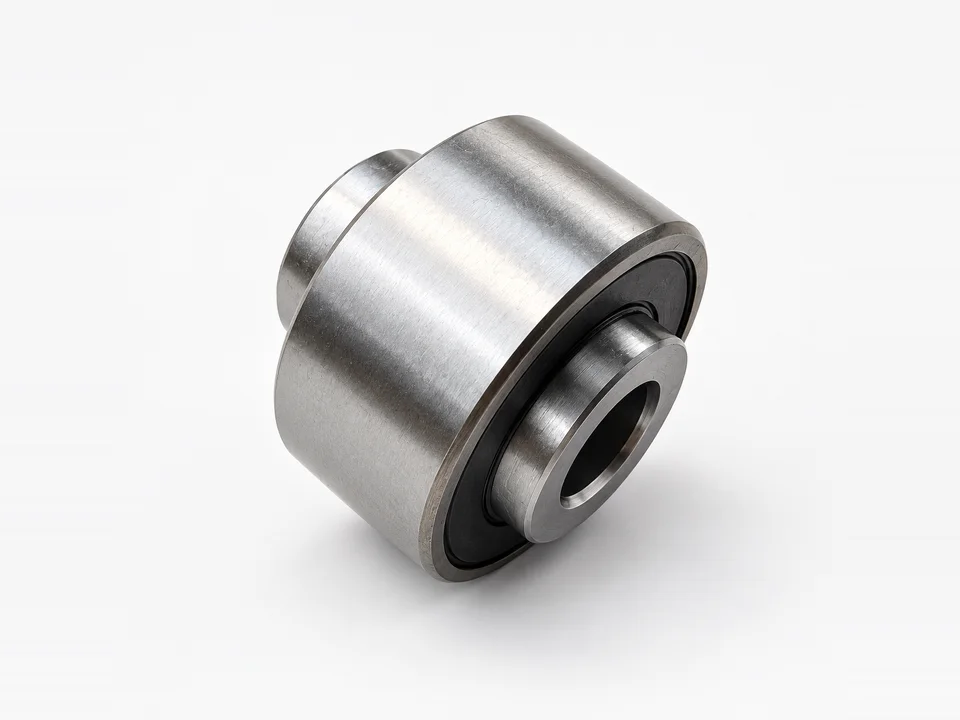
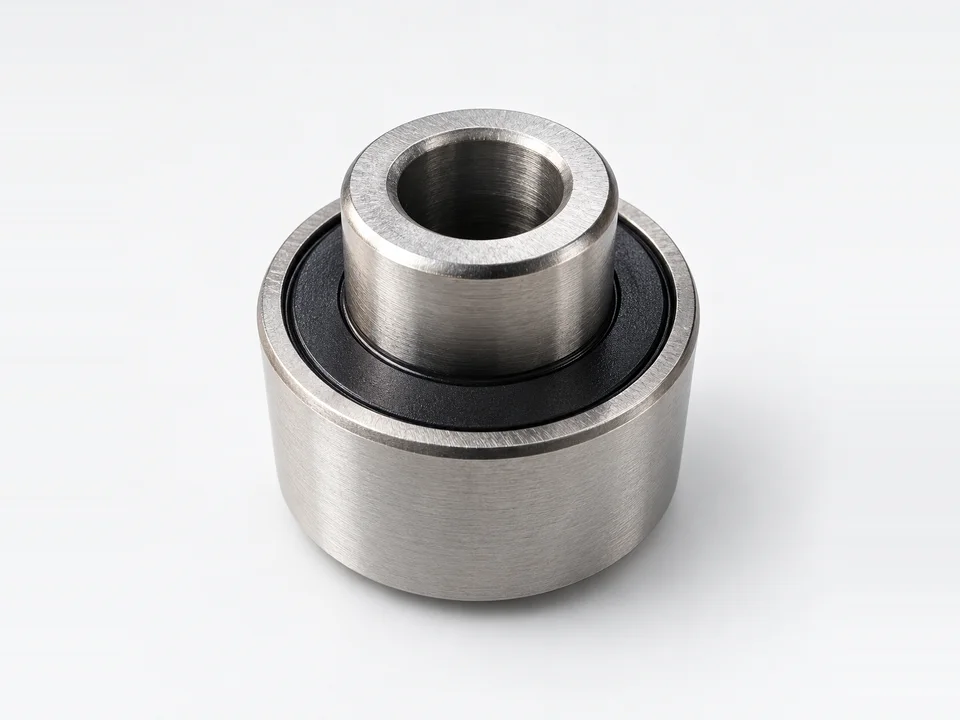
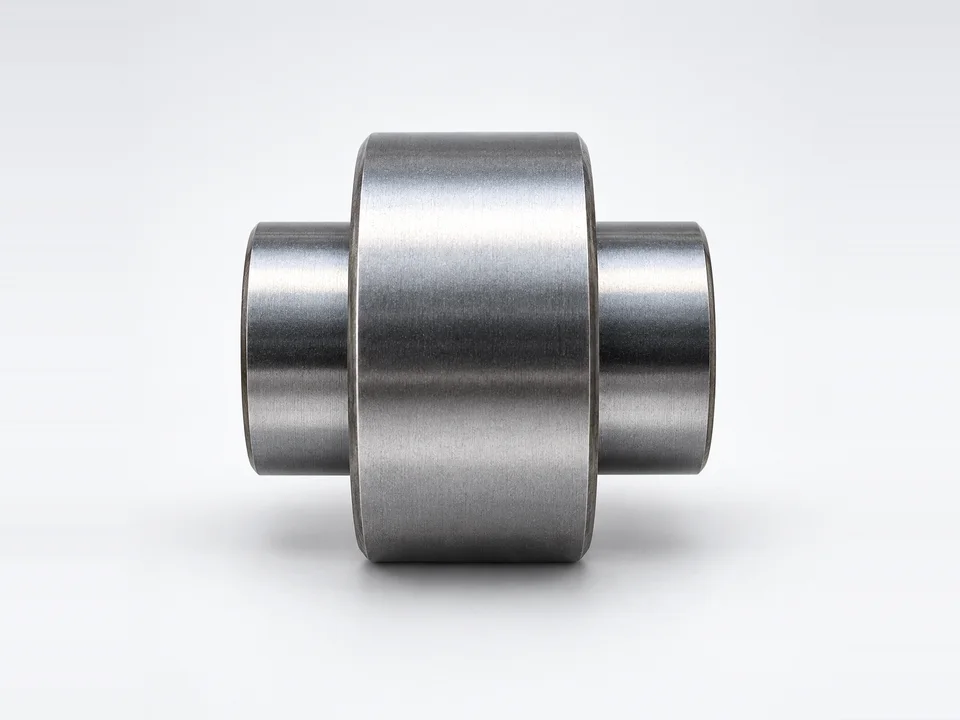
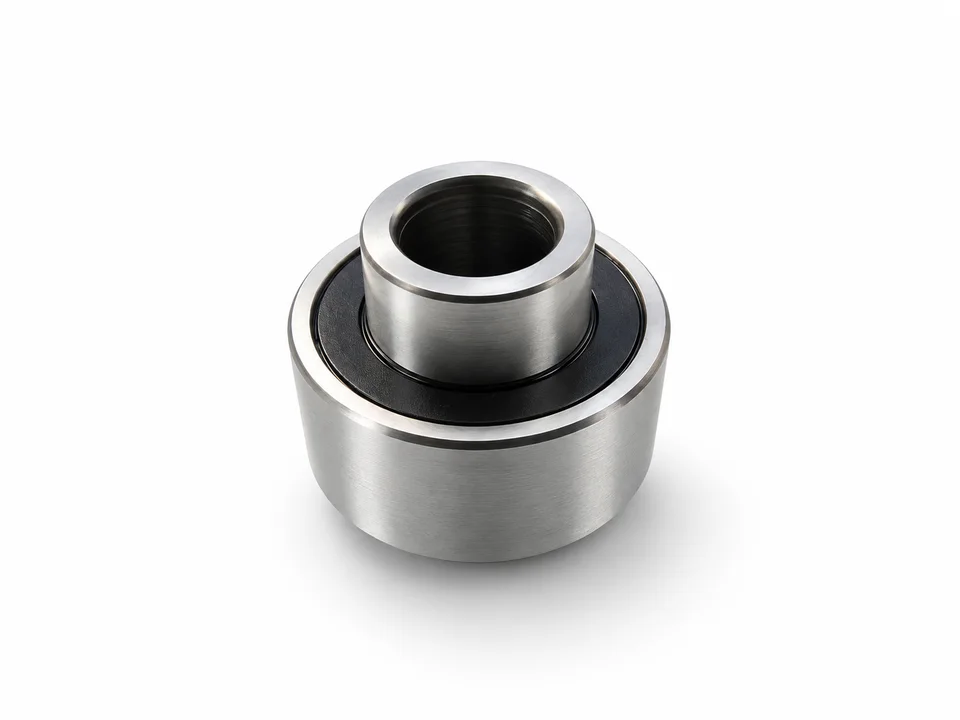
A pulley bearing is the bearing inside a belt idler or tensioner pulley. Ours are double-row angular contact ball bearings with an extended inner ring. The inner ring is wider than the outer ring and sticks out on both sides, so it works as the spacer: the pulley bolt clamps the inner ring against the mounting plate, and the outer ring and pulley turn freely. Two ball rows carry the belt load and the side load from belt misalignment, and rubber seals on both sides keep grass, dust and water out.
All sizes in this series share the same outside diameter (1.001–1.002 in) and outer-ring width (.480–.485 in), so one pulley wheel design can take several inner-ring widths. The difference between sizes is the bore and the inner-ring width, which sets how high the pulley sits on its bolt.
How to identify the size you need
- Measure the bore. Around .315 in means the 5/16 in group (6000-5xx); around .375–.389 in means the 3/8 in group (6000-6xx).
- Measure the inner-ring width from one end face to the other. This is the number that separates most sizes.
- Check the outside diameter. It should be about 1.001 in for every size in this series.
- Read the full number on the old part if you can, including the suffix letter. Sizes such as 6000-616 and 6000-616A differ in bore.
If the measurements do not match any size in the tables, send a drawing or a sample. Extended-inner-ring pulley bearings are made to drawing, so a new width or bore is a normal request. See our custom bearing service for how a drawing becomes a sample.
Why idler pulley bearings fail
- Dirt and water entry. Mower decks and harvesters work in grass clippings, dust and wet conditions. Once the seal is damaged, grease washes out and the raceways wear quickly.
- Belt misalignment. A bent bracket or a worn pivot pushes the belt sideways, adding axial load to the bearing.
- Over-tension. Too much spring force on a tensioner shortens bearing life.
- Loose clamping. If the inner ring is not clamped tight, it spins on the bolt and wears the bore.
Typical signs are squealing, a rough feel when the pulley is turned by hand, side play at the pulley rim, and a belt that keeps jumping off. Replace the bearing before the pulley wobble damages the belt.
Frequently asked questions
What is the difference between a pulley bearing and a standard 6000 deep groove bearing?
A pulley bearing in this series has two ball rows and an extended inner ring that works as the spacer. A standard 6000 bearing has one ball row and equal-width rings, so it needs separate spacers and carries less side load.
Which size fits my mower deck idler pulley?
Measure the bore and the inner-ring width and match them in the tables above. If the old part still shows its number, send it to us with a photo and we will confirm the size.
Are these bearings sealed?
Yes. All sizes in this series have rubber seals on both sides and are greased for life.
What do the suffix letters A, B and C mean?
They mark drawing variants with a different bore or inner-ring width. For example, 6000-616A has a slightly larger bore than 6000-616. Always order with the full number.
Can you make a pulley bearing to our drawing?
Yes. Send the drawing or a sample with the expected load and speed. We review the bore, inner-ring width, seals and grease before quoting.