The water pump and the belt tensioner and idler pulleys sit on the same front-end accessory drive and fail in similar ways: noise, play and heat. Their bearings, however, are built very differently. A water pump normally uses an integral shaft bearing, where the shaft itself forms the inner raceway; a tensioner or idler pulley normally runs on a sealed double row ball bearing pressed into the pulley. This guide explains both constructions, what the common symptoms point to, and how to identify a replacement from a part number and measured dimensions.
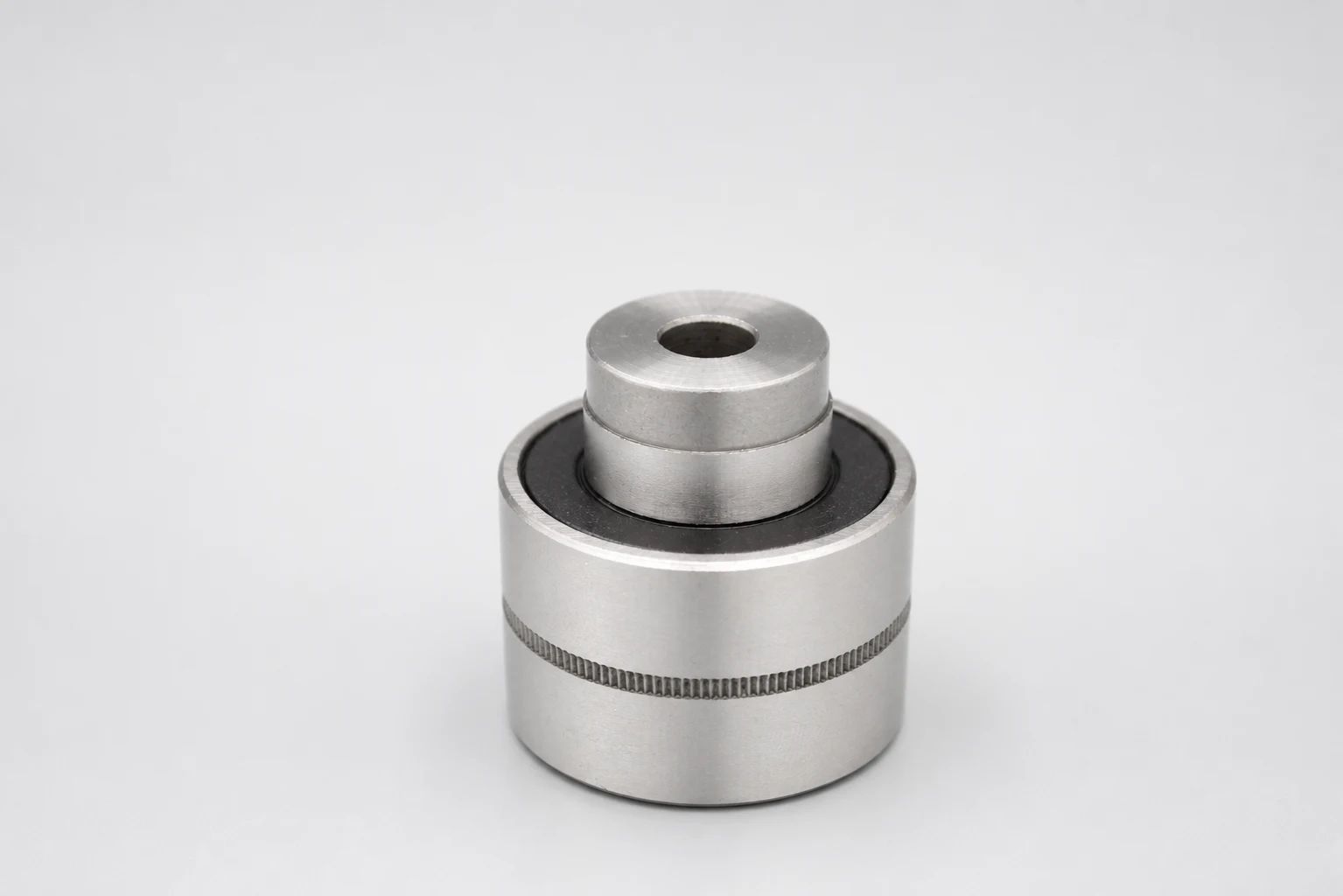
Two bearings on one belt drive
Both bearings carry belt tension as a radial load that is offset from the bearing centre. The water pump bearing must also keep coolant away from its grease; the pulley bearing must keep road dirt and water out while running at engine-related speed.
How a water pump bearing is built
Most automotive water pumps use an integral shaft bearing (also called a shaft-type or spindle bearing). There is no separate inner ring: the raceways are ground directly on the hardened shaft, and one common outer ring holds two rows of rolling elements. The outer ring is pressed into the pump housing, the impeller is pressed onto the inner end of the shaft, and the pulley hub or flange is pressed onto the outer end.
| Configuration | Rolling elements | General characteristics | Where it is used |
|---|---|---|---|
| Ball-ball | Two rows of balls | Carries radial load and axial load in both directions; compact | Pumps with moderate belt load |
| Ball-roller | One ball row and one cylindrical roller row | Roller row takes the higher radial load on the belt side; ball row locates the shaft axially | Pumps with higher belt load or a larger pulley offset |
Designations such as WB (ball-ball) and WR (ball-roller) are widely used in the aftermarket, but the numbering after the prefix is not uniform across manufacturers. Treat these designations as a guide to the configuration and confirm every dimension against the sample or drawing.
The pump also has a mechanical face seal between the impeller and the bearing. This seal holds the coolant. Between the face seal and the bearing, the housing has a weep hole that drains any seepage to the outside. The bearing's own seals are there to keep grease in and to keep seepage and dirt out; they are not designed to hold coolant pressure.
How tensioner and idler pulley bearings are built
Tensioner and idler pulleys run the belt on their outside surface, so the belt force acts on the pulley rim. Because the belt contact is often wider than the bearing, or not centred on it, the bearing sees a radial load plus a tilting moment. A double row ball bearing, with two ball rows in a single wide outer ring, resists that moment better than a single row bearing of the same bore.
- Double row angular contact type: two ball rows with contact angles set against each other; stiff against tilting and takes axial load in both directions. See our double row angular contact series guide.
- Single row deep groove type: used in lighter or narrower idler pulleys, often in wider-than-standard versions.
- Seals: contact rubber seals on both sides are normal, because the pulley runs exposed to road splash and dust. Grease fill and seal design are fixed at assembly; the bearing is not relubricated in service.
- Mounting: the outer ring is pressed into a steel or plastic pulley; the inner ring is clamped by a bolt through the bore to the tensioner arm or bracket.
Failure symptoms and what they point to
| Symptom | Likely component | Likely cause | What to check |
|---|---|---|---|
| Whine or growl that rises with engine speed | Water pump bearing or pulley bearing | Raceway wear or spalling; grease loss | Remove the belt and turn each pulley by hand: roughness or noise identifies the bearing |
| Coolant traces or crust below the weep hole | Water pump face seal | Face seal wear; seepage reaching the drain | Occasional light seepage can be normal; continuous drip means the pump seal is failing |
| Coolant in or around the bearing, rusty grease | Water pump bearing | Face seal leak with blocked weep hole; coolant washed out the grease | Replace the complete pump or shaft bearing; do not replace the bearing alone and leave a leaking seal |
| Pulley wobble or visible play | Either bearing | Advanced wear, loss of preload in the rows | Rock the pulley by hand with the belt removed |
| Belt squeal, edge fraying, belt walking off | Tensioner or idler pulley | Bearing play tilts the pulley; weak tensioner spring | Pulley alignment, bearing play, tensioner arm travel |
| Seized pulley, burnt belt smell | Pulley bearing | Grease loss or water ingress past the seal | Replace pulley or bearing; inspect belt |
Noise diagnosis is easier with the belt off: a healthy sealed bearing turns smoothly with some drag from its contact seals. A rough, notchy or loose feel, or grease leaking from the seal, confirms that the bearing is at fault.
Identifying a replacement from part numbers
A replacement can be identified from the vehicle or engine OE part number, the pump or pulley manufacturer's number, or the number stamped on the bearing itself. These numbers are useful for finding the configuration, but a cross-reference is a dimensional match, not brand authorization. Two parts listed under the same reference can differ in seal design, grease, raceway geometry and shaft end detail, so the final decision is made on dimensions and the sample.
| Source of the number | What it tells you | Limitation |
|---|---|---|
| Vehicle / engine OE number | Which pump or pulley assembly is fitted | Refers to the assembly, not the bearing inside |
| Pump or pulley aftermarket number | Assembly type, sometimes bearing dimensions in the catalogue | Catalogue data may not list shaft end details or seals |
| Number on the bearing | Bearing type and envelope | Numbering differs between bearing makers |
| Our number after sample check | Dimensionally compatible reference in our range | Confirmed only against your sample or drawing |
What to measure
| Water pump shaft bearing | Tensioner / idler pulley bearing |
|---|---|
| Outer ring (body) outside diameter and length | Bore diameter |
| Shaft diameter at each end (they are often different) | Outside diameter |
| Overall length and length of each shaft extension | Inner ring width and outer ring width (they may differ) |
| Shaft end features: knurl, flat, groove, chamfer | Seal type on each side; any extended inner ring or spacer |
| Configuration: ball-ball or ball-roller (from the sample or drawing) | Pulley outside diameter and surface: flat, grooved, flanged |
Measure the shaft ends in the undamaged area, away from where the impeller or hub was pressed. Record the instrument used. If the old part is worn, send the sample so we can confirm dimensions that cannot be measured reliably in the field.
Water pump and tensioner bearings from our Cixi factory
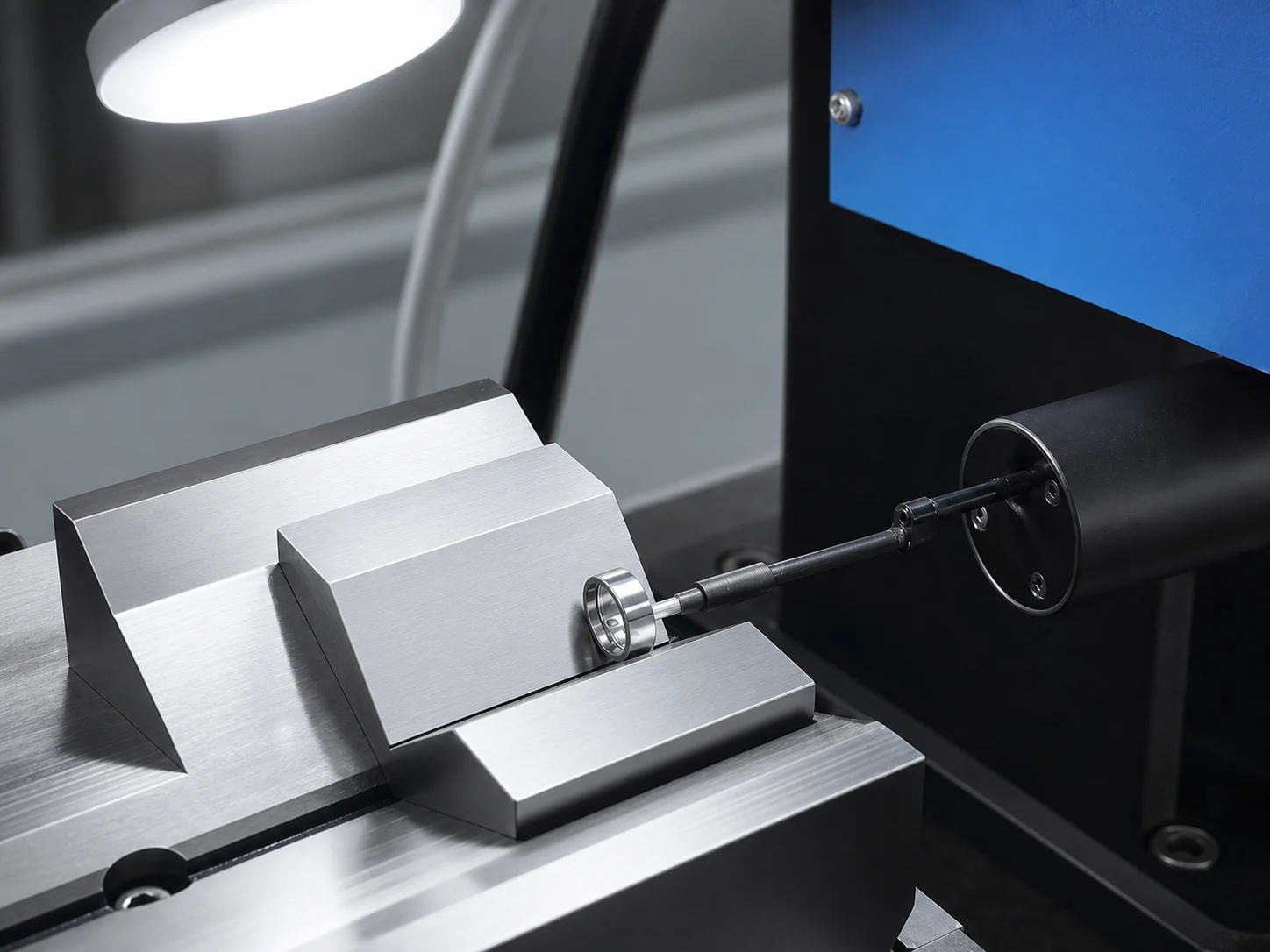
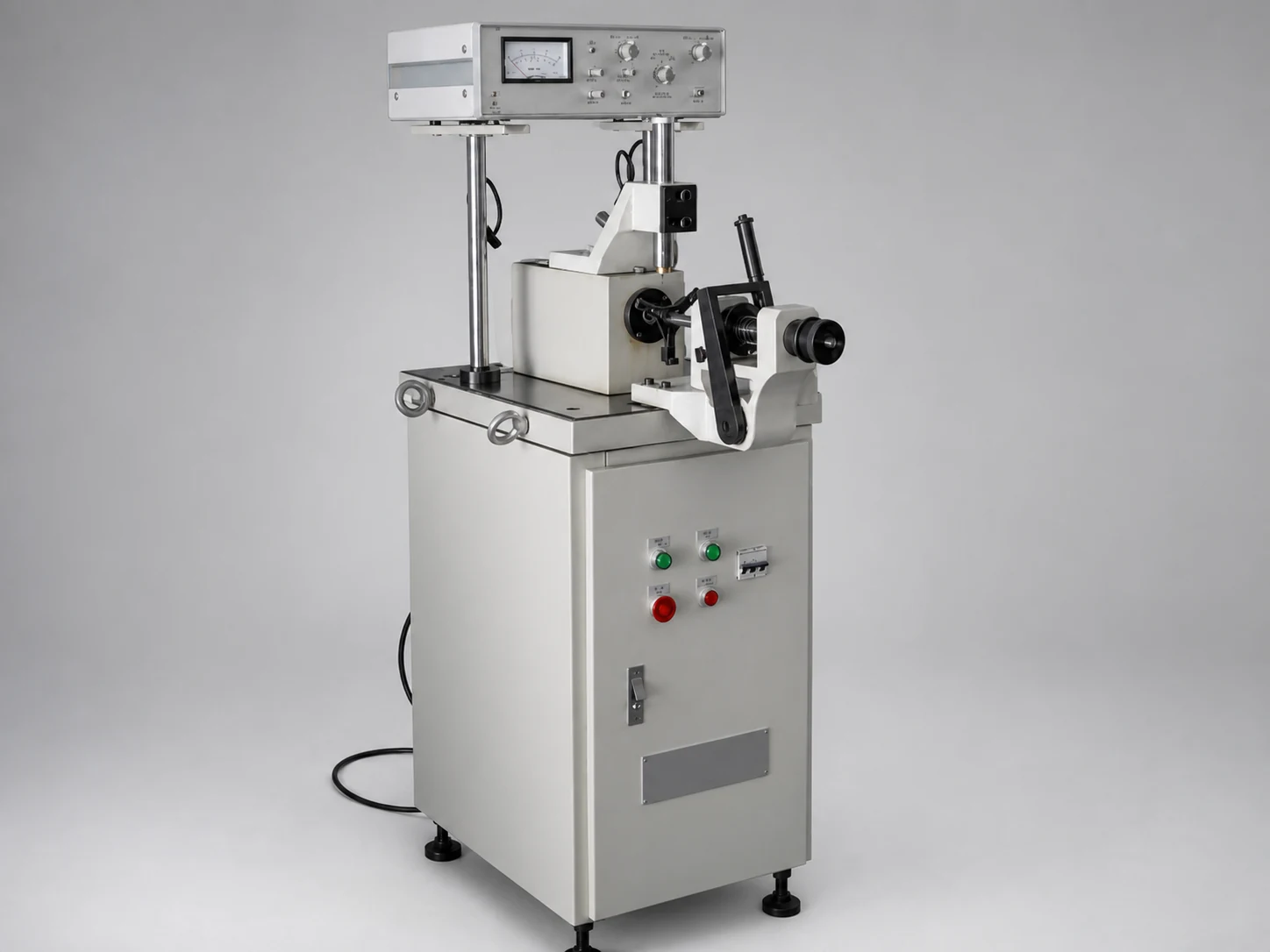
We produce automotive water pump bearings, tensioner bearings and AC compressor clutch bearings. Turning, raceway grinding, super-finishing and assembly are done in our own factory; heat treatment is carried out by a long-term partner. We quote dimensionally compatible references against your sample or drawing, not brand-authorized parts. NLHB manufactures miniature and deep groove ball bearings up to P4 precision, and double row angular contact bearings and track rollers up to P6.
Evidence from our workshop
What to send for a quotation
- OE, pump or pulley number, and any number stamped on the bearing.
- Measured dimensions as listed above, or a drawing.
- Photos of the part from both ends and the side, or a sample.
- Seal type and any grease or noise requirement.
- Annual quantity, packing and target market (OE assembly or aftermarket).
Frequently Asked Questions
What is a water pump shaft bearing?
It is a bearing without a separate inner ring: the raceways are ground on the pump shaft, and one outer ring holds two rows of balls, or one row of balls and one row of rollers. The impeller and pulley hub are pressed onto the shaft ends.
Is coolant at the weep hole a bearing failure?
Not by itself. The weep hole drains seepage from the pump's mechanical face seal. A continuous drip means the face seal is failing; if coolant reaches the bearing and washes out its grease, the bearing fails soon after.
Why do tensioner pulleys use double row bearings?
The belt force acts on the pulley rim and is often off-centre from the bearing, creating a tilting moment. Two ball rows in one outer ring resist that moment better than a single row bearing of the same bore.
How do I tell which pulley is noisy?
Remove the belt and turn each pulley by hand. A good bearing turns smoothly with slight seal drag; roughness, play or grease leakage identifies the faulty one.
Can I order by OE number only?
The OE number helps identify the assembly and configuration, but we confirm the match against measured dimensions or a sample. Replacements are dimensionally compatible references, not brand-authorized parts.
Related guides
Published 2026-09-25. Images show our own workshop and representative products. Final dimensions, grades, inspection limits and supply conditions are confirmed against the requested model, drawing and order.