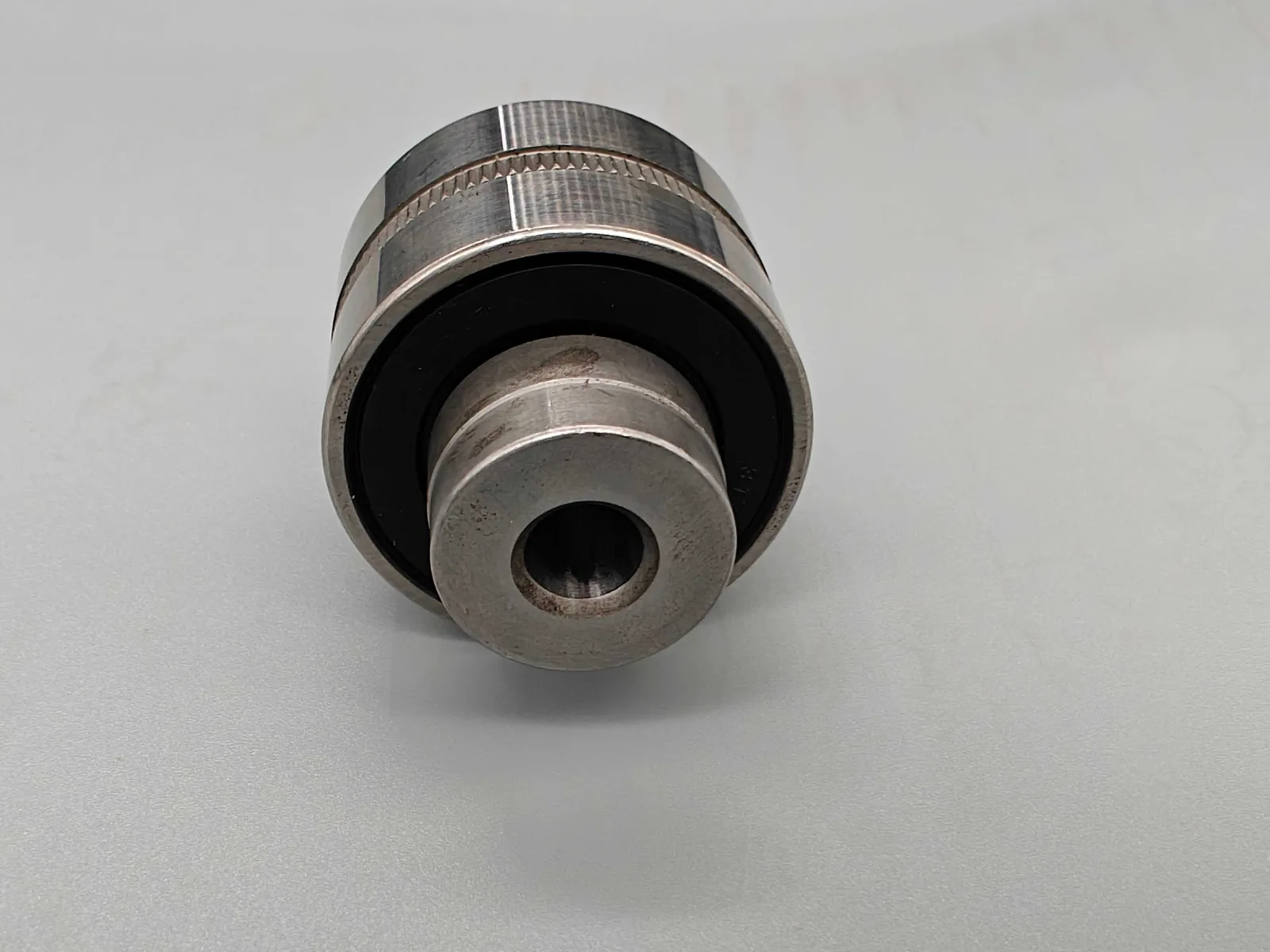
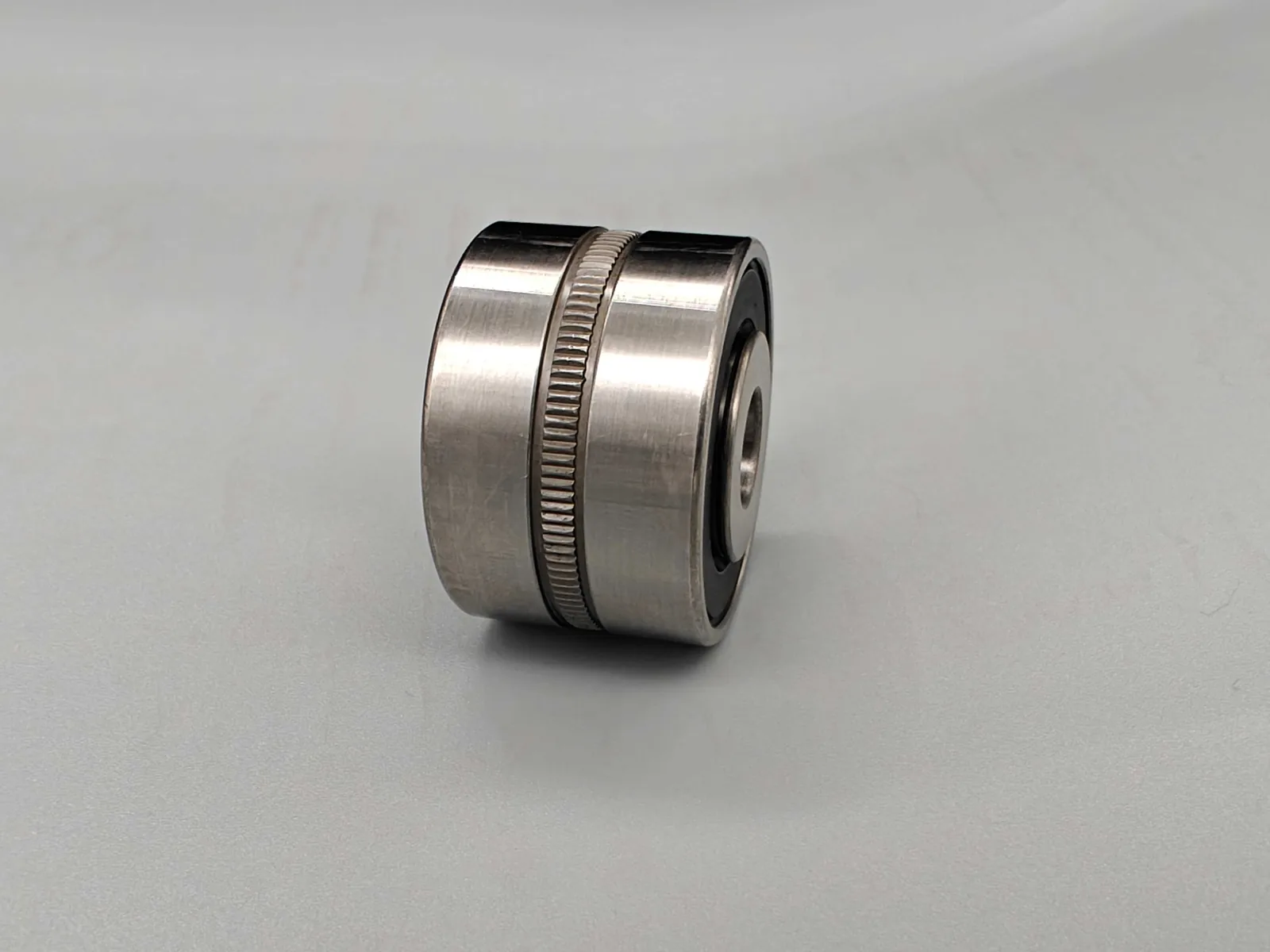
A tensioner bearing — also called a tension wheel bearing — runs inside the pulley of a belt tensioner. It is typically installed on the slack side of a timing or accessory belt, where the tensioner keeps belt tension within range to prevent slippage, excess wear and noise in the drive.
What a tensioner bearing does
A belt drive only transmits power reliably when the belt is held at the right tension. Belts stretch and wear over time, and engine speed and load change continuously. The tensioner compensates for this with a spring-loaded or damped arm that presses a pulley against the belt.
The bearing in that pulley lets it rotate freely at belt speed while carrying the radial load from belt tension. Its condition directly affects how smoothly the belt runs: a worn or contaminated tensioner bearing shows up as noise, pulley wobble and uneven belt wear.
Tensioner vs. idler pulley bearings
An idler pulley guides or re-routes the belt around other components; its position is fixed. A tensioner pulley is mounted on a moving arm and actively sets belt tension. Both use a bearing inside the pulley, and the bearing designs are often similar, but the tensioner sees changing load as the arm moves and damps belt vibration.
Common constructions
- Single-row or double-row ball bearings fitted into a steel or plastic pulley. Double-row designs are used where a wider pulley or higher tilting stiffness is needed.
- Sealed, greased-for-life bearings. Tensioners sit in the engine bay exposed to dust, water and temperature changes, so contact seals are normally specified.
- Extended or wide inner rings that locate against the tensioner arm and carry the mounting bolt.
- Outer ring as running surface in some designs, where the belt runs directly on a profiled or flat outer ring instead of a separate pulley.
Reference models
Examples of tensioner bearings previously listed on this page:
Dimensions, seal type and availability for these and other tensioner bearings are confirmed against your part number or sample.
What to check when selecting or replacing
- Envelope: bore, outside diameter and width, plus any extended inner-ring width or shoulder.
- Pulley interface: whether the bearing is pressed into a pulley or the outer ring is the running surface, and the pulley profile (flat, grooved or ribbed).
- Construction: single or double row, ball count and cage type, if the original can be inspected.
- Sealing and grease: contact seals on both sides and a grease suited to the engine-bay temperature range.
- Load and speed: belt tension, wrap angle on the pulley and maximum belt speed.
Information for a quotation
- Bearing number or OEM tensioner reference, if replacing an existing part.
- Bore, outside diameter and width — or a drawing or sample.
- Whether the bearing is supplied alone or pressed into a pulley.
- Seal and grease requirements.
- Application: vehicle or machine type, belt type and operating temperature.
- Annual quantity and required delivery schedule.
Frequently asked questions
Where is a tensioner bearing installed?
In the pulley of the belt tensioner, which is usually positioned on the slack side of a timing or accessory belt.
What are the signs of a failing tensioner bearing?
Typical signs are a whining or grinding noise from the belt drive, visible wobble of the tensioner pulley, and uneven or accelerated belt wear.
Can the bearing be replaced without replacing the whole tensioner?
That depends on the tensioner design. Where the bearing is pressed into a serviceable pulley it can be replaced separately; on many units the pulley and bearing are serviced as an assembly.
Can NLHB supply a tensioner bearing from a sample?
Yes. Send a sample or drawing together with the application details and we will review dimensions, construction and sealing before quoting.
Related resources
Photos are representative. Final dimensions, ratings, inspection limits and supply conditions are confirmed against the requested model, drawing and order.