The pulley of an automotive A/C compressor rides on a sealed double row angular contact ball bearing, usually identified by a BD designation such as 30BD, 35BD or 40BD. The bearing runs whenever the engine runs, whether or not the electromagnetic clutch is engaged, and it works in engine-bay heat under belt tension. This guide explains the structure, the usual failure mechanisms, and how to specify a replacement correctly. NLHB produces BD-series clutch bearings in its Cixi factory.
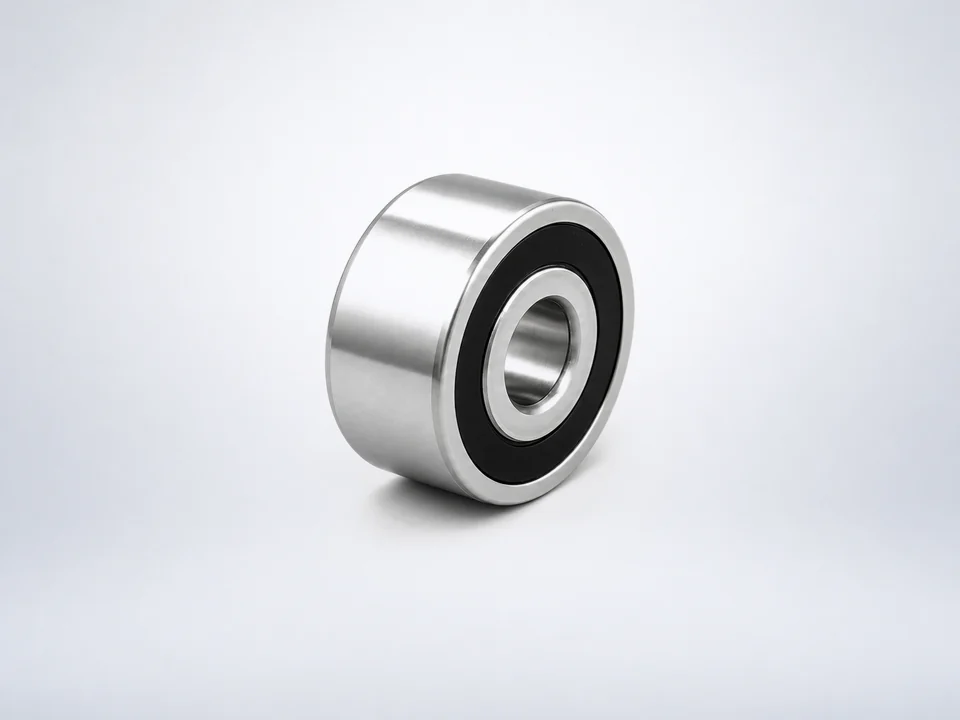
One bearing carries the pulley at all times
When the clutch is disengaged, the pulley freewheels on the bearing while the compressor shaft stays still. When the clutch is engaged, the bearing still carries the belt load. The bearing therefore accumulates running hours equal to engine hours, not A/C hours.
What a BD clutch bearing is
A BD bearing is a double row angular contact ball bearing designed for the compressor clutch pulley. Two rows of balls sit in raceways with an inclined contact angle, arranged so that the bearing supports radial load, axial load in both directions and a tilting moment in a single, compact unit. This matters because the belt groove of the pulley is usually offset from the bearing centre, so the belt pull creates a moment as well as a radial force.
| Feature | Typical design | Why it matters in a clutch pulley |
|---|---|---|
| Rolling elements | Two rows of steel balls | Two load paths give moment stiffness in a narrow width |
| Contact arrangement | Angular contact, both rows in one outer ring | Supports belt load and the moment from pulley offset |
| Sealing | Contact seals on both sides (2RS type) | Keeps grease in and road water, dust and belt debris out |
| Lubrication | Grease-filled for life | No relubrication is possible after the pulley is assembled |
| Fit in pulley | Outer ring pressed into the pulley bore, retained by a snap ring or staking | Outer ring rotates with the pulley; the fit must prevent creep |
| Fit on compressor | Inner ring on the stationary compressor nose | The inner ring is stationary relative to the belt load; the outer ring rotates relative to the load and therefore needs the tighter fit |
BD designations follow two common patterns. In the four-digit pattern the leading number is the bore and the four digits after BD give outside diameter and width in millimetres: 35BD5222 is 35 × 52 × 22 mm, 30BD4518 is 30 × 45 × 18 mm and 35BD5520 is 35 × 55 × 20 mm. In the three-digit pattern the digits after BD are a maker's serial code, not a dimension: 35BD219 is 35 × 55 × 20 mm, while other codes with the same bore differ in size, so they must be looked up or measured. Letters that follow (for example T12, DDU, CG) are maker-specific codes for cage, seals, clearance or grease. The same size is also sold under other makers' designations, such as 35BG-type or ACB-type numbers; these are dimensionally compatible references, not brand authorization. We confirm every BD bearing by measured dimensions and drawing. For general design background see our double row angular contact series guide.
Why clutch bearings become noisy or fail
| Mechanism | What happens | Typical evidence on the removed bearing |
|---|---|---|
| Grease degradation from heat | Engine-bay temperature and heat from a slipping clutch age the grease; oil separates and the film thins | Dark, hardened or dry grease; discoloured raceways |
| Water and dirt ingress | Seal lips wear or are damaged, road spray enters, grease emulsifies | Rust spots, corrosion lines at ball pitch, gritty feel |
| Excessive belt tension | Over-tensioned belt raises radial load and moment beyond the design case | Wide, offset load zone and early fatigue spalling |
| Pulley misalignment | Belt line not in plane with crankshaft pulley or tensioner | Load path shifted to one row; asymmetric wear between rows |
| Clutch slip and air-gap problems | Wrong clutch air gap or worn friction face causes slip and local heating | Heat tint on the pulley and bearing, grease leakage |
| Installation damage | Bearing pressed in by pushing on the inner ring, or pulley hammered on | Dents at ball spacing (brinelling), noise from new |
A useful field check: if the noise is present with the A/C switched off (clutch disengaged, pulley freewheeling), the pulley bearing is the prime suspect. If noise appears only when the clutch engages, the compressor itself or the clutch is more likely. Heat-related failure modes are covered in more detail in bearing overheating troubleshooting.
How to specify a replacement BD bearing
- Record the complete marking on the old bearing, including all characters after BD and any seal or clearance suffix.
- Measure bore (d), outside diameter (D) and width (B) of the old bearing with a calibrated instrument. Note whether the inner and outer rings have the same width.
- Record the retention method in the pulley (snap ring groove position, staking) and whether the outer ring has any groove or chamfer that locates it.
- State the operating conditions: vehicle or compressor type, belt type, whether the application runs at high ambient temperature.
- State seal and grease requirements if your drawing specifies them; otherwise we propose a sealed, high-temperature grease configuration and confirm it before quotation.
- Agree the inspection items for acceptance: dimensions, radial clearance or axial play, vibration and seal appearance.
Common mistakes when sourcing clutch bearings
- Selecting by bore only. Several BD bearings share the same bore but differ in outside diameter or width.
- Substituting a single row deep groove bearing. It does not carry the pulley moment in the same way and usually fails early in this position.
- Ignoring grease temperature. General-purpose grease is not intended for the temperatures near a compressor clutch.
- Reusing a pulley with a worn bore. A loose outer ring fit lets the ring creep, generates heat and wears the pulley further.
BD clutch bearings from our own line
We produce A/C compressor electromagnetic clutch bearings in the BD series in our Cixi factory, with turning, raceway grinding, super-finishing and assembly in house and heat treatment by a long-term partner. Dimensions, clearance, seal and grease are confirmed per designation or drawing before quotation. NLHB manufactures miniature and deep groove ball bearings up to P4 precision, and double row angular contact bearings and track rollers up to P6.
Evidence from our workshop
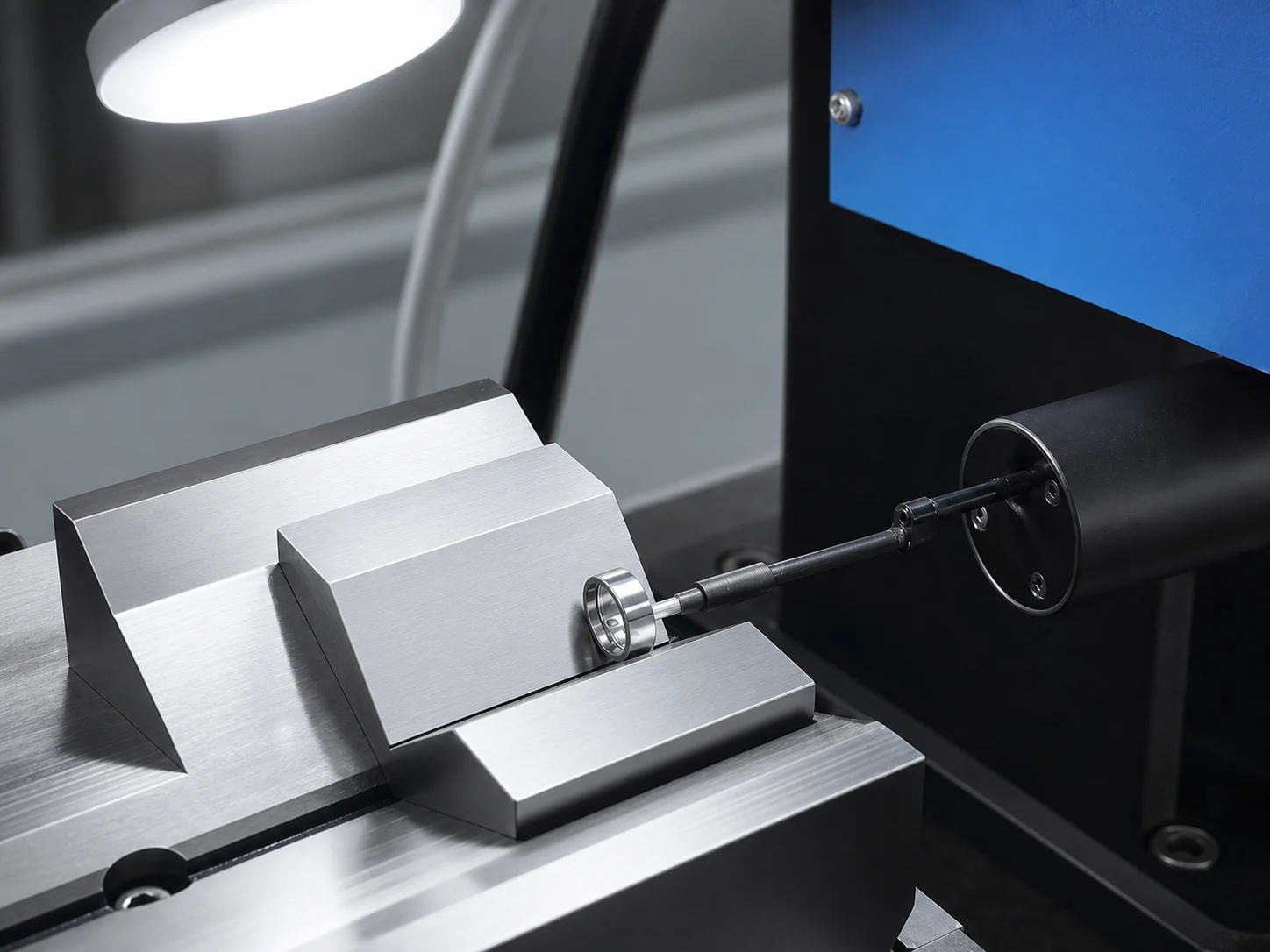
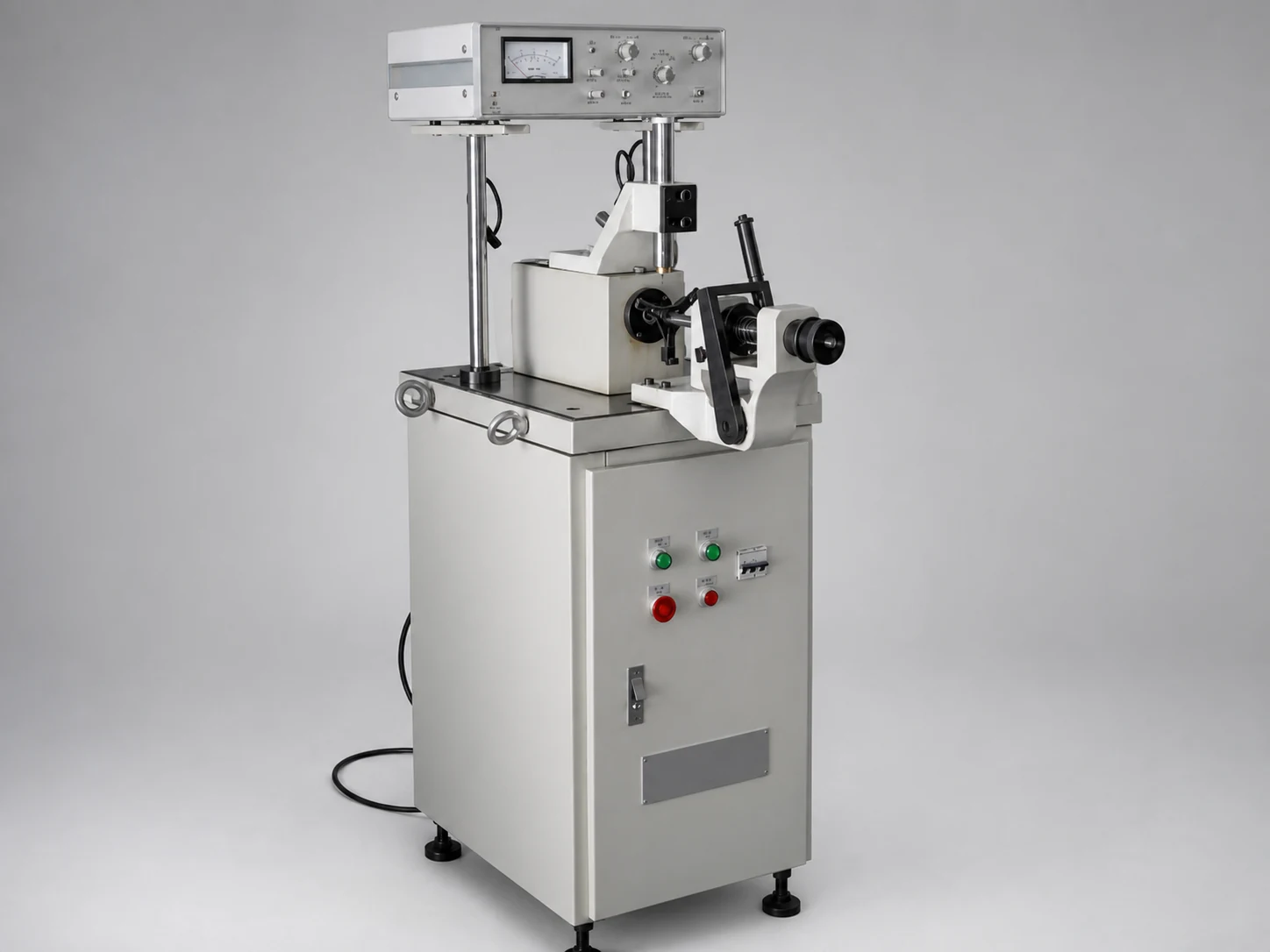
What to send for a quotation
- Full designation from the old bearing, including all suffixes.
- Measured bore, outside diameter and width, or your drawing.
- Seal type and grease requirement, if specified.
- Compressor or vehicle application and operating temperature.
- Quantity, packaging and inspection report requirements.
Frequently Asked Questions
What type of bearing is used in an A/C compressor clutch?
Most compressor clutch pulleys use a sealed double row angular contact ball bearing, commonly identified with a BD designation such as 30BD, 35BD or 40BD.
How do I read a BD bearing number such as 35BD5222 or 35BD219?
The leading number is the bore in millimetres. If four digits follow BD, they give outside diameter and width: 35BD5222 is 35 × 52 × 22 mm. If three digits follow, they are a maker's serial code: 35BD219 is 35 × 55 × 20 mm and must be looked up or measured. Trailing letters are maker-specific suffixes.
Why is my A/C compressor pulley noisy with the A/C off?
With the clutch disengaged the pulley freewheels on its bearing, so noise in this condition usually points to the pulley bearing rather than the compressor. Typical causes are dried grease, water ingress or fatigue.
Can I replace a BD bearing with a deep groove ball bearing of the same size?
It is not recommended. The BD bearing is a double row angular contact design that carries the pulley moment; a single row deep groove bearing is not designed for that load case.
Does NLHB make BD series clutch bearings?
Yes. We produce A/C compressor clutch bearings in the BD series and confirm dimensions, clearance, seal and grease against your designation or drawing before quoting.
Related guides
Published 2026-09-25. Images show our own workshop and representative products. Final dimensions, grades, inspection limits and supply conditions are confirmed against the requested model, drawing and order.