A polyurethane (PU) tyred roller combines two components with different failure mechanisms: an elastomer tyre bonded to a metal hub, and a rolling bearing inside the hub. When a roller is returned with a separated tyre, a cracked surface or a flattened running face, the cause is usually one of a small number of mechanisms: loss of adhesion, internal heat build-up, a hardness or thickness that does not match the load, chemical or moisture attack, or a bearing that has stopped turning. This guide explains each mechanism, how to tell them apart on a failed part, and what to put in the specification. NLHB makes polyurethane and POM tyred rollers to drawing or sample.
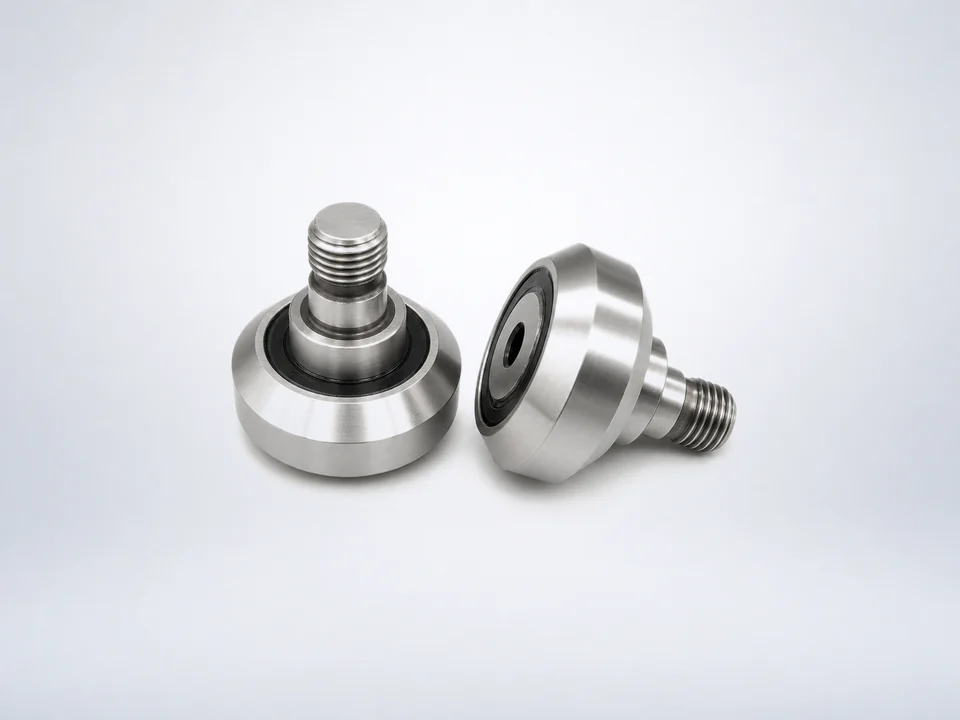
Tyre, bond and bearing fail differently
Most returned PU rollers are reported as a tyre problem. On inspection, a share of them turn out to be adhesion failures at the hub, heat damage from inside the tyre, or skidding caused by a seized or rough bearing. The repair is different for each, so the diagnosis comes first.
How a PU tyred roller carries load
Under load the tyre flattens at the contact and recovers as it leaves the contact. Each revolution is one compression cycle for every section of the tyre. Polyurethane is viscoelastic: part of the energy of each cycle is not returned but converted into heat (hysteresis). The tyre is a poor heat conductor, so this heat accumulates in the centre of the tyre section, near the bond line, rather than at the surface. At the same time the shear stress from traction and from tyre deformation is carried through the bond to the metal hub, and the radial load passes through the hub into the bearing.
| Component | What it does | Typical failure |
|---|---|---|
| PU tyre | Contact with the track; damping; noise reduction; protection of the track surface | Wear, cutting, chunking, flattening (compression set), surface cracking, softening |
| Bond line | Transfers load and traction between tyre and hub | Debonding from the edge or from the centre; tyre spins or slides on the hub |
| Metal hub | Carries the tyre and seats the bearing | Deformation of the bearing seat, corrosion under the tyre |
| Bearing | Allows rotation with low friction | Rough running or seizure; the roller then skids and damages the tyre |
1. Debonding: adhesion failure at the hub
Debonding means the tyre separates from the hub. It is important to see where the separation occurred, because this identifies the cause.
| Appearance of the separated surfaces | Interpretation | Usual cause |
|---|---|---|
| Clean metal, no PU left on the hub | Adhesive failure at the metal interface | Surface preparation, contamination of the hub before bonding, adhesive system unsuitable for the PU or the hub material |
| Thin PU layer left on the hub | Cohesive failure inside the PU near the bond | Heat build-up close to the bond line, or shear stress beyond the strength of the PU |
| Separation starting at the tyre edges | Edge peeling | High edge stress from a tyre edge that is square or unsupported, side load, misalignment, or media entering at the edge |
| Corrosion products on the hub under the tyre | Undercutting of the bond | Moisture or process fluid entering at the edge and attacking the metal interface |
Design factors that reduce debonding risk: a hub surface that is prepared and kept clean until bonding, a bonding system chosen for the tyre material, tyre edges that do not overhang the hub, and a tyre width and profile that keep contact away from the edges. Where the roller runs under side load (for example on a crowned or misaligned track), the edge region carries more stress and should be reviewed on the drawing.
2. Heat build-up: why a PU tyre fails from the inside
Hysteresis heat increases with the amount of deformation per cycle and with the number of cycles per second. The main variables are therefore contact load, rotational speed and tyre thickness. Because PU loses strength and stiffness as its temperature rises, heat build-up is self-reinforcing: a softer tyre deforms more and generates more heat.
- Load: higher load increases deflection and the heat generated per revolution.
- Speed: more cycles per second leave less time for the heat to dissipate. A roller that is satisfactory at low speed may fail at a higher line speed with the same load.
- Duty cycle: continuous running allows the core temperature to rise to a steady high level; intermittent running gives cooling time.
- Tyre thickness: a thicker tyre deflects more and has a longer heat path to the hub and surface.
- Ambient conditions: a warm environment or heat from the process reduces the available margin.
Typical evidence of heat failure: the tyre is softened, blistered or melted internally, often with cohesive separation near the bond line while the outer surface is still intact. The load and speed limits of a particular tyre material come from the tyre material data and are confirmed per application; they cannot be read from hardness alone.
3. Hardness versus load
Hardness is usually the first parameter specified for a PU tyre, but it is a measure of indentation resistance, not a load rating. It influences how the tyre behaves under a given load:
| Direction | Effect | Risk if pushed too far |
|---|---|---|
| Softer tyre | More damping, quieter running, better grip, more tolerance of track irregularities | Larger deflection and more heat under load; flattening; lower load capacity; higher rolling resistance |
| Harder tyre | Less deflection, lower rolling resistance, higher load capacity for the same size | Less damping and grip; more noise; higher contact stress on the track; less tolerance of debris |
Choose hardness together with load, speed, tyre thickness and track material, and state the measurement method and tolerance on the drawing. Replacing a tyre with a harder grade to cure wear, without checking noise, grip and track contact, often moves the problem rather than solving it.
4. Tyre thickness: thicker is not automatically better
| Tyre section | Advantages | Limits |
|---|---|---|
| Thin | Less deflection, less heat, more precise running diameter | Less damping; less tolerance of debris and track steps; less wear allowance |
| Thick | More damping and noise reduction; more wear allowance; covers track irregularities | More deflection and heat under load; larger running diameter change under load; higher edge stress at the bond |
For a given outer diameter, tyre thickness also decides how large the hub and bearing can be. A thicker tyre means a smaller hub and a smaller bearing, which reduces the bearing load capacity at the same time as the tyre carries more heat. Tyre thickness and bearing size should therefore be decided together.
5. Chemical, hydrolysis and environmental exposure
Polyurethane grades differ in their resistance to water, oils, solvents, cleaning agents and temperature. The two chemical families used for PU tyres are commonly described as polyester-based and polyether-based: polyether types are generally regarded as more resistant to hydrolysis in hot and humid conditions, and polyester types as more resistant to oils and abrasion. The actual grade used for a given roller is selected against the stated environment.
| Exposure | What can happen | What to state in the specification |
|---|---|---|
| Hot water, steam, high humidity | Hydrolysis: the PU softens, becomes sticky, cracks and loses strength over time | Humidity, water temperature, washdown frequency |
| Oils, coolants, fuels | Swelling, softening or loss of adhesion at the bond edge | Fluid names and whether contact is splash or immersion |
| Solvents and cleaning agents | Swelling, surface cracking, bond attack | Cleaning chemical, concentration, exposure time |
| Ozone, UV, outdoor use | Surface crazing and embrittlement | Indoor or outdoor, direct sunlight |
| High or low temperature | Softening and heat failure at high temperature; stiffening and cracking at low temperature | Ambient range and process heat |
Where chemical resistance is uncertain, a sample test in the actual fluid and temperature is a better basis than a general chart. For rollers that must also resist corrosion, see stainless steel bearings for corrosive applications.
6. Bearing failure that looks like tyre failure
When the bearing inside the hub becomes rough or seizes, the roller no longer turns freely with the track. The tyre is then dragged along the track, and the damage appears on the tyre first. Before replacing the tyre material, check the bearing.
| Observation on the returned roller | Tyre-caused | Bearing-caused |
|---|---|---|
| Flat spot on the running face | Compression set after standing under load, or local overheating | Roller stopped turning and skidded; flat spot is scuffed and often glazed |
| Uneven wear around the circumference | Tyre runout or hardness variation | Bearing turning intermittently; check rotation by hand for tight spots |
| Heat damage at the tyre centre | Load, speed or thickness beyond the tyre limit | Heat from a seizing bearing conducted through the hub into the bond |
| Tyre loose on the hub | Adhesion failure | High friction torque from a failing bearing loading the bond in shear |
| Noise | Tyre surface damage, debris embedded in tyre | Rough bearing; check with the tyre off the track |
Common bearing-side causes are contamination through shields in dusty or wet environments, loss or degradation of grease at elevated temperature, an interference fit that removes internal clearance, and a hub seat that is deformed when the tyre is applied or when the roller is pressed in. For shields and seals see ZZ vs 2RS; for heat-related bearing problems see bearing overheating troubleshooting.
Diagnosing a failed PU roller: a sequence
- Record the operating data: load per roller, speed, duty cycle, temperature, fluids, track material and hours or cycles to failure.
- Turn the bearing by hand before disassembly. Rough, tight or seized rotation points to a bearing-initiated failure.
- Inspect the running face: wear pattern, flat spots, cuts, embedded debris, glazing, blistering, surface cracks.
- Inspect the tyre edges for peeling or undercutting.
- If the tyre has separated, examine both separated surfaces: clean metal, a PU layer on the hub, or corrosion products.
- Section the tyre if heat is suspected: internal softening or melting close to the bond indicates heat build-up.
- Compare with an unused roller from the same batch if available.
- Only then decide whether the correction is the tyre material, hardness, thickness, bonding, the bearing and seal, or the operating conditions.
How to specify a PU or POM tyred roller
| Item | What to state |
|---|---|
| Tyre material | PU or POM; for PU, any requirement on hydrolysis or oil resistance |
| Hardness | Nominal value, tolerance and measurement method, if you have a requirement; otherwise state load and speed and let the grade be proposed |
| Geometry | Outer diameter, tyre width, tyre thickness or hub diameter, profile (flat, crowned, U or V groove), edge form |
| Load and speed | Radial load per roller, side load, speed, duty cycle |
| Environment | Temperature range, humidity, water, oils, cleaning agents, outdoor exposure |
| Track | Material and surface; whether the track must not be marked |
| Bearing | Bore, seals or shields, grease, internal clearance, precision (up to P6 for track rollers) |
| Tolerances | Outer diameter tolerance, runout of the tyre relative to the bore |
POM tyres are an alternative where low friction and dimensional stability matter more than damping. For the general comparison between steel profiles, PU and POM tyres, see custom track rollers: what to specify.
Common specification mistakes
- Specifying hardness only, without load, speed and duty cycle.
- Choosing a thicker tyre for quieter running without checking heat build-up and the smaller bearing that fits in the hub.
- Omitting washdown, steam or cleaning chemicals from the environment description.
- Treating every flat spot as a tyre defect without checking whether the bearing still turns freely.
- Using open or shielded bearings in wet or dusty positions where contact seals are needed.
Polyurethane and POM tyred rollers to drawing or sample
We make polyurethane (PU) and POM tyred rollers, with the tyre material, geometry, bearing and seals agreed per drawing or measured sample. Turning, raceway grinding and assembly of the bearing are done in our Cixi factory; heat treatment is done by long-term partners. NLHB manufactures miniature and deep groove ball bearings up to P4 precision, and double row angular contact bearings and track rollers up to P6.
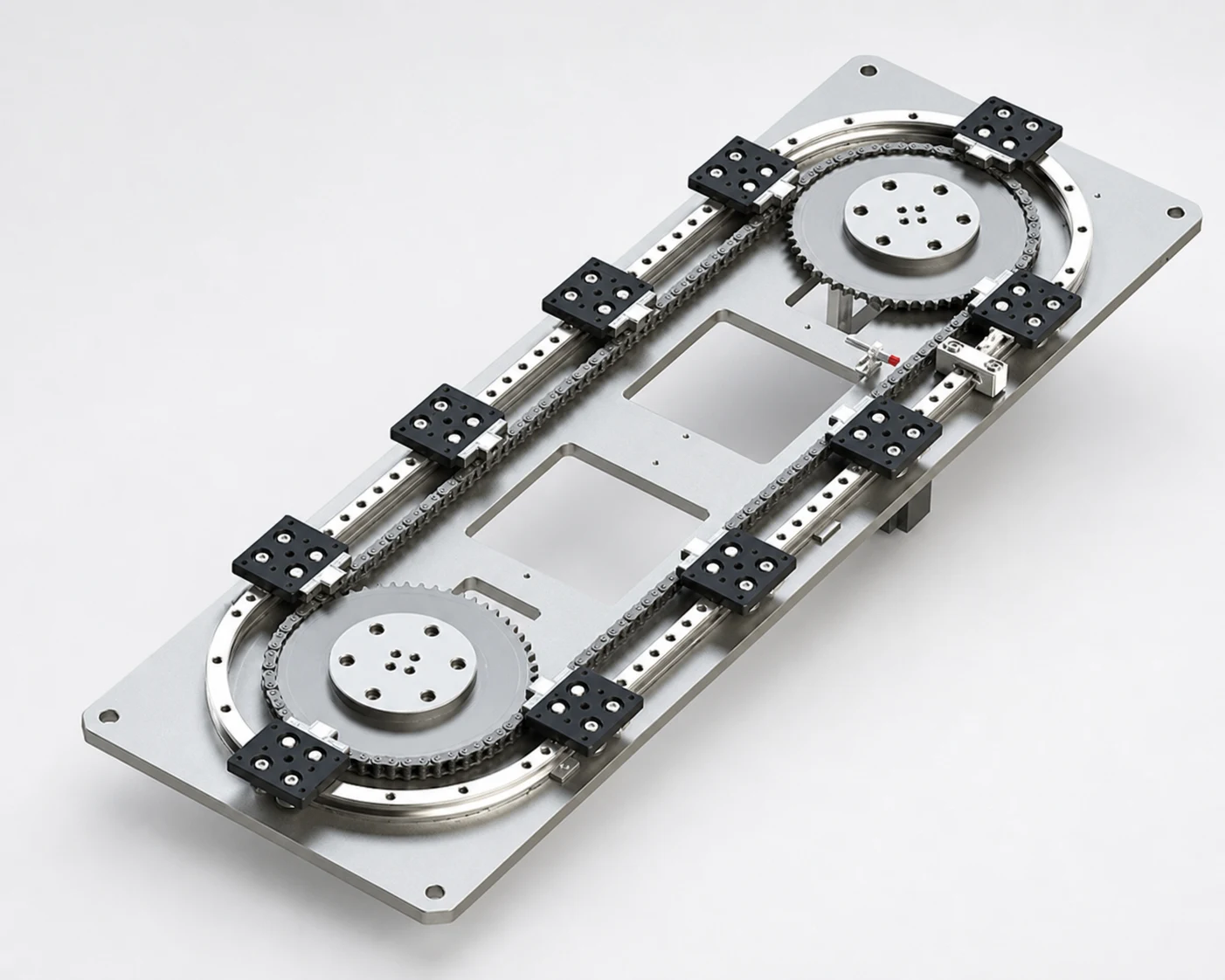
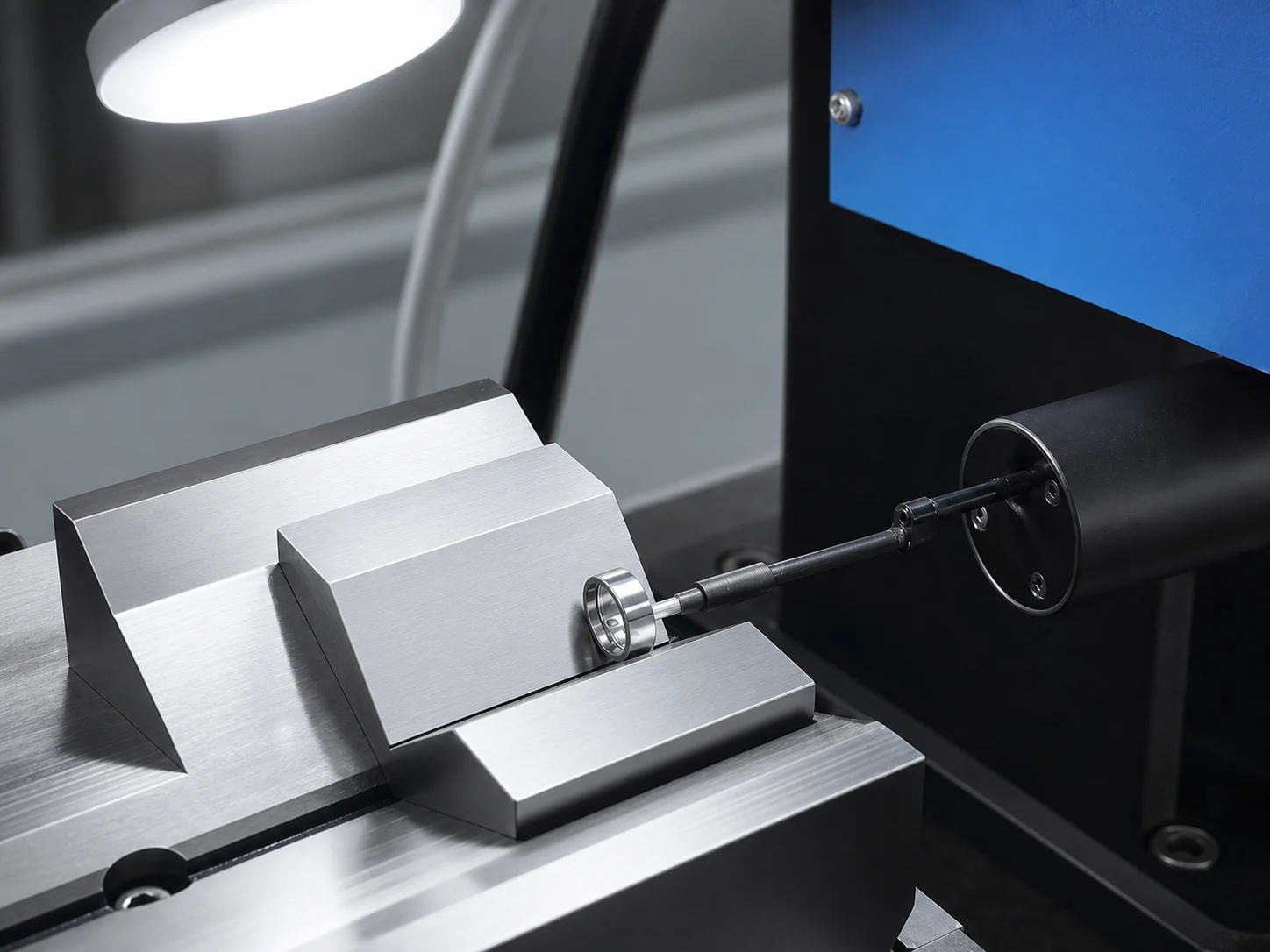
Evidence from our workshop
What to send for a quotation
- Drawing, or a sample (unused if possible), with photos of the failed roller if there is a failure history.
- Tyre material (PU or POM), hardness requirement if any, tyre thickness or hub diameter, outer profile.
- Radial and side load per roller, speed, duty cycle.
- Environment: temperature, humidity, water or steam, oils, cleaning agents, outdoor use.
- Bearing requirements: bore, seals, grease, precision; quantity and sample needs.
Frequently Asked Questions
Why does the polyurethane come off the hub?
Either the bond failed at the metal interface (surface preparation, contamination, adhesive system), or the PU failed next to the bond because of heat build-up or excessive shear. Examine the separated surfaces to see which one occurred.
Why does a PU roller fail at high speed but not at low speed?
Each revolution deforms the tyre and generates heat inside it. At higher speed there is less time for the heat to escape, so the core temperature rises, the PU softens and can melt or separate near the bond.
Should I use a harder polyurethane to stop wear?
Not without checking the rest of the application. A harder tyre deflects less and carries more load, but damps less, grips less and is noisier. Select hardness together with load, speed, thickness and track material.
How can I tell if a flat spot is caused by the bearing?
Turn the bearing by hand. If it is rough, tight or seized, the roller has probably skidded on the track. Skid flats are usually scuffed or glazed, while compression set flats are smooth.
Do you make both polyurethane and POM tyred rollers?
Yes. We make PU and POM tyred rollers to drawing or sample, with the tyre, bearing and seals agreed per application.
Related guides
Published 2026-09-25. Images show our own workshop and representative products. Final dimensions, grades, inspection limits and supply conditions are confirmed against the requested model, drawing and order.