A custom track roller is defined by its interface with the track and its mounting, not by a catalogue number. When the profile, tyre, stud or seal is not standard, the drawing — or a measured sample — becomes the specification. This guide lists the decisions to make, how to cross-reference SG, LFR, LV and VW series, and what to send for a quotation. NLHB makes custom track rollers to drawing or sample, up to P6.
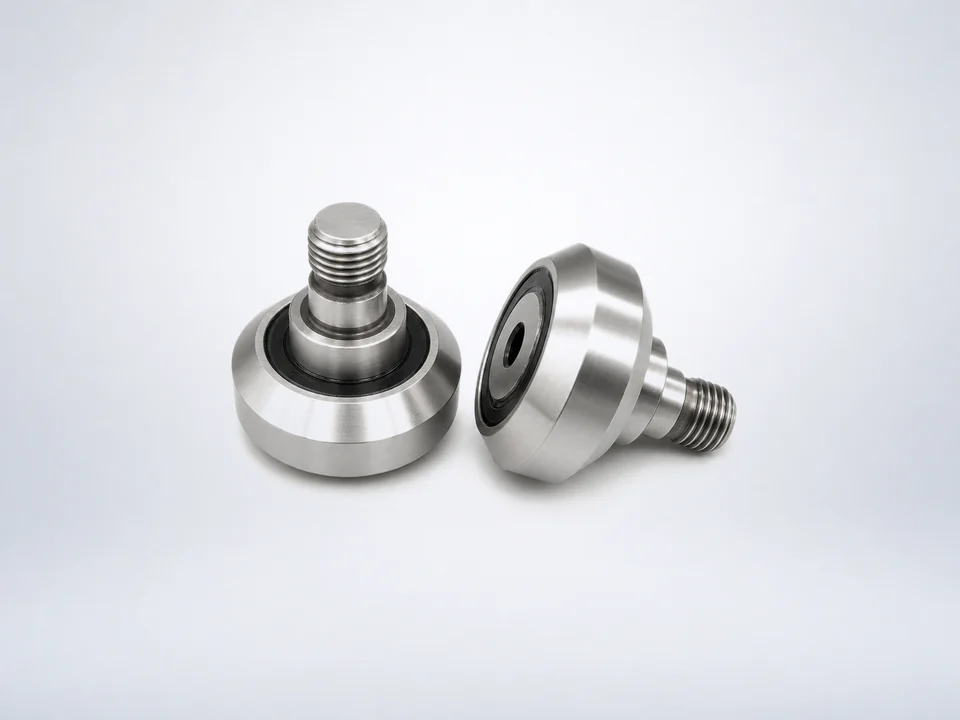
Specify the interface, then the bearing
The track decides the outer profile or tyre; the machine decides the mounting and stud; load, speed and environment decide the internal bearing, seals and material. Series names are only a starting point for cross-reference.
Outer profile options
| Profile | Runs on | Notes |
|---|---|---|
| U groove | Round rail or shaft | Groove radius matched to the rail diameter; SG-type rollers |
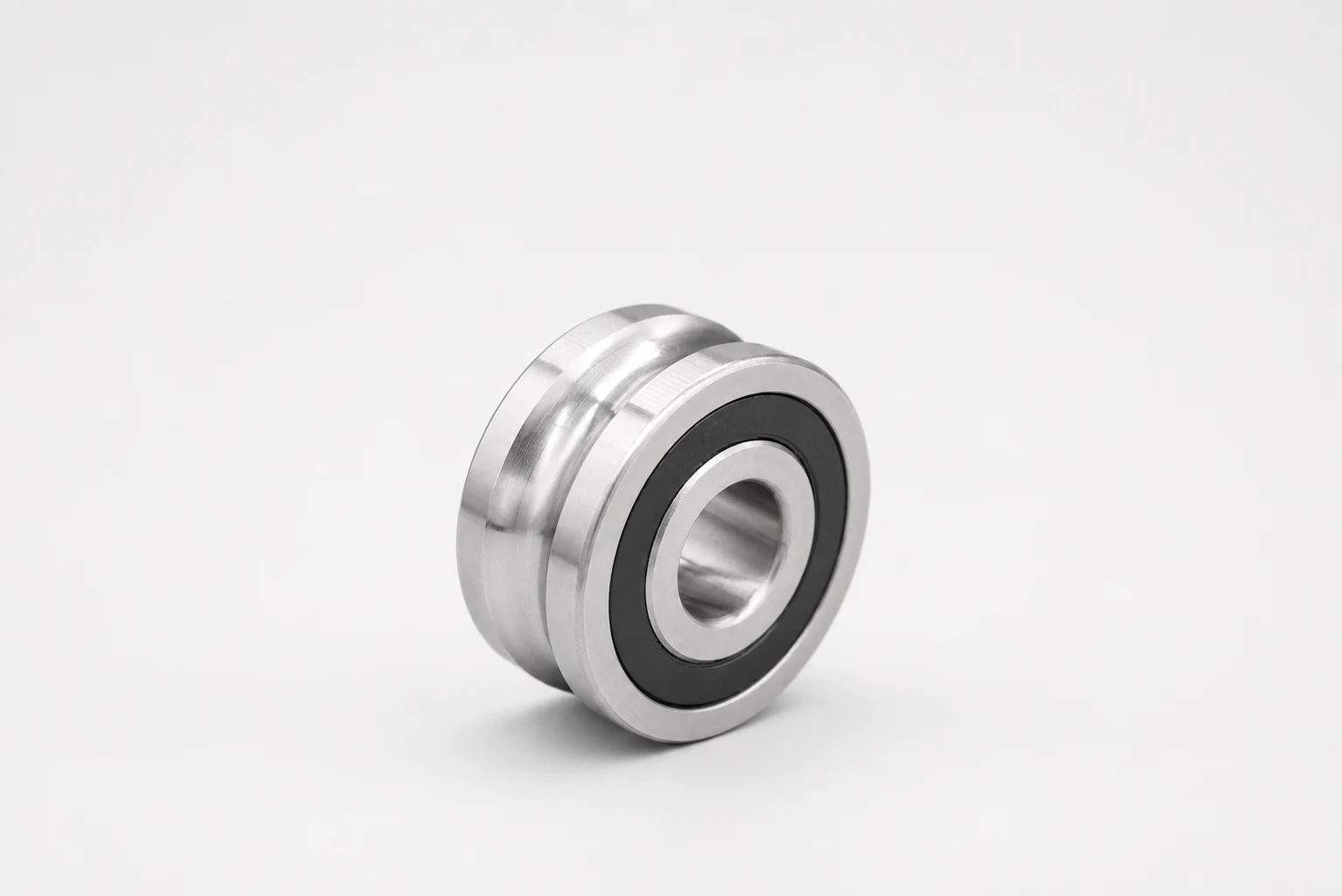
| Gothic arch | Round rail or shaft | Two-point contact for stable guidance; LFR-type rollers |
| V groove | V-edge rail | Groove angle matched to the rail; LV and VW (W type) rollers |
| Flat (cylindrical) | Flat track, channel | Line contact; requires good alignment |
| Crowned | Flat track, channel, mast | Tolerates misalignment and reduces edge loading |
For choosing the profile by rail type, see how to match a track roller to your rail.
Steel profile or plastic tyre
| Outer surface | Advantages | Limits |
|---|---|---|
| Hardened steel profile | Highest load capacity, accurate profile, long life on hardened rails | Noisier on steel tracks; can mark soft tracks |
| Polyurethane (PU) tyre | Quiet, damps vibration, protects painted or soft tracks, good grip | Lower load capacity; heat build-up and deformation under high load or speed; hardness and chemical resistance must suit the environment |
| POM (acetal) tyre | Low friction, dimensionally stable, quiet, suits door and light guide tracks | Lower load capacity than steel; less damping than PU |
Tyre hardness, thickness and bonding method are specified per application and confirmed per drawing. A thicker tyre is quieter but deflects more; a harder tyre carries more load but damps less.
Studs, seals and materials
| Item | Options | What to specify |
|---|---|---|
| Mounting | Through-bore · concentric stud · eccentric stud | Bore or stud diameter, length, thread, locking (nut, hex socket) |
| Eccentric stud | For preload and play adjustment | Eccentricity, adjustment access, pairing with concentric rollers |
| Seals | Open · ZZ shields · 2RS contact seals | Environment: dust, washdown, chips; contact seals add friction |
| Internal bearing | Single or double row ball; needle or roller designs | Load direction, axial load from the profile, required rigidity |
| Material | Chrome bearing steel as standard; other materials on request | Corrosion or cleanroom needs; availability confirmed per size |
| Precision | Normal to P6 | Bearing grade plus profile runout relative to the bore |
| Lubrication | Greased for life · relubricable | Grease type for temperature and cleanliness requirements |
Cross-referencing SG, LFR, LV and VW series
Series names from different makers overlap, but the same name does not guarantee the same roller. Cross-reference by function, in this order:
- Profile: U groove, gothic arch, V groove (and angle), flat or crowned.
- Contact diameter: the diameter at which the roller touches the rail, which sets the carriage height and rail spacing.
- Mounting: bore, stud or eccentric stud, width and axial position of the profile relative to the mounting face.
- Internal bearing and seals: load direction, rigidity, sealing.
We do not publish generic dimension tables for these series; dimensions are confirmed per drawing. Cross-referenced numbers are dimensional equivalents only and do not imply brand authorisation.
Drawing or sample: two routes to a custom roller
| Route | What we need | What we do |
|---|---|---|
| From drawing | Dimensioned drawing with tolerances, profile, material, seals, grade | Review manufacturability, confirm open points, quote |
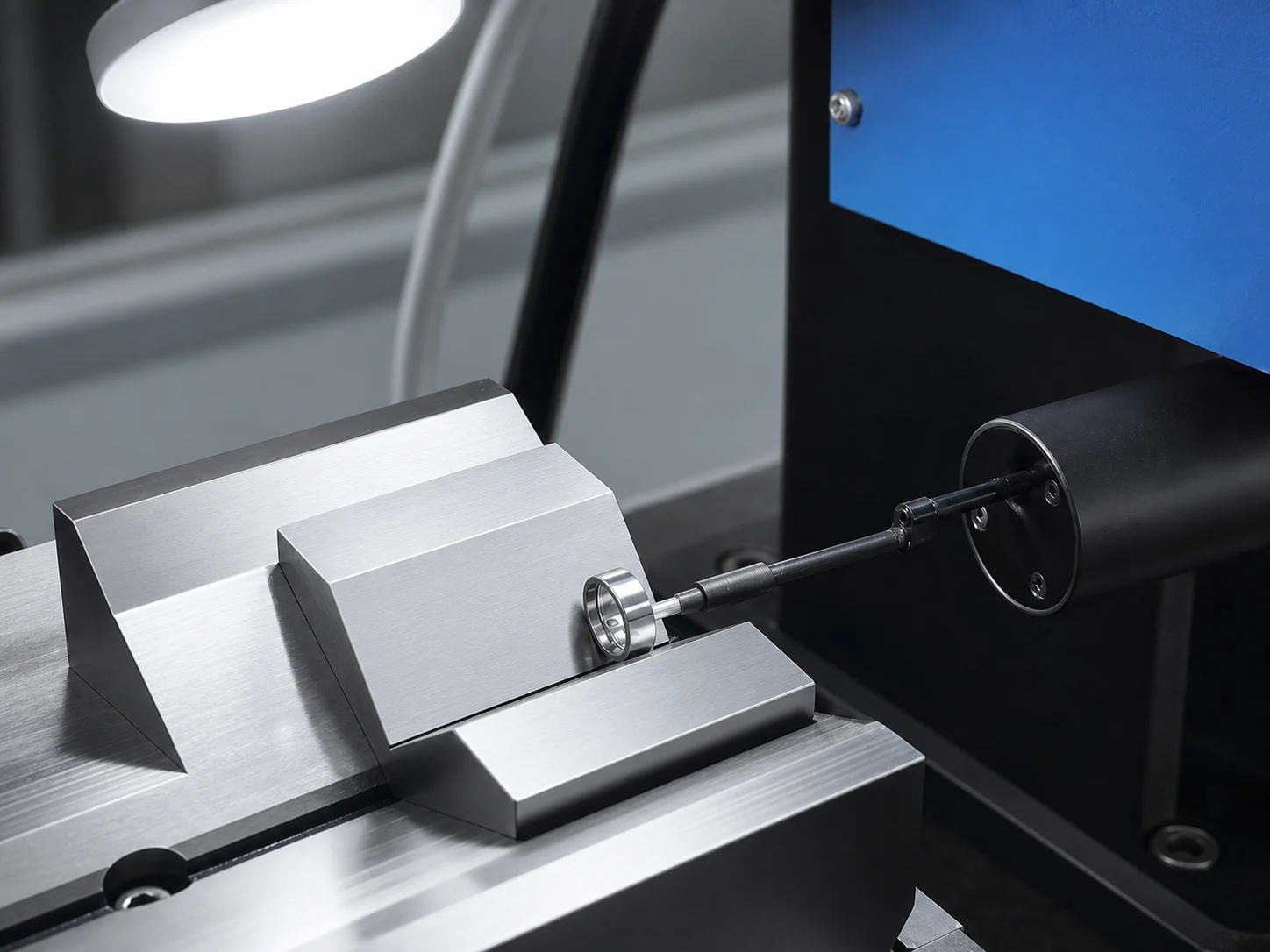
| From sample | Physical roller, preferably with the mating rail or its dimensions, and operating conditions | Measure bore, OD, widths and profile on our inspection equipment, draw it, send the drawing for your confirmation, then quote and produce |
A worn sample shows the worn profile, not the original. Where possible send an unused roller or the rail dimensions so that the profile can be reconstructed correctly.
Application: sliding and automatic door rollers
Sliding doors, automatic doors and sliding windows use track rollers on a top rail or bottom track. The priorities are quiet running, corrosion resistance and tolerance to dust in the track.
- Match the profile to the track: U or V groove on a round or V track, flat or crowned on a flat track.
- POM or PU tyres reduce noise and protect aluminium tracks; steel profiles suit heavy industrial doors.
- Specify door weight, number of rollers per door and the adjustment method; eccentric or slotted mounting allows door height setting.
- Choose seals for dust in floor tracks and corrosion protection for outdoor or humid installations.
Common specification mistakes
- Ordering by series name only, without contact diameter and mounting dimensions.
- Specifying a PU tyre for a load or speed that causes tyre heat build-up and deformation.
- Specifying eccentric studs without defining eccentricity or how the stud will be locked.
- Asking for a high bearing grade but no tolerance on profile runout relative to the bore.
- Sending a heavily worn sample as the only reference.
Custom profiles, tyres and studs
We make SG, LFR, LV and VW type rollers, polyurethane (PU) and POM tyred rollers, forklift mast rollers, door and automatic door rollers and custom profiles, to drawing or from a measured sample. NLHB manufactures miniature and deep groove ball bearings up to P4 precision, and double row angular contact bearings and track rollers up to P6.
Evidence from our workshop
What to send for a quotation
- Drawing, or sample with the mating rail or its dimensions.
- Outer profile or tyre: type, angle or radius, tyre material and hardness if known.
- Mounting: bore or stud, concentric or eccentric, eccentricity, thread and locking.
- Load (radial and axial), speed, environment, seal and material requirements.
- Precision (up to P6), profile runout requirement, quantity and sample needs.
Frequently Asked Questions
What do I need to specify for a custom track roller?
Outer profile or tyre, contact diameter, mounting (bore, concentric or eccentric stud), internal bearing, seals, material, precision and operating conditions.
Polyurethane or POM tyre — which should I choose?
Polyurethane is quieter and damps vibration better; POM has lower friction and holds its dimensions. Both carry less load than a steel profile, so check load and speed first.
Can SG, LFR, LV and VW rollers from different makers be interchanged?
Only when profile, contact diameter and mounting dimensions match. Cross-reference by these, not by the series name; dimensions are confirmed per drawing.
Can you make a track roller from a sample without a drawing?
Yes. We measure the sample, send you a drawing to confirm and then produce. An unworn sample or the rail dimensions give the most accurate profile.
Do you make sliding door and automatic door rollers?
Yes. We make door, window and automatic door rollers with steel profiles or plastic tyres, to drawing or sample.
Related guides
Published 2026-09-25. Images show our own workshop and representative products. Final dimensions, grades, inspection limits and supply conditions are confirmed against the requested model, drawing and order.