Most small drone and brushless outrunner motors run on a pair of miniature deep groove ball bearings. When a motor starts to sound rough, vibrate or run warm, the bearings are the usual cause. This guide covers the common size classes, the failure mechanisms behind a rough bearing, what precision, noise grade and clearance mean for a motor, when ceramic balls are worth considering, and what a motor maker should control when bearings are replaced.
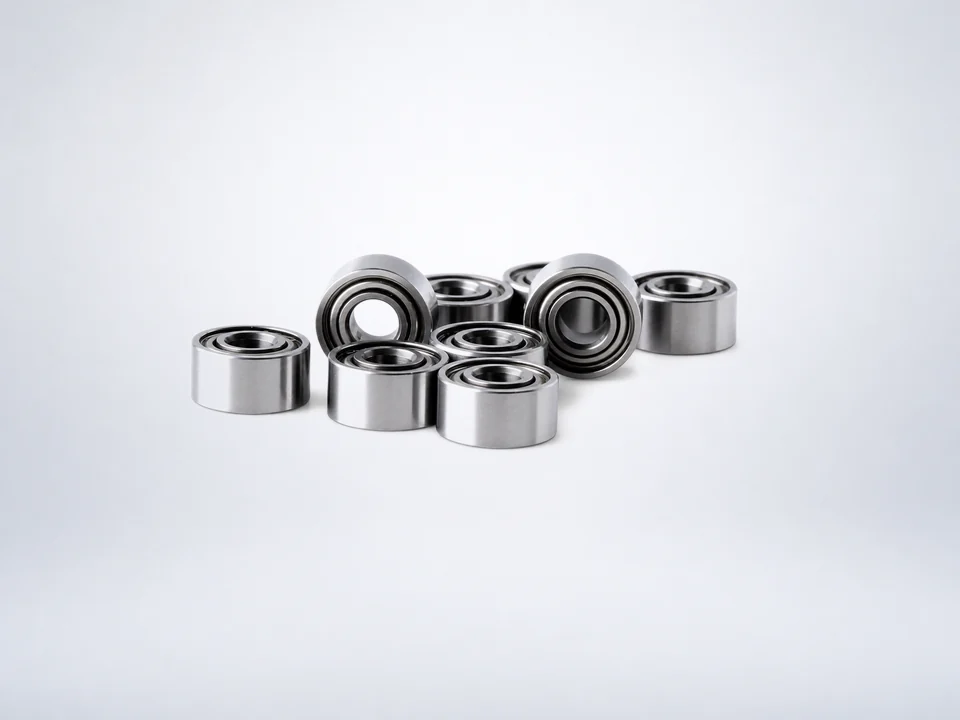
Small bearings, high speed, hard landings
Drone motor bearings see high speed, rotor imbalance, propeller loads and crash impacts, often in dusty outdoor conditions. Precision and noise grades control how the motor runs when new; handling and sealing control how long it stays that way.
Common size classes
| Designation | d × D × B (mm) | Size class | Notes |
|---|---|---|---|
| 693ZZ | 3 × 8 × 4 | 3×8 mm | Common for 3 mm motor shafts; shielded |
| 683ZZ | 3 × 7 × 3 | 3×7 mm | Thinner option where axial space is short |
| 684ZZ | 4 × 9 × 4 | 4×9 mm | Common for 4 mm shafts in larger motors |
| MR84ZZ | 4 × 8 × 3 | 4×8 mm | Thin-section alternative for a 4 mm shaft |
The motor design sets the size. When replacing bearings, measure the shaft and housing and match the width exactly, because a wider or narrower bearing changes the rotor's axial position. For how miniature designations are built, see the miniature bearing selection guide.
Why motor bearings turn rough
| Mechanism | Cause | What you notice | Prevention |
|---|---|---|---|
| Brinelling (raceway dents) | Crash or hard landing drives the balls into the raceway; also pressing the bearing through the balls during assembly | Notchy rotation by hand, regular vibration at speed | Correct pressing method; inspect bearings after every crash |
| Contamination | Sand, dust or metal particles entering through the shield gap or the motor bell | Gritty feel, rising noise, temperature rise | Shielded bearings, clean assembly, protective motor design |
| Grease loss or degradation | Heat, high speed, solvent cleaning, or too little grease | Dry sound, higher current draw, warm motor | Suitable high-speed grease; do not wash sealed bearings in solvent |
| Loss of clearance or misalignment | Tight fits, bent shaft after a crash, housing distortion | Heat, stiff rotation, early failure | Check shaft straightness and fits; suitable radial clearance |
| Corrosion | Moisture, condensation or wet-weather flights | Rough feel after storage, stains on the rings | Stainless steel rings where the duty requires it; dry storage |
Precision, noise and clearance
- Precision grade: lower ring runout reduces vibration at high speed. Motor makers commonly move from normal grade to P5 or P4 for high-speed or low-vibration motors; see P4, P5 and P6 precision.
- Noise grade: write a Z/V vibration grade on the order so that smooth running is measured, not assumed. See Z3V3 vibration grades.
- Radial clearance: fits, magnet and winding heat and high speed all reduce operating clearance. Agree the clearance class with the fits; see C3, CN and C4 clearance.
- Grease: high-speed, low-noise grease with a controlled fill. Over-filling increases churning and heat.
Ceramic balls: what they change and what they do not
Silicon nitride (Si₃N₄) balls weigh about 40% of steel balls of the same size, so centrifugal load and frictional heat at high speed are lower. They are also harder and do not corrode. They do not make a bearing crash-proof: the rings are still steel, and an impact can still dent the raceway. Hybrid bearings are therefore a choice for speed, temperature and running consistency, not a substitute for correct handling and inspection. More detail is in the high-speed bearing guide.
Replacement notes for motor makers and service workshops
- Remove the retaining clip and rotor, then press the old bearings out with a punch that bears on the correct ring, with the housing supported.
- Clean the housing bore and shaft; check the shaft for bending and the bore for wear or ovality.
- Press new bearings in by the ring that has the interference fit (outer ring into the housing, inner ring onto the shaft). Never transmit the pressing force through the balls.
- Do not use a hammer directly on the bearing. Do not heat shielded bearings with an open flame.
- Restore the original axial arrangement: shims, wave washers or spacers exactly as designed.
- Rotate by hand before refitting the propeller, then run at low speed and check for vibration and temperature rise.
Miniature bearings for motors
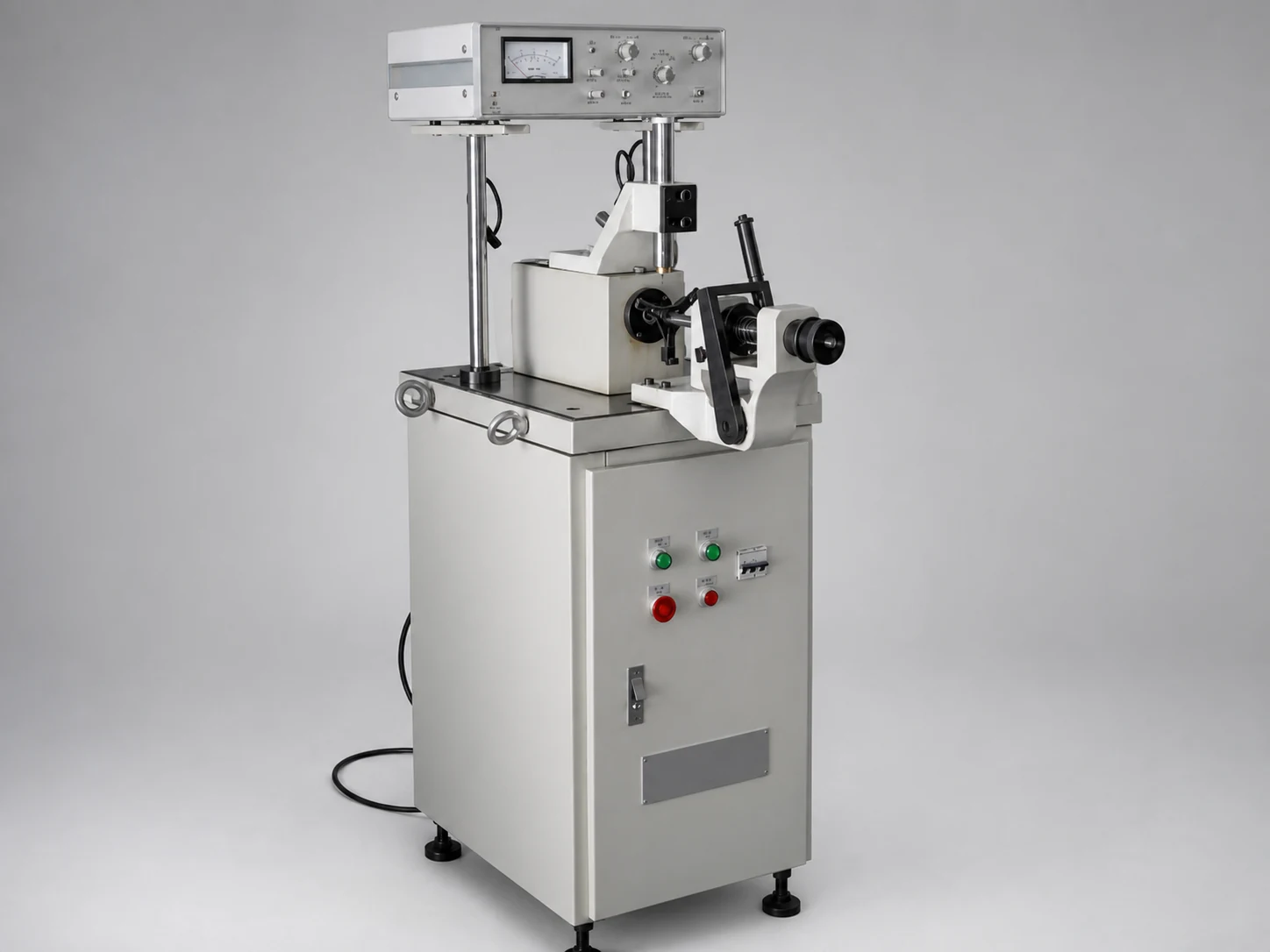
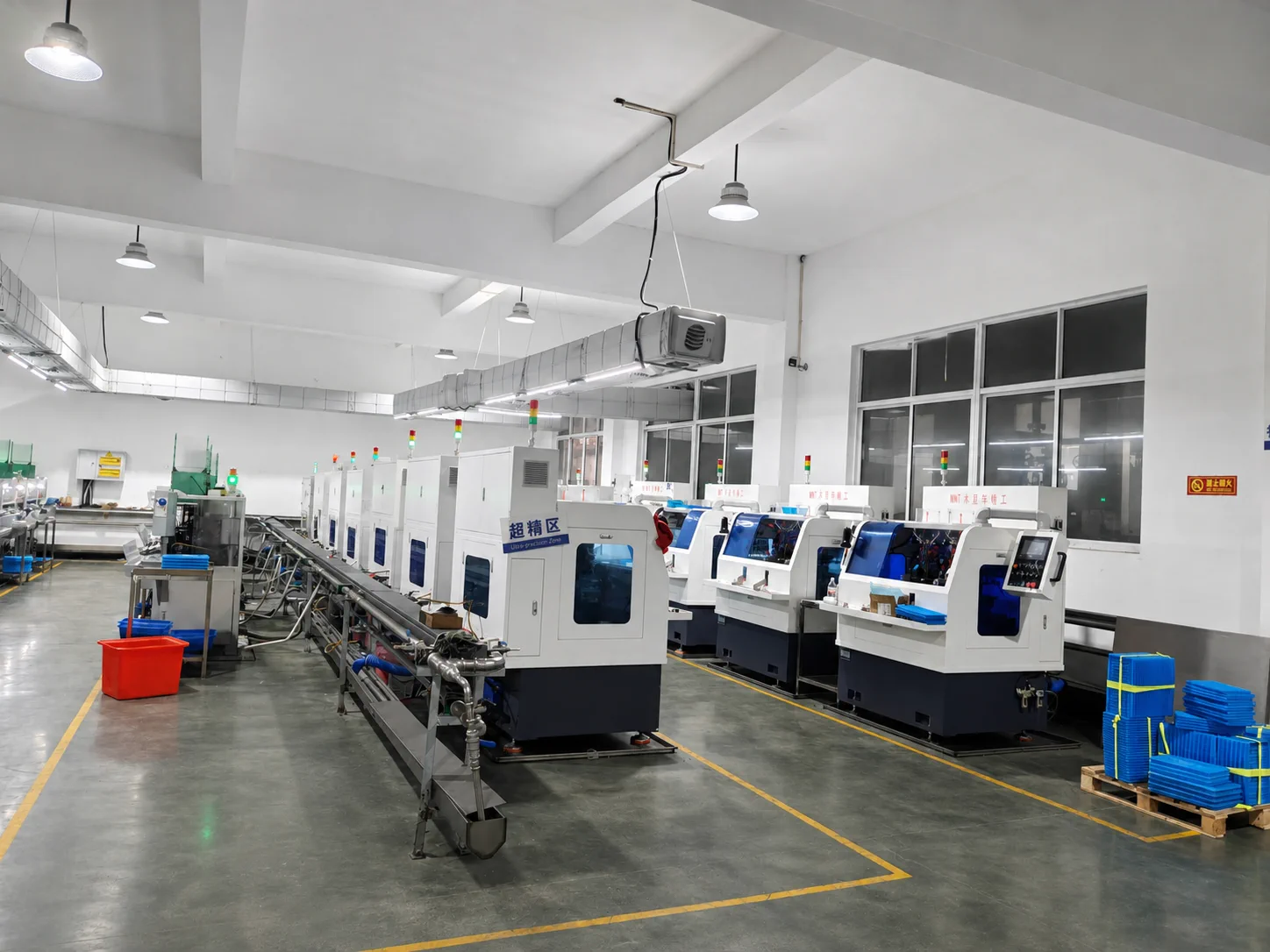
We produce miniature bearings in-house, with chrome or stainless steel rings, steel or silicon nitride ceramic balls, and steel or nylon cages chosen to the customer's requirement. Finished bearings are vibration-sorted before packing to the grade agreed on the order. NLHB manufactures miniature and deep groove ball bearings up to P4 precision, and double row angular contact bearings and track rollers up to P6.
Evidence from our workshop
What to send for a quotation
- Designation or d × D × B, and shield type.
- Motor type, speed range and operating temperature.
- Precision grade, radial clearance and Z/V noise grade.
- Ring and ball material (chrome steel, stainless, Si₃N₄ ceramic) and cage.
- Grease requirement, quantity and packaging.
Frequently Asked Questions
What size bearings do drone motors use?
Many small drone and outrunner motors use 3×8 mm class bearings such as 693ZZ (3×8×4 mm); larger motors often use the 4×9 mm class such as 684ZZ (4×9×4 mm). Always measure the actual shaft, housing and width.
Why do drone motor bearings get rough?
Mainly raceway dents from crashes and hard landings, and contamination from sand and dust. Grease loss, tight fits and corrosion also contribute.
Are ceramic ball bearings better for drone motors?
Si₃N₄ balls are lighter and harder, so they reduce heat at high speed, but they do not prevent raceway dents from impacts because the rings are still steel.
Should I choose ZZ or open bearings for a brushless motor?
Shielded ZZ bearings are the usual choice because they retain grease and keep out coarse dirt with low friction. Contact seals add friction at high speed.
Can NLHB supply motor bearings with a noise grade?
Yes. We vibration-sort finished miniature bearings and supply to the Z/V grade agreed per order. Send the size and requirements and we confirm before quoting.
Related guides
Published 2026-09-25. Images show our own workshop and representative products. Final dimensions, grades, inspection limits and supply conditions are confirmed against the requested model, drawing and order.