A double row angular contact ball bearing carries radial load, axial load in both directions and tilting moment in the width of one bearing. That makes it a common locating bearing on gearbox shafts and pump shafts. This guide covers the application side — load direction, contact angle, clearance, fits, lubrication and sealing — for gearboxes and centrifugal pumps. For the series overview see our double row angular contact series guide.
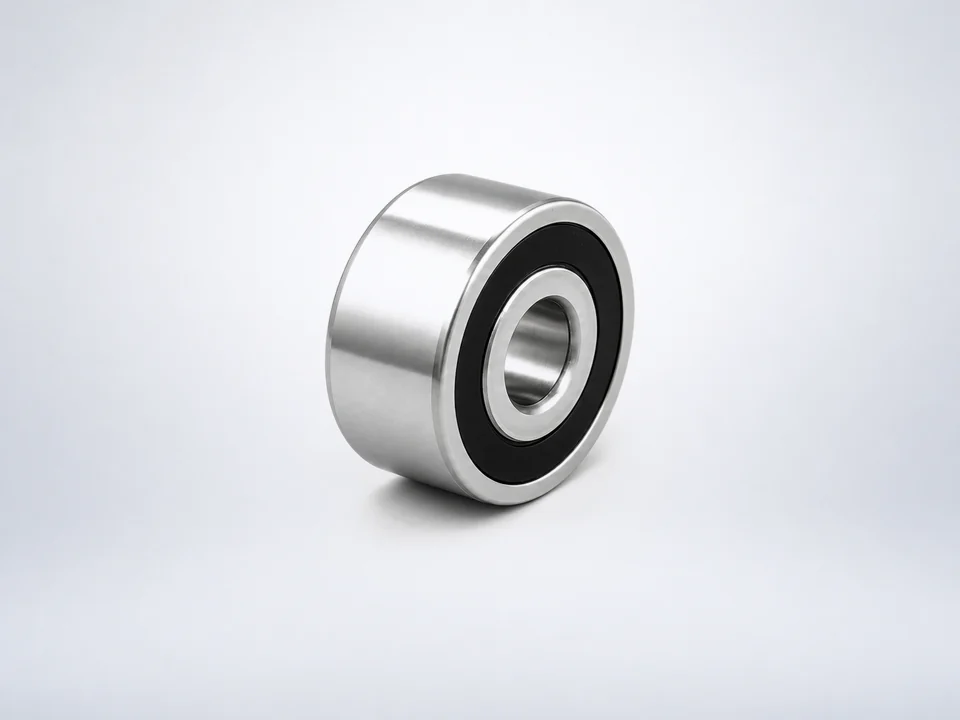
One bearing, two load directions
The two ball rows have opposed contact angles. One row carries axial load in one direction, the other row in the opposite direction, while both share the radial load. This is why the bearing is normally used as the locating bearing.
Why gearboxes and pumps use double row angular contact bearings
Helical gearboxes
Helical gears create axial load that reverses with direction of rotation or between drive and coast. The double row bearing locates the shaft in both directions.
Centrifugal pumps
Hydraulic axial thrust changes with operating point and during start-up and shutdown. A double row bearing at the drive end often serves as the locating bearing.
Compact shaft arrangements
Where two single-row bearings in a pair would need more axial space, one double row bearing gives a shorter shaft and simpler housing.
Contact angle and axial capacity
A larger contact angle increases axial load capacity and axial stiffness; a smaller contact angle favours radial load and higher speed. Series such as 3200 and 5200 differ in internal design, and bearings with the same boundary dimensions from different makers may use different contact angles. Compare the contact angle and load ratings on the data sheet rather than the series name — see 3200 vs 5200.
Some designs use filling slots to insert more balls. For those, the dominant axial load should act on the row without the slot. If your gearbox or pump has a clearly dominant thrust direction, state it on the enquiry. Groove designs are compared in double row groove design.
Clearance and fits
| Topic | Gearbox | Centrifugal pump | What to check |
|---|---|---|---|
| Load on inner ring | Usually rotating load on the inner ring | Usually rotating load on the inner ring | Inner ring needs an interference fit on the shaft to avoid creep |
| Outer ring fit | Locating bearing axially clamped in housing | Locating bearing axially clamped in housing or bearing cover | Housing bore geometry and cover clamping face must be square |
| Axial clearance | Normal or reduced where shaft positioning matters | Often larger (e.g. C3) where the shaft runs warmer than the housing | Interference fit and temperature difference reduce clearance after mounting |
| Second bearing | Floating bearing at the other end | Floating bearing at the other end | Only one bearing should locate axially; the other must allow thermal expansion |
The clearance that matters is the operating clearance, not the value in the box. Shaft interference and a hot shaft both reduce it. For how axial clearance is defined and measured, see axial clearance of double row angular contact bearings. Fit tolerances are selected from the shaft and housing design standards you use and confirmed with us for the bearing tolerance class.
Lubrication: oil or grease
| Lubrication | Where used | Bearing choice | Notes |
|---|---|---|---|
| Oil bath or splash | Gearboxes, oil-lubricated pump bearing frames | Open bearing | Oil must reach both ball rows; check oil level and oil return paths |
| Circulating oil | Larger gearboxes, high heat load | Open bearing | Oil also removes heat; filtration controls contamination |
| Grease, relubricated | Grease-lubricated pump bearing housings | Open bearing | Relubrication interval and grease quantity per machine maker |
| Grease, sealed for life | Small pumps, auxiliary drives, dusty or wet environments | 2RS or ZZ | No relubrication; grease type and fill agreed on the order |
A sealed bearing inside an oil-lubricated gearbox isolates the balls from the gearbox oil and runs only on its own grease. Use sealed bearings when grease is intended as the lubricant, not by default. The trade-offs between contact seals and shields are covered in 2RS vs ZZ.
Sealing choices
- Open bearing plus housing seal: standard for oil lubrication; the housing lip seal or labyrinth keeps oil in and dirt out.
- ZZ shields: low friction, retain grease, limited protection against water and fine dust.
- 2RS contact seals: better protection against water and dust, more friction and heat, lower speed limit.
- Pumps: protect the bearing from leakage of the pumped liquid along the shaft; a flinger or housing seal in front of the bearing is usually more effective than relying on the bearing seal.
Common mistakes
- Locating the shaft with two double row bearings, so thermal expansion loads both bearings axially.
- Using a sealed bearing in an oil-lubricated gearbox and expecting oil lubrication.
- Choosing clearance without accounting for shaft fit and shaft temperature.
- Applying the dominant thrust on the filling-slot side of a slotted design.
- Mounting by pressing on the outer ring when the inner ring is the interference-fit ring, which forces the load through the balls.
- Ignoring misalignment: a double row angular contact bearing is stiff against tilting and tolerates very little shaft or housing misalignment.
Specification checklist
| Item | Example of what to state |
|---|---|
| Designation | Series and size, e.g. 3206 or 5206, with seal suffix |
| Loads | Radial load, axial load in each direction, dominant thrust direction |
| Speed and temperature | Operating speed range, shaft and housing temperature |
| Clearance | Axial clearance group or range, and the shaft/housing fits you use |
| Precision | P0 or P6 (our maximum for double row bearings) |
| Lubrication | Oil bath, circulating oil, relubricated grease or sealed-for-life grease |
| Seals | Open, ZZ or 2RS; environment (water, dust, pumped liquid) |
| Cage and design | Cage material, filling slot or no slot if required |
Double row bearings for shafts that must locate
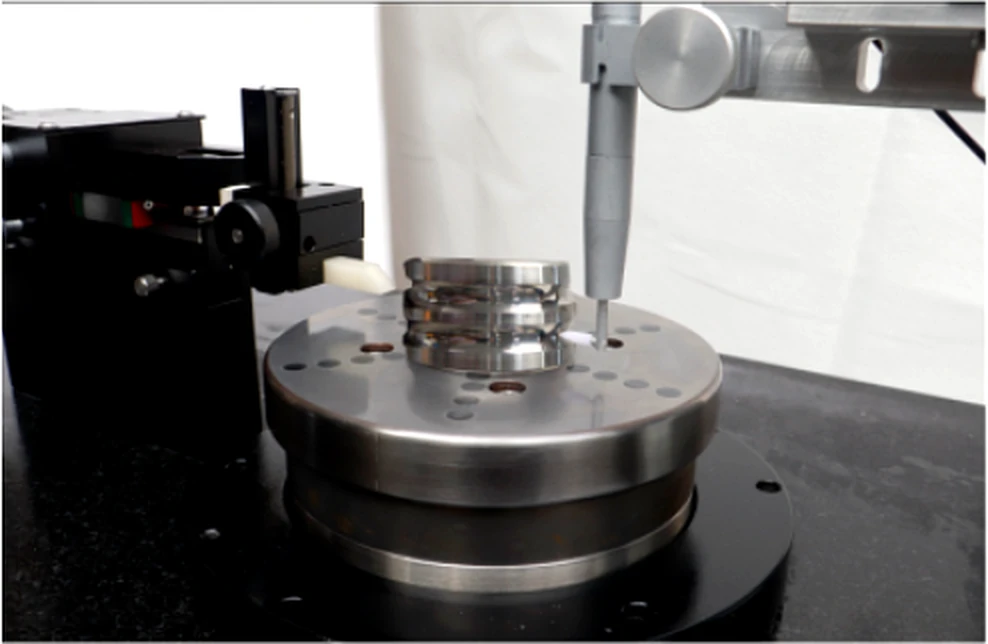
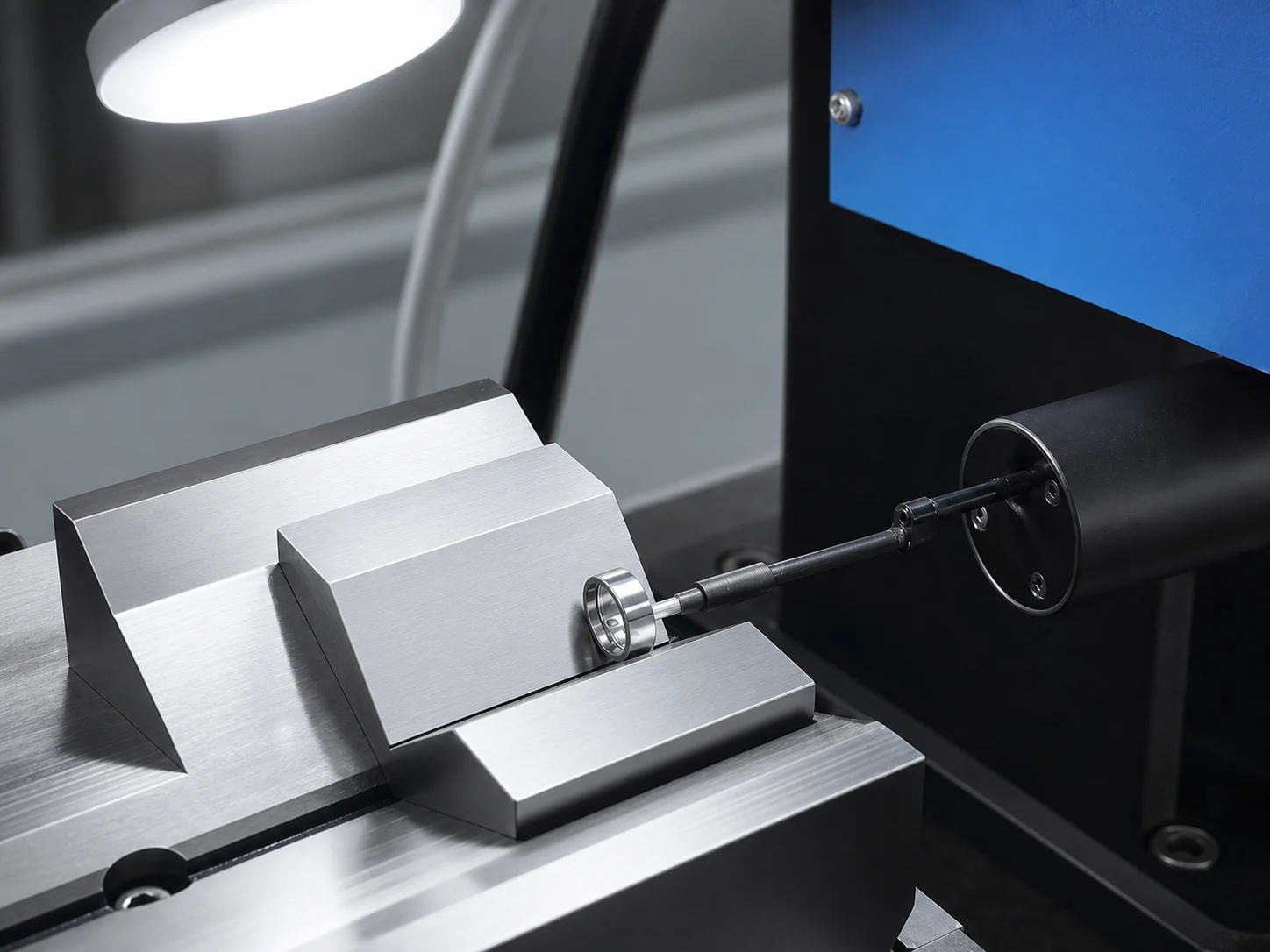
We grind the raceways of our double row angular contact bearings in Cixi and measure roundness and raceway profile on our own instruments. Open, ZZ and 2RS versions are available. NLHB manufactures miniature and deep groove ball bearings up to P4 precision, and double row angular contact bearings and track rollers up to P6.
Evidence from our workshop
What to send for a quotation
- Designation or drawing, with seal suffix.
- Radial and axial loads, including the dominant thrust direction.
- Speed, temperature, and oil or grease lubrication.
- Shaft and housing fits, and required axial clearance.
- Precision grade (up to P6), quantity and inspection report requirements.
Frequently Asked Questions
Why use a double row angular contact bearing in a gearbox?
It carries radial load and axial load in both directions in one bearing, so it can locate a helical gear shaft whose thrust reverses.
Should a pump or gearbox bearing be open or sealed?
Open when the housing is oil-lubricated or relubricated with grease; sealed when grease inside the bearing is the intended lubricant for life.
What clearance should I use for a centrifugal pump bearing?
Choose the clearance so that enough operating clearance remains after the shaft fit and the shaft-to-housing temperature difference. Larger clearance such as C3 is common when the shaft runs warmer; confirm with the application data.
Can one shaft have two double row angular contact bearings?
Normally only one should locate the shaft axially. The other bearing should float to allow thermal expansion.
What precision can NLHB supply for double row angular contact bearings?
Up to P6, in open, ZZ and 2RS versions.
Related guides
Published 2026-09-25. Images show our own workshop and representative products. Final dimensions, grades, inspection limits and supply conditions are confirmed against the requested model, drawing and order.