A non-standard bearing is not ordered, it is developed. Between the first drawing or worn sample and a stable series supply there are six stages, each with a defined input, output and approval. This guide describes those stages as we run them in our Cixi factory, and explains which technical factors — tooling, heat treatment scheduling, special materials and precision grade — decide lead time and minimum order quantity.
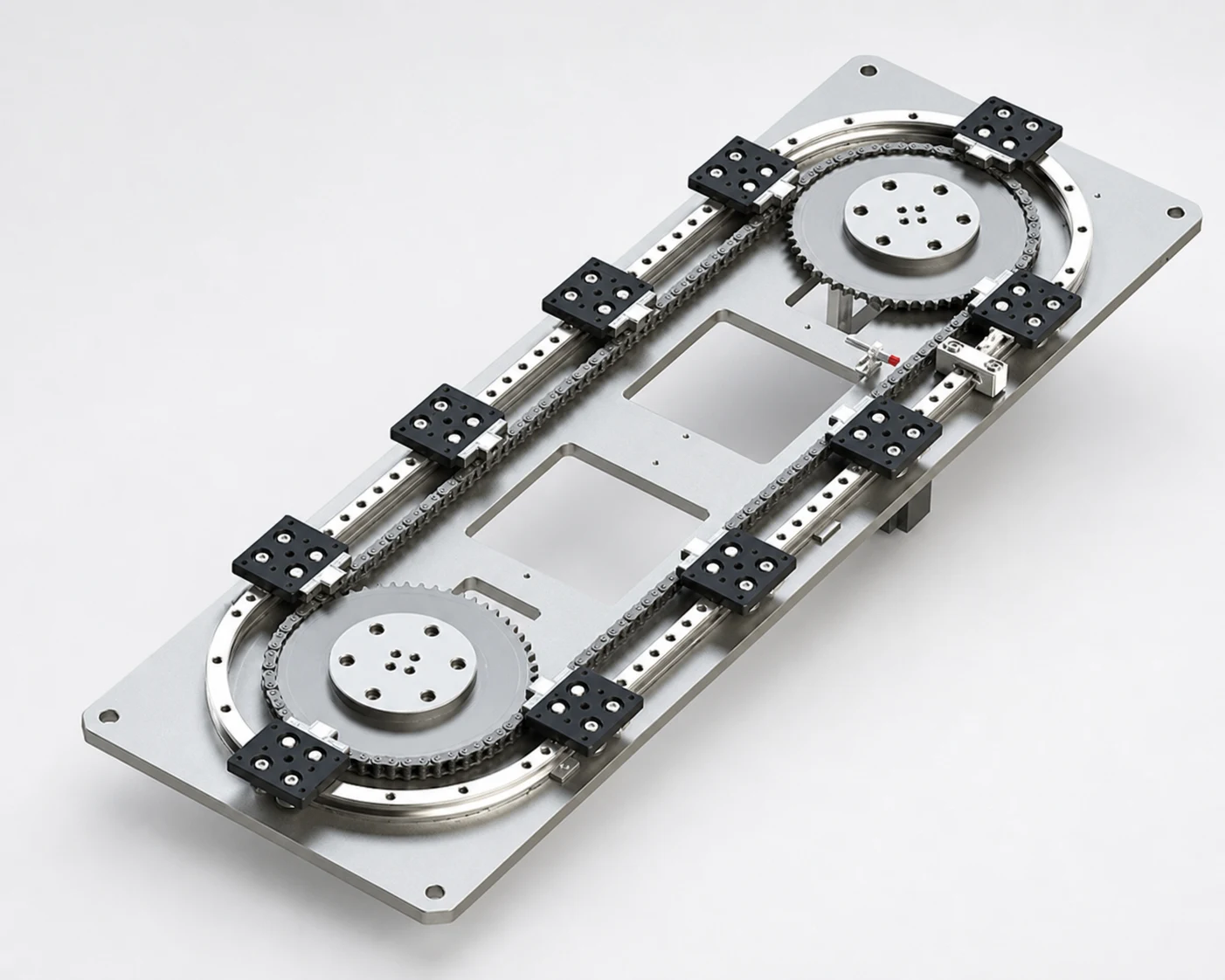
Every stage ends with an approval
A development project is controlled by approvals, not by dates alone: drawing sign-off, sample approval, pilot batch approval and version freeze. Skipping one usually costs more time later than it saved.
The six stages of a custom bearing project
| Stage | Input | What we do | Output / approval |
|---|---|---|---|
| 1. Feasibility review | Drawing, sample or application data (load, speed, temperature, environment) | Check dimensions, internal design, material, heat treatment route, precision grade and inspection capability against our process | Feasibility statement, open questions, budgetary quotation |
| 2. Drawing confirmation | Customer drawing or our measured sample drawing | Define tolerances, clearance, seals, grease, marking, packing and inspection items | Signed-off drawing and technical agreement |
| 3. Samples | Approved drawing | Turning, outsourced heat treatment, grinding, super-finishing and assembly; full inspection of the samples | Samples with measured data report |
| 4. Customer testing | Samples and data report | Support the test: installation data, failure analysis of returned parts if needed | Sample approval or a list of changes |
| 5. Pilot batch | Approved sample and drawing | Run the part under series conditions and series inspection plan | Pilot batch report, process capability observations |
| 6. Version freeze | Approved pilot batch | Freeze drawing revision, material, heat treatment route, grease and inspection plan | Released version; later changes go through change notification |
Stage 1: feasibility review — what we check first
- Geometry: wall thickness, groove or profile form, flanges and chamfers that can be turned and ground on our equipment.
- Internal design: ball size and count, contact angle, cage type, clearance range — especially when the part must match the load rating of an existing bearing.
- Material and heat treatment: bearing steel or stainless steel, required hardness and heat treatment route at our long-term partner.
- Precision: the requested grade against our capability — up to P4 for miniature and deep groove ball bearings, up to P6 for double row angular contact bearings and rollers.
- Inspection: whether each drawing requirement can be measured, and with which instrument. A requirement that cannot be measured is clarified before quotation.
If you start from a worn or competitor sample rather than a drawing, we measure it first and issue a drawing for your review. Our sample teardown example shows what such a measurement covers.
Stages 2–4: drawing, samples and customer testing
Drawing confirmation is where most later disputes are prevented. Every functional requirement should be on the drawing or in the technical agreement, not in e-mails: tolerances and the standard they refer to (GB/T 307.1 or ISO 492), clearance group or range, seal and grease, noise grade, marking, packing and the inspection report format.
Samples are produced on the same process route intended for series production, and delivered with a measured data report. Customer testing then confirms function in the real machine. When a sample fails in test, we ask for the failed parts and the test conditions; the cause decides whether the drawing, the process or the application must change.
Stages 5–6: pilot batch and version freeze
A sample proves the design; a pilot batch proves the process. The pilot batch runs with series equipment, series heat treatment lots and the agreed inspection plan, so that the variation you will receive later becomes visible before volume orders.
After pilot approval we freeze the version: drawing revision, material, heat treatment route, grease, seal and inspection plan. Any later change — on your side or ours — is handled as a change request with the affected items re-verified.
What determines lead time and MOQ
| Factor | Why it affects lead time | Why it affects MOQ |
|---|---|---|
| Tooling | Non-standard profiles may need form tools, grinding wheel dressing profiles, gauges or fixtures before the first part | Tooling and set-up cost is spread over the order quantity |
| Heat treatment (outsourced) | Rings are heat treated at our long-term partner; the part must fit into their furnace scheduling and batch loading | A heat treatment lot has a practical minimum size regardless of how many rings you need |
| Special materials | Stainless steel grades, special bar or tube sizes may need to be purchased for the part | Material is bought in mill or stockist quantities, not in single pieces |
| Precision grade | Higher grades need more grinding and super-finishing time and tighter inspection | Set-up and inspection effort per batch is higher; yield is part of the calculation |
| Seals, cages, balls | Non-standard seals, shields, cages or ball sizes may need sourcing or tooling | Component suppliers have their own minimum quantities |
| Drawing and approval loops | Each open question or re-test adds a cycle | Not an MOQ factor, but a major lead time factor |
Because these factors differ from part to part, we do not publish standard development times or minimum quantities. Sample lead time, series lead time and MOQ are confirmed per part in the quotation, after the feasibility review.
How to shorten the project
- Send a complete input package at the start — see our custom bearing quote checklist.
- Mark the functional dimensions on the drawing and relax tolerances that have no function.
- Choose a standard internal design, seal and grease where the application allows it.
- Agree the test plan and acceptance criteria for samples before they are made.
- Keep one technical contact on each side for drawing questions.
Six stages, four approvals
Turning, raceway grinding, super-finishing, assembly and inspection are done in our Cixi factory; heat treatment is done by long-term partners, which is why we confirm scheduling per part. NLHB manufactures miniature and deep groove ball bearings up to P4 precision, and double row angular contact bearings and track rollers up to P6.
Evidence from our workshop
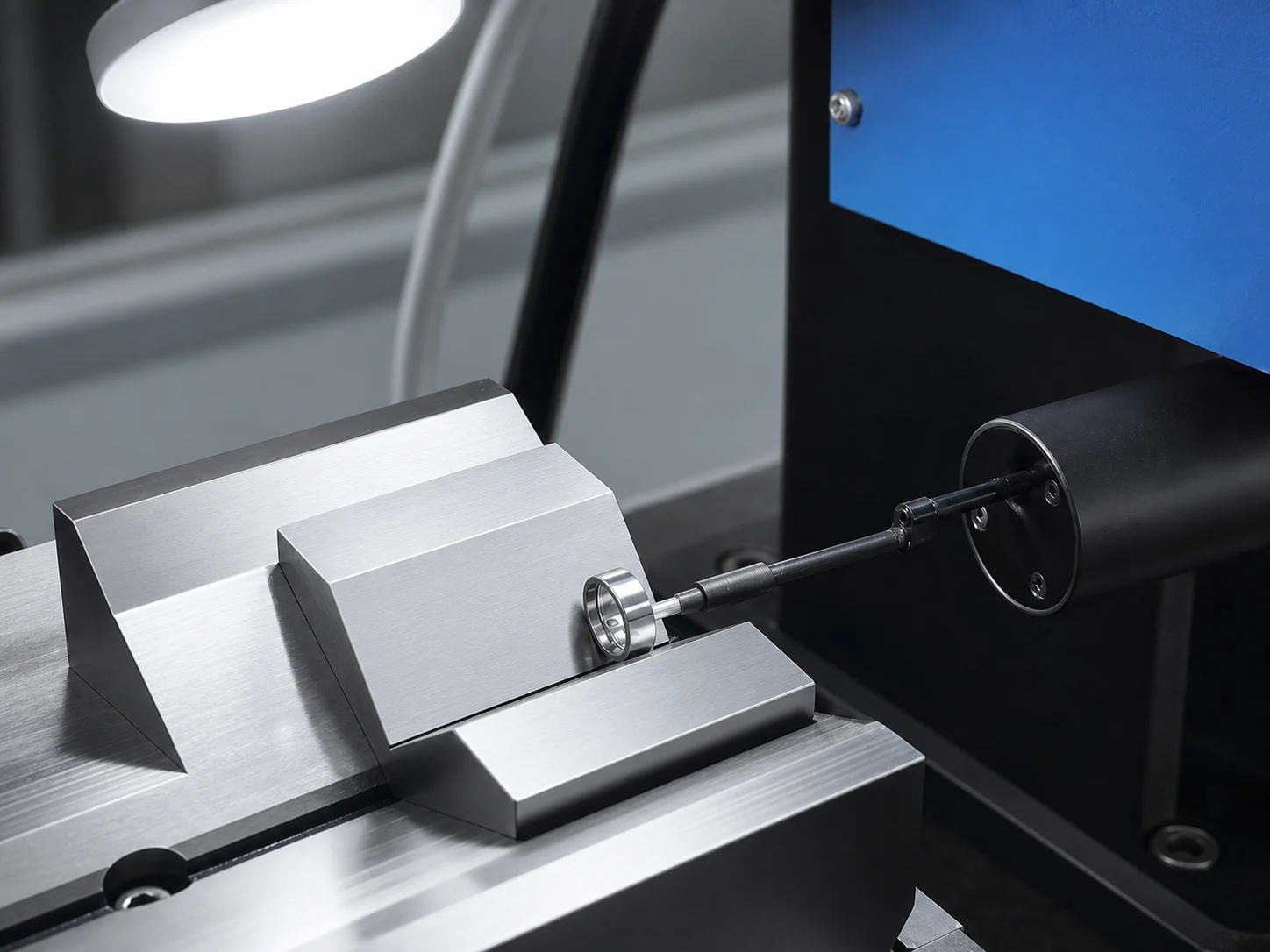
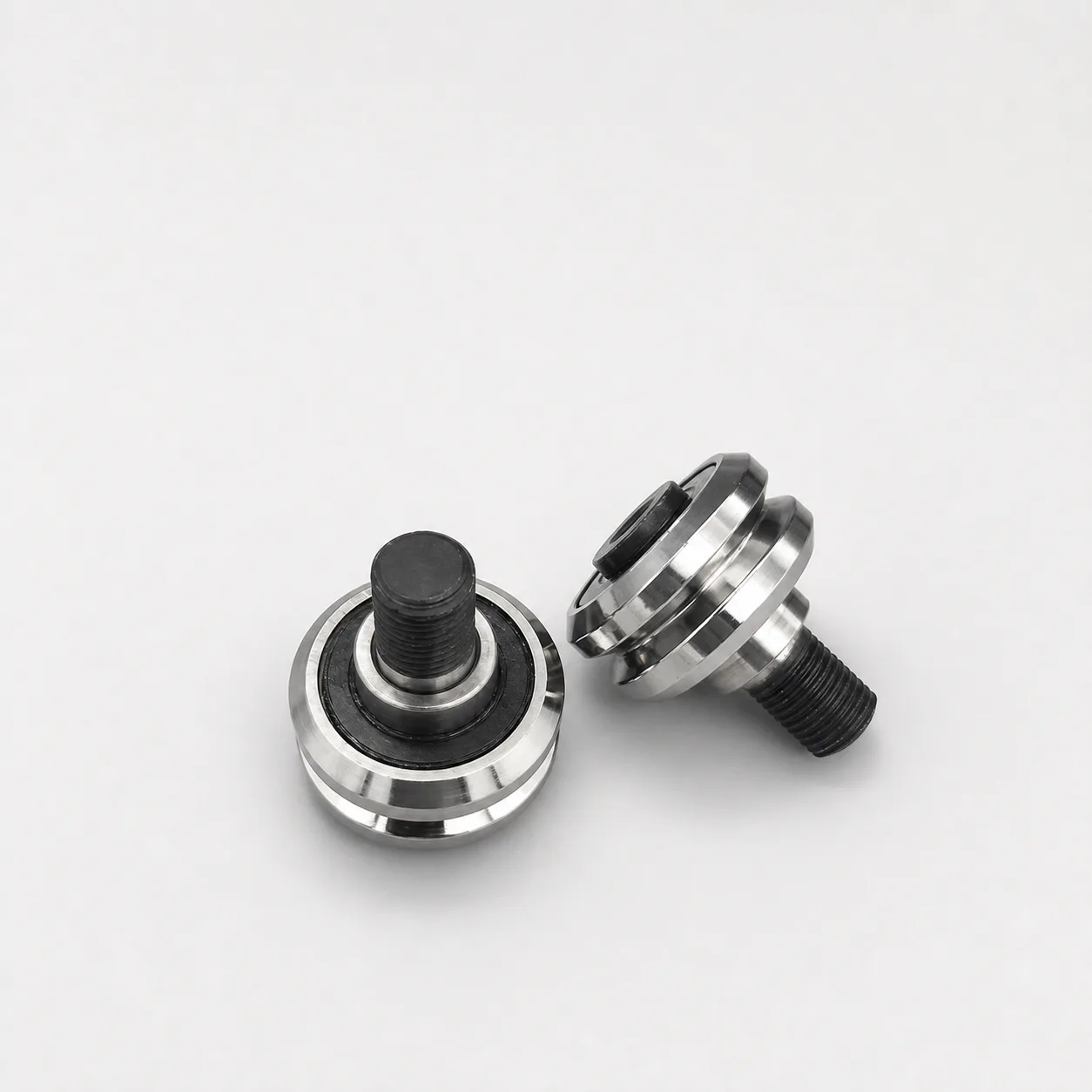
What to send for a quotation
- Drawing (PDF and CAD if available) or a physical sample.
- Application: machine type, load, speed, temperature, environment.
- Precision grade, clearance, seal, grease and noise requirements.
- Sample quantity and expected annual or batch quantity.
- Test plan for samples and the required inspection report.
Frequently Asked Questions
What are the steps to develop a custom bearing?
Feasibility review, drawing confirmation, samples with measured data, customer testing, pilot batch and version freeze. Each stage ends with a customer approval.
How long does custom bearing development take?
It depends on tooling, heat treatment scheduling, material availability, precision grade and the number of approval loops. We confirm sample and series lead time per part in the quotation.
What is the MOQ for a non-standard bearing?
It is set by tooling and set-up cost, heat treatment lot size, material purchase quantities and component suppliers. We confirm it per part at quotation.
Can you develop a bearing from a sample without a drawing?
Yes. We measure the sample, issue a drawing for your review and continue only after you approve it.
Do you do heat treatment in-house?
No. Turning, grinding, super-finishing, assembly and inspection are in-house; heat treatment is done by long-term partners, and their scheduling is part of the lead time we confirm.
Related guides
Published 2026-09-25. Images show our own workshop and representative products. Final dimensions, grades, inspection limits and supply conditions are confirmed against the requested model, drawing and order.